



You hear scratching behind the kitchen wall, then spot dark droppings near the cabinets. Is there rat activity, or did a rodent simply pass through? In a New York City home, shared walls, utility openings, and building spaces can make it difficult to tell where activity started. If you’re trying to get rid of rats NYC, quick fixes may help, but lasting control also means reducing what attracts rats and addressing how they get inside.
It’s understandable to feel uneasy, especially in an apartment where you may not control the basement, trash area, or neighboring units. You can still take practical steps in your home and report concerns to building management. This guide explains how to recognize signs of rat activity, reduce access to food and shelter, and understand why traps or cleanup alone may not resolve the source.
You’ll also learn how Pestrol’s rat extermination and rodent-proofing services can support a coordinated response. We’ll cover what you can do yourself, what may require attention beyond your apartment, and how to approach the problem calmly and persistently.
Key Takeaways
- Droppings, gnaw marks, scratching sounds, and damaged food packaging can help you assess whether rat activity may be present.
- In NYC buildings, shared walls, service areas, and hidden openings can make it harder to address the source from inside one apartment.
- Sanitation and access reduction can make your home less inviting to rats, but cleanup alone may not resolve an active infestation.
- To get rid of rats NYC, document signs, reduce household attractants, and coordinate with building management when repairs or action in shared spaces are needed.
- Pestrol’s rat extermination and rodent-proofing services address rat concerns and potential access points that could contribute to recurring activity.
How to Tell If You Have Rats in Your NYC Home
Finding a dropping, hearing a scrape behind a cabinet, or noticing a torn food package can be unsettling. Take a breath and assess the clues methodically. One sign alone won’t tell you how many rodents may be present, how long they’ve been there, or where they entered. Look for repeated evidence, note its location, and share concerns about areas you don’t control with building management.
Signs of rat activity are clues to investigate, not proof on their own of an active infestation. A pattern of fresh droppings, new damage, or recurring sounds in the same area is more informative than one isolated mark. For wider context on the city’s history and rat behavior, see Rats in New York City.
Which signs suggest rat activity indoors?
Check calmly for several types of evidence:
- Droppings: Small, dark, pellet-shaped droppings may appear along walls, behind appliances, in cupboards, or near stored food. Their location and whether new ones appear can help reveal a pattern.
- Gnaw marks: Look for rough-edged damage on food packaging, cardboard, or other accessible materials. Rats may chew while moving through or exploring an area.
- Greasy rub marks: Dark smudges along wall edges, pipes, or narrow routes may result from repeated contact with a surface. A smudge alone isn’t enough to identify its cause.
- Scratching or movement sounds: Noises in walls, ceilings, or under floors can have more than one cause. Note the time, location, and whether they recur.
Don’t touch suspected droppings or contaminated materials with bare hands, and avoid disturbing them while you document what you see. Keep children and pets away from the area. Record when and where signs appear. A dated note or photo taken from a safe distance can help you explain the pattern to management or a pest professional.
Where should NYC apartment residents look?
Start in kitchens and pantry areas, especially near food storage, appliances, and cabinets. Then check utility areas, storage spaces, and visible gaps around pipes, doors, or other openings. You don’t need to pull apart walls or enter restricted spaces. Focus on places you can inspect safely, and note any openings that may need repair.
Rat activity can also involve shared basements, refuse areas, and building service spaces. If you’re a renter, document what you observe and notify building management when signs appear in common areas or seem connected to an opening outside your apartment. You may not control those spaces, but clear details about location and timing can help the building address the wider concern. This first check gives you a useful starting point as you decide how to get rid of rats NYC.
Why Rats Keep Finding Their Way Into NYC Buildings
Rat activity usually reflects a combination of opportunity: a way inside, something to eat, and a sheltered place to move or nest. In a New York City building, those conditions may exist in different places. A unit might have food crumbs or a gap near a pipe, while an accessible refuse area or an unmaintained service space provides another draw. This doesn’t mean every older building or apartment has rats. It means that understanding the surrounding conditions can help explain why activity may persist.
City living adds complexity. Older structures can have openings created by wear or past repairs, while shared walls and connected service routes can link spaces that residents experience as separate. The NYC Health Department Rat Control Guidelines offer official background on rat prevention and control. Consider both the individual home and the building environment when looking for possible causes.
Closing one access point can help, but building-wide activity may continue if other routes, food sources, or sheltered areas remain available.
How rats can move through shared buildings
Gaps around pipes, utility lines, doors, and other building openings may connect apartments with wall voids, basements, or service areas. Rats can use these routes to move between places, while residents may notice signs in only one room. Activity inside a unit doesn’t necessarily mean the cause is contained there.
Focus first on your own space, but record concerns that involve shared areas. Repairs inside an apartment may be within a resident’s control, while openings in common walls, basements, or utility spaces often need building management’s attention. A coordinated response can address more than one route.
What can attract rats around a home?
Accessible food and unsecured waste can provide an easy meal. Crumbs, uncovered food, pet food left out, or bags and bins that don’t close securely may add to the appeal. Clutter can create sheltered places to hide, especially where items sit undisturbed. A warm, protected gap or storage area may offer cover even when food is elsewhere.
Shared refuse areas and building maintenance matter, too. An apartment can be clean and still be affected by conditions in a nearby basement or service space. Residents can reduce household attractants, store food securely, and keep personal storage areas orderly. For shared spaces or repairs beyond your unit, document the concern and notify management rather than attempting work in restricted areas.
Because access, food, and shelter can overlap across a property, a lasting plan may need to consider each factor, not just the spot where activity first appeared. If rats keep returning, professional rat control and rodent proofing can help address active concerns and potential access points.
DIY Rat Control vs. Professional Help: What Works in NYC?
Household steps can reduce what attracts rats and help you keep track of activity. They may not resolve the underlying problem if rats are entering through an inaccessible opening or moving through shared building spaces. A practical approach is to handle what you can control at home while recognizing when the issue needs a broader assessment.
Use this comparison to decide where to start. These approaches can work together rather than as competing choices.
| Approach | What it can help with | Where it may fall short |
|---|---|---|
| Household sanitation | Securing food and waste can reduce easy access to food. | It won’t seal entry points or address activity elsewhere in the building. |
| Access reduction | Closing appropriate gaps in your own space can limit some routes indoors. | Openings in shared or inaccessible areas may need property coordination. |
| Professional assessment | Can help evaluate signs, possible access, and a targeted response. | Building-wide concerns may also require attention to shared spaces. |
Cleaning up is worthwhile, but it shouldn’t be treated as proof that the source has been resolved. If signs recur after you’ve secured food and waste, or show up in more than one area, look beyond your individual unit. In an apartment building, residents, management, and a pest professional may each have a role in addressing different parts of the problem.
What can residents do safely while arranging help?
Secure food in closed containers, dispose of waste carefully, and reduce clutter that could provide cover. Keep notes or photos of activity and where you observed it. If you use any pest-control product, follow its label and keep children and pets away from products and treated areas as directed. Notify building management if signs involve a basement, refuse area, utility space, or another shared part of the property.
When is professional rat control a better next step?
Professional help is a practical next step if signs keep returning, appear across multiple rooms or shared spaces, or point to a suspected entry area you can’t safely reach. An assessment can help distinguish household conditions from access or activity that may extend beyond the apartment and inform a targeted response. For residents looking to get rid of rats NYC, Pestrol provides rat extermination and rodent proofing services to address rat concerns and potential access points.
A Practical Plan to Reduce Rat Activity at Home
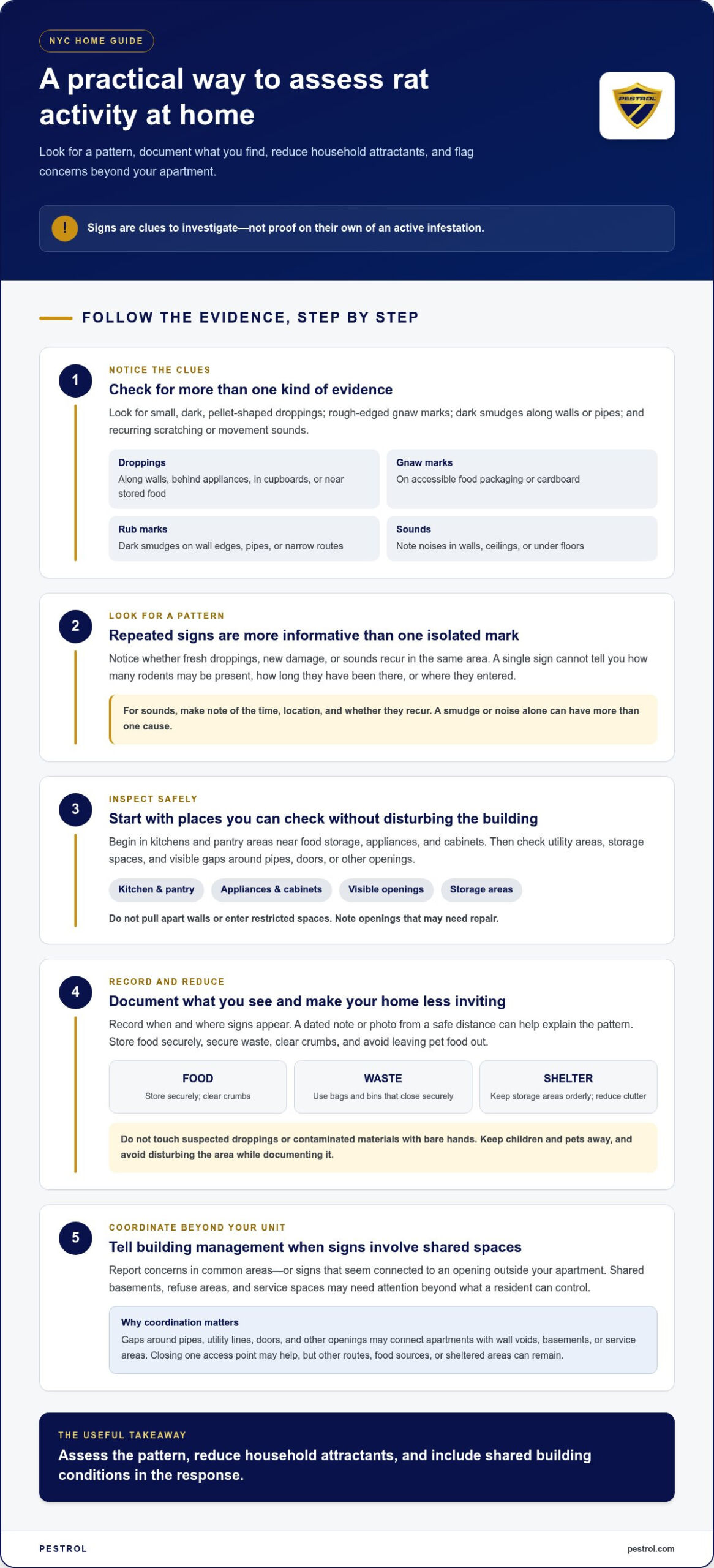
A steady plan helps you separate what you can handle inside your home from what needs attention elsewhere in the building. If you’re trying to get rid of rats NYC, work through these steps and keep a simple record so you can see whether activity changes.
- Record what you observe. Note the date, time, location, and type of sign. Take a photo from a safe distance if useful, but don’t touch suspected droppings or contaminated materials.
- Look for patterns. Compare new observations with your notes. Repeated signs in one area, or activity in several places, can help clarify whether the concern may extend beyond a single room.
- Reduce household attractants. Store food securely, clean up accessible scraps, and avoid leaving pet food unattended. Keep household waste contained and storage areas as orderly as practical.
- Identify concerns that need repair. Make a note of visible gaps or damage inside your unit, but don’t attempt work on building systems or openings in areas you don’t control.
- Coordinate on shared spaces. Notify the appropriate property contact if you observe signs in a basement, refuse area, or service space, or suspect activity is coming from a shared wall or utility route.
What should renters document and report?
Keep your record specific and factual: write down dates, locations, and observable changes, such as fresh signs in a previously clear area. Avoid handling anything that may be contaminated. Share your notes with building management when concerns involve common areas, building systems, or repairs outside your apartment. A clear timeline can help others understand what you’ve seen without requiring you to investigate unsafe or inaccessible spaces.
How can households reduce attractants?
Choose practical habits you can maintain: close food packages or use secure storage, clear up crumbs, and put away pet food after feeding. Keep waste contained and avoid letting clutter build up around storage areas. These steps can make your unit less inviting, though they can’t address a shared source by themselves. For more household prevention ideas, explore this 2026 guide to home pest protection.
Once you’ve handled the steps within your control, review your notes. If activity continues or points to access beyond your unit, a coordinated response may be the next practical move. Pestrol’s rat extermination and rodent-proofing services address active concerns and potential entry points.
How Pestrol Helps NYC Residents Address Rat Problems
Rat concerns can be stressful, especially when signs appear in an apartment but possible entry points or activity involve shared building spaces. Pestrol provides rat extermination and rodent proofing to address both the activity you’re noticing and potential access concerns. Looking at these factors together can support a more coordinated response than focusing only on one room or one sign.
Pestrol is a family-owned and operated business. You don’t need to determine the full extent of a rat problem on your own. Sharing what you’ve observed helps clarify the concern and identify the areas that may need attention.
Pestrol serves homes and businesses in Manhattan, Bronx, Chester, Cornwall, Crawford, Goshen, Greenville, Highlands, Minisink, Monroe, Montgomery, Mount Hope, New Windsor, Newburgh, Palm Tree, Tuxedo, Wallkill, Warwick, Wawayanda, and Woodbury. For NYC residents, the service includes Manhattan and the Bronx, as well as communities across the surrounding area.
What to expect from a focused rat-control response
A focused response starts with the details: what signs you’ve noticed, which areas are affected, and whether you have concerns about openings or routes rats may be using. Conditions at the property shape the appropriate response. For example, signs limited to one area may point to different concerns than activity reported in several rooms or near a shared utility space.
Rat extermination addresses the active concern, while rodent proofing focuses on potential access points. Considering both can help account for factors that may contribute to recurring activity. The specific approach depends on what’s found at the property, so there’s no need to assume a particular method or timeline before the situation is assessed.
How to take the next step with Pestrol
Before reaching out, gather a few useful details. Note where you saw signs, when they appeared, whether they’ve returned, and whether the activity seems limited to your apartment. If you’re a renter, mention any observations in shared areas and whether building management has been notified. These facts help distinguish what you’ve seen firsthand from what may need attention elsewhere in the building.
Photos taken from a safe distance and a short timeline can also help explain changes in activity. Don’t handle suspected droppings or contaminated materials to collect evidence. If access concerns are involved, describe the location without trying to inspect restricted or unsafe spaces yourself.
If you’re looking for a practical way to get rid of rats NYC, Pestrol can address rat activity and potential access concerns through rat extermination and rodent-proofing services. Share where and when you’ve noticed signs, including whether they occur in private or shared areas, to help put the concern in context.
Take the Next Step Toward a Calmer Home
You can get rid of rats NYC residents encounter by treating recurring signs as a reason to take steady action, not a reason to panic. If activity continues or seems connected to spaces beyond your apartment, focus on the next step you can control. A clear record of what you’ve noticed can help you explain the concern and move toward a response that fits your home.
Keep building management informed when the issue involves shared areas, and don’t feel you have to solve building-wide access concerns on your own. Pestrol provides professional rat extermination and rodent proofing to address rat activity and potential access concerns together. Note where and when you’ve noticed signs, along with any changes over time, and contact Pestrol to take the next step.
Progress starts with a practical next step. With a calm, persistent approach, you can work toward a home that feels more comfortable and secure.
Frequently Asked Questions
How do I know if I have rats or mice in my NYC home?
Rat signs tend to be larger than mouse signs, but droppings and gnaw marks can be difficult to identify with confidence. A single clue may not tell you which rodent is present. For example, a torn cereal box could have more than one cause. Avoid handling suspected droppings. Take a photo from a safe distance and note where you found the sign. A pest professional can help assess signs that keep appearing.
Can rats get into an NYC apartment through walls or pipes?
Yes, rats can use openings around pipes and utility lines to enter or move between building spaces. They don’t need to pass through a solid wall. Small gaps, damaged areas, or unsealed penetrations may provide a route. If you notice signs near a radiator pipe or under a sink, report the location rather than trying to open a wall. In connected Manhattan or Bronx buildings, the route may involve spaces beyond your unit.
What should I do if I see a rat in my NYC apartment building?
Don’t try to catch or corner it. Keep children and pets away, secure nearby food, and make a note of where and when you saw it. If it’s in a hallway, basement, or refuse area, alert building management so the concern can be addressed beyond your apartment. If you’re unsure about the next step, check current NYC guidance for reporting rat concerns before submitting a report.
Are rats dangerous to people and pets?
Rats can create health and safety concerns through bites, contaminated food or surfaces, and damage to household materials. Keep pets from chasing or touching a rat, droppings, or gnawed items, and prevent children from entering affected areas. If a person or pet has been bitten or may have had contact with contaminated material, contact a medical professional or veterinarian for advice. Don’t handle suspected contamination while cleaning.
How long does it take to get rid of rats in an apartment?
There isn’t one reliable timeline for every apartment. The time needed depends on factors such as how widespread the activity is, whether there are accessible entry points, and whether shared building areas also need attention. One visit or a quiet stretch doesn’t necessarily show that the source is resolved. Keep a dated record of new signs and discuss recurring activity with building management or a pest professional.
Should I tell my landlord or building manager about rats?
Yes, notify the appropriate property contact, especially if you see activity in common areas, near building systems, or in more than one unit. Share clear observations, such as the location and date, rather than handling evidence. This helps distinguish an issue limited to your apartment from one that may involve shared spaces. Keep a copy of your message and any response so you can track what’s been reported.