




What if mice are entering your apartment for reasons you can’t see? If you’re wondering what attracts mice to a clean apartment, the answer often has little to do with visible mess. A spotless home can still have hidden crumbs, a drip under the sink, warmth, shelter, or an opening around a pipe.
A mouse doesn’t mean you haven’t cleaned well enough. Mice look for food, water, shelter, and a way inside. Even a gap about the size of a dime can provide access. Cleaning helps limit food, but it may not address an entry point or a route through the building.
This guide explains what can attract mice beyond clutter, which signs and hiding spots to check, and practical ways to reduce food, water, shelter, and access. You’ll also learn when prevention may be enough and when ongoing activity or hard-to-find entry points may call for professional assessment, including targeted mouse control or longer-term rodent proofing.
Key Takeaways
- What attracts mice to a clean apartment can include resources and access points that aren’t obvious during routine cleaning.
- Use signs of activity to guide a focused check of food storage, water sources, and accessible areas around your apartment.
- Separate renter-friendly prevention steps from suspected gaps or repairs that need a landlord or property manager.
- Repeated signs or hard-to-find entry points may call for professional assessment, targeted mouse control, or rodent proofing.
What Attracts Mice to a Clean Apartment? The Real Reasons
A mouse sighting doesn’t prove your apartment is dirty. Clean floors and clear counters can reduce food scraps, but mice may find resources in places a regular tidy-up doesn’t reach. They respond to what they can access, not to whether a home looks clean to a person. That’s the key to understanding what attracts mice to a clean apartment.
Think of attractants as a combination of resources and conditions. A small food source, a dependable water source, a sheltered route, or a gap into the building can make an apartment worth exploring. The House mouse behavior overview describes how these rodents live close to people and adapt to human environments.
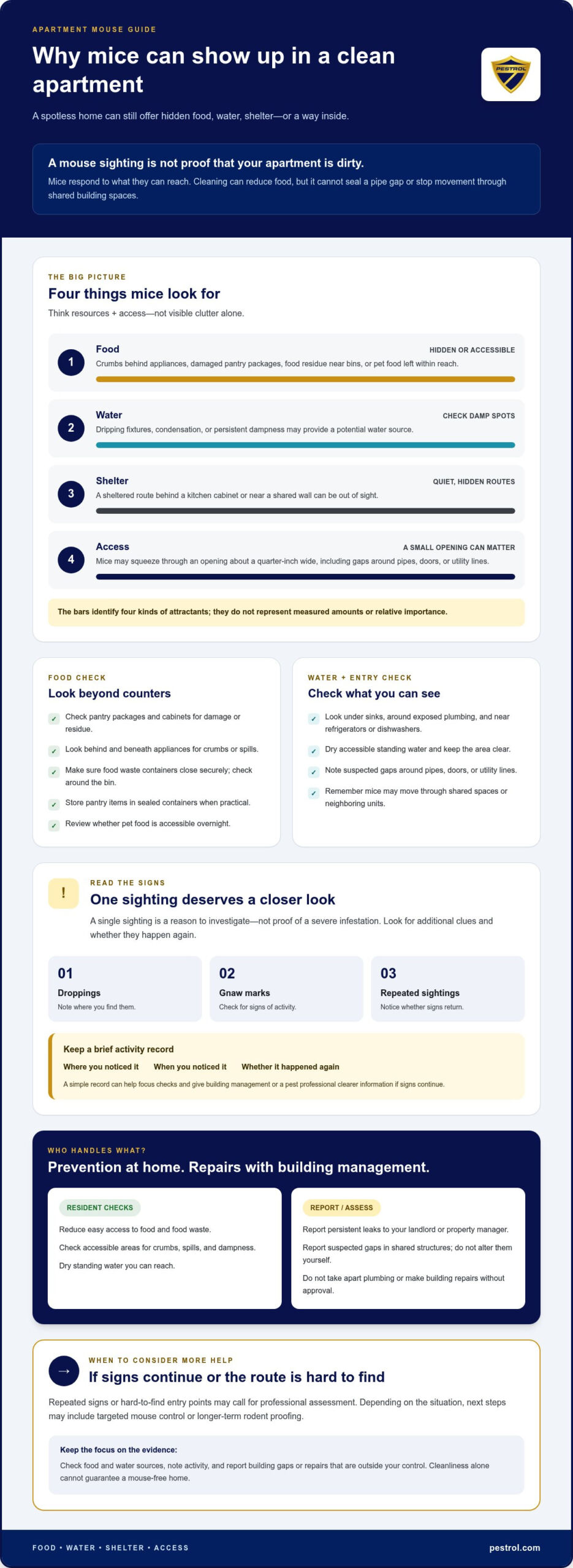
Mice are drawn to four practical things: food to eat, water to drink, shelter to hide in, and access that lets them reach those resources. Cleaning can reduce available food, but it can’t close an opening around a pipe or stop mice from moving through shared building spaces. Addressing activity may mean looking beyond the apartment itself.
Can mice enter a clean apartment?
Yes, mice can enter a clean apartment while searching for basic resources. They may squeeze through an opening about a quarter-inch wide, including gaps around pipes, doors, or utility lines. They can also travel from a neighboring unit through shared spaces and building openings. Residents aren’t necessarily responsible for conditions elsewhere in the building, and cleanliness alone can’t guarantee a mouse-free home.
The source of activity may not be obvious from inside your apartment. A route behind a kitchen cabinet or near a shared wall can be out of sight. Note suspected building gaps and report them to your landlord or property manager rather than changing shared structures yourself.
Why a single mouse sighting deserves a closer look
One sighting is a reason to investigate, not proof of a severe infestation. Look for other clues, such as droppings, gnaw marks, or repeated sightings. These signs can help you tell whether activity may be ongoing and identify where mice could be moving.
Before choosing a response, record what you notice:
- Where the mouse or sign appeared
- When you noticed it
- Whether you’ve seen similar signs again
A brief record gives you clearer information to share with building management or a pest professional if signs continue. It also helps focus next steps on the likely source instead of blaming yourself for a clean home.
Food and Water Sources That Can Attract Mice Without a Mess
A kitchen can look spotless and still have small, accessible food sources. A few crumbs behind an appliance, a torn pantry package, or pet food left out overnight may be easy to miss during a quick cleanup. These aren’t signs that you’ve failed to keep a clean home. They’re useful places to check when investigating what attracts mice to a clean apartment.
Accessible food and water can attract mice even in orderly homes. The goal isn’t to make your apartment perfect. It’s to find and reduce easy-to-reach resources while checking for other possible causes.
Small food sources residents commonly overlook
Look beyond counters and open floors. Check inside cabinets for damaged packaging, around waste bins for food residue, and behind or beneath appliances where crumbs can collect. Wipe up spills when they happen, and move pantry items into sealed containers when practical. If you have a pet, check whether food is left accessible overnight and adjust storage or feeding routines if needed.
Check food waste too. Make sure bags or containers close securely, and look for residue around the bin. These steps can limit access without requiring an all-day deep clean.
Water, leaks, and damp areas
Food isn’t the only resource to consider. A dripping fixture, condensation, or persistent dampness may provide a potential water source, although not every mouse sighting is linked to moisture. Check under sinks, around exposed plumbing, and near appliances such as refrigerators or dishwashers for damp spots or signs of a leak.
If you find ongoing moisture, report it to your landlord or property manager so they can assess repairs outside your control. In properties dealing with hidden pipe leaks or recurring blockages, professional drainage teams like Drain Genie Direct are often called in to inspect and clear the lines. You can dry accessible standing water and keep the area clear, but don’t take apart plumbing or make building repairs without approval.
- Check pantry packages and cabinets for damage or residue.
- Look behind appliances and around waste bins for crumbs or spills.
- Review whether pet food is left within reach overnight.
- Note dripping fixtures or damp areas and report persistent leaks.
If food and moisture checks don’t explain continued activity, consider how mice may be getting in. For persistent signs, you can learn more about Pestrol mouse control as an option for targeted professional help.
Shelter and Entry Points: How Mice Reach a Spotless Apartment
Food and water aren’t the whole story. A mouse also needs a route inside and a place to stay hidden. Openings around pipes, doors, utility lines, or building materials can provide access, while quiet, undisturbed spaces may offer shelter. These conditions can exist in an orderly apartment, so checking them can help explain what attracts mice to a clean apartment without blaming the resident.
Apartment entry points to inspect and report
Look for visible gaps around plumbing where pipes pass through walls or cabinets, behind accessible cabinets, near door edges, and around utility openings. You don’t need to pull apart fixtures or make repairs to investigate. Take a clear photo of anything that looks like a possible opening, note its location, and send the information to your landlord or property manager. Avoid altering shared structures without approval.
A gap may be difficult to assess from inside the apartment, especially if it sits behind an appliance or connects to a wall cavity. A quick patch may not address the route mice are using. For a closer look at how exclusion work may fit into a broader response, see Pestrol’s rodent proofing services.
Shared walls, hallways, and building conditions
In an apartment building, mice may travel through shared spaces or openings between units. Activity inside one clean apartment doesn’t necessarily begin there. Building layouts differ, so don’t assume a particular route. If you notice recurring signs in a hallway, storage area, or near a shared wall, record where they appear and notify building management.
Hidden shelter doesn’t mean poor housekeeping
Boxes in a closet, stored belongings, or quiet spaces behind furniture can provide cover because they’re undisturbed. Their presence isn’t proof that an apartment is dirty. When checking a room, look for signs of activity around the edges of stored items and along walls. Arrange belongings so you can see those areas.
Start with observation: note possible access points, sheltered areas, and signs that recur. If the suspected route is hard to reach or activity continues, a professional assessment can help distinguish targeted mouse control from longer-term rodent proofing and identify appropriate next steps. For building owners and managers seeking ways to seal hidden entry points in wall cavities and foundations, visit Third Coast Spray Foam to see how specialized insulation and air-sealing solutions help secure building envelopes.
How to Check Your Apartment and Reduce Mouse Attractants
A simple, repeatable check can help you move from wondering what attracts mice to a clean apartment to identifying what needs attention. Start with signs, then review food and water, inspect visible gaps, and share your findings with building management. You don’t need to investigate every hidden space or make repairs yourself.
A practical room-by-room mouse check
Begin in the kitchen and food-storage areas. Look for droppings, gnaw marks, disturbed packaging, or other signs near cabinets, bins, and appliances. Then check under sinks and around plumbing for moisture or visible openings. Continue through nearby rooms, noting signs along walls and around doors or utility lines. Don’t touch droppings or suspected nesting material, and avoid moving items that may be contaminated.
Keep a brief record as you go. Note the date, room, and exact location of each sign. Photos can help show whether marks or suspected gaps are in the same place over time, and make it easier to describe the issue to your landlord or property manager.
Prevention steps that suit apartment living
Store food securely, close waste containers, and clean up accessible spills as part of regular upkeep. These steps reduce easy access to food without demanding a spotless home at all times. You can also note damp areas or a recurring leak, but leave plumbing repairs and changes to shared structures to the people responsible for the building.
If you suspect an opening around a pipe, door, or utility line, photograph it and ask management to assess it before attempting a repair. Report recurring signs in hallways or shared spaces too. A broader overview of prevention is available in Pestrol’s home pest protection guide.
Use your notes to look for patterns. Repeated activity in one area, fresh signs after cleanup, or a suspected route that’s difficult to reach may warrant further assessment. Building management can address repairs or shared-area concerns, while professional help may be an option if mouse activity continues.
When Mouse Activity Calls for Professional Help
Prevention steps are useful, but they may not explain ongoing activity. Consider further assessment if you see mice repeatedly, find fresh signs after cleaning, or suspect an entry point that’s difficult to reach or inspect. These clues don’t automatically mean there’s a severe infestation. They do suggest it’s time to understand where activity is happening and what may be allowing it to continue.
A professional assessment can help identify signs of mouse activity and inform possible next steps. If you’re still asking what attracts mice to a clean apartment, the answer may involve an access route or building condition that isn’t visible during routine checks. Share what you’ve observed and ask how the assessment will consider both activity and potential entry points.
What to tell a pest professional
Bring clear, practical details. Note when and where you saw a mouse or signs, and share photos if you have them. Mention possible food or water access, suspected gaps, and any activity you’ve reported to building management or noticed in shared spaces. Ask what the inspection covers and whether recommendations may include ways to address entry points. These questions help clarify the assessment and what remains the property manager’s responsibility.
Mouse control and longer-term prevention
Targeted mouse control focuses on addressing mouse activity. Rodent proofing focuses on access routes that may let rodents enter. They address different parts of the problem, and the appropriate next step depends on what the assessment finds and on the property itself. Neither service should be treated as a guaranteed outcome.
Pestrol offers mouse control and rodent proofing for readers considering professional help. If signs keep appearing or the suspected route is hard to identify, contact a pest professional to discuss what you’ve found and which service may fit your situation.
Take the Next Step Toward a Mouse-Free Home
A mouse in a clean apartment isn’t proof that you’ve done anything wrong. Mice may find small food or water sources, shelter in quiet spaces, or enter through gaps connected to the building. That’s why understanding what attracts mice to a clean apartment means looking beyond visible mess.
Start by noting signs and where they appear. Check accessible food, moisture, and visible gaps, then share concerns about building repairs or shared spaces with your property manager. If activity repeats or the route is difficult to identify, professional assessment can help clarify next steps.
Pestrol offers targeted mouse control and rodent proofing. These services address different parts of the issue: mouse activity and potential access routes. The right option depends on what’s happening in your apartment.
With clear observations and practical support, you can take a calm, informed step toward a more comfortable home.
Frequently Asked Questions
Can mice live in a clean apartment?
Yes, mice can live in a clean apartment if they can find shelter, water, food, and a way inside. Clean counters and floors help reduce visible scraps, but they can’t block access through building openings or shared spaces. A mouse sighting doesn’t prove that an apartment is dirty. Check for signs and possible attractants, then report suspected building issues to your landlord or property manager.
What attracts mice if there is no food left out?
Even without food left in the open, mice may find crumbs behind appliances, residue in bins, or food inside damaged pantry packaging. Water from a drip or damp area may also be accessible, and mice can use quiet spaces for shelter. They may enter from neighboring units or shared areas, too. Understanding what attracts mice to a clean apartment means checking resources and access, not just countertops.
Can mice get into an apartment through the walls?
Yes, mice may travel through wall cavities or openings around pipes, utility lines, and other building features. They can also move through shared spaces, depending on the apartment’s layout. If you spot a suspected gap, take a photo and note its location. Tell your landlord or property manager rather than altering a shared wall or sealing an opening without approval.
How do I know if mice are attracted to my apartment?
A mouse sighting, droppings, gnaw marks, or disturbed food packaging can indicate activity. One clue doesn’t establish how widespread the issue is, so look for patterns. Record the date and location of each sign, and take photos when useful. Avoid touching droppings or other unknown material. Share your observations with building management if signs recur or appear near a suspected entry point.
Does clutter attract mice even if my apartment is clean?
Clutter can create sheltered, undisturbed places where mice may hide, but belongings don’t mean your apartment is dirty or that mice are present. Keep stored items arranged so you can check around them, especially near walls and possible access points. Also consider food and water sources, since reducing clutter alone may not address other conditions that could support mouse activity.
What should I do if I see a mouse in my apartment?
Note where and when you saw it, then check nearby areas for additional signs without touching droppings or suspected nesting material. Secure accessible food, record findings, and notify your landlord or property manager about possible building gaps or shared-area activity. If sightings repeat or the entry route is hard to identify, consider professional assessment. Pestrol offers mouse control and rodent proofing in Manhattan, the Bronx, and communities including Chester, Cornwall, Crawford, Goshen, Greenville, Highlands, Minisink, Monroe, Montgomery, Mount Hope, New Windsor, Newburgh, Palm Tree, Tuxedo, Wallkill, Warwick, Wawayanda, and Woodbury.