




Did you know that in a high-density city like New York, your home’s defenses are often only as strong as the smallest gap in your neighbor’s wall? It is a frustrating reality for many residents that even the cleanest apartment can fall victim to invaders traveling through shared pipes or aging floorboards. Whether you are dealing with the anxiety of bed bugs in a Manhattan high-rise or the heartbreak of moths destroying an expensive wardrobe, the stress of an infestation is overwhelming. You deserve to feel safe and comfortable in your own space without worrying about health risks from rodent droppings or property damage.
This 2026 Homeowner’s Protection Guide will help you identify the most common household pests in New York and provide you with the professional strategies needed to secure your property. We understand the unique challenges of local architecture, from pre-war brownstones to suburban Hudson Valley homes. We will preview the latest shifts in pest behavior, including how German cockroaches have developed resistance to standard sprays. You will learn about structural exclusion, the impact of the Birds and Bees Protection Act on local treatments, and how to build a permanent barrier that keeps your neighbors’ problems from becoming your own.
Key Takeaways
- Understand how New York’s unique high-density housing and aging pre-war infrastructure create “pest highways” through shared walls and utility lines.
- Identify the most common household pests in New York, including insecticide-resistant German cockroaches and the “hitchhiking” bed bugs that plague Manhattan high-rises.
- Learn why professional rodent proofing and specialized clothing moth protocols are essential for protecting your property’s structural integrity and your luxury wardrobe.
- Discover a seasonal defense strategy to stay ahead of ant scouts in the spring and high-humidity invaders like roaches and flies during the summer months.
- Compare tiered Home Pest Protection plans to find a customized level of security that fits your specific budget and property risk profile.
Why New York Homes are Vulnerable to Pests in 2026
New York’s environment is unique, blending century-old brownstones with modern high-rises. This architectural diversity creates a complex landscape for common household pests that thrive in urban settings. In 2026, aging infrastructure remains a significant vulnerability. Cracks in masonry and settled foundations offer easy entry points for resilient invaders. Because our homes are so closely packed, a single opening can compromise an entire block. Our state’s extreme weather also plays a role. Humid summers drive roaches and ants indoors for moisture, while freezing winters force rodents to seek the warmth of your basement or walls.
The ‘Shared Wall’ Challenge in NYC Apartments
In Manhattan and the Bronx, shared walls act as biological highways. Pests don’t care about your lease or deed; they move through electrical conduits, steam pipes, and plumbing stacks with ease. If a neighbor struggles with an infestation, those pests will likely explore the wall voids to find your kitchen. This interconnectedness means individual unit treatment is often just a temporary fix. You need a professional barrier that stops the travel between units to ensure long-term peace of mind. Building-wide awareness is helpful, but securing your own perimeter is the most effective way to stay protected. For those in classic NYC buildings, you can discover Progressive Contracting NY Corp to help reinforce your property’s exterior masonry and prevent pest entry.
Hudson Valley and Suburban Pest Dynamics
If you live in Middletown or Warwick, your home faces different pressures than a city apartment. Suburban properties in Orange County often deal with pests migrating from wooded areas into crawl spaces and attic vents. These common household pests in New York suburbs are experts at finding structural weaknesses. When the temperature drops in late autumn, rodents look for any gap to escape the cold. Older suburban homes are particularly at risk because of settling foundations and aging rooflines. Permanent exclusion work is the only reliable way to stop these seasonal invasions before they start.
Current urban living trends in 2026 have also changed the game. Increased home deliveries provide “hitchhiker” pests like bed bugs and moths with more opportunities to enter your home via cardboard boxes. Additionally, the rise of high-density composting has created new food sources for local rodent populations. These factors mean that a reactive approach to pest control is no longer enough. You need a proactive, year-round defense to protect your property’s value and your family’s health.
The Most Common Pests in New York: Identification and Risks
Identifying the common household pests in New York starts with understanding which species thrive in our specific urban and suburban climates. German cockroaches are the most persistent invaders, often found in kitchens and bathrooms where they contaminate food surfaces. These pests have developed significant cross-resistance to many standard insecticides, making DIY efforts increasingly difficult. Bed bugs remain a major concern; New York City consistently ranks in the top five most infested cities in the United States. They travel easily from hotels to homes on luggage or clothing, hiding in mattress seams and headboards.
Rodents are another constant threat. The common house mouse is small and nimble, while the Norway rat is much larger and more aggressive, often entering through basement foundations. While pavement ants are mostly a nuisance in the kitchen, carpenter ants are destructive. They tunnel through damp wood to build nests, potentially compromising your home’s structure. If you notice these signs, our Home Pest Protection plans provide the specialized defense you need to reclaim your space.
Health Risks Associated with NYC Pests
Living with pests isn’t just stressful; it’s a legitimate health concern. Cockroach droppings and shed skins are known triggers for asthma and allergies, especially in children living in high-density buildings. Rodents are even more dangerous, carrying pathogens like Salmonella and Leptospirosis that spread through their urine and droppings. Beyond physical health, the psychological toll of a bed bug infestation can lead to severe anxiety and sleep deprivation. Following safe pest control practices is the first step in mitigating these risks and protecting your family’s well-being.
Spotting the Early Signs of Infestation
Catching a problem early is the best way to prevent a full-blown crisis. Look for “peppery” spots in cabinet corners, which indicate cockroach activity, or dark grease marks along baseboards where rodents travel. You might also hear scratching or scurrying sounds in the walls at 2 AM when the house is quiet. Frass is the fine, sawdust-like debris left behind by wood-destroying insects like carpenter ants, and finding it is a clear signal that your home’s integrity is under attack. These common household pests in New York leave behind a trail; you just need to know how to read it. By acting on these early signals, you can secure your property before the damage becomes expensive or dangerous.
Wardrobe and Structural Threats: The ‘Invisible’ Pests
Many common household pests in New York announce their presence with a visible trail or a sudden scurry across the floor. Others operate in the shadows, quietly destroying high-value property before you even realize they’ve arrived. Clothing moths and rodents often fall into this “invisible” category. While a few moths fluttering in the hall might seem harmless, they’re frequently a sign that your investment pieces are under attack. Similarly, rodents don’t just target your pantry; they compromise your home’s structural integrity by gnawing through wires and insulation behind your walls.
New York’s luxury wardrobes are prime targets for two specific types: webbed and casemaking clothes moths. Webbed moths leave behind silk tunnels as they feed, while casemaking moths carry a portable silken case with them. Both species are notoriously difficult to spot until you find irregular holes in your favorite cashmere or silk. These pests thrive in the dark, undisturbed corners of closets, making them a persistent threat to New York residents who value their high-end textiles.
Clothing Moth Control for New York Residents
Damage usually appears as small, irregular holes or “grazed” patches on natural fibers like wool and silk. If you find these signs, the larvae are already at work. Don’t rely solely on DIY pheromone traps. These are useful for monitoring activity, but they only attract adult males, leaving the egg-laying females and hungry larvae untouched. To truly protect your collection, you need a best exterminator for clothing moths who understands specialized treatment protocols for high-end fabrics. Professional intervention ensures the entire life cycle is disrupted, providing the peace of mind that natural remedies simply can’t match.
Rodent Proofing and Exclusion Services
Rodents are masters of entry. A mouse only needs a structural gap as small as a dime to squeeze into your kitchen. Rats are equally opportunistic, exploiting cracks in foundations or gaps around utility lines. Setting traps is a reactive cycle that never ends if the entry points remain open. Our “Seal and Protect” philosophy shifts the focus from temporary trapping to permanent exclusion. It’s a proactive approach designed to keep your home secure year-round.
Many homeowners try to use expanding foam to fill gaps, but New York rats can chew through standard foam in minutes. We use professional-grade materials like heavy-gauge steel mesh and specialized sealants that rodents can’t penetrate. By closing the physical gaps in your foundation and siding, we create a lasting barrier against common household pests in New York. Investing in professional rodent proofing services is the only way to stop the seasonal cycle of infestations and protect your home’s long-term value.
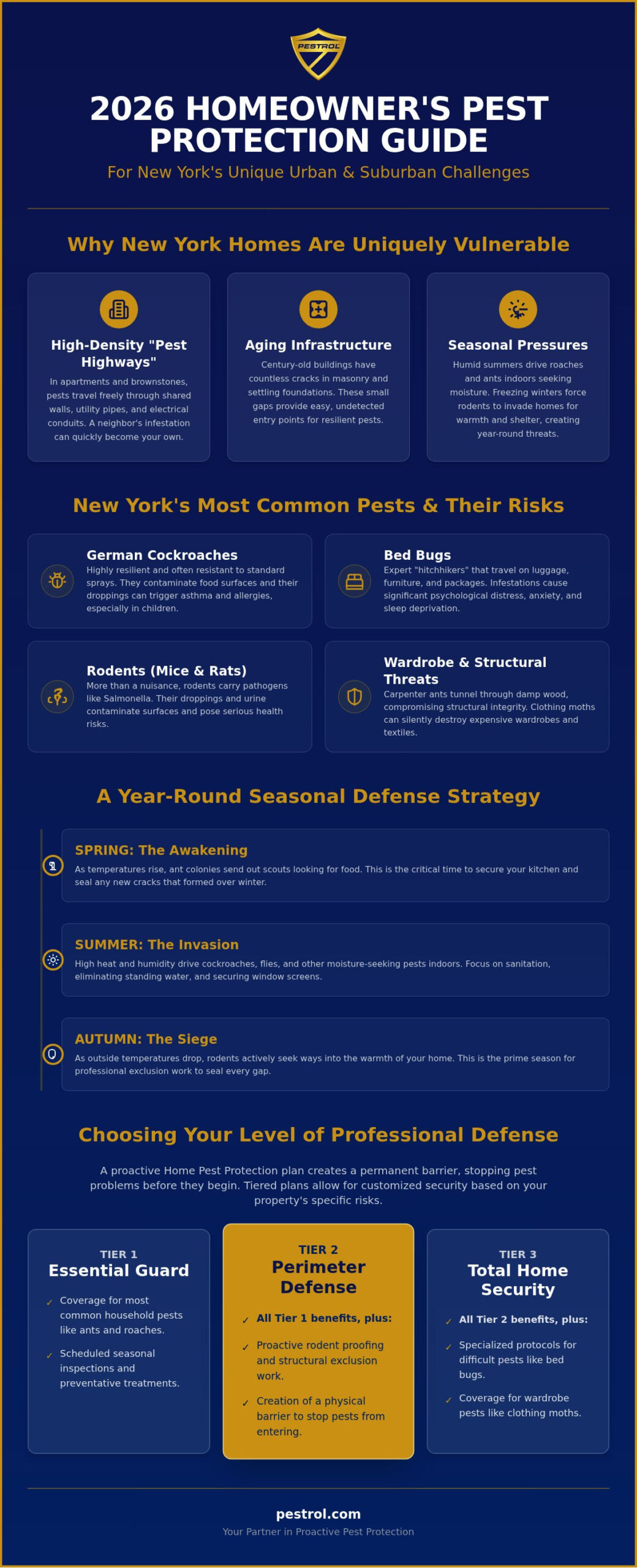
A Seasonal Guide to New York Pest Prevention
Pest behavior in New York follows the rhythm of the seasons. Your defense strategy needs to change as the weather shifts from the humid highs of July to the freezing lows of January. Spring is the season of scouts. Ant colonies send out workers to find food sources in your kitchen, while stinging insects begin building nests under eaves. Identifying these early visitors allows you to stop a colony before it establishes a permanent residence. In the summer, high humidity creates the perfect environment for roaches and flies to multiply rapidly. These common household pests in New York thrive in the heat, making moisture control a top priority for every homeowner.
Fall represents the most critical window for rodent exclusion. You must seal your home’s exterior before the first frost drives mice and rats to seek indoor warmth. Once they’ve settled into your insulation for the winter, removal becomes much more difficult. Winter doesn’t provide a total reprieve, as indoor pests like bed bugs and clothing moths remain active year-round. These invaders don’t rely on the weather; they rely on the stable climate inside your home and the “hitchhiking” opportunities provided by holiday travel and deliveries.
The 10-Minute Home Inspection Checklist
You can significantly reduce your risk by performing a quick monthly sweep of your property. Focus on these high-traffic areas for common household pests in New York:
- Check door sweeps and window screens: Look for light filtering through gaps or small tears in mesh. If air can get through, a pest can too.
- Inspect under sinks: Check for leaky pipes and gaps where plumbing enters the wall. Seal these openings with professional-grade materials.
- Declutter storage areas: Remove stacks of cardboard boxes in basements or attics. These provide ideal nesting sites and food for silverfish and moths.
When to Call a Professional NYC Exterminator
Knowing when to transition from DIY prevention to professional intervention is key to protecting your property value. We recommend the ‘One Bug’ Rule: if you see a single cockroach during daylight hours, it’s a strong indicator that hundreds more are nesting nearby. DIY sprays often fail because they only kill the pests you see, while the rest of the population retreats deeper into your walls. If you notice an infestation is spreading despite your best efforts, it’s time for expert help. Investing in professional roach removal ensures total elimination by targeting the source of the problem rather than just the symptoms.
Professional Defense: Choosing the Right Protection Plan
Reactive pest control is a cycle of persistent stress. You wait for an infestation to appear, pay for an emergency visit, and then worry about when the next one will start. Choosing a structured plan breaks this cycle. Our tiered approach ensures that your home remains a sanctuary, regardless of the season or the specific vulnerabilities of your neighborhood. We focus on persistence and thoroughness to keep your environment healthy and secure.
Home Pest Protection – Basic provides essential seasonal security for the most common household pests in New York. It’s a reliable choice for residents who want consistent, professional monitoring. Home Pest Protection – Plus builds on this foundation by adding enhanced coverage for specialized threats that require more aggressive protocols. For those who want the ultimate “protective guardian” for their property, Home Pest Protection – Premium offers our most comprehensive defense, including advanced rodent exclusion and priority response times.
Whether you live in a Manhattan high-rise or a suburban home in Middletown, your pest risks are unique. NYC apartments require a focus on shared wall boundaries and plumbing voids where pests travel between units. Hudson Valley homes often need more attention on crawl spaces and attic vents to block seasonal migrations. We tailor our treatments to the specific architecture of your residence. This includes integrating professional bed bug treatment NYC protocols when needed to ensure your living space is truly secure.
The Pestrol Advantage: Peace of Mind Guaranteed
As a family-owned and operated business, we treat every client with a high degree of personal care. We aren’t just looking for a one-off transaction; we’re building long-term relationships based on results and trust. Our tiered plans simplify home protection from pests, giving you a clear path to a comfortable environment. Contact us today for a professional evaluation of your New York home. We have the expertise and the work ethic to keep your property safe and your family healthy.
Take Control of Your Home’s Defense Today
Your home should be a place of relaxation, not a source of constant anxiety. By focusing on structural exclusion and seasonal prevention, you can stop the cycle of recurring infestations. Whether you live in a pre-war Manhattan apartment or a Hudson Valley suburban home, understanding the behavior of common household pests in New York is the first step toward long-term security. Professional-grade barriers and customized defense strategies provide the permanent protection that DIY methods simply can’t offer.
As a family-owned and operated business, we take pride in our deep roots and specialized expertise in NYC pre-war buildings. We don’t just treat the symptoms; we solve the underlying structural issues that allow pests to enter. Our tiered Home Pest Protection plans are designed to fit your specific budget and property needs, giving you the peace of mind you deserve.
You have the tools and the knowledge to protect your property value and your family’s health. We’re ready to help you build a lasting defense that keeps your sanctuary safe for years to come.
Frequently Asked Questions
What are the most common pests found in New York City apartments?
The most common household pests in New York apartments are German cockroaches, bed bugs, and house mice. These species thrive in high-density buildings where they travel easily through shared walls and plumbing lines. German cockroaches are particularly persistent because they have developed resistance to many standard insecticides. Bed bugs are also a top concern, often hitchhiking into Manhattan homes via travel or deliveries. Professional monitoring is essential for total elimination.
How do I know if I have a bed bug infestation in my NYC home?
You can identify a bed bug infestation by looking for small, reddish-brown blood spots or dark fecal spotting on your sheets and mattress seams. Many residents also notice itchy, red welts on their skin that often appear in clusters. Check the corners of your headboard and any crevices near your bed for live insects or shed skins. Since these pests are excellent hiders, seeing even one sign suggests a professional evaluation is necessary.
Are clothing moths common in New York, and how do I identify them?
Yes, clothing moths are very common in New York, especially in homes with luxury wardrobes containing wool, silk, or cashmere. You can identify them by irregular holes in your natural fiber garments or by finding small, silken tunnels in dark closet corners. Unlike food moths, these pests avoid light and prefer undisturbed areas. If you find grazed patches on your expensive textiles, it is a clear sign that larvae are actively feeding on your clothing.
How much does professional pest control cost in New York in 2026?
Professional pest control costs in New York vary based on property size, the type of invader, and the severity of the infestation. Factors like the age of the building and the need for structural exclusion work also influence the total investment. While one-time treatments are available, many homeowners find better value in tiered protection plans that offer year-round security. We recommend a professional evaluation to determine the most efficient and cost-effective strategy for your residence.
Can I handle a New York roach infestation with store-bought products?
Handling a roach infestation with store-bought products is extremely difficult because local German cockroaches have developed significant resistance to many retail sprays. These products often act as a repellent, driving pests deeper into wall voids rather than eliminating the colony. This can actually make the problem worse over time. Professional-grade baits and specialized protocols are required to target the entire population and ensure total elimination of the nesting sites hidden behind your cabinets.
What is rodent proofing, and is it better than traditional traps?
Rodent proofing is a permanent structural solution that involves sealing every potential entry point in your home’s foundation and siding. It is much more effective than traditional traps because it addresses the root cause of the problem. While traps only catch the mice that are already inside, proofing uses durable materials like steel mesh to create a physical barrier. This proactive philosophy ensures that rodents cannot enter your home, providing long-term peace of mind.
How often should I have my New York home inspected for pests?
We recommend having your New York home inspected at least four times a year to catch seasonal migrations early. Spring and fall are the most critical times, as pests like ants and rodents are actively seeking new food sources or shelter. Regular inspections help identify common household pests in New York before they become a full-blown crisis. This proactive approach ensures your property’s defenses remain strong and protects your family’s health throughout the entire year.
Does Pestrol provide pest control services for restaurants in NYC?
Yes, we provide specialized Restaurant Pest Control services designed to meet strict NYC Department of Health compliance standards. Our team understands the unique pressures of the food service industry, where even a minor pest issue can impact your reputation. We offer customized plans that focus on discreet, effective treatments and long-term prevention. This helps restaurant owners maintain a safe environment for their staff and customers while staying ahead of local regulatory requirements and inspections.