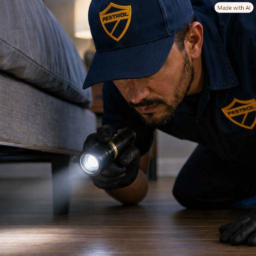




Under NYC Health Code §81.25, a single verified sighting of a live cockroach in your food preparation area can trigger an immediate closure. For business owners in Manhattan or the Hudson Valley, that isn’t just a minor setback; it’s a reputational and financial nightmare. You already know that maintaining high standards for pest control for food industry facilities is the only way to stay in business. The pressure to remain audit-ready 24/7 is exhausting, especially when DIY methods fail to stop recurring infestations.
We understand the stress that comes with a surprise Department of Health inspection. This guide will help you master the rigorous 2026 safety standards and implement long-term rodent exclusion strategies that actually work. We’ll explore the latest regulatory updates, including the extension of FSMA Rule 204 compliance, and explain how to pass the critical “pencil test” for structural integrity. By the end of this article, you’ll have a clear roadmap to a compliant, pest-free facility and the peace of mind that comes with professional, local protection.
Key Takeaways
- Understand the five pillars of Integrated Pest Management (IPM) and how they protect your inventory without over-reliance on chemical treatments.
- Master the rigorous 2026 safety standards of pest control for food industry facilities to ensure you stay compliant and avoid devastating regulatory fines.
- Identify the localized pest threats specific to NYC and the Hudson Valley that require more than just a standard national approach.
- Learn how to implement permanent rodent proofing and structural exclusion to keep your facility audit-ready 24/7.
- Use our expert checklist to evaluate commercial pest partners and find the specialized care your restaurant or warehouse deserves.
What is Pest Control for the Food Industry?
Specialized pest control for food industry operations is a rigorous, preventative management system. It isn’t just about eliminating bugs; it’s about creating a comprehensive shield that prevents contamination and satisfies strict health regulations. While residential services focus on individual comfort, food-grade programs center on public safety and legal survival. In a professional kitchen or warehouse, you don’t have the luxury of a “wait and see” approach. You need a partner who understands that zero tolerance is the only acceptable standard.
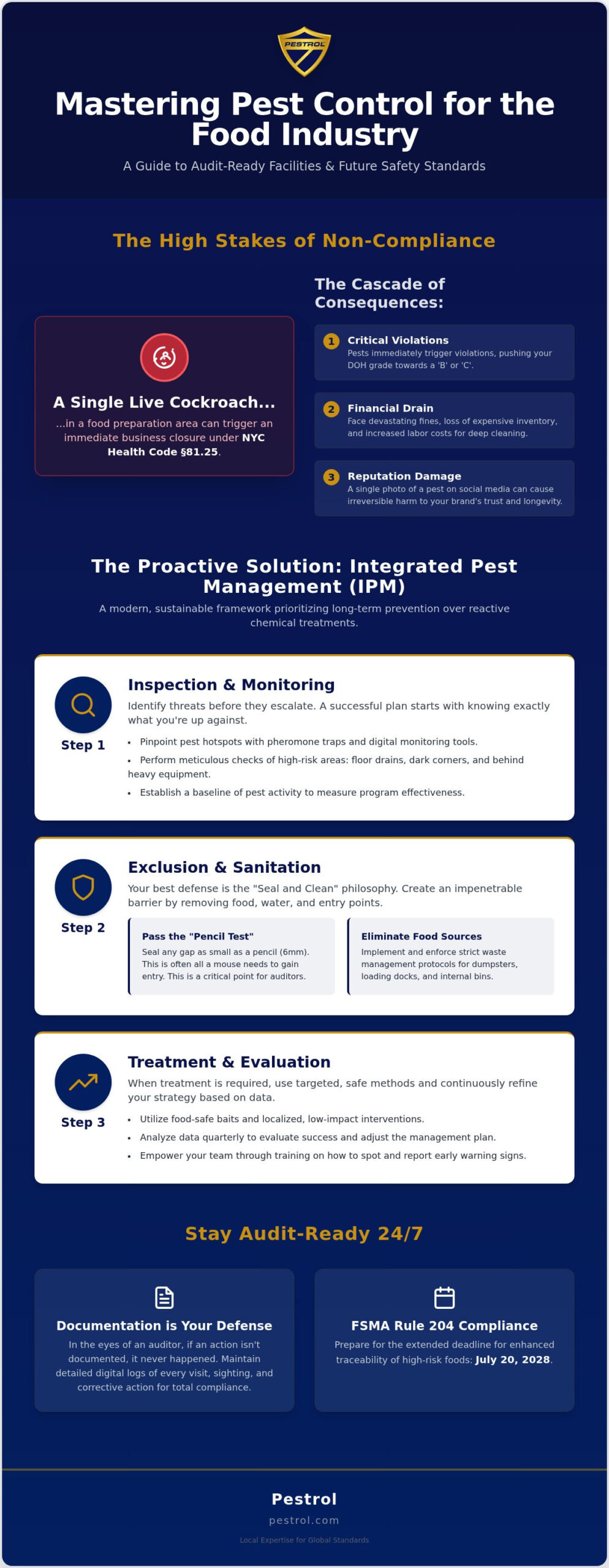
In places like Manhattan, the Bronx, and Orange County, the Department of Health (DOH) doesn’t just check for general cleanliness. They hunt for specific signs of activity, structural entry points, and your service history. Under NYC Health Code §81.25, a single live cockroach in a food prep area can lead to an immediate closure. This makes a structured Integrated Pest Management (IPM) Framework essential for your daily operations. It ensures your facility remains audit-ready without relying solely on heavy chemical applications.
The Legal and Financial Stakes of Non-Compliance
The DOH point system is unforgiving for local business owners. Pests are classified as “critical violations” that quickly push your score toward a “B” or “C” grade. Worse, they can trigger an immediate “Closed by Order of the Commissioner” sign on your front door. Beyond the obvious fines, the hidden costs of an infestation are devastating. You lose expensive inventory to contamination, pay for extra labor hours for deep cleaning, and face potential legal fees if a customer becomes ill. The Food Safety Modernization Act (FSMA) Rule 204 mandates enhanced traceability for high-risk foods, with a verified compliance deadline extended to July 20, 2028.
Protecting Brand Reputation in the Age of Digital Reviews
Your reputation is your most valuable asset, yet it’s incredibly fragile. A single photo of a rodent or roach posted to social media can go viral within hours, effectively bankrupting a local restaurant or bakery. Proactive management stops these problems before they become a public spectacle. When you prioritize a professional defense, you’re investing in your brand’s longevity. Reactive “emergency” calls are always more expensive and often come too late to save your image. Visible, professional pest management builds lasting trust with your customers, showing them that their safety is your top priority.
The Integrated Pest Management (IPM) Framework
Integrated Pest Management (IPM) is the industry-standard approach that prioritizes long-term prevention over temporary fixes. It’s a common-sense strategy that minimizes chemical use while maximizing results. For any facility, effective pest control for food industry standards requires moving away from reactive “spraying” and toward a proactive system. This transition is vital because modern health inspectors look for a comprehensive plan, not just a clean floor on the day they arrive.
Documentation is the backbone of audit readiness. If you didn’t record a sighting or a corrective action, it didn’t happen in the eyes of the law. Keeping detailed digital logs of every visit and finding is essential. When choosing a pest control partner, ensure they provide the transparent reporting required by federal and local regulators.
Step 1: Inspection and Monitoring
Successful management starts with knowing exactly what you’re up against. We use pheromone traps and digital monitoring tools to pinpoint pest hotspots before they become full-blown infestations. Floor drains and dark corners behind heavy equipment are prime real estate for roaches and flies. You can find deep-clean strategies for these areas in our Commercial Kitchen Pest Control Checklist.
Step 2: Exclusion and Sanitation
The “Seal and Clean” philosophy is your best defense against NYC rats and roaches. We focus on removing food, water, and entry points. Permanent rodent proofing involves sealing gaps as small as a pencil (6mm), which is often all a mouse needs to enter. Strict waste management protocols for dumpsters and loading docks are equally critical. If you’re ready to secure your facility, our team at Pestrol can help you build a custom defense plan.
Step 3: Treatment and Evaluation
When treatment is necessary, we select food-safe baits and localized interventions that won’t compromise your inventory. We then analyze the data every quarter to refine your management plan. Training your staff to recognize early warning signs is the final piece of the puzzle. A team that knows how to spot a single dropping can save you thousands in potential fines and lost product. This methodical approach ensures your facility remains compliant and your reputation stays intact.
Common Pests in NYC and Hudson Valley Food Facilities
Designing a defense for Manhattan or the Bronx requires a different strategy than a facility in Orange County. While the specific species might vary by neighborhood, the biological drivers remain the same. Commercial kitchens are biological magnets. Constant heat from ovens, standing moisture near floor drains, and grease buildup in hard-to-reach corners provide everything a pest needs to thrive. Maintaining high-level pest control for food industry facilities means understanding these drivers before they lead to a failed audit.
It’s helpful to distinguish between “nuisance” pests and “contamination” pests. A few fruit flies might be a nuisance, but they signal a sanitation breakdown. Contamination pests, like rodents and roaches, carry dangerous pathogens including Salmonella and E. coli. In the eyes of a NYC health inspector, any sign of these pests is a direct threat to public safety.
Rodents: The NYC Rat and Mouse Challenge
Norway rats are the heavyweights of NYC. They use aging infrastructure to bypass standard barriers, often entering through gaps near steam pipes or basement foundations. House mice are smaller but equally destructive, capable of squeezing through openings the size of a dime. Because our local buildings are often connected, rodent proofing services are your only permanent defense. Don’t wait for an inspector to find “rub marks” or greasy sebum trails along your baseboards. These signs indicate established nesting sites that require immediate professional intervention.
Cockroaches: Eliminating the German Roach Threat
German cockroaches are the primary threat in NYC food service. They breed faster than almost any other insect and have developed significant resistance to common over-the-counter sprays. These pests aren’t just gross; they’re a major source of allergens and foodborne illnesses. We focus on strategic, food-safe baiting rather than generic fogging. Fogging often fails because it just scatters the colony into deeper wall voids. Surgical baiting targets the heart of the infestation without contaminating your prep surfaces. For a comprehensive breakdown of the protocols that keep kitchens roach-free, our 2026 guide to cockroach control for restaurants outlines the essential strategies you need before your next inspection.
Flies and Stored Product Pests
Drain flies and fruit flies don’t just appear; they’re indicators of organic matter buildup in your plumbing or decaying produce. Managing these requires a mix of specialized cleaners and strict sanitation. Stored product pests, like Indian Meal Moths, often “hitchhike” into your facility on delivery pallets. Always inspect dry storage goods and pantries upon arrival. A single infested bag of flour can quickly compromise your entire inventory, leading to massive financial losses and a hit to your reputation. Professional pest control for food industry success depends on stopping these hitchhikers at the loading dock.
Choosing a Pest Control Partner: A Reference Checklist
Selecting the right partner is the difference between passing a surprise inspection and facing a padlock on your front door. Many providers offer generic services, but effective pest control for food industry facilities requires a specialized, high-stakes approach. You need a guardian who understands that your livelihood depends on a clean record. While national brands often rely on high turnover and “one size fits all” scripts, a local expert brings deep knowledge of NYC and Hudson Valley building quirks. They know how pests move through aging Manhattan infrastructure and what inspectors prioritize in Orange County warehouses. For businesses in other regions like Northern Nevada, specialized experts such as battlebornpestreno.com offer a similar level of dedicated, high-standard protection.
Price is a tempting metric, but it should never be your primary factor. A cheap contract often results in surface-level treatments that miss deep-seated infestations. If a provider cuts corners to lower their fee, you’ll likely pay the difference in Department of Health (DOH) fines or lost inventory. Look for a partner who offers tiered protection plans. This ensures a small neighborhood cafe gets the precise care it needs without paying for the industrial-scale protocols required by a massive food processing plant.
Verification is your first line of defense. Ensure any potential provider is fully licensed for commercial application in New York State. Beyond basic licensing, ask about their specific track record with restaurant pest control NYC regulations. A seasoned partner understands the local DOH point system and knows exactly how to prepare your staff for an audit. They should be able to identify structural vulnerabilities that a generalist might overlook, such as gaps in steam pipe insulation or improper floor drain seals.
Transparency and Communication
Documentation is the backbone of your compliance strategy. Your provider must offer detailed digital service reports after every single visit. These logs should include sightings, treatments applied, and recommended corrective actions for your staff. If an inspector walks in, you need to produce these records instantly to prove you are proactive. Rapid response times are equally vital. When a sighting occurs, you can’t wait three days for a technician to show up. A dedicated account manager who knows your facility’s layout and history provides the personalized care that keeps your reputation intact.
Secure your facility with expert restaurant pest control today.
The Pestrol Advantage: Local Expertise for Global Standards
At Pestrol, we combine the personalized care of a family-owned business with the high-standard protocols required for global compliance. We’ve spent decades perfecting pest control for food industry leaders across Manhattan, the Bronx, and the Hudson Valley. Our team doesn’t just show up to spray and leave; we act as your protective guardian. We understand the unique pressures of the local market, from the fast-paced kitchens of Middletown to the historic buildings of the city. We’re deeply rooted in the local community and committed to long-term relationships rather than one-off transactions.
Our tiered approach ensures you aren’t paying for more than you need. We apply the same logic found in our Home Pest Protection plans to commercial spaces, customizing solutions based on your facility’s specific size and risk profile. Whether you run a boutique cafe or a massive distribution warehouse, we provide a structured solution that moves you from reactive crisis management to proactive peace of mind. Our results-first mentality means we don’t rest until your facility is audit-ready and your reputation is secure.
Customized Restaurant and Food Service Plans
Every kitchen has a unique story and a specific set of vulnerabilities. We design our Restaurant Pest Control plans to fit your exact layout and pest history. We don’t just work alongside your team; we integrate our protocols with your existing cleaning and maintenance schedules, often recommending Commercial Cleaning Services Advance Industrial Maintenance for facilities that require specialized deep-cleaning support. This collaboration is the key to maintaining a consistent ‘A’ grade from the Department of Health. We help your staff identify the subtle signs of activity, ensuring that a single sighting never turns into a closure-worthy violation. Our goal is to make pest management a seamless part of your daily operations.
Trapping is a temporary fix, but it doesn’t solve the underlying problem of entry. Our specialized approach to pest control for food industry facilities includes permanent Rodent Proofing and exclusion services. We focus on the exterior of your building and your loading docks, stopping seasonal migrations before they reach your inventory. By sealing entry points as small as six millimeters, we ensure that pests can’t find a way in. This structural commitment is what sets us apart from generic providers who only treat the symptoms of an infestation. It’s about persistence and a commitment to seeing the task through to completion.
Protect your reputation today. Contact Pestrol for a Commercial Inspection.
Secure Your Facility’s Future in 2026
Maintaining high standards for pest control for food industry facilities is about more than just passing an inspection; it’s about protecting your brand’s integrity and the health of your community. By implementing a robust IPM framework and prioritizing permanent rodent exclusion, you move from the stress of reactive treatments to the confidence of a proactive defense. You’ve learned how specialized local expertise in NYC and the Hudson Valley can help you navigate the strict DOH point system and meet the evolving 2026 safety standards.
As family-owned local experts, we provide customized commercial protection plans designed to keep you audit-ready 24/7. Don’t let a single sighting derail your success or lead to costly closures. We are here to partner with you, offering the persistence and specialized knowledge needed for long-term DOH compliance.
Take control of your facility today and enjoy the peace of mind that comes with professional, local protection. Your business deserves a partner who cares as much about your reputation as you do.
Frequently Asked Questions
How often should a food facility have pest control inspections?
High-traffic food facilities should have professional inspections at least once a month. However, for many businesses in Manhattan or the Bronx, weekly visits are often necessary to maintain an audit-ready environment. Regular monitoring allows us to catch activity before it escalates into a health code violation. Your frequency depends on your facility’s size, age, and local pest pressure. We customize these schedules to ensure you never fall behind on your compliance duties.
Can I use store-bought pesticides in my commercial kitchen?
You should never use store-bought pesticides in a commercial kitchen. Using unlicensed chemicals violates NYC health codes and can lead to immediate fines or closure. These retail products are often ineffective against resistant German cockroaches and can cross-contaminate food preparation surfaces. Professional pest control for food industry facilities requires specialized, EPA-approved products that only licensed technicians can apply. Stick to professional treatments to protect your customers and your legal standing.
What happens if I fail a DOH inspection due to pests?
Failing a DOH inspection due to pests usually results in a “C” grade or an immediate closure. If an inspector finds live cockroaches or rodents in food prep areas, they have the authority to padlock your doors on the spot. You’ll face heavy fines and the reputational damage of a public closure notice. To reopen, you must pass a follow-up inspection, which often requires a certified letter from your pest management provider.
Is pest control for the food industry different from residential services?
Yes, the two services are fundamentally different. Residential care focuses on individual comfort, while pest control for food industry operations is a high-stakes compliance system. Commercial kitchens require a “zero-tolerance” standard and extensive documentation that isn’t necessary for a home. We focus on Integrated Pest Management (IPM) to protect large inventories and satisfy rigorous health department audits. The structural exclusion and reporting requirements for businesses are far more complex than standard home treatments.
What is the most common pest found in restaurants?
The German cockroach is the most common and persistent pest found in restaurants across NYC and the Hudson Valley. These insects thrive in the heat and moisture of commercial kitchens and breed at an alarming rate. They’re notorious for developing resistance to common sprays, making professional baiting strategies essential. For a deeper look at how to eliminate this threat for good, see our complete 2026 guide to cockroach control for restaurants. Other frequent offenders include Norway rats, drain flies, and Indian meal moths, all of which require specific management plans to prevent contamination.
How do I prepare my facility for a professional pest control visit?
Proper preparation starts with a deep clean of all food preparation and storage areas. Clear any clutter from the floors and pull heavy equipment away from the walls so technicians can access hidden hotspots. Ensure all food is sealed in airtight containers and trash is removed from the premises. Training your staff to report sightings in a dedicated log also helps us target specific problem areas more efficiently during our visit.
What documentation do I need to keep for health inspectors?
You must maintain a comprehensive folder containing your service contract, recent service reports, and pesticide labels (SDS). Health inspectors expect to see a clear log of all sightings, treatments, and corrective actions taken by your team. Digital record-keeping is becoming the standard for 2026 audits. Having these documents organized and accessible proves that you’re proactive about safety and can help you maintain that coveted “A” grade during surprise inspections.
Are the chemicals used in pest control safe for food environments?
Yes, the treatments used by professional providers are specifically selected for their safety in food-handling environments. We prioritize low-volatility baits, gels, and pheromone traps that target pests without risking cross-contamination. Our technicians are trained to apply these products in areas where they won’t come into contact with food or prep surfaces. Using a professional service ensures that all applications comply with EPA regulations and local health department safety standards.