



What should a long-term pest prevention program include before a pest sighting interrupts service or unsettles guests? For Warwick restaurant owners, long-term pest prevention for restaurants Warwick means more than a one-time treatment. It brings together daily staff routines, building maintenance, monitoring, and professional follow-up. A clear checklist also makes it easier to compare service plans and confirm what each provider will do.
Use this guide to review your current program, spot routine gaps, and reduce pest risks over time. It includes practical questions for evaluating inspections, reporting, and follow-up. Pestrol offers restaurant pest control and rodent-proofing services in Warwick and nearby communities. Discuss your site’s needs and confirm service details directly with the team to understand how professional support could complement your staff’s cleaning, storage, and maintenance routines.
Key Takeaways
- Long-term pest prevention for restaurants Warwick works best when staff routines, building controls, monitoring, and professional follow-up support one another.
- Build a prevention plan around your restaurant’s layout, operating hours, and observed pest risks instead of relying on a one-size-fits-all approach.
- Compare providers by asking what inspections cover, how monitoring and documentation work, and what follow-up and staff communication to expect.
- Use staff checks and manager reviews to keep receiving, food storage, cleaning, drains, waste handling, and entry points on the radar.
- Bring your completed checklist to a service discussion with Pestrol about restaurant pest management and rodent-proofing for your site.
Why Warwick restaurants need a long-term pest prevention plan
A pest sighting can put pressure on a restaurant. Staff may feel uneasy, guests may lose confidence, and managers have to respond while keeping service moving. A continuing prevention plan helps reduce risk by connecting cleaning and storage routines with building maintenance, monitoring, and professional follow-up. That is the practical value of long-term pest prevention for restaurants Warwick: not a promise that pests will never appear, but a consistent way to identify and address conditions that can attract them.
Restaurants in Warwick and Orange County vary in layout, age, and operating routine. Start with the premises rather than assumptions about local pest patterns. Trace how food, deliveries, and waste move through the building. Look for moisture, gaps around doors or pipes, and areas that are easy to miss during routine cleaning. A treatment may address visible activity, but it may not correct the conditions that contributed to it or help prevent it from returning.
What makes restaurant pest prevention different from one-time treatment?
A one-time response focuses on a current sighting. Prevention looks at why activity may occur and what can change. Food residue, standing moisture, incoming deliveries, waste buildup, and openings around doors or pipes can all contribute to risk. A practical approach draws on Integrated Pest Management (IPM), combining sanitation, access reduction, monitoring, and appropriate professional action.
Staff routines are important, but they are only part of the picture. A team can clean thoroughly and still face risks from a delivery area, a damaged door sweep, or an overlooked utility opening. Addressing those physical vulnerabilities often requires both structural maintenance and specialized pest expertise—learn more about Hughes Termite Control to see how combined services tackle such property risks. Professional monitoring can help identify patterns and guide follow-up. Treat prevention as an ongoing process, not a guarantee of a pest-free property.
Which restaurant areas belong on a Warwick prevention checklist?
Walk the site with the building layout and any observed activity in mind. Include areas where food, water, deliveries, and waste are handled, as well as less visible spaces that may be missed during routine cleaning.
- Receiving and storage: Check deliveries, packaging, shelving, and food storage areas.
- Food preparation and cleanup: Review kitchens, dishwashing areas, drains, and spaces around equipment.
- Waste and access: Inspect indoor waste zones, outdoor waste storage, entrances, and loading areas.
- Less visible spaces: If they are part of the premises, include basements, utility openings, and connected areas.
Adapt the checklist to your building. Note recurring conditions such as damaged seals, persistent moisture, or waste that is difficult to contain. These observations give staff and a professional provider a useful starting point for coordinated prevention.
How a long-term restaurant pest prevention program works
A reliable program follows a repeatable cycle: assess conditions, reduce attractants, monitor activity, address access points, and review results. This helps managers turn observations into practical fixes instead of treating each sighting as an isolated event. Long-term pest prevention for restaurants Warwick operators can apply should reflect the restaurant’s layout, operating hours, and identified pest risks.
Integrated pest management coordinates prevention, monitoring, and response to reduce pest risks over time. In practice, staff handle routine sanitation and report signs of activity, while a professional provider assesses conditions and discusses appropriate inspections, treatment, and follow-up. Confirm the provider’s actual scope rather than assuming every plan includes the same services.
How inspections and monitoring support prevention
Inspections should look beyond visible pests. Ask whether the process checks for signs of activity, conditions that may attract pests, possible entry points, and changes since the previous visit. Monitoring can help identify where activity is occurring, while clear records connect findings to next steps.
Ask how observations, completed work, and recommended corrections will be communicated. Clarify how to raise urgent concerns, who at the restaurant receives updates, and who tracks outstanding building repairs. Confirm inspection frequency, reporting, and follow-up directly with the provider because these details can vary by service agreement.
How staff routines and rodent proofing reduce risk
Make prevention part of each shift. Store food in suitable closed containers, clean spills promptly, handle waste before it accumulates, and report pest evidence or damaged seals to a manager. For facilities looking to reinforce ongoing sanitation standards with commercial support, check out Way Beyond Cleaning. Assign responsibilities by shift and keep unfinished tasks visible so a repair or cleaning issue does not get lost during handover.
Rodent proofing focuses on potential access routes, such as gaps around doors, pipes, or utility openings. It can reduce opportunities for entry, but no building should be described as completely sealed. Pair recommended repairs with staff routines and monitoring, then review whether the changes address the identified conditions.
For a site-specific discussion, bring your observations and unresolved access concerns to a provider. Pestrol offers customized restaurant pest management and rodent-proofing services. Ask which inspection, documentation, and follow-up details would apply to your premises. Learn more about restaurant pest management and discuss how professional support could complement your team’s daily routines.
How to compare restaurant pest control providers in Warwick
A recurring service plan should not be a standard schedule applied to every restaurant. When comparing options for long-term pest prevention for restaurants Warwick, consider your premises, operating hours, staff access needs, and known pest concerns. Ask each provider to explain what they recommend for your site and why. Visit frequency alone does not show what a plan includes.
A suitable provider should explain findings, next steps, and responsibilities clearly. Use the questions below to compare written proposals. Details can vary, so confirm what each provider includes instead of assuming that plans cover the same tasks or follow-up.
| What to compare | Questions to ask | What to look for in the proposal |
|---|---|---|
| Inspection scope | Which areas will be checked, including receiving, food storage, kitchens, waste zones, and relevant utility or loading areas? | A clear description of the areas covered and how the inspection reflects your building. |
| Monitoring | How are findings tracked, and how will you learn about signs of activity or conditions that may attract pests? | An explanation of monitoring methods and how observations will be shared. |
| Documentation | What service records or recommendations will you receive? | Clear details about available records, observations, actions, and outstanding corrections. |
| Follow-up | What happens if activity continues or a repair remains incomplete? | Defined next steps, with any limits or additional arrangements explained. |
| Staff communication | Who receives updates, and how should staff report new concerns? | A practical communication process that fits your team and shifts. |
Questions to ask before choosing a Warwick restaurant pest provider
Explain your service hours and ask how visits can fit around food handling, opening routines, and staff access. Share your building layout and recurring observations. Ask how recommended corrections will be documented, who should complete them, and how you will know whether a concern needs more attention. The answers can help you tell whether a proposal is tailored to your restaurant or simply generic.
What to verify about compliance, safety, and service records
Ask whether available records can support your restaurant’s own inspection-readiness process, and confirm exactly what documentation the provider supplies. Verify current New York and local requirements with the appropriate authority rather than relying on assumptions. Before any treatment, discuss communication, preparation instructions, and product-use questions directly with the provider. A clear proposal should make responsibilities understandable for both the service team and your staff.
Compare each written proposal against the same site-specific needs. If a plan leaves important questions unanswered, ask for clarification before deciding. Pestrol offers customized pest management and rodent-proofing services for restaurants, so operators can discuss their premises and confirm the service scope directly.
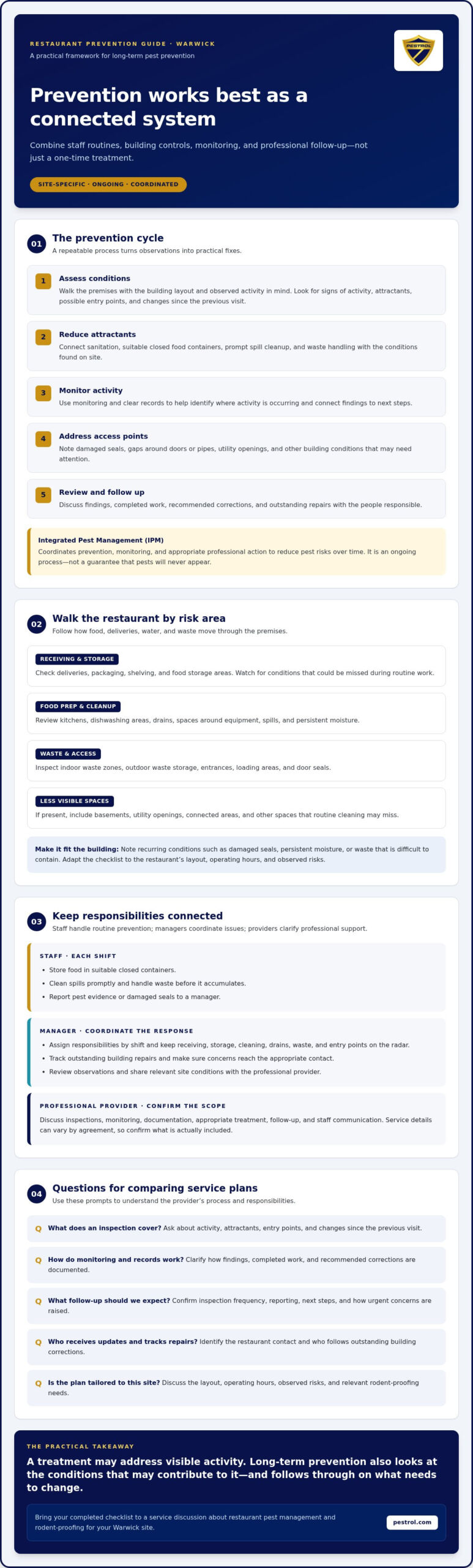
Restaurant pest prevention checklist for daily, weekly, and provider-led tasks
A checklist works best when every task has an owner and a clear way to record completion. Use the categories below as a starting point, then adapt timing to your restaurant’s conditions, observed activity, and provider’s findings. No single schedule fits every building or operation.
Daily and weekly actions restaurant teams can track
Assign routine checks by shift so details do not get missed during handovers. Set a recurring manager review that suits the site, then adjust it when observations or operating conditions change.
- Receiving: Check incoming goods and packaging for damage or signs of pest activity. Record concerns and follow the restaurant’s process for handling affected deliveries.
- Food storage: Keep ingredients in suitable closed containers. Note damaged packaging or storage areas that need attention.
- Cleaning and drains: Clean spills promptly, remove food debris from hard-to-reach areas, and flag drains or nearby surfaces that remain damp or dirty.
- Waste handling: Remove waste routinely, keep bins and surrounding areas orderly, and report problems with lids, leaks, or buildup.
- Evidence and maintenance: Log sightings, droppings, damaged packaging, moisture concerns, gaps, or faulty door seals for manager review.
Keep the log simple enough for staff to use consistently. Record the date, location, observation, action taken, and any unresolved issue. For example, “moisture beneath dishwashing area, reported to manager” gives the next shift a clearer handover than “check kitchen.”
Provider-visit and follow-up checks for managers
Use each professional visit to connect observed activity with practical next steps. Before the visit, identify new concerns and confirm which areas are to be checked. Afterward, make sure the responsible manager understands the findings and which actions belong to the restaurant and which require provider follow-up.
- Confirm the visit covered the agreed areas and ask for an explanation of relevant findings.
- Record recommendations, assign an owner to each corrective task, and set a completion date.
- Track unresolved repairs, such as damaged seals or unaddressed openings, until they are completed.
- Review repeated observations with the provider and discuss whether changes to the prevention plan are appropriate.
This record helps staff routines and professional monitoring support one another. A site-specific checklist gives Warwick restaurant operators a practical way to act on recurring observations. Confirm inspection, reporting, and follow-up details directly with your provider rather than assuming they are standard parts of every plan.
Build a Warwick restaurant pest prevention plan with Pestrol
Your completed checklist can make a provider conversation more useful. Bring a clear picture of your restaurant’s layout, routines, and concerns rather than starting with a general request. That gives Pestrol a practical starting point for discussing customized restaurant pest management and rodent-proofing for the property.
What to share when requesting restaurant pest control
Prepare the restaurant address, a basic layout, operating hours, and the areas where you have noticed signs or conditions of concern. Include when and where activity occurred, whether it has happened before, and related staff observations. Share maintenance or sanitation steps already taken, such as repairing a door seal or changing how waste is stored. This context can guide a site-specific discussion without assuming every property needs the same approach.
Ask which details can be confirmed for your location and type of establishment. Clarify which areas may be covered, how inspection findings and recommendations are communicated, what records may be available, and what treatment or follow-up details apply. Pestrol serves Warwick and nearby communities in its service area. Confirm directly that your address and property needs are within its current coverage.
What a tailored plan should make clear
Before proceeding, make sure you understand the proposed scope and how the service would fit your operations. Ask who staff should contact to report activity between visits, who receives updates, and how unresolved repairs or recurring findings will be handled. Discuss treatment details and preparation instructions directly with the provider. Confirm what documentation is available rather than assuming a particular report or record is included.
A clear agreement should distinguish provider responsibilities from tasks your team or building maintenance staff will handle. It should also give you a way to revisit the plan if operating routines, building conditions, or observed pest risks change. That clarity turns long-term pest prevention for restaurants Warwick operators need into coordinated, site-specific action without relying on assumptions about service inclusions.
Use your notes to ask direct questions and compare the proposed approach with your restaurant’s needs. Confirm the details before service begins so everyone understands the next steps.
Put your restaurant’s prevention plan into action
Lasting protection comes from consistent routines, clear records, and professional support shaped around your premises. Use your checklist to turn staff observations into practical next steps, then compare proposals by inspection scope, communication, documentation, and follow-up. This gives Warwick restaurant operators a foundation for ongoing pest prevention.
Pestrol offers customized commercial and restaurant pest management, along with rodent-proofing services. As a family-owned and operated business, Pestrol can discuss your restaurant’s concerns and clarify what service scope and records may apply to your property. Confirm the details directly before proceeding so your team knows what to expect and who is responsible for each action.
Start with conditions you can address today, keep unresolved issues visible, and build a plan that fits the way your restaurant operates. Consistent small actions help your team stay prepared and protect the confidence guests place in your business.
Frequently Asked Questions
How can a restaurant prevent pests long term?
Prevent pests long term by combining sanitation, food storage, waste handling, building maintenance, monitoring, and professional follow-up. Warwick restaurant operators can assign staff checks by shift, record sightings and conditions, and address issues such as spills, moisture, damaged door seals, or gaps around utility lines. A provider can assess activity and recommend next steps, but prevention also depends on ongoing attention from the restaurant team.
How often should a restaurant schedule pest control?
Set service frequency according to the restaurant’s layout, operating routines, pest history, and monitoring findings. There is no schedule that suits every site. Ask a provider to explain the recommended frequency and what might lead to a change. Review the plan if activity recurs, the building changes, or new concerns arise. Confirm the proposed visit schedule and follow-up details in writing before agreeing to service.
What should a restaurant pest prevention checklist include?
Include receiving and food storage, kitchen and dishwashing areas, cleaning tasks, drains, waste handling, entrances, and potential access points. Add basements, loading areas, outdoor waste storage, or utility openings if they are part of your property. Assign staff responsibilities and record sightings, damaged packaging, moisture concerns, corrective actions, and unresolved repairs. Keep the checklist specific to your building and update it when staff observations or provider findings reveal new concerns.
Can pest control visits be arranged around restaurant operating hours?
Ask the provider whether visits can be coordinated with your operating hours, food handling, and staff access needs. Scheduling options depend on the provider’s arrangements, so do not assume a particular visit time or after-hours availability. Explain when key areas are accessible and how a visit could affect preparation or service. Before booking, confirm the proposed timing, areas to be inspected, preparation instructions, and who should be available to speak with the provider.
What records should a restaurant keep after pest control service?
Keep service records and recommendations provided by the pest control company, along with your own log of sightings, dates, locations, actions taken, and outstanding maintenance concerns. Track who was assigned each corrective task and when it was completed. Ask the provider what records are available and how findings or follow-up recommendations will be shared. Organized records help managers track recurring issues and see which actions remain open.
Who is responsible for pest prevention: restaurant staff or the pest control provider?
Both have roles, and clear responsibilities help prevent gaps. Restaurant staff manage routine cleaning, food storage, waste handling, shift checks, and prompt reporting of pest evidence or building concerns. A pest control provider can assess conditions, carry out agreed professional services, and communicate findings and recommendations according to the confirmed scope. Managers coordinate the work, assign repairs or sanitation tasks, and track open concerns through to completion.
How do I choose a restaurant pest control company in Warwick?
Compare written proposals for inspection scope, monitoring, documentation, communication, and follow-up, then check that each fits your premises and operations. Ask how visits can work around food handling and staff access, and confirm service details directly. Pestrol offers customized restaurant pest management and rodent-proofing. Its service area includes Warwick and communities such as Manhattan, Bronx, Chester, Cornwall, Crawford, Goshen, Greenville, Highlands, Minisink, Monroe, Montgomery, Mount Hope, New Windsor, Newburgh, Palm Tree, Tuxedo, Wallkill, Wawayanda, and Woodbury. Confirm coverage for your property.