




Waiting to call an exterminator until you spot pests scurrying across your floor feels practical, but it is often the most stressful way to protect your property. Reactive treatments only address visible symptoms after an infestation takes hold, leaving you trapped in an exhausting cycle of temporary fixes. Setting up a monthly pest protection subscription changes the dynamic entirely, stopping invaders outside your living space by disrupting biological breeding cycles permanently.
Every homeowner understands the headache of seasonal invasions, messy retail traps, and constant worries over chemical safety around children and pets. You deserve a consistently pest-free home without emergency fees or sudden surprises. In this guide, you will discover how recurring pest protection plans work, compare subscription models, and choose the right preventative defense for your home. We will walk through the essential strategies that secure your perimeter and deliver dependable peace of mind all year long.
Key Takeaways
- Learn how a monthly pest protection subscription disrupts insect reproductive lifecycles to stop infestations before they penetrate your living space.
- Compare professional preventative plans against reactive treatments and uncover the serious performance limits of mail-order DIY chemical boxes.
- Identify the core service standards your property requires, including durable, weather-resistant exterior perimeter barriers and scheduled monitoring.
- Evaluate your home’s unique environmental risk factors across urban multi-family spaces, historic brownstones, and suburban layouts.
- Discover how tiered options like Home Pest Protection – Basic, Plus, and Premium let you select targeted coverage built specifically for New York homes.
What Is a Monthly Pest Protection Subscription and How Does It Work?
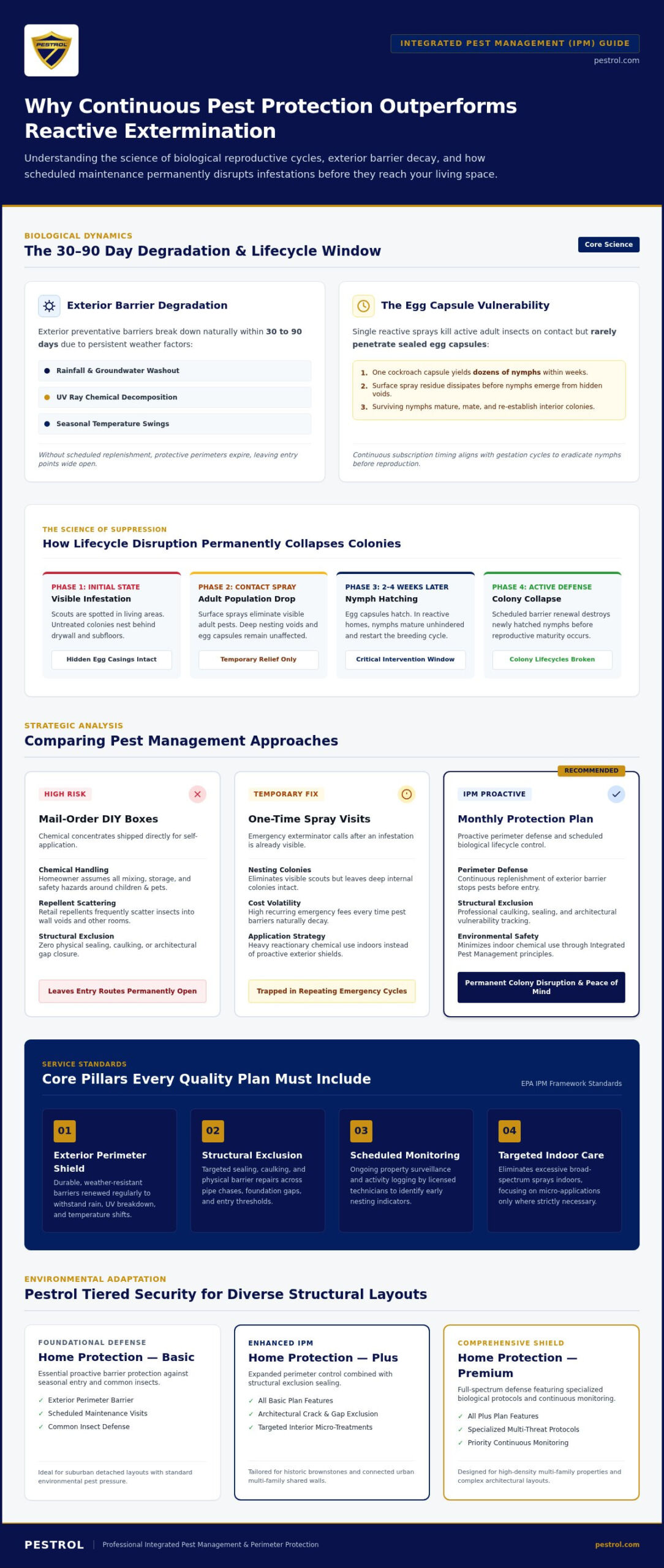
A monthly pest protection subscription is a structured defense service focused on proactive prevention rather than emergency panic. Instead of waiting for visible invasions, a subscription maintains active perimeter shields and continuous monitoring to stop pests before they cross your threshold. Exterior treatments naturally break down within 30 to 90 days due to rainfall, UV exposure, and seasonal temperature swings. Scheduled maintenance replenishes these protective barriers on time, eliminating the frustration and unexpected costs of emergency exterminator calls.
Continuous Defense vs. Emergency Extermination
Emergency extermination treats pests as isolated crises. Unfortunately, by the time you spot roaches or ants on a kitchen counter, an established colony is often thriving undetected behind drywall, beneath subflooring, or inside utility chases. One-off sprays kill the scouts you see while leaving the hidden nest intact.
Continuous defense replaces reactionary panic with predictable control. A professional technician inspects structural vulnerabilities, tracks pest movement, and reinforces exterior defenses systematically. Grounded in the proven principles of Integrated Pest Management (IPM), this approach addresses the root causes of pest activity, keeping your living space safe without overusing chemicals indoors.
The Lifecycle Disruption Mechanism
Pest biology requires precise timing. Surface treatments frequently eliminate active adult insects, but they rarely penetrate sealed egg casings. A single cockroach egg capsule can produce dozens of nymphs just weeks after an initial spray. If treatments do not match that developmental window, the surviving generation matures, mates, and repopulates your living space.
Routine service interrupts this reproductive chain. By timing exterior renewals to insect gestation periods, technicians eliminate emerging nymphs before they reach reproductive maturity. This consistent disruption collapses local populations for good. Homeowners looking to establish dependable year-round security can explore structured protocols in Home Pest Protection for New Yorkers. Investing in a monthly pest protection subscription guarantees active barriers never lapse, keeping your home fortified throughout the year.
Subscription Plans vs. One-Time Treatments vs. DIY Boxes
Homeowners tackling pest issues typically weigh three paths: mail-order chemical kits, reactive one-time spray treatments, or ongoing professional defense. While DIY boxes market convenience and single visits seem like quick fixes, both fall short on lasting efficacy and structural safety. Aligning your property care with the EPA’s IPM principles requires routine monitoring and environmental controls that static products cannot supply. Choosing a monthly pest protection subscription establishes predictable, long-term defense while removing the hazards of self-application.
- Mail-Order DIY Boxes: Low initial barrier, but homeowner assumes all chemical safety risks, zero structural exclusion, and high risk of misapplication.
- One-Time Sprays: Temporarily reduces surface adults, but leaves hidden nesting sites untouched, creates unpredictable emergency expenses, and allows pests to return once chemical barriers dissolve.
- Recurring Subscriptions: Delivers proactive barrier reinforcement, licensed property monitoring, tailored exclusion sealing, and guaranteed peace of mind.
The Hidden Pitfalls of Mail-Order DIY Kits
Subscription boxes containing concentrates require homeowners to mix, apply, and store potent chemicals near family members and pets. Without professional spray gear, these applications remain uneven. Worse, retail-grade contact repellents frequently scatter insects into wall voids, causing populations to spread across multiple rooms. Because boxed products offer zero physical caulking, sealing, or architectural exclusion, entry routes remain open to new pests indefinitely.
Why One-Off Spray Visits Fail Long-Term
Single-visit treatments operate as an expensive band-aid. Once standard formulations degrade under normal moisture and light, nesting colonies hidden inside floorboards or plumbing chases resume their growth. Homeowners then face repeating cycles of infestation and expensive emergency call-out fees. Complex pest pressures demand methodical, continuous suppression. Stubborn populations often need specialized protocols, such as targeted professional roach removal, backed by ongoing monitoring to ensure nests collapse entirely.
Investing in a monthly pest protection subscription removes the guesswork from home maintenance. For lasting defense without the hazards of DIY chemicals, consulting a licensed pest specialist provides the steady oversight your property requires.
Core Services Every Quality Pest Protection Plan Must Include
A reliable monthly pest protection subscription does far more than apply liquid treatments to baseboards. Comprehensive residential protection demands multi-layered defense: establishing resilient exterior barriers, sealing vulnerable architectural gaps, and tracking pest activity continuously. Understanding these essential baseline protocols helps homeowners evaluate service providers against federal standards on how to choose a pest control company, ensuring your property receives thorough, preventative care rather than superficial sprays.
Perimeter Shielding and Entry Point Defense
True defense starts outside. Technicians apply targeted, weather-resistant barrier treatments around foundation bands, window casings, and roof eaves to stop pests before they reach living areas. Service visits also include sweeping down cobwebs and knocking down active wasp nesting sites around overhangs. Crucially, chemical defense must pair with structural sealing. Applying copper mesh and heavy sealants through professional rodent proofing services closes gaps around pipe chases, foundation cracks, and sill plates, shutting down primary entry routes for good.
Seasonal Targeting Across Climate Transitions
Pest pressures shift dramatically as regional weather patterns change. A quality subscription adapts protocols throughout the calendar year to match biological behavior:
- Spring: Technicians target emerging ant trails, nesting wasps, and foraging ground insects as soil temperatures warm up.
- Summer: Focus moves to high-volume exterior pests, spider web management, and outdoor perimeter suppression.
- Autumn & Winter: As temperatures drop, services pivot inward to inspect heating pipe penetrations, monitor basements, and reinforce barriers against rodents and roaches seeking warmth.
Monitoring Devices and Early Warning Systems
Preventative management relies heavily on actionable data. Technicians position discreet monitoring traps inside damp basements, beneath kitchen sinks, and along mechanical utility runs. These stations capture early wandering insects, revealing subtle population increases weeks before adults show up on main living floors. Outside, secured perimeter bait stations receive regular cleanings and refills, interrupting rodent activity along property fence lines and building foundations before mice ever attempt an indoor entry.
Every home presents unique structural challenges, from older pre-war brickwork in urban settings to sprawling suburban foundations. A professional monthly pest protection subscription guarantees that all three layers-exclusion, seasonal barrier maintenance, and active monitoring-work in unison to keep your interior living spaces permanently pest-free.
How to Evaluate and Choose the Right Plan for Your Home
Selecting the right monthly pest protection subscription requires assessing your property’s physical build, neighborhood layout, and surrounding environment. A pre-war brick co-op bordering a commercial alley faces vastly different pressures than a detached frame house surrounded by dense woods or standing water. Grounding your choice in these environmental realities ensures you secure targeted defense without paying for unnecessary coverage.
Matching Architecture and Regional Pest Pressures
Building architecture directly dictates vulnerability. In dense urban hubs across Manhattan and the Bronx, shared plumbing stacks and electrical conduits function as indoor highways for rodents and German roaches. Proximity to street-level trash storage or restaurants magnifies this risk. Suburban properties face external pressures instead. Homes in Orange County bordered by mature trees or tall grasses regularly battle mice seeking warmth, carpenter ants tunneling through damp framing, and migrating outdoor invaders. Interior fabrics carry risk as well; historic closets and wool rugs often demand specialized clothing moth control to safeguard prized textiles alongside general structural defense.
Crucial Service Standards and Guarantees
Never sign an agreement without vetting a provider’s operational accountability. Look for clear commitments on four essential operational standards:
- Re-Treatment Coverage: Reputable companies provide free follow-up treatments between scheduled cycles if covered pests manage to break through your barrier.
- Applicator Licensing: Technicians must hold active credentials from the Department of Environmental Conservation (DEC) alongside full commercial liability insurance.
- Itemized Digital Logs: Require clear digital reports after every inspection detailing identified vulnerabilities, pest activity levels, and the exact formulations applied.
- Billing Transparency: Demand simple cancellation policies and clear renewal terms that avoid predatory multi-year lock-ins. As you budget for ongoing defense, explore Residential and Commercial Pest Eradication Fees to see an example of how transparent providers structure their rates.
Pestrol Home Pest Protection: Tiered Security for New York Homes
New York properties face distinct environmental stresses that national corporate chains simply do not understand. As a family-owned and operated local business, Pestrol delivers responsive, community-focused pest management engineered for regional architecture. Instead of locking homeowners into rigid, one-size-fits-all contracts, Pestrol provides a structured monthly pest protection subscription with clear tiering. This gives residents full control over their defense perimeter, ensuring you only pay for the protection your specific property demands.
Understanding Pestrol’s Protection Tiers
Tailored coverage options ensure complete structural security whether you manage an urban apartment or an expansive suburban property:
- Home Pest Protection – Basic: Establishes foundational perimeter security against common household invaders, focusing on routine exterior treatments, targeted barrier maintenance, and active crawl space monitoring.
- Home Pest Protection – Plus: Expands defensive boundaries to tackle more persistent pests, integrating specialized subterranean termite monitoring and advanced structural barriers to protect building integrity.
- Home Pest Protection – Premium: Delivers complete residential coverage. This tier combines interior monitoring, targeted rodent exclusion, termite defense, and seasonal yard treatments targeting outdoor invaders like ticks and mosquitoes.
The Local Pestrol Service Advantage
Local expertise makes all the difference when fortifying New York residences. Pestrol’s technicians understand the physical realities of the region, from the century-old brick framing and masonry voids of Manhattan brownstones to the sprawling foundations of Hudson Valley homes in Orange County. We treat home defense as a long-term partnership rather than a detached transaction.
Every relationship begins with an exhaustive baseline property evaluation. A licensed specialist surveys exterior foundations, maps utility penetrations, and identifies subtle pest entry routes. From there, your recurring monthly pest protection subscription maintains persistent, scheduled defense through changing weather cycles. Contact Pestrol to select your custom home pest protection plan and secure lasting peace of mind.
Secure Lasting Peace of Mind for Your Home
Living pest-free doesn’t require constant stress, messy retail traps, or expensive emergency extermination bills. Shifting to a monthly pest protection subscription stops invaders before they ever enter your living space by disrupting biological reproductive cycles at the exterior perimeter. Consistent barrier maintenance, specialized seasonal monitoring, and structural exclusion give your property the continuous shield it needs.
As a family-owned local New York provider, Pestrol protects properties with dedicated guardianship rather than impersonal corporate contracts. Our licensed technicians understand local building architecture from Manhattan to Orange County, offering flexible defense across three structured tiers: Home Pest Protection – Basic, Plus, and Premium. You get precise, neighborhood-specific care designed to keep pests out for good.
Take the proactive step today to fortify your property and enjoy the true comfort of a reliably protected home.
Frequently Asked Questions
Is a monthly pest protection subscription really necessary during winter months?
Yes, winter defense is critical because freezing temperatures drive rodents, roaches, and spiders indoors searching for food and warmth. Throughout New York and the Hudson Valley, pests actively exploit microscopic foundation cracks and heating pipe penetrations. A monthly pest protection subscription shifts focus inward during winter, maintaining indoor monitoring traps, inspecting basements, and reinforcing structural seals before pests nest inside your walls.
What happens if bugs or rodents appear between scheduled subscription visits?
If covered pests break through your barrier between scheduled visits, your technician returns to provide targeted follow-up service at no extra cost. The specialist inspects your property to locate any newly opened access routes and reapplies treatments where needed. Quality protection plans guarantee you don’t face sudden re-treatment fees or deal with unexpected flare-ups alone.
Are the materials used in recurring home pest protection safe for children and pets?
Professional protection plans prioritize family safety by applying targeted, low-toxicity formulations strictly to exterior perimeters and concealed structural voids. These treatments dry quickly and remain out of reach of curious paws and hands. Instead of broadcasting airborne sprays inside your living areas, licensed technicians rely on exterior barriers and strategic bait placement to keep indoor spaces protected and clean.
How does a professional subscription differ from over-the-counter pest control products?
Over-the-counter sprays only provide temporary surface contact kills, whereas a professional subscription establishes an evolving, multi-layered defense strategy. Store-bought chemicals frequently scatter insect colonies deeper into wall cavities without fixing entry points. Professional technicians use weather-resistant barrier products, apply permanent structural exclusion materials, and time treatments precisely to insect breeding cycles to prevent re-infestation entirely.
Do I need to be home for every scheduled subscription service visit?
No, you don’t need to stay home once your initial property evaluation and indoor sealing are complete. Routine maintenance visits focus primarily on fortifying exterior foundation bands, inspecting outdoor bait stations, and sweeping roof eaves. Technicians perform the scheduled perimeter service, log their findings in a digital report, and leave a complete summary without interrupting your day.
What specific pests are covered under recurring home pest protection plans?
Coverage depends on the plan tier you select for your home. For instance, Pestrol’s Home Pest Protection – Basic covers common crawling insects like ants, roaches, and spiders. Home Pest Protection – Plus adds specialized subterranean termite defense, while Home Pest Protection – Premium delivers comprehensive coverage including rodent control, mosquitoes, and ticks. Targeted protocols for bed bugs or clothing moths can also be integrated.
Can a subscription plan solve an existing, heavy pest infestation?
Yes, but severe infestations start with an intensive initial clean-out service before transitioning into routine maintenance. Technicians first eliminate the established population using targeted flush treatments and structural exclusion. Once the active nest collapses, your monthly pest protection subscription maintains resilient perimeter barriers, preventing new pests from entering and establishing colonies in the future.