



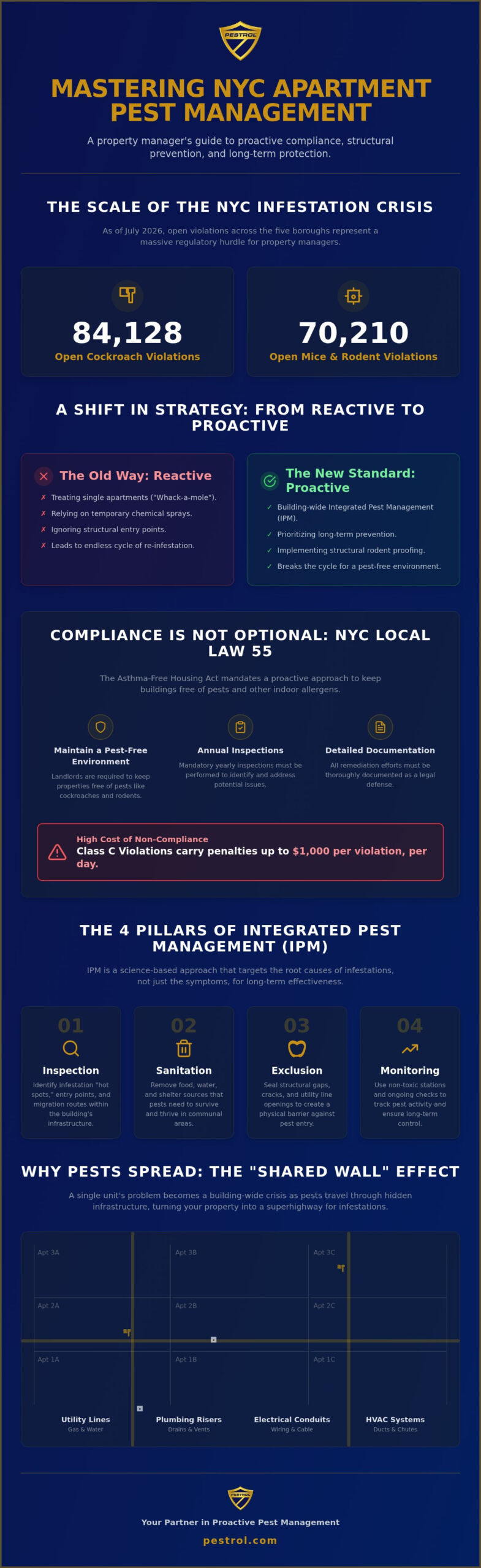
With 84,128 open violations for cockroaches and 70,210 for mice across the five boroughs as of July 2026, New York City property managers are facing a massive regulatory hurdle. If you feel like you’re losing the war against recurring infestations, you aren’t alone. Effective pest management for apartment buildings NYC requires more than just responding to individual tenant complaints or spraying under a few kitchen sinks. It demands a proactive, structural approach that stops pests before they ever cross the threshold or migrate through shared walls.
We understand the exhaustion of playing whack-a-mole with pests that simply move from one apartment to the next. This guide provides a clear roadmap to break that cycle by mastering Local Law 55 compliance and implementing long-term prevention strategies. You’ll learn how to transition from reactive treatments to comprehensive rodent proofing and tiered protection plans that secure your building’s reputation. We will explore how to manage HPD deadlines, avoid costly civil penalties, and choose safety-conscious treatments that keep your residents and your budget protected for the long haul.
Key Takeaways
- Understand why Integrated Pest Management is the modern standard for high-density housing. It prioritizes long-term prevention over temporary chemical fixes.
- Navigate the 2026 regulatory landscape with confidence. Learn how to stay compliant with Local Law 55 and avoid the steep penalties associated with HPD violations.
- Implement a building-wide strategy for pest management for apartment buildings NYC. This method targets shared walls and utility lines to stop infestations from spreading between units.
- Move beyond temporary traps with permanent structural rodent proofing. Identify the five key entry points in NYC infrastructure that pests use to gain access.
- Protect your building’s reputation and your budget with tiered protection plans. These customized solutions provide the consistent oversight needed to maintain a healthy living environment.
The NYC Apartment Ecosystem: Why Density Demands Specialized Pest Management
Living in New York means sharing space, but that proximity creates a unique challenge for property managers. In a high-density environment, a single unit’s roach problem can quickly become a building-wide crisis. This “Shared Wall” effect occurs because pests use utility lines, plumbing risers, and electrical conduits as a private highway system. Effective pest management for apartment buildings NYC requires looking beyond the individual front door to address the hidden voids where pests thrive. It’s about protecting the entire structure.
Architecture plays a major role in how these infestations spread. Pre-war buildings often feature aging infrastructure with settled foundations and cracked plaster. These gaps provide endless harborages for rodents. Modern buildings aren’t immune either. Their complex HVAC systems and centralized trash chutes act as perfect distribution hubs. Failing to manage these structural vulnerabilities leads to more than just tenant complaints. It results in a measurable drop in property value and increased turnover. Proactive management saves money. It keeps your reputation intact.
Legal Compliance and Local Law 55
Staying compliant in 2026 means strictly adhering to Local Law 55, also known as the Asthma-Free Housing Act. This law requires landlords to keep buildings free of indoor allergens, including pests like cockroaches and rodents. You’re mandated to perform annual inspections and provide detailed documentation of your remediation efforts. Using Integrated Pest Management (IPM) is the only way to meet these standards effectively. Proactive management isn’t just a suggestion; it’s a legal shield. As of 2026, hazardous Class C violations can carry civil penalties as high as $1,000 per violation per day. Documentation is your best defense.
The High-Density Infestation Cycle
Treating one apartment at a time is a losing game. Pests simply retreat into the walls and wait for the chemicals to dissipate. True pest management for apartment buildings NYC identifies entry points in communal spaces like basements, laundry rooms, and trash rooms. These areas often serve as the primary nesting grounds from which pests migrate. By securing these zones and focusing on the building’s infrastructure, you break the cycle of re-infestation. This approach protects your residents’ health and your bottom line. We focus on long-term results, not quick fixes.
Integrated Pest Management (IPM): The Gold Standard for Multi-Unit Buildings
The traditional “spray-and-pray” method is a relic of the past. In the complex environment of New York real estate, relying solely on chemicals often creates more problems than it solves. Instead, professional pest management for apartment buildings NYC now centers on Integrated Pest Management (IPM). This science-based approach prioritizes long-term prevention and structural fixes over the repeated use of heavy pesticides. It’s a shift from being reactive to being protective of both the property and its inhabitants.
IPM relies on four essential pillars: Inspection, Sanitation, Exclusion, and Monitoring. This framework is vital for buildings housing residents with respiratory issues or pets. Because IPM minimizes chemical exposure, it aligns perfectly with the safety goals of the Asthma-Free Housing Act. By removing the food, water, and shelter that pests need, we create an environment where they simply cannot survive. This method doesn’t just kill pests; it changes the environment to keep them out for good.
The Inspection and Monitoring Phase
Effective control starts with data. We use non-toxic monitoring stations in high-traffic areas like boiler rooms and basement corridors to track infestation “hot spots.” This allows us to identify exactly where pests are entering and moving before they reach tenant living spaces. IPM is a science-based, long-term strategy designed to ensure 2026 compliance by focusing on the root causes of infestations rather than just the symptoms. By tracking these patterns, we can apply targeted treatments exactly where they’re needed most.
Sanitation and Resident Education
Sanitation is about more than just a clean lobby; it’s about managing the “carrying capacity” of your building. This is the maximum number of pests an environment can support based on available resources. If trash rooms and compactors aren’t managed strictly, you’re providing an all-you-can-eat buffet for rodents and roaches. You can see how the city implements these standards by reviewing the guidelines for Pest Control at NYCHA. Reducing this capacity is the most effective way to lower pest populations naturally.
Property managers must also empower tenants. Clear, simple prep-sheets help residents understand their role in treatment success. When tenants know how to properly store food and report leaks, the building’s overall defense strengthens. If you’re ready to move beyond temporary fixes, consider a professional pest control partner who specializes in these comprehensive pest management for apartment buildings NYC strategies.
Tackling the “Big Three”: Bed Bugs, Roaches, and Rodents
In the high-stakes world of New York real estate, bed bugs, cockroaches, and rodents are the primary drivers of tenant dissatisfaction and HPD violations. As of July 2026, the city tracks over 84,000 open roach violations and 70,000 for mice. Managing these pests requires more than just a quick response; it demands a strategic understanding of how they exploit your building’s unique infrastructure. Successful pest management for apartment buildings NYC focuses on total eradication rather than temporary suppression.
Building-Wide Bed Bug Protocols
Bed bug outbreaks can trigger immediate panic among residents, but a calm, systematic approach prevents a building-wide crisis. When an infestation is reported, your first step is inspecting the “neighboring” units: those directly above, below, and on either side of the affected apartment. Pests don’t respect lease boundaries; they travel through wall voids and electrical outlets. Following a professional bed bug treatment NYC protocol ensures that you meet the 21-day correction deadline required by the city.
Reducing the stigma around bed bugs is just as important as the treatment itself. Encourage early tenant reporting by providing clear education and non-judgmental communication. Whether you utilize targeted chemical applications or high-heat treatments, the goal is to stop the spread before it reaches communal spaces. Proactive reporting saves you from the $100 to $500 penalties associated with failing to file the required Annual Bedbug Infestation History Report.
Cockroach and Rodent Eradication
German cockroaches are notorious for hiding in plumbing voids and behind kitchen cabinetry. In multi-unit settings, we prioritize professional roach removal using high-quality baits rather than aerosol sprays. Aerosols often act as repellents that scatter the colony into neighboring units, whereas baits are carried back to the nest for total elimination. This method is cleaner, safer for residents with asthma, and far more effective at reaching the deep harborages found in aging NYC pipes.
Rodent control presents a different challenge, particularly in the Bronx, which currently holds the highest number of open pest violations in the city. Mice and rats thrive in basement environments and around trash compactors. You can find detailed prevention strategies through the NYC Health Rat Information portal. We focus on structural exclusion, sealing the entry points that allow these pests to move from the street to the boiler room. By combining localized expertise with building-wide monitoring, you can maintain a rodent-free environment even in the most challenging high-density neighborhoods.
Structural Rodent Proofing: The Permanent Solution for NYC Infrastructure
Trapping rodents is often a cycle of frustration. It addresses the pests currently in the basement but does nothing to stop the next colony from entering. In a city where infrastructure is constantly aging, traditional trapping acts as a temporary fix for permanent openings. Real success in pest management for apartment buildings NYC comes from structural exclusion. We focus on “The Big Five” entry points: radiator pipe gaps, door sweeps, utility line penetrations, trash room vents, and foundation settling cracks.
The choice of materials determines the longevity of the fix. Rodents can easily gnaw through expanding foam or wood. Instead, we use durable materials like copper mesh, stainless steel wool, and professional-grade sealants that pests cannot penetrate. This physical barrier is the only way to ensure long-term protection. For a deeper look at the technical side of these barriers, explore our rodent proofing services.
The Exclusion Checklist for Managers
Managers should conduct a floor-by-floor walk-through to identify vulnerabilities. Focus on these high-risk areas:
- Radiator Pipes: Seal the gaps where hydronic heating lines pass through floors and walls. These are primary highways for mice.
- Service Entrances: Reinforce door sweeps on basement and service entrances. If a pencil can fit under the door, a mouse can too.
- Mechanical Closets: Close voids in trash rooms and mechanical closets where utility lines are often left unsealed after repairs.
Long-Term Maintenance of Proofing
NYC buildings are living structures that shift and settle over time. An annual structural audit is necessary to identify new cracks or compromised seals caused by building movement. Maintaining a strong perimeter defense reduces the pressure on your interior proofing by making the building’s exterior less inviting. Proactive pest management for apartment buildings NYC relies on these annual checks to stay ahead of infestations. Rodent proofing is an investment in building health. It protects your residents and your property value simultaneously.
Implementing a Protection Plan: How Pestrol Secures NYC Buildings
Transitioning from reactive extermination to a proactive partnership is the final step in securing your property. Effective pest management for apartment buildings NYC requires a consistent presence rather than occasional visits. By establishing a recurring defense model, you ensure that the structural proofing and sanitation standards we’ve discussed remain intact year-round. This approach doesn’t just stop infestations; it builds a documented history of care that protects you from HPD scrutiny and legal liability.
We provide transparent reporting designed specifically for co-op boards and property owners. These reports offer clear insights into building health, highlighting potential risks before they escalate into costly Class C violations. Our family-owned roots mean we treat every building with personal care, bringing local reliability to every borough from Manhattan to the Bronx. We understand the specific stresses property managers face and focus on providing the peace of mind that comes from a job done right the first time.
Tiered Protection for Predictable Budgets
Managing a building’s budget requires predictability. We offer tiered plans that allow you to choose the level of oversight that matches your building’s risk profile. Our Home Pest Protection – Basic plan provides essential seasonal security, focusing on the most common NYC pests. For high-risk properties or large complexes with complex infrastructure, Home Pest Protection – Premium is the ideal solution. This tier is particularly effective for co-op boards that demand the highest standards of safety and allergen control.
Buildings with ground-floor retail, such as restaurants or grocery stores, face unique exterior pressures. We provide customized commercial plans to ensure that these commercial units don’t become a bridge for pests to enter residential floors. This comprehensive coverage ensures that every square foot of your property is defended under a single, cohesive strategy.
The Pestrol Advantage in 2026
Our technicians are seasoned experts trained specifically in NYC-specific architecture. They know how to navigate the voids of pre-war buildings and the complex mechanical systems of modern towers. We maintain a “results-first” mentality, meaning we don’t just apply treatments; we solve the underlying structural issues that invite pests in. This tireless work ethic has made us a trusted ally for managers across the city who are tired of the revolving door of ineffective pest companies.
Transitioning your building to a recurring model is straightforward. We begin with a comprehensive audit to establish a baseline of building health and then implement the tier that best fits your needs. Our team stays rooted in the local community, ensuring that we’re always available when you need us most. We’re committed to long-term relationships that keep your tenants happy and your building compliant.
Securing Your Building’s Future in 2026
Mastering pest management for apartment buildings NYC requires a fundamental shift from reactive “spray-and-pray” methods to a permanent, structural defense. By prioritizing Integrated Pest Management and rigorous rodent proofing, you can eliminate the entry points that allow infestations to spread through shared walls. These strategies don’t just stop pests; they ensure your building remains fully compliant with Local Law 55 and the Asthma-Free Housing Act. Proactive oversight is the only way to avoid the steep penalties associated with HPD violations.
We understand the pressure of managing high-density properties across the five boroughs. As a family-owned partner, we specialize in Local Law 55 compliance and provide the dedicated rodent proofing expertise needed to protect aging NYC infrastructure. Our results-first mentality ensures that your reputation remains intact and your residents stay safe. We’re here to act as your knowledgeable ally in maintaining a healthy, comfortable environment for the long haul.
Let’s work together to build a pest-free future for your building and your tenants. Your peace of mind is our priority.
Frequently Asked Questions
Who is responsible for pest control in NYC apartments?
In New York City, property owners and landlords are legally responsible for maintaining pest-free conditions in all units and common areas. This mandate is part of the NYC Housing Maintenance Code for buildings with three or more units. Owners must hire licensed professionals to address infestations and perform necessary repairs to prevent future outbreaks. Tenants are responsible for maintaining basic cleanliness within their own living spaces to avoid attracting pests.
How often should a NYC apartment building be treated for pests?
The frequency depends on your building’s specific risk profile and current infestation history. For high-density environments in Manhattan or the Bronx, monthly preventative visits are often the standard for effective pest management for apartment buildings NYC. At a minimum, Local Law 55 requires annual inspections for indoor allergens, including pests. Regular monitoring allows technicians to catch problems early before they spread through shared infrastructure or trigger costly city violations.
What is Local Law 55 and how does it affect my building?
Local Law 55, known as the Asthma-Free Housing Act, requires landlords to keep residential buildings free of indoor allergens like cockroaches, rodents, and mold. It applies to buildings with three or more units. You must perform annual inspections and provide tenants with a notice of their rights regarding indoor allergens. Failure to comply can result in Class C “immediately hazardous” violations, which carry significant daily penalties until the issue is documented as resolved.
Can pests travel between apartments through the walls?
Pests frequently travel between apartments by using the voids behind shared walls and the pathways created by utility lines. Plumbing risers, electrical conduits, and radiator pipes act as high-speed corridors for cockroaches and mice. This is why treating a single unit in isolation rarely works in a multi-unit complex. Effective control must involve building-wide monitoring and structural exclusion to seal these hidden gaps and stop the migration from unit to unit.
What is the most effective way to get rid of mice in an NYC apartment?
The most effective way to eliminate mice is through professional Rodent Proofing and structural exclusion. While traps provide temporary relief, they don’t address the holes that allowed the mice to enter. Technicians use durable materials like copper mesh and professional sealants to close gaps around radiator pipes and baseboards. By combining these physical barriers with strategic monitoring, you create a permanent solution that protects the building against future infestations from the street or basement.
Are pest control chemicals safe for tenants with asthma?
Yes, modern pest management for apartment buildings NYC utilizes Integrated Pest Management (IPM) techniques that are safer for residents with respiratory issues. We prioritize non-toxic monitoring stations and targeted gel baits rather than broadcast aerosol sprays. These methods effectively eliminate pests like cockroaches without releasing airborne irritants that trigger asthma. Our approach focuses on removing the root causes of infestations, ensuring a healthy living environment that complies with the safety standards of Local Law 55.
How much does building-wide pest management cost in NYC?
The cost of building-wide management is determined by the size of the complex and the level of protection required. We offer tiered Home Pest Protection plans, ranging from Basic seasonal security to Premium packages designed for high-risk properties or co-op boards. These plans provide predictable budgeting by covering regular inspections and preventative treatments. A customized quote is necessary to account for factors like building age, unit count, and the presence of ground-floor commercial spaces.
What should a property manager do if a tenant refuses pest control entry?
If a tenant refuses entry, property managers should first review the lease agreement, which typically includes a right-of-entry clause for necessary repairs and inspections. You must provide proper notice, usually 24 to 48 hours, before the scheduled visit. If the refusal persists, it may be necessary to involve legal counsel or the HPD, as failure to inspect can prevent you from complying with mandatory Local Law 55 requirements. Clear communication about the health benefits often resolves these issues.