




The fastest appointment isn’t always the one that solves the problem. How soon an apartment roach exterminator in the Bronx can visit depends on scheduling, access to the affected areas, and the scope of the infestation. Treatment cost also depends on the situation, with a quote provided after a request based on factors such as the areas involved and the work needed.
Roaches in an apartment can be stressful, especially when you’re unsure whether one visit will be enough or what to expect. Reviews can offer context about communication and the service experience, but a clear inspection and explanation of the treatment plan are just as important.
This article explains what affects visit timing and treatment scope, when ongoing service may make sense, and how an inspection can identify roach activity and likely hiding places. You’ll also learn how to read reviews for useful details and prepare for the next step.
Key Takeaways
- Understand what can affect appointment timing, including access to affected areas and roach pathways through shared plumbing and utility spaces.
- Learn which factors shape a roach treatment quote, so you can better understand the scope of work involved.
- See how the inspection findings can help determine whether one-time treatment or recurring service makes more sense.
- Discover what to look for in customer reviews, including details about communication, inspections, and follow-up.
- Explore when Home Pest Protection – Basic may be a relevant next step for ongoing pest protection.
How soon can you come out for pest control in New York City, NY?
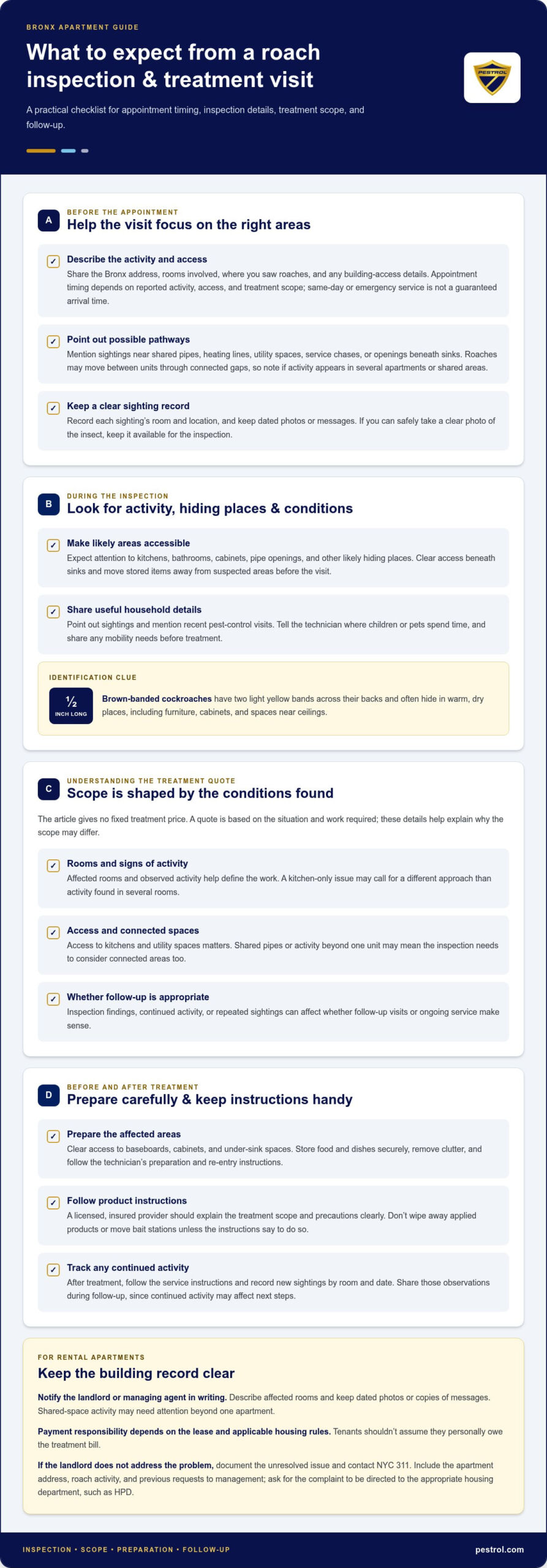
For a Bronx apartment, appointment timing depends on reported activity, building access, and treatment scope. Describe where you’ve seen roaches when arranging a visit, and make sure the affected rooms and relevant utility spaces are accessible. If roaches appear in several apartments or near shared pipes, mention that pattern so the inspection can consider likely entry routes, not just visible insects.
In a Bronx apartment building, cockroaches may move between units through gaps around plumbing, heating pipes, and utility lines. Shared walls, service chases, and openings beneath sinks can connect spaces that seem separate. A roach near a kitchen drain, for example, may point to activity around a pipe opening or cabinet void. Record each sighting’s room and location, then show those spots during the inspection.
Brown-banded cockroaches are about half an inch long and have two light yellow bands across their backs. They often hide in warm, dry places, including furniture, cabinets, and spaces near ceilings. This differs from the habits of roaches often found near damp kitchens or bathrooms. Identifying the insect and its hiding places helps focus the inspection and treatment. If you can safely take a clear photo, keep it available for the visit.
Cockroaches can contaminate food and surfaces as they move through kitchens and storage areas. Droppings and shed body parts may also worsen allergy symptoms for sensitive residents. Keep food sealed, clean up crumbs, and avoid leaving dishes overnight. If children or pets live in the home, tell the technician where they spend time. A residential inspection should identify roach activity, hiding places, and conditions that may support it before treatment.
New York City landlords must address cockroach infestations and maintain apartments free of pests. Notify the landlord or building manager in writing, describe the affected rooms, and keep dated photos or messages. A problem involving shared spaces may require attention to connected apartments and utility areas, not just one kitchen. An apartment roach exterminator in the Bronx can inspect the unit, identify likely pathways, and explain treatment options based on observed activity.
During a residential visit, expect the inspection to cover kitchens, bathrooms, cabinets, pipe openings, and other likely hiding places. Before the appointment, clear access beneath sinks and move stored items away from suspected areas. Point out sightings and mention any recent pest control visits. This preparation helps the technician assess where roaches are active and where treatment may be needed.
How much does it cost for a pest control service?
The scope of roach treatment in a Bronx apartment depends on the conditions and work required. Factors may include affected rooms, signs of activity, access to kitchens or utility spaces, and whether follow-up visits are appropriate. A kitchen-only issue may require a different approach from activity found in several rooms. Describe these details when requesting service so the treatment plan can address the situation.
For a Bronx rental, report the infestation to the landlord or managing agent first so they can coordinate inspection and treatment for the apartment or building. Tenants shouldn’t assume they personally owe the treatment bill; payment responsibility depends on the lease and applicable housing rules. Keep dated photos and copies of messages about sightings, affected rooms, and requests for help. These records clarify what was reported and when, especially if the problem continues.
Same-day appointments and emergency pest services depend on scheduling, access, and the reported problem. “Emergency” describes urgency, not a guaranteed arrival time. When contacting a pest management provider, state the borough, building access details, rooms involved, and whether roaches are appearing in food-preparation spaces. That gives the office useful information to assess the request. Service areas also vary by provider, so give the Bronx address rather than relying on a broad NYC metro-area label.
Before treatment, prepare the apartment by clearing access to baseboards, cabinets, and under-sink spaces. Store food and dishes securely, remove clutter from affected areas, and follow the technician’s specific preparation and re-entry instructions. Mention children, pets, or mobility needs before the visit. A licensed, insured provider should explain the treatment scope and any precautions in clear terms. Don’t wipe away applied products or move bait stations unless the instructions say to do so.
If the landlord doesn’t address the problem, document the unresolved issue and contact NYC 311. Give the apartment address, describe the roach activity, and note previous requests to building management. Ask for the complaint to be directed to the appropriate housing department, such as HPD, and keep the service request details. If activity spreads from one unit into shared spaces, include that information. A clear record helps connect the apartment complaint with conditions affecting the building.
After treatment, follow the service instructions and record any new sightings by room and date. Share those observations during follow-up, since continued activity may affect the next steps. For a focused review of roach treatment options, consider the affected spaces and whether the problem has appeared beyond one room.
Do I need a monthly pest control plan or is a one-time treatment enough?
A one-time treatment may suit a limited problem found in one area of an apartment. Ongoing service may make sense when inspections find continued activity, repeated sightings, or conditions connecting several units. In older Bronx buildings, cracks around pipes, wall voids, and basement spaces can provide places for roaches to hide or move. The appropriate approach depends on inspection findings, access to hiding places, and whether the building has addressed conditions that support activity.
Treatment methods address different parts of an infestation. Gel baits are placed in targeted locations where roaches forage, while insect growth regulators affect their development. Crack-and-crevice applications focus on narrow gaps and hiding places rather than broad, exposed surfaces. A technician can choose methods based on the insect, activity, and room conditions. Ask for a clear explanation of the approach, including where products will be applied and how to prepare the apartment.
Gel baits and insect growth regulators may form parts of a broader plan, but they are not interchangeable. Bait placement works best when food residue and competing food sources are managed. An insect growth regulator affects development, so it does not serve the same purpose as bait. Follow the technician’s instructions about cleaning, product placement, and access. Don’t disturb treated cracks or bait locations unless the directions say to do so.
Older buildings need attention to structural conditions alongside treatment. During an inspection, point out gaps around sink pipes, loose baseboards, cabinet seams, and openings near heating lines. A basement or shared utility area may also need attention if roach activity appears there. Sealing accessible cracks and keeping food containers closed can reduce hiding and feeding opportunities. These steps support treatment, but they don’t replace a building-wide response when roaches move between apartments.
If children or pets live in the home, tell the technician before treatment begins. Identify sleeping areas, feeding stations, and rooms where children play. Ask which spaces need to remain clear and follow the instructions for treated areas. A plan that accounts for household routines should explain product placement clearly. Avoid moving bait or wiping treated cracks without guidance, as this can interfere with the treatment approach.
Use the inspection findings and treatment plan to compare one-time and ongoing options. The plan should describe observed activity, treatment locations, recommended follow-up, and preparation steps. A monthly plan isn’t automatically necessary, and one visit can’t guarantee that activity won’t return. If sightings continue after treatment, record the room and location and share those details during follow-up. Clear observations help determine whether targeted treatment, monitoring, or attention to building conditions is the next step.
Inspections and infestation risk assessments
A useful roach inspection looks beyond the insect you saw. The technician checks kitchens, bathrooms, cabinet hinges, appliance edges, and pipe openings. These places may reveal droppings, egg cases, shed skins, or live roaches. A sighting near a refrigerator, for example, gives the inspection a starting point, not a complete picture. The goal is to identify activity, likely hiding places, and conditions that could support an infestation.
Before the visit, make a short record for each room. Note where you saw roaches, when they appeared, and whether sightings happen during the day or after dark. Include details such as insects near a bathroom vanity or droppings inside a pantry cabinet. Keep food sealed and clear access to the areas you recorded. These steps help the inspection focus on evidence instead of guesswork.
During the assessment, point out gaps around pipes, cracks behind cabinets, and spaces beside appliances. The technician can compare these observations with signs in nearby rooms. In a Bronx apartment, activity in both a kitchen and bathroom may make shared walls or utility openings worth checking. The inspection should distinguish active signs from old debris, then explain which areas need treatment and which need monitoring.
A clear treatment plan makes the next steps easier to follow. It should identify observed activity, treatment locations, preparation instructions, and any recommended follow-up. Ask which findings support the proposed approach. For example, one sighting without other signs differs from repeated evidence inside several cabinets. Clear notes also help residents and building management discuss access, repairs, or coordination across affected apartments.
- Record sightings by room and location.
- Show droppings, egg cases, or shed skins without moving them unnecessarily.
- Clear access to sinks, cabinets, and appliance edges.
- Share prior treatments and any instructions residents followed.
Risk assessment also considers conditions that may allow roaches to persist, such as accessible food, moisture, clutter, or unsealed openings. A basement sighting matters if it corresponds with activity near pipes above. The inspector can explain whether those conditions call for housekeeping changes, repairs, targeted removal, or additional treatment. A friendly, clear walkthrough helps residents understand what each observation means.
Not every pest sign points to cockroaches. If an inspection finds evidence suggesting termites, that requires a separate assessment rather than assuming roach treatment will address it. Ask the technician to identify the evidence and explain the next step plainly. For roaches, use the inspection record to track new sightings and locations. That record gives follow-up visits concrete information about changes in activity.
Customer reviews of Bronx exterminators
Customer reviews can show what a service visit was like, but look beyond star ratings. For a Bronx roach problem, prioritize comments about the inspection, treatment explanation, and follow-up. A review saying “the technician checked behind the stove” gives more useful detail than praise without context. Compare specific experiences, not just the overall score.
Look for patterns across multiple reviews. Do customers mention technicians arriving prepared, explaining product placement, and answering questions clearly? Do they describe what happened after treatment, including how later sightings were handled? One complaint may reflect a single experience, while repeated comments about missed appointments or unclear instructions deserve attention. Look for examples involving roaches and apartments rather than unrelated services.
Check whether a review describes the pest accurately. A brown-banded cockroach has two light yellow bands across its back, while other insects can be mistaken for roaches. Reviews that mention inspection or identification show how the technician approached the reported problem. A comment about bed bugs, termites, or rodents may still say something about communication, but it doesn’t show how roach treatment was handled.
Timing comments need context, too. A review about a seasonal increase in insect activity may describe a different situation from a year-round building problem. Note when the review was posted and whether it describes one apartment, shared spaces, or several units. These details can help you judge relevance, but one reviewer’s appointment experience doesn’t establish when another household will receive service.
Use this quick review-reading checklist:
- Find comments about apartment roach inspections and treatment.
- Look for clear explanations of preparation and treated areas.
- Notice whether reviewers describe follow-up or continued activity.
- Compare specific service details across more than one review.
Pay attention to how reviewers describe communication during the visit. A useful account may explain whether the technician identified hiding places, discussed access needs, and clarified next steps. A review that only says “great service” offers less insight into the process. Consider whether the reviewer describes a building-wide concern, since shared conditions can differ from a single-unit problem.
Reviews are one source of context, not a substitute for a clear inspection and treatment plan. Use them to shape practical questions, then compare the answers with your apartment’s needs. For example, ask how inspection findings guide treatment locations and what follow-up involves if activity continues. Keep the decision focused on the work, not promotional language or one dramatic review.
Pestrol: Home Pest Protection – Basic
Pestrol’s Home Pest Protection – Basic is a next step for households seeking residential pest protection beyond a single roach concern. If you’re deciding between addressing one issue and considering broader home pest management, the Basic plan is one option to explore. Pestrol also offers Home Pest Protection – Plus and Home Pest Protection – Premium, giving homeowners plan levels to consider based on their needs. For a separate bed bug concern, Pestrol provides Bed Bug Treatment. The right path depends on the pest issue you’re addressing and the protection you’re looking for. Share the details of your concern to help guide the conversation. Contact Pestrol or visit Pestrol.com to learn more.
Choose a clear next step for your apartment
Use what you’ve learned to choose an approach that fits your home, not just the first visible sighting. Record where roaches appear and share that information during an inspection. Consider whether the issue is limited to one area or part of broader household pest needs. Choosing an apartment roach exterminator in the Bronx is easier when you begin with clear observations and the outcome you want.
Pestrol offers Home Pest Protection – Basic, Home Pest Protection – Plus, and Home Pest Protection – Premium. These options give you different plan levels to consider for ongoing home pest protection. If you’re weighing a specific roach concern against broader protection, explain what you’ve observed and what you want help with. A straightforward discussion can help you identify a sensible next step.
With a clear plan, you can focus on making your apartment feel comfortable again.
Frequently Asked Questions
How quickly can you respond?
Appointment timing depends on scheduling, apartment access, and reported roach activity. Describe the affected rooms and whether sightings occur near shared pipes or building utility spaces. For example, mention if roaches appear in both the kitchen and bathroom. Clear details help establish the scope of the visit and make it easier to coordinate access with building management.
What happens if the pests come back after treatment?
Record each new sighting by date, room, and location, then share the record during follow-up. Note whether activity appears near the original treatment area or somewhere new, such as a pantry or bathroom vanity. Avoid disturbing treated locations unless the written instructions allow it. The technician can use these observations to reassess activity and determine whether further treatment or monitoring is appropriate.
What products do you use, and what precautions should I take?
The treatment approach depends on inspection findings, roach activity, and the locations involved. Ask which areas will be treated and request clear preparation and aftercare instructions. Before the visit, secure food and dishes, and tell the technician about children, pets, or household routines that affect access to rooms. Follow instructions for treated spaces, and don’t move or clean treated placements unless directed.
What does apartment roach extermination cost in the Bronx?
The cost depends on the apartment’s conditions and the treatment work required, and is provided after a quote request. Factors include the rooms affected, the signs found during inspection, access to likely hiding places, and whether follow-up is needed. When describing the problem, note whether activity is limited to one room or appears in several areas. That helps scope the work for the quote.
Which Bronx exterminators specialize in apartment cockroach infestations?
Pestrol provides Cockroach Control for roach problems, including apartment infestations. When seeking help, describe the affected rooms, how often you see roaches, and whether activity appears in shared spaces. These details help focus the inspection on the reported issue. If sightings involve more than one apartment, tell building management too, since access to connected areas may matter.
How do Bronx apartment pest control companies compare on reviews and guarantees?
Compare reviews for specific details about inspections, treatment explanations, communication, and follow-up, rather than relying only on star ratings. Look for several accounts describing apartment roach work and note whether they explain the situation clearly. Reviews reflect individual experiences, not guaranteed results. Read service terms directly and distinguish a stated policy from a reviewer’s personal expectations or interpretation.
What roach treatment methods are used in Bronx apartments, and how long do they take?
Treatment methods may include gel baits, insect growth regulators, and targeted crack-and-crevice applications. The approach depends on where roaches are active and what the inspection finds. Visit length depends on the rooms, access, and treatment scope, so clear access to cabinets and likely hiding areas before the appointment. Follow the technician’s instructions about treated locations and any steps to take afterward.
How many treatments are usually needed to eliminate roaches in an apartment?
The number of treatments depends on the extent of the infestation, hiding places, and whether roaches are entering from connected spaces. One visit may address a limited, localized problem, while continued activity may call for reassessment and follow-up. Track sightings after treatment and report their locations. This gives the technician useful evidence for deciding whether further treatment or monitoring is needed.