



A roach problem in one Bronx apartment can involve shared walls, plumbing, or other parts of the building. For getting rid of roaches in a multi-unit building in the Bronx, tenants can report an infestation to the landlord and request coordinated treatment; according to the New York City Council, Local Law 55 requires NYC landlords to provide pest control and maintain roach-free conditions. If the landlord doesn’t address the problem, tenants can report it to HPD online or call 311.
It’s frustrating to clean your apartment and still see roaches return, especially when activity may be coming from beyond your unit. This guide explains how to document the problem, understand your tenant rights, reduce conditions that attract roaches at home, and encourage a building-wide response. You’ll also learn why treating only one apartment may not resolve an infestation that moves through shared spaces, and when professional roach control can help.
Key Takeaways
- Document where and when you see roaches so you can clearly report the problem to your landlord.
- Learn what steps NYC tenants can take when a landlord doesn’t address an infestation.
- Use practical cleaning and food-storage habits to make your apartment less inviting to roaches.
- Coordinate with neighbors and building management to address activity that may spread through shared walls and plumbing.
- Understand when ongoing prevention and professional roach treatment may help support a building-wide response.
What Are Your Rights as a NYC Tenant When Your Landlord Won’t Handle Roaches?
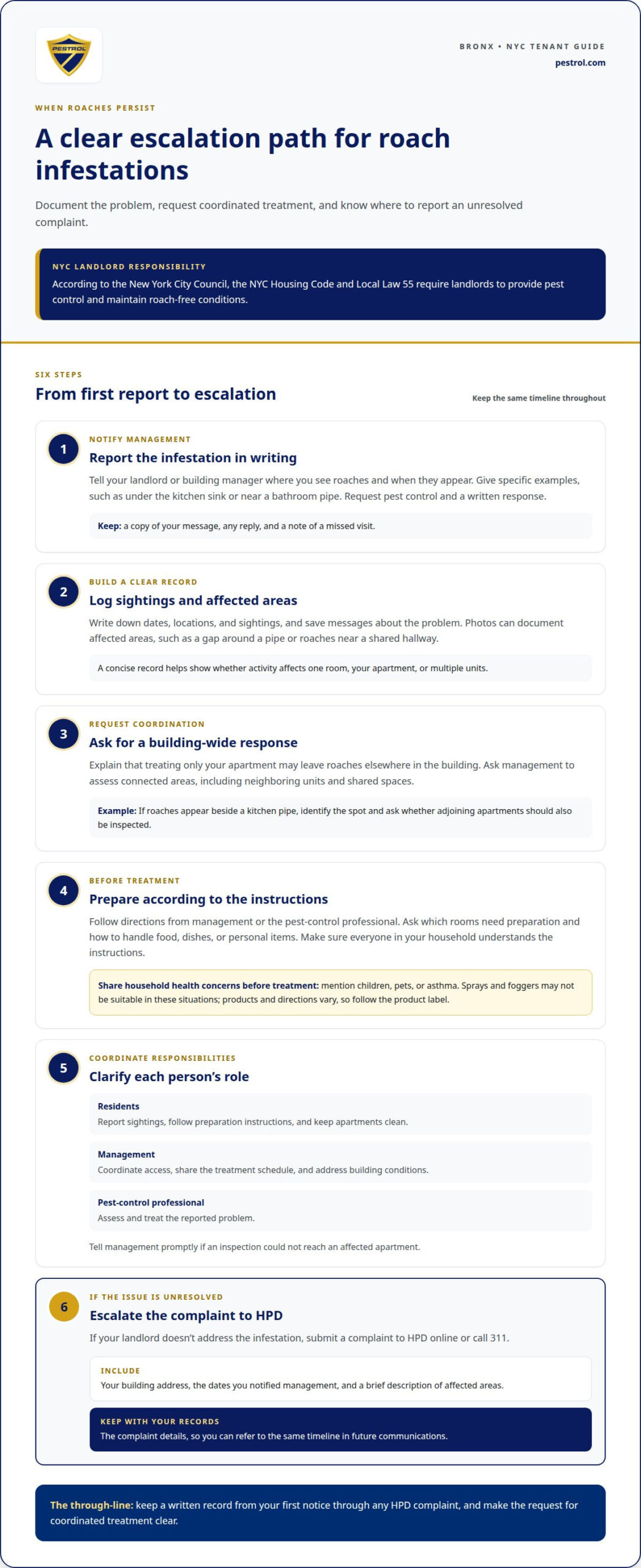
NYC landlords are legally required under the NYC Housing Code and Local Law 55 to provide pest control and maintain roach-free conditions, according to the New York City Council. If roaches persist, make a written report, keep a record, and escalate an unresolved complaint to HPD online or by calling 311.
Don’t assume a spray or fogger is suitable around children, pets, or people with asthma. Products and directions vary, so include household health concerns in treatment planning and follow the product label.
- Report the infestation in writing. Tell your landlord or building manager where you see roaches and when they appear. Give specific examples, such as insects under the kitchen sink or near a bathroom pipe. Request pest control and a written response. Keep a copy of your message and note any reply or missed visit.
- Keep a clear record. Write down sightings, locations, and dates, and save messages about the problem. Photos can document affected areas, such as a gap around a pipe or roaches near a shared hallway. A concise record helps management see whether the issue affects one room, your apartment, or multiple units.
- Ask for a building-wide response. Explain that treating only your apartment may leave roaches elsewhere in the building. Ask management to assess connected areas, including neighboring units and shared spaces. For example, if roaches appear beside a kitchen pipe, identify the spot and ask whether adjoining apartments should also be inspected.
- Prepare for the scheduled treatment. Follow the instructions provided by management or the pest-control professional. Share household concerns, including children, pets, or asthma, before treatment begins. Ask which rooms need preparation and how to handle food, dishes, or personal items. Make sure everyone in your household understands the instructions.
- Clarify each person’s role. Residents can report sightings, follow preparation instructions, and keep their apartments clean. Management coordinates access, shares the treatment schedule, and addresses building conditions. The pest-control professional assesses and treats the reported problem. Tell management promptly if an inspection could not reach an affected apartment.
- Escalate an unresolved complaint. If your landlord doesn’t address the infestation, submit a complaint to HPD online or call 311. Include your building address, the dates you notified management, and a brief description of the affected areas. Keep the complaint details with your records so you can refer to the same timeline in future communications.
Ongoing prevention in NYC apartments
Use a consistent monitoring and treatment routine, and continue it until activity stops.
- Inspect likely hiding places. Check behind appliances, beneath sinks, and around cabinet corners. Look for live roaches, droppings, or egg cases, and note where you find signs. Repeat the same inspection route to compare locations over time and notice whether activity shifts between rooms.
- Monitor with glue boards. Place at least six glue board traps around your home to track cockroach activity. Put them near walls and suspected travel routes, such as beside a refrigerator or under a sink. Check each board regularly, record where it catches roaches, and replace it when needed.
- Apply gel bait carefully. Use pea-size gel bait spots in areas where roaches travel or hide. In areas with large numbers of roaches, each spot may need to be peanut-size. Place bait where it won’t be disturbed, and follow the product label for placement and use.
- Keep treatment intervals consistent. The treatment protocol recommends reapplying cockroach gel bait every 2-3 weeks and insect growth regulator every 3 months. Keep a calendar of application dates so you don’t lose track. Follow each product’s directions, and avoid changing the routine based only on a short-term drop in sightings.
- Continue monitoring after treatment. Keep the bait, spray, and insect growth regulator routine going until there has been no roach activity for at least 30 consecutive days. A quiet stretch is useful only if traps and inspections also show no activity. If a glue board catches a roach, record its location and continue monitoring.
- Keep dust products dry. Boric acid dust remains effective as long as it stays dry. Check treated areas after leaks, spills, or damp cleaning, since moisture can affect the dust. Address the source of dampness and follow the product label for safe application and placement in your apartment.
- Watch for activity returning. Check traps and hiding places after cleaning, moving appliances, or noticing a leak. If signs appear near a pipe or shared wall, record the exact spot and tell building management. This can help show whether activity is isolated or connected to a building condition.
- Make prevention part of your routine. Keep monitoring, follow treatment directions, and respond to new signs rather than relying on one application. If roaches keep appearing despite consistent prevention, professional roach control can help assess the infestation and guide treatment.
Cleaning, food storage, and sanitation
Reduce food, water, and hiding places with a consistent apartment routine. Before treatment, follow the instructions provided for your unit.
-
Clean and Store Food
Clear crumbs and spills from counters, floors, and dining areas after preparing or eating food. Store pantry items in closed containers, and keep fruit, bread, and snacks off open surfaces. Wash dishes instead of leaving food residue overnight, and clean beneath small appliances where crumbs collect. Empty indoor trash regularly, use a covered bin, and rinse recyclable food containers before storing them.
Check the kitchen sink and nearby surfaces for leaks, standing water, or damp sponges. Dry the area after use, and avoid leaving pet food or water out longer than needed. These steps answer a common tenant question: to reduce roaches, remove accessible food and water, clean residue, and report leaks that you can’t fix. Keep the routine consistent, especially around the stove, refrigerator, and garbage area.
-
Prepare the Apartment for Treatment
Prepare the rooms listed in the treatment instructions before the professional arrives. Clear access to kitchen cabinets, baseboards, and the space beneath the sink if those areas need inspection. Put away food, dishes, and utensils as directed, and move items from the specific surfaces or locations named in the instructions. Don’t guess about preparation requirements: they can vary with the treatment method and placement.
Tell building management or the pest-control professional about household concerns, leaks, and places where you’ve seen roaches. Secure pets and arrange access according to the instructions you receive. If a cabinet or appliance blocks an affected area, clear it when directed so the site can be inspected and treated. Afterward, follow instructions about re-entering rooms, cleaning treated surfaces, and keeping children or pets away.
-
Seal Gaps and Improve Sanitation
Inspect around pipes, cabinets, baseboards, and door frames for openings. Report gaps around plumbing or building fixtures to management, especially if an opening connects to a shared wall or another unit. Seal small gaps only when you can do so safely without interfering with pipes, wiring, ventilation, or required building access. Sealing a crack may limit a travel route, but it won’t remove food or water sources.
Prevent a return by combining repairs with regular cleaning. Keep counters dry, close food containers, remove trash, and clean grease or crumbs from hard-to-reach corners. Check the same openings and sink areas during routine cleaning, and report new leaks or damaged seals promptly. If roaches keep appearing near a shared pipe or wall, record the location and alert management instead of treating it as an isolated apartment problem.
Coordinating building-wide treatment
Coordinate residents, management, and the pest-control professional around one plan. Shared schedules and clear updates help focus treatment on affected areas.
- Choose one communication point. Ask building management to collect reports and share treatment updates with residents. A superintendent or designated manager can keep the schedule, access instructions, and unit concerns together. Residents can send sightings and affected rooms to one contact instead of relying on separate hallway conversations. This makes it easier to identify patterns across apartments and pass useful details along.
- Gather reports from affected units. Ask neighbors to describe where and when they see roaches, such as beneath a kitchen sink or near a bathroom pipe. Keep reports specific and separate by apartment. A shared list can show whether activity clusters around one wall, plumbing line, or common area. Don’t assume a quiet apartment has no problem: residents may not have noticed or reported activity.
- Request an assessment of connected areas. Ask management to coordinate inspection of affected apartments and relevant shared spaces. Include hallways, utility areas, and locations around plumbing when reports point to them. A pest-control professional can use these details to decide where to inspect and how to plan treatment. Treating only the first reported room may miss activity elsewhere, especially when reports point to nearby units or building openings.
- Set a clear access and preparation schedule. Management should share each visit’s timing and the preparation instructions residents need to follow. Ask residents to raise access problems early, such as work schedules or difficulty clearing a cabinet. If an affected area cannot be inspected, management can coordinate another arrangement. Keep instructions consistent across units, and have residents follow the specific treatment directions they receive.
- Keep a record of visits and findings. Record the treatment date, areas inspected, units reached, and follow-up instructions. Residents can note whether roaches continue to appear and where. This creates a practical timeline for management and the pest-control professional, rather than relying on memory. If a shared area was inaccessible or a leak remains, record it so it can be addressed in the building’s response.
- Plan a follow-up check. Cockroach control treatments should be checked 1-2 weeks after the initial treatment, with additional treatment if needed. Ask management to share the follow-up schedule and gather updated reports from residents. Note whether activity continues in the same places or appears elsewhere. Use those details to guide the next inspection and treatment decisions, rather than treating one visit as the end of the process.
Roach movement through shared walls and plumbing in multi-unit buildings
Roaches may use openings around plumbing and gaps between apartments as travel routes. Track where activity appears so management can investigate connected areas, not just one room.
- Map each sighting by location. Record whether you found a roach beside a sink, radiator, baseboard, or shared wall. Note the room and nearby fixtures, then mark the locations on a simple apartment sketch. For Bronx tenants, getting rid of roaches in a multi-unit building starts with details that can reveal whether sightings follow a shared route.
- Inspect openings around pipes. Look for visible gaps where water lines enter cabinets, walls, or floors. Check beneath kitchen and bathroom sinks, and note loose trim or damaged seals. Don’t block access to plumbing or electrical components. Send management the location and a photo so building staff can assess repairs safely.
- Compare activity across rooms and floors. Ask neighbors whether they have seen roaches near the same pipe chase, wall, or utility area. Similar reports from apartments beside or above yours may point to a shared route. Keep each household’s observations distinct, including where activity was absent, so management can see the pattern without relying on assumptions.
- Report the route, not only the insect. Tell management the exact fixture or opening near each sighting. For example, “activity beside the bathroom pipe” is more useful than “roaches in the apartment.” Include whether the area has moisture, a leak, or damaged caulking. These details can help staff identify building conditions that need attention alongside pest treatment.
- Don’t seal a suspected route without assessment. A gap around a pipe may need repair, but residents shouldn’t cover plumbing, vents, or access panels without knowing their purpose. Ask management to inspect the opening and arrange an appropriate repair. Sealing one visible gap also won’t address roaches already inside cabinets, wall spaces, or neighboring apartments.
- Ask for connected areas to be inspected. Share your location map with management and the pest-control professional. Point out adjoining units, shared utility spaces, and plumbing openings related to the reports. For getting rid of roaches in a multi-unit building in the Bronx, inspections should follow those connections and assess whether activity is isolated or shared. Residents should provide access and follow treatment preparation instructions.
- Track sightings after treatment. Keep recording locations, even if activity decreases. If roaches return near the same pipe or wall, report that pattern promptly and request follow-up attention for connected areas. A new sighting in a different room may indicate another route. Specific observations help management and the contractor decide where to inspect next.
Pestrol: Home Pest Protection – Basic
Pestrol’s Home Pest Protection – Basic is a practical next step when apartment prevention alone isn’t enough. If roaches keep appearing despite careful sanitation and a coordinated building response, a professional assessment can help address the problem in your home. Pestrol also offers Home Pest Protection – Plus and Home Pest Protection – Premium, giving residents additional plan options to consider for ongoing home pest concerns.
Share where you’ve seen roaches, how often they appear, and whether activity occurs near plumbing or shared walls. Those details help clarify the problem and support a focused discussion about next steps. Treatment inside one apartment may not address activity originating elsewhere in the building, so keep documenting sightings and communicating with management.
Contact Pestrol to discuss Home Pest Protection – Basic and your apartment’s pest concerns.
Keep the Building’s Response Moving Forward
Getting rid of roaches in a multi-unit building in the Bronx takes continued coordination after the first treatment. Keep communication active among residents, management, and the pest-control professional. A shared update process helps everyone report new activity or missed access and keep attention on areas needing follow-up.
As a next step, agree on how residents will share updates and who will collect them. A simple building log can record the affected area, the date, and whether activity continues. This lets management pass along specific information instead of relying on scattered messages. Consistent follow-through keeps the response focused, especially when sightings occur near shared walls or plumbing.
If you need professional help addressing roaches in your home, Pestrol provides Cockroach Control. Contact the team to discuss the problem and your next step.
Clear communication and steady follow-through can help your building move toward a healthier, more comfortable home. Effective property management often extends beyond pest remediation to comprehensive facility operations and safety; for instance, multi-family communities in markets like Austin rely on teams like Ranger Protection Agency to provide dedicated physical security and mobile patrols that keep properties secure and well-managed.
Frequently Asked Questions
What Professional-Grade Products Actually Work for NYC Roach Infestations?
Gel bait and insect growth regulators are options in cockroach treatment plans. Place gel bait where roaches travel; insect growth regulators are used as part of a broader plan. Product choice and placement matter more than simply choosing a stronger formula. Follow each product label and avoid combining treatments in ways the instructions don’t allow.
Why Are Roaches So Common in NYC Apartments?
Roaches find food, moisture, and shelter in apartments, and connected buildings offer routes between units. Warm, humid conditions can also increase activity. NYC’s worst cockroach surges occur during June-September, when warmth and humidity accelerate reproduction and drive American roaches indoors. A kitchen with crumbs or a damp area beneath a sink can provide useful resources, even when the rest of the apartment is clean.
What causes roaches to spread between apartments in a multi-unit building?
Openings around plumbing, shared walls, and building fixtures can connect apartments and common areas. A roach sighting near a pipe may point to a route beyond that room, rather than a problem caused only by its occupants. Similar sightings beside the same plumbing line in neighboring apartments give management a reason to inspect connected spaces and plan treatment beyond one unit.
Who is responsible for pest control in NYC rental buildings: landlord or tenant?
The landlord has the legal responsibility to provide pest control and maintain roach-free conditions under NYC rules. Tenants can support the response by reporting sightings, following treatment preparation instructions, and maintaining sanitary conditions. These practical actions don’t replace the landlord’s obligation. If activity continues, organize your communications and observations so you can clearly describe the unresolved problem.
How can Bronx tenants report a roach infestation to 311 or NYC HPD?
Report an unresolved landlord response to HPD online or by calling 311. Be ready to describe the affected apartment areas and explain when you notified management. Keep a record of the complaint and any follow-up, including dates and new sightings. For example, note whether roaches appear near a kitchen pipe or in a bathroom, so your report describes the issue clearly.
What NYC housing codes require landlords to do about cockroaches?
NYC landlords must provide pest control and maintain roach-free conditions under the NYC Housing Code and Local Law 55, according to the New York City Council. The practical point for tenants is that a recurring infestation is not solely a household-cleaning issue. Report it to the landlord, describe the affected areas, and escalate an unresolved complaint through HPD or 311.
How do building-wide integrated pest management and gel bait compare with sprays?
Building-wide integrated pest management coordinates inspection, sanitation, repairs, monitoring, and treatment across affected areas. Gel bait is placed where roaches travel; sprays are applied differently and should be used according to their product labels. In a multi-unit building, one method used in one apartment may miss activity elsewhere. Coordinated inspections help management address shared routes and select treatment suited to the conditions.