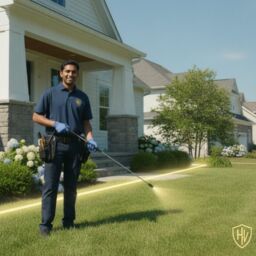




What if pest risks in your new Minisink home are hiding behind the fresh finishes? New construction can look sealed and spotless, but disturbed soil and small gaps around plumbing or utility lines can still give insects and rodents a way in. That’s why preventing pests in a new construction home Minisink should start before move-in, not after the first sighting.
It’s natural to expect a brand-new home to be protected, but even careful construction can leave details worth checking. A few practical steps can help you spot possible entry points, limit access to food and water, and make your home less inviting to pests.
Use this checklist during construction, before closing, and as you settle in. You’ll learn what to inspect, how routine upkeep can reduce common pest risks, and when professional prevention may help with recurring concerns. After you’ve handled the basics, Pestrol’s Home Pest Protection – Basic offers ongoing residential pest management in Minisink.
Key Takeaways
- Learn why a new build can still have pest entry points and what prevention can address.
- Use a stage-by-stage inspection checklist to note gaps around pipes, cables, vents, doors, and other openings.
- Separate construction corrections from household upkeep and ongoing professional pest protection.
- Keep a move-in record of inspection dates, locations, photos, and follow-up items.
- See how preventing pests in a new construction home Minisink can combine routine prevention with professional support for recurring concerns.
Why a New Construction Home in Minisink Still Needs Pest Prevention
A brand-new home may look sealed and spotless, but new construction doesn’t automatically make it pest-proof. Work on the site can leave openings temporarily exposed, and small gaps may remain around pipes, cables, vents, doors, or other points where materials pass through walls. These are reasons to inspect, not proof that pests are inside. A practical plan for preventing pests in a new construction home Minisink starts with checking possible access points and reducing the food, water, and shelter available around the house.
Think of prevention as managing conditions, not expecting a perfect building or reacting only after pests appear. Check that doors close properly, look for gaps that need attention, store food securely, address leaks, and limit clutter. Construction corrections belong with the appropriate project team. Once you take possession, household sanitation and routine checks become part of your upkeep.
Integrated pest management is a prevention-first approach that combines inspection, monitoring, and practical steps to reduce pest access and resources, with control measures guided by what you observe. This approach helps you respond to evidence rather than treating every gap or scrap as an infestation. The overview of Integrated Pest Management (IPM) explains the broader method. In a new home, the core idea is simple: spot conditions early, make sensible corrections, and keep monitoring.
- Conditions to inspect: unfinished openings, damaged screens, unsealed penetrations, standing water, and materials or debris stored close to the home.
- Signs to document: repeated sightings, droppings, gnaw marks, or other visible evidence that suggests pest activity.
- Next steps: note the location and date, take a photo when useful, and identify who should follow up.
How construction conditions can create pest opportunities
During rough work, openings around utility lines may be visible before they’re sealed or finished. Later, check accessible edges around doors, vents, and service entries for gaps or damaged materials. Stored building supplies and leftover debris can also provide temporary places to hide, though their presence alone doesn’t mean pests are nearby. An opening is a condition to address. Repeated sightings or physical traces are evidence worth recording and investigating.
What Minisink homeowners should consider locally
In Minisink and across Orange County, New York, use nearby vegetation and changing seasonal weather as prompts to revisit exterior checks, without assuming a particular pest is present. Look at the foundation edge, entryways, and areas where leaves or other debris collect. During the build or handover, record the date, exact location, what you observed, and any photo or follow-up needed. Clear notes help the project team or a pest professional understand what needs attention.
Construction-Stage Pest Prevention: What to Check Before the Walls Close
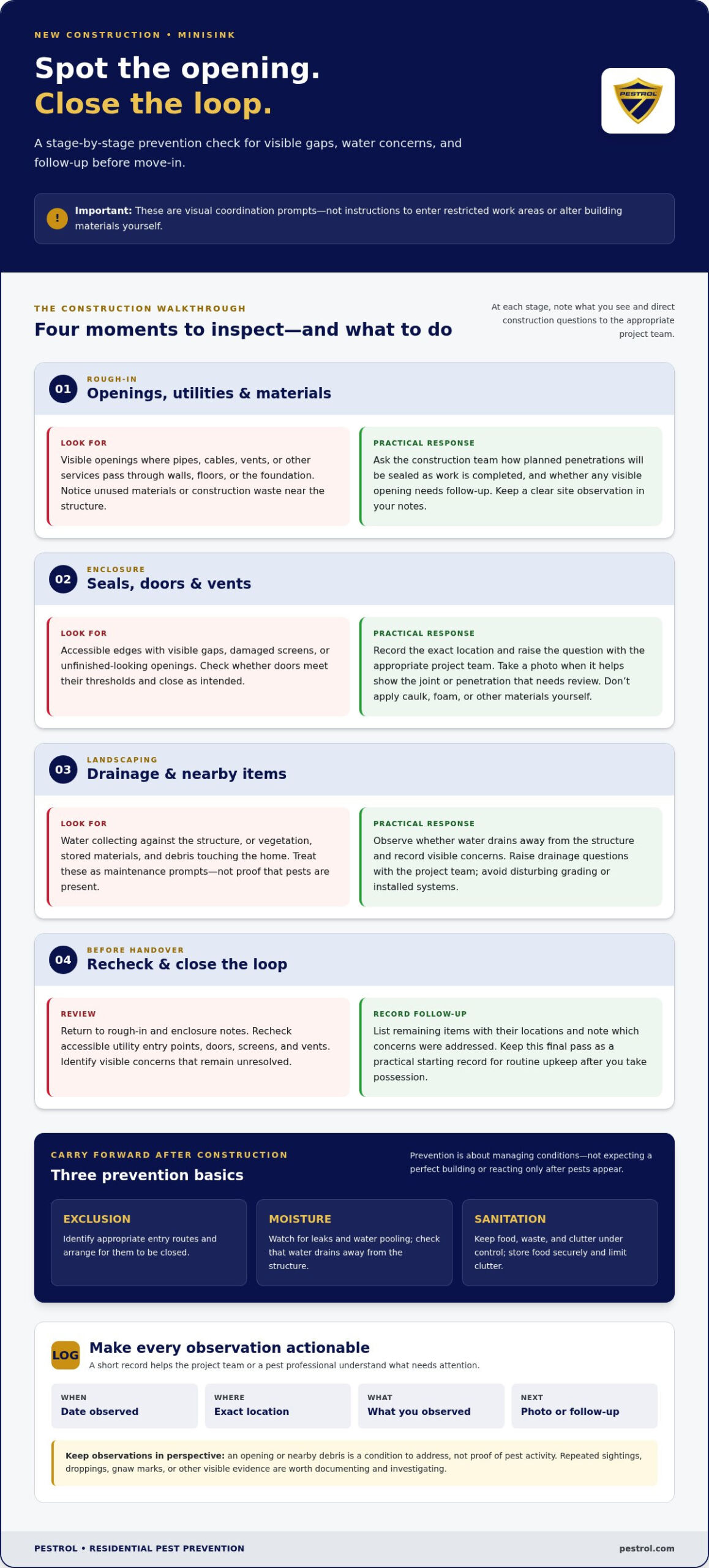
A staged inspection is easier than trying to remember every detail at handover. Use each construction milestone to look for visible concerns and raise them with the project team. These are coordination prompts, not instructions to enter restricted work areas or alter building materials yourself. Keep a short log of the location, date, and question so each item can be followed as work progresses.
Rough-in: openings, utilities, and materials
While framing and utility work remain visible, note where pipes, cables, vents, and other services pass through walls, floors, or the foundation. Ask the construction team how these planned penetrations will be sealed as work is completed, and whether any visible opening still needs follow-up. Also look for unused materials and construction waste accumulating near the structure. Their presence isn’t proof of pest activity, but an orderly site makes it easier to spot changes and complete inspections.
Enclosure: seals, doors, and vents
As exterior finishes, windows, and doors are installed, review accessible edges for visible gaps, damaged screens, or openings that appear unfinished. Check that doors meet their thresholds and close as intended. Don’t apply caulk, foam, or other materials to construction details yourself. Note the location and direct the question to the appropriate project team. A photo can help show exactly which joint or penetration needs review.
Landscaping: drainage and nearby items
Once exterior work and landscaping take shape, observe whether water drains away from the structure rather than collecting against it. Look for vegetation, stored materials, or debris touching the home, and record these as maintenance prompts rather than proof that pests are present. Raise drainage concerns with the project team. Keep the inspection focused on what you can see, and avoid disturbing grading or installed systems.
Pre-handover: close the loop
Before handover, revisit the notes you made during rough-in and enclosure. Confirm which visible gaps or other concerns were addressed, and list any remaining follow-up items with their locations. Check doors, screens, vents, and utility entry points again from accessible areas. This final pass gives you a practical starting record for routine upkeep once the home is yours.
Checklist summary: Exclusion means identifying and closing appropriate entry routes; moisture management means watching for leaks or water pooling; sanitation means keeping food, waste, and clutter under control. Together, these measures make preventing pests in a new construction home Minisink a practical process that starts before move-in.
For ongoing support after construction checks are complete, Pestrol provides home pest protection to help address recurring household pest concerns.
Builder Measures vs. Homeowner Upkeep vs. Professional Pest Protection
A new home can still develop pest concerns. Its age alone doesn’t prevent insects or rodents from finding food, moisture, shelter, or a route indoors. Prevention works best as an ongoing effort: construction teams address building-related corrections, homeowners manage everyday conditions, and pest professionals help assess recurring activity. These roles complement one another, and none replaces the others.
Integrated Pest Management (IPM) offers a useful prevention-first framework. It combines inspection, monitoring, and practical changes to reduce pest opportunities, with control guided by observed conditions. For preventing pests in a new construction home Minisink, that means recording construction concerns, keeping up household routines, and seeking professional guidance when patterns persist.
Construction team | During the build and punch-list process: Review documented concerns such as unfinished seals, damaged screens, and visible exterior gaps. Note locations, take photos, and raise items through the project process. Construction corrections should be handled by the appropriate project team, not improvised by the homeowner.
Homeowner | At handover and day to day: Store food securely, manage household waste, watch for leaks or persistent damp areas, and make regular visual checks. These routines reduce food, water, and clutter that could support pest activity. Record changes so you can tell whether a concern is isolated or recurring.
Pest professional | When activity or conditions repeat: A professional assessment can help identify patterns, evaluate recurring signs, and guide a prevention response. Ongoing residential protection supports monitoring and attention to household pest risks over time. It doesn’t replace construction repairs or routine sanitation.
What belongs on the construction punch list
Keep the list specific and easy to follow. Note the room or exterior location, the feature involved, what you observed, and when you reported it. For example, record a visible gap near a utility entry or a screen that appears damaged. Share the note through the project’s established process, then track whether it was reviewed or needs follow-up. Don’t modify building systems yourself.
When ongoing household or professional support fits
Daily upkeep is a useful first layer, but repeated sightings, recurring entry concerns, or persistent conditions may call for professional assessment. Keep notes on where and when activity appears, along with any changes you’ve made. Pestrol provides residential pest management in Minisink, including Home Pest Protection – Basic for ongoing protection. For broader context on residential prevention, explore Home Pest Protection for New Yorkers.
New Home Pest-Prevention Checklist for Move-In and the First Months
Use this sequence to turn handover observations into practical routines. You don’t need to treat every gap or single insect sighting as an emergency. Look for patterns, keep clear records, and route construction concerns through the handover process. These habits make preventing pests in a new construction home Minisink easier to manage as you settle in.
At handover: inspect and document
- Walk the accessible exterior and interior. Check visible seals, screens, doors, utility entries, and drainage areas. Note concerns such as a screen that doesn’t sit properly or water collecting near the structure.
- Take photos and make a record. For each item, write the date, location, what you observed, and a photo reference. Add a follow-up note, such as “reported during handover” or “recheck after repair.” Keep these notes with your home maintenance records.
- Track unresolved construction items. Send documented concerns through the appropriate handover process. Don’t attempt to alter seals, utility entries, or other building systems yourself. Keep a copy of the item and any response so you can follow its status.
After move-in: make prevention routine
- Before furnishing, check storage areas. Look over basement, utility, pantry, and closet spaces while they’re easy to access. Keep stored goods organized and leave room to inspect corners and edges.
- Build simple household habits. Store food securely, manage waste regularly, and address leaks or standing water promptly. These steps reduce food and moisture that can support pest activity.
- Repeat visual checks during regular upkeep. Review less-used spaces, door and window screens, and areas where you’ve noticed a concern. Note the date and location of any new observation.
- Look for repetition or change. A single sighting may warrant a note and observation. Repeated sightings in the same area, recurring droppings, or signs of damage deserve closer attention, especially if activity continues after you address an obvious household condition.
A simple log can be a notebook or digital note with four fields: date, location, photo, and follow-up. For example: “October 10, pantry corner, photo saved, recheck and record any further signs.” Consistent notes can help distinguish a one-time observation from a pattern. If signs recur or you’re unsure what they indicate, professional assessment can help guide next steps. For ongoing rodent entry concerns, Pestrol provides rodent proofing services.
When Minisink Homeowners Should Consider Professional Pest Protection
New construction doesn’t rule out future pest activity. If you’re seeing repeated signs or the same entry concern keeps returning after basic upkeep, professional guidance can help you understand what to address next. A single sighting doesn’t automatically mean there’s an infestation, so focus on patterns and context instead of jumping to conclusions.
Signs that prevention may need professional attention
Take note if sightings recur, evidence appears in several places, or signs continue after you address an obvious source such as uncovered food or an accessible waste bin. Repeated activity can point to a persistent condition or access route that deserves a closer look. If you notice damage or activity in a hard-to-inspect area, avoid disturbing it and record what you can see.
Before seeking help, make your observations useful. Keep a brief log that captures:
- Pest type: Describe what you saw, or note if you’re unsure.
- Location: Record the room, exterior area, or nearby feature.
- Frequency: Note dates and whether signs are recurring or increasing.
- Visible conditions: Record moisture, a potential opening, or stored items nearby, and add a photo if it helps.
This record gives a professional a clearer starting point for assessing the concern. It also helps distinguish a one-time observation from a repeated pattern, without treating any single sign as a diagnosis.
How ongoing home protection supports prevention
A one-time response focuses on a concern that has already appeared. Scheduled residential pest protection takes a longer view, supporting routine attention to household risks and recurring activity over time. It can complement homeowner habits such as secure food storage, waste management, moisture awareness, and visual checks. It doesn’t replace construction corrections or guarantee a pest-free home.
For preventing pests in a new construction home Minisink, professional support can be useful when records show recurring signs, repeated entry concerns, or activity in more than one area. Pestrol’s Home Pest Protection – Basic is an ongoing residential option for homeowners who want professional prevention as part of their household routine. It’s a practical next step after you’ve addressed everyday conditions, not a substitute for the project team’s construction work.
Keep your notes handy and share what you’ve observed. Details about the pest, location, and frequency can help guide the next steps and make the process feel more manageable.
Make Prevention Part of Your New-Home Routine
Your first months in a new home are a good time to build simple habits that last. Keep inspection notes with your home records, revisit unresolved concerns, and adjust your routine as you learn how the property behaves through changing weather. Steady attention can help you catch developing issues early without treating every small sign as a crisis.
For preventing pests in a new construction home Minisink, you don’t have to manage recurring concerns alone. Pestrol is family-owned and operated and serves Minisink and nearby communities, including Manhattan, the Bronx, Chester, Cornwall, Crawford, Goshen, Greenville, Highlands, Minisink, Monroe, Montgomery, Mount Hope, New Windsor, Newburgh, Palm Tree, Tuxedo, Wallkill, Warwick, Wawayanda, and Woodbury. Its Home Pest Protection plans offer Basic, Plus, and Premium levels for ongoing residential protection.
Choose the next step that fits your home and the concerns you’ve observed. A little continued attention can help you feel more settled and confident in your new space.
Here’s to a comfortable new home and a confident start.
Frequently Asked Questions
Can a newly built house still have pests?
Yes. A new house can still have pests because fresh construction doesn’t prevent insects or rodents from reaching indoor food, shelter, or moisture. Materials brought onto a site or work areas left open temporarily are reasons to stay observant, not evidence of an infestation. If you notice something, record where and when it appeared. A pattern of activity is more useful to assess than one isolated sighting.
What should I inspect for pests before moving into a new home?
Inspect accessible doors, screens, vents, and utility entry areas. Also look inside cabinets, closets, and storage spaces before boxes or furniture block your view. Check for torn screens, visible gaps, water stains, or unexplained debris, but don’t treat any one condition as proof of pests. Photograph concerns and note their locations. Keep construction-related items in your handover records so they’re easier to follow up.
How can I prevent mice from entering a new construction home?
Reduce access to food and entry opportunities: store pantry goods in secure containers, keep rubbish contained, and note gaps around doors or utility entries for appropriate repair. Don’t block vents or change building systems, since these may serve important functions. If you find gnaw marks, droppings, or repeated sightings, note the room and dates. That information can help distinguish an isolated observation from a continuing concern.
Should pest control happen during construction or after move-in?
Prevention can start during construction, while openings and exterior details are visible, then continue as part of household care after handover. The appropriate next step depends on what you observe and whether signs recur. Route building-related repairs through the project process rather than trying to correct them yourself. If household pest concerns continue after move-in, Pestrol’s residential pest management can help address them.
Are new construction homes in Minisink less likely to have pests?
A home’s age alone can’t determine its pest risk. Conditions vary from property to property, including the surrounding environment, maintenance, and details of the finished structure. For preventing pests in a new construction home Minisink, treat the house as something to inspect and maintain rather than assuming new means protected. Keep observations tied to dates and locations, and avoid making seasonal assumptions without reliable local guidance.
When should I call a pest professional after moving into a new home?
Consider professional guidance for repeated activity, signs appearing in multiple areas, visible damage, unusual odors, or scratching sounds in walls. These clues don’t prove a particular pest is present, but they deserve attention, especially if they continue. Note what you observed, where, and how often. A professional assessment can help clarify possible next steps. Avoid applying pest-control products without understanding their directions and intended use.