



What if the moths you see near your carpet aren’t the ones causing the damage? It’s the larvae that feed on natural fibers, and they can stay tucked away under furniture, along edges, or in other undisturbed spots. Effective moth larvae in carpet removal starts with finding where activity is happening, not just treating the patch you can see.
If you’ve spotted unexplained holes or thinning carpet, it’s reasonable to wonder whether moths are to blame. Vacuuming is an important first step, but it may not reach every hidden area or resolve ongoing activity on its own. A careful inspection and thorough cleaning can help you understand what you’re dealing with and what to do next.
This guide explains how to recognize likely carpet moth activity, check commonly missed areas, and clean affected carpet and nearby spaces safely. You’ll compare practical removal approaches and learn when recurring signs or activity in several areas may call for targeted professional clothing moth control. With a clear plan, you can tackle the problem methodically and protect your home from further damage.
Key Takeaways
- Learn to distinguish likely moth activity from other carpet damage by checking for fiber loss, webbing, shed cases, and larvae in quiet areas.
- Understand why cleaning visible damage alone may miss eggs or larvae hidden beneath furniture and along carpet edges.
- Compare vacuuming, professional textile cleaning, and targeted pest treatment to see what each method can and can’t address.
- Follow a practical moth larvae in carpet removal plan: document signs, inspect nearby sources, clean, reassess, and monitor.
- Recognize when recurring signs or activity in multiple areas may call for professional clothing moth control.
Moth Larvae in Carpet: How to Recognize the Problem
Textile-feeding moth larvae are the immature stage that can damage susceptible natural fibers; adult moths are mainly associated with reproduction, not feeding on carpet. Wool, silk, and other animal-based fibers may be at risk. The Tineidae (Fungus Moths) family includes moths whose larvae use natural materials as a food source.
Look for a combination of clues rather than relying on one mark. Carpet moth activity may be associated with:
- Irregular patches of thinning, missing, or damaged fibers, especially in less-disturbed areas.
- Small shed larval cases or silk-like webbing among fibers or near carpet edges.
- Live, caterpillar-like larvae tucked into carpet, beneath furniture, or beside a skirting board.
Adult moths flying indoors can prompt an inspection, but a sighting alone doesn’t show whether larvae are present or how much carpet is affected. Carpet wear can have other causes, too. Check the material and location of any damage, and look for additional signs before treating it as a moth problem.
What do moth larvae in carpet look like?
They’re small and caterpillar-like, but their size, color, and appearance can vary by species and stage of development. Some may be difficult to notice against carpet fibers. Good lighting can help you spot movement, a larval case, or webbing. Don’t identify a pest by color alone.
Carpet beetle larvae can also be associated with damage to natural-fiber materials. They’re often described as bristly or hairy, while moth larvae may appear smoother or be found with a silken case or webbing. These are clues, not a diagnosis. Look for several features together because signs can be hard to interpret.
Where should you look for carpet moth activity?
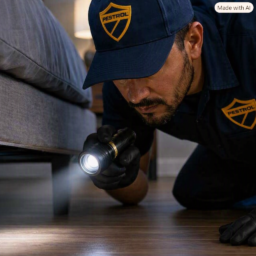
Start where carpet gets less attention. Check along edges and skirting boards, beneath sofas and beds, and under rugs or other floor coverings. Use a flashlight to inspect seams, corners, and the carpet perimeter. Pay close attention to dim, quiet spots where dust, hair, and lint collect, since these areas can conceal signs a quick walk-through misses.
Extend the inspection to nearby closets and textile storage, including wool or other natural-fiber items kept close to the affected carpet. In an apartment, inspect your own rooms and belongings without assuming neighboring units are affected. For effective moth larvae in carpet removal, record where you find damage, cases, webbing, or larvae so you can focus the next steps.
How Carpet Moth Larvae Develop and Spread Through a Home
Carpet moth activity can continue even after you remove a larva you’ve spotted. The larval stage feeds on susceptible natural fibers, while adult moths are mainly involved in reproduction. Eggs and young larvae can be difficult to notice, especially in places that aren’t moved or cleaned often. A single visible pest is a reason to inspect more broadly, not proof that the problem is limited to that exact patch.
Removing visible larvae alone may not resolve an infestation because eggs or other larvae could remain in undisturbed carpet, rugs, or nearby textiles. Activity in one place can also point to another susceptible item in the room, such as a wool rug or stored clothing. Trace the signs across nearby materials before deciding what to clean.
Why larvae hide along carpet edges and under furniture
Carpet edges, skirting boards, and areas under furniture are useful inspection priorities because they’re often less disturbed than open floor space. They aren’t guaranteed hiding places, so check rather than assume larvae will be there. Move furniture slowly and safely, then inspect the carpet boundary and concealed patches with good lighting.
Dust, hair, and lint can collect in these spots. Their presence doesn’t confirm moth activity, but it signals areas that may need closer inspection and thorough cleaning. Check around furniture legs, under the front edge of a sofa, and where a rug meets fitted carpet.
How to check nearby fabrics and stored items
Inspect susceptible textiles near the affected area, including wool, silk, feathers, and items made with other natural fibers. Check both sides of rugs, closet floors, and stored fabrics. Look for signs consistent with the carpet findings, such as fiber damage, webbing, or cases. One mark can have another explanation, so compare locations and clues rather than drawing a conclusion from a single item.
Before starting moth larvae in carpet removal, make a simple record of what you find. Note the room, exact location, item, and visible signs, and take photos if useful. This makes it easier to spot patterns, prioritize cleaning, and reassess the same areas later. In an apartment, begin with your own rooms and belongings; don’t assume nearby activity without evidence.
If signs keep appearing across several areas or on multiple textiles, a broader assessment may be a practical next step. Pestrol provides professional clothing moth control for residential pest concerns.
Comparing Carpet Moth Larvae Removal Methods
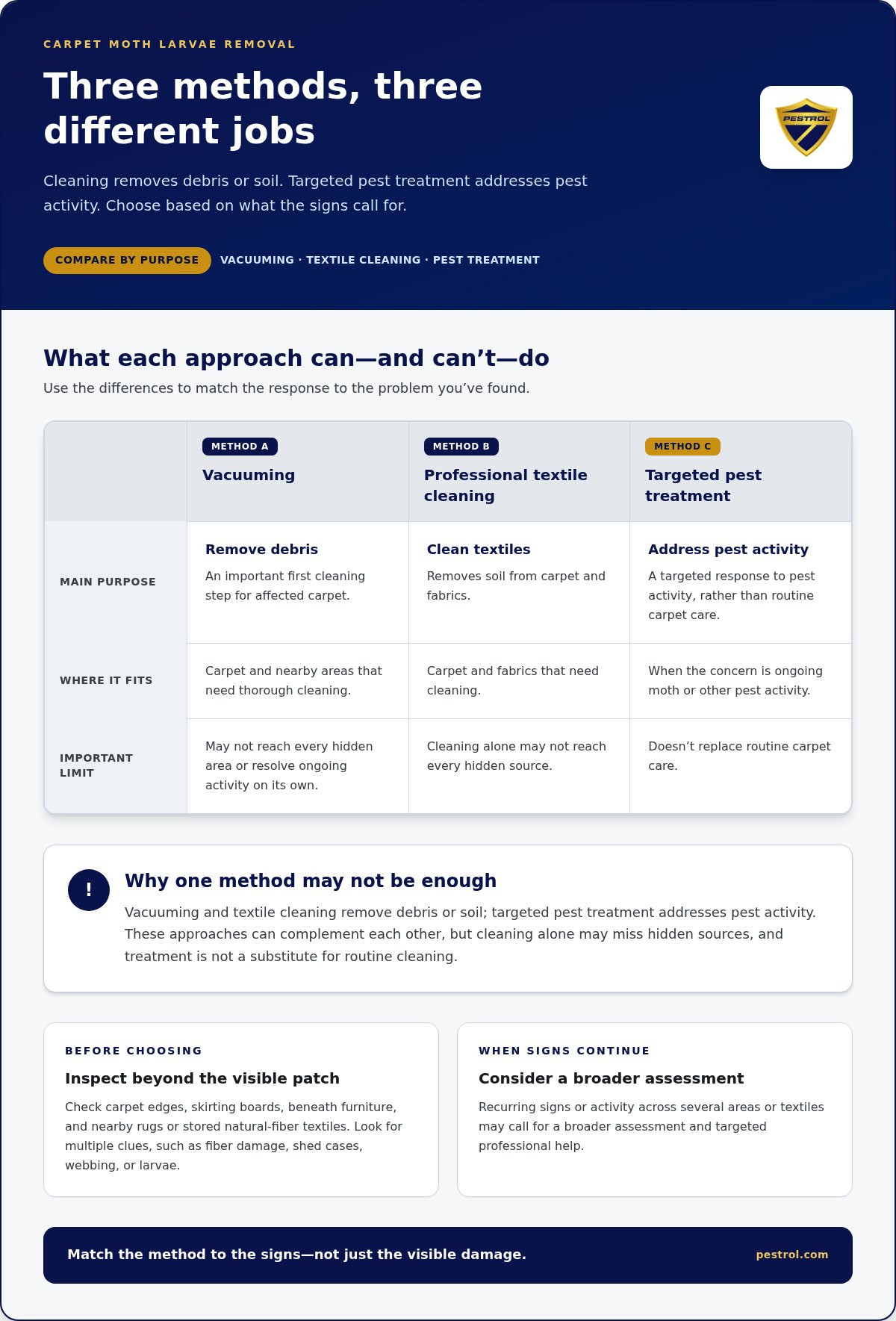
No single cleaning task does everything. Vacuuming and textile cleaning remove debris or soil from carpet and fabrics, while targeted pest treatment addresses pest activity. These approaches can complement each other, but cleaning alone may not reach every hidden source, and pest treatment doesn’t replace routine carpet care. For effective moth larvae in carpet removal, match your response to the signs you’ve found and the areas involved.
| Method | Purpose and where it may help | What it may not address |
|---|---|---|
| Vacuuming | Removes dust, lint, and other debris from carpet surfaces, edges, and accessible areas under furniture. It may also collect accessible insects or pest-related material. | It may not reach concealed sources, eggs, or larvae in deep or hard-to-access areas. Rugs and stored textiles need to be vacuumed separately. |
| Professional textile cleaning | Provides a deeper clean for suitable carpets, rugs, or other textiles, following the item’s care needs. It may help remove embedded soil and material from the treated item. | Cleaning isn’t the same as pest treatment. It may not address activity elsewhere in the room or home, or hidden sources outside the item being cleaned. |
| Targeted pest treatment | A professional assessment can help identify the likely pest issue and guide a response focused on affected areas and potential sources. | The approach depends on the situation. It doesn’t replace cleaning, textile care, or follow-up inspection of areas where signs were found. |
What vacuuming and carpet cleaning can address
Vacuum slowly and methodically, giving attention to carpet edges, room boundaries, and accessible areas beneath furniture. Empty the vacuum contents into a bag, seal it, and dispose of it promptly. If your vacuum uses a collection container, empty and clean it according to the manufacturer’s instructions. This helps keep collected debris from being left around the home.
For a rug or carpet that needs more than vacuuming, follow its care instructions before arranging or attempting textile cleaning. Check the material and any cleaning guidance first, especially for delicate or natural-fiber items. A freshly cleaned carpet can still have a nearby source in a closet, rug, or upholstered item, so include those areas in your inspection.
When targeted professional moth control may be useful
Consider professional help if signs return after cleaning, new damage appears, or activity shows up in several locations. Repeated findings may mean the source is hidden or extends beyond the section of carpet you can easily reach. Keep your notes and photos; they can help explain where signs appeared and what you’ve already cleaned.
A professional assessment can guide a targeted response without assuming every case needs the same treatment. Pestrol provides specialized clothing moth control for residential pest concerns, a practical option when activity persists or affects multiple areas.
A Practical Step-by-Step Plan for Removing Moth Larvae from Carpet
A steady process makes it easier to clean thoroughly and see whether signs return. Work through the affected room and nearby textiles in order, and keep a simple record as you go. Whether you rent an apartment or own a house, avoid rushing into treatments that could damage carpet or fabrics.
- Document what you find. Before moving anything, note or photograph the locations of larvae, cases, webbing, or fresh fiber damage. Include nearby rugs or textiles with similar signs. This gives you a clear starting point for comparison after cleaning and can help you explain the issue to a property manager if you rent.
- Inspect nearby sources. Check carpet edges, accessible areas beneath furniture, rug undersides, closet floors, and stored natural-fiber items. Move light furniture where practical, but don’t strain yourself or risk damaging the floor. Record each location separately so you can focus cleaning and follow-up on places where you found evidence.
- Prepare the room and fabrics. Separate visibly affected washable items from clean fabrics to reduce unnecessary contact between them. Check each item’s care label before washing or cleaning; some textiles need special handling. Keep inspected items apart from uninspected ones while you work, and don’t assume a textile is affected just because it was stored nearby.
- Clean the affected areas. Vacuum the carpet carefully, including edges and accessible concealed spots, while following its care requirements. Empty vacuum contents into a bag, seal it, and dispose of it promptly. Clean reusable equipment according to its instructions. If you use any cleaning or pest-control product, follow its label exactly. Don’t mix products or improvise combinations.
- Reassess and monitor. Compare the cleaned areas with your notes and photos. Record any new larvae, cases, webbing, or damage in the same way. Keep checking those locations and nearby textiles rather than assuming one cleaning addressed every possible source. Fresh evidence or repeated damage is a reason to broaden the assessment.
Cleaning carefully in a rental or shared building
In a rental, document carpet damage before cleaning and avoid altering fitted carpet. If the carpet needs specialized care, check its care guidance and coordinate with the property manager as appropriate. In an apartment, focus on your own rooms and belongings; don’t assume the activity extends to other units. For guidance on the wider fabric-infestation process, see Pestrol’s how to get rid of clothing moths.
Recheck the same places
Return to the spots you recorded, including the edges and areas under furniture you moved. Note what you see, even if there’s no new evidence. A consistent record helps distinguish old damage from new signs and makes it easier to decide whether cleaning is enough or a broader assessment would be useful.
When to Call Pestrol for Carpet Moth Larvae and Clothing Moth Control
DIY cleaning is a useful first response, but it can’t always reveal whether activity continues in a hidden spot or has spread to nearby textiles. If you’ve cleaned carefully and still find fresh damage or other signs, a broader assessment can help clarify where the issue may be coming from and what next steps make sense. You don’t need to wait until carpet damage is extensive to take recurring signs seriously.
Signs that suggest the problem needs a closer look
Consider professional help if new damage appears after cleaning or if you find signs repeatedly in more than one room. Similar evidence on a carpet, rug, and stored woolens may suggest that the affected area is broader than one visible patch. These patterns don’t confirm the full extent of activity, but they’re useful context for an assessment.
Bring your notes and photos. Record which rooms and items showed signs, what you found, and which areas you’ve already cleaned. That history can help focus the discussion on recurring locations and changes over time, rather than relying on memory or a single observation. For renters, keeping a record can also help communicate the issue clearly with a property manager.
What Pestrol’s residential moth-control support offers
Pestrol provides specialized clothing moth control for residential moth concerns, along with home pest-management plans. As a family-owned business serving local communities, Pestrol helps residents in Manhattan, the Bronx, Chester, Cornwall, Crawford, Goshen, Greenville, Highlands, Minisink, Monroe, Montgomery, Mount Hope, New Windsor, Newburgh, Palm Tree, Tuxedo, Wallkill, Warwick, Wawayanda, and Woodbury. Professional support can be a practical next step when repeated signs or activity across several locations make it difficult to determine whether cleaning alone is enough.
Share what you’ve observed and where it appeared. Your notes don’t need to prove an infestation; they help explain why you’re concerned and what you’ve already tried. You can also explore Pestrol’s clothing moth guidance for related information on managing moth concerns around the home.
If signs keep returning or you’re finding them across several areas, contact Pestrol to discuss residential clothing moth control. A calm, informed next step can help you move beyond repeated spot-cleaning and address the concern with a clearer picture of what’s happening.
Take the Next Step Toward Protecting Your Home
Carpet damage can feel unsettling, but you don’t have to solve every question at once. Use what you’ve observed to decide on a sensible next step: continue careful monitoring if signs have stopped, or seek a broader assessment if activity keeps returning. A measured approach to moth larvae in carpet removal helps you respond to the evidence without relying on guesswork or rushing into treatments that may not suit your home.
If you’re still finding fresh signs, or you’d rather have support assessing the concern, Pestrol offers specialized Clothing Moth Control and residential pest-management plans. Contact Pestrol to discuss your concern and take the next step with a clearer plan.
With a clear plan and the right support, you can move forward calmly and give your home the attention it needs.
Frequently Asked Questions
Can vacuuming remove moth larvae from carpet?
Yes, vacuuming may collect larvae and other accessible material, but it can’t confirm that all activity is gone. Give attention to the carpet perimeter and areas beneath furniture, then empty the vacuum promptly and clean reusable parts according to the manufacturer’s instructions. For moth larvae in carpet removal, also inspect nearby rugs and closets. If fresh signs appear later, record their location and reassess the area.
Does professional carpet cleaning kill moth larvae?
Professional carpet cleaning may remove some accessible insects or material while cleaning affected fibers, but it shouldn’t be assumed to eliminate a pest problem. Results depend on the carpet, cleaning method, and where activity is located. Before arranging cleaning, check the carpet’s care instructions and identify any delicate materials. If signs continue afterward, inspect nearby rugs, closet contents, and stored fabrics separately.
Can moth larvae live in synthetic carpet?
A synthetic surface doesn’t automatically rule out moth activity. Carpet can include blended materials or backing, and susceptible textiles nearby may be the source rather than the visible carpet pile. Check the rug beside the carpet, stored woolens, and dust-collecting edges before deciding what’s affected. If you can’t tell what the carpet is made from, look at its label or care information rather than judging by appearance alone.
What happens if moth larvae are left in carpet?
If larvae remain where susceptible fibers are available, they may continue feeding and damage may increase. How much damage occurs depends on the materials and circumstances, so one sighting doesn’t predict the outcome. Take a close-up photo of any new bare or thinning patch and compare it with the same spot later. That can help distinguish continuing damage from older wear, which may have another cause.
Can carpet moth larvae spread from one room to another?
Moth-related signs can occur in multiple rooms, but finding them in a second location doesn’t establish how or when activity began there. Compare the materials and conditions in each area: a wool rug, closet storage, or an undisturbed carpet edge may offer useful clues. Keep separate notes for each room, including which items were checked, so the pattern is easier to explain and reassess.
Are carpet moth larvae the same as carpet beetle larvae?
No. They’re different pests, though damage to carpet or fabrics can look similar at first glance. A carpet beetle larva is often described as bristly, while moth larvae may be associated with silk-like webbing or a case. Those traits can guide inspection, but they aren’t enough to confirm identification. If you find a specimen, take a clear close-up photo and avoid choosing a treatment based on carpet damage alone.
When should I call a pest control professional for moth larvae in carpet?
Consider professional help if new damage continues after cleaning, signs recur, or several rooms or textiles are involved. Share your notes, photos, and the cleaning steps you’ve tried. Pestrol provides Clothing Moth Control and residential pest-management support in Manhattan, the Bronx, Chester, Cornwall, Crawford, Goshen, Greenville, Highlands, Minisink, Monroe, Montgomery, Mount Hope, New Windsor, Newburgh, Palm Tree, Tuxedo, Wallkill, Warwick, Wawayanda, and Woodbury.