



There isn’t one flat price for pest control in New York City. The cost depends on the pest, the property’s size and condition, and whether you need a one-time service or ongoing protection. To choose the right approach, start by identifying what is causing the problem and what kind of service can address it.
It’s reasonable to want a clear idea of the cost before deciding what to do. This guide explains the factors that shape pricing, how one-time treatments compare with ongoing plans, and what commercial pest control involves. You’ll also learn which options may suit different pest problems, so you can decide on a practical next step for your home or business.
Key Takeaways
- Learn which factors shape a pest control estimate, including the pest, property conditions, and treatment approach.
- Compare one-time treatment with ongoing service to understand which option may fit the problem.
- See how professional plans address common concerns such as rodents, cockroaches, and bed bugs.
- Find out what commercial pest management can involve, including service considerations for restaurants.
- Explore how tiered home protection options and targeted bed bug treatment can guide your next step.
Do you offer one-time treatments or just ongoing plans?
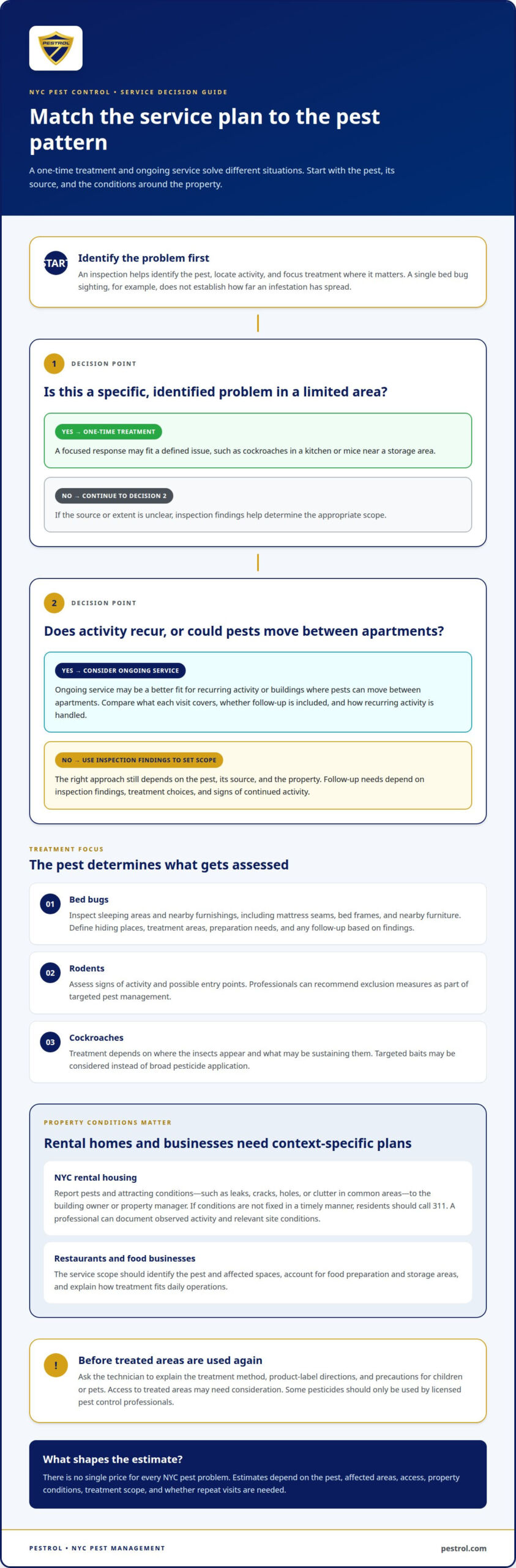
Both approaches can make sense in New York City. A one-time treatment targets a specific, identified problem, such as cockroaches in a kitchen or mice near a storage area. Ongoing service may be a better fit for recurring activity or buildings where pests can move between apartments. The right choice depends on the pest, its source, the property, and whether the problem returns after treatment.
For NYC rentals, residents should report pests and conditions that attract them, including leaks, cracks, holes, or clutter in common areas, to the building owner or property manager. If those conditions aren’t fixed in a timely manner, residents should call 311. This practical reporting step helps put the problem and its possible building-wide causes on record.
An inspection helps identify the pest and focus treatment where it matters. Rodent concerns call for assessing signs of activity and possible entry points; cockroach treatment depends on where the insects appear and what may be sustaining them. Bed bugs require a careful inspection of sleeping areas and nearby furnishings. A single sighting can warrant an assessment, but it doesn’t establish how far an infestation has spread.
A bed bug assessment should identify likely hiding places and define the treatment plan. A professional can inspect mattress seams, bed frames, and nearby furniture, then explain which areas need treatment and what preparation is required. Pestrol provides Bed Bug Treatment for this specific problem. Follow-up needs depend on inspection findings, treatment choices, and signs of continued activity. Clear instructions help residents know what to expect before and after each visit.
Treatment safety starts with using pesticides according to the product label. In homes with children or pets, access to treated areas and any required precautions need consideration. Some pesticides should only be used by licensed pest control professionals. Ask the technician to explain the treatment method, label directions, and steps needed to protect household members. No treatment should be described as universally child-safe or pet-safe without considering the product and how it’s used.
Reduced-risk pest management can prioritize targeted treatment and practical prevention instead of broad pesticide application. For cockroaches, targeted baits may be considered; for rodents, professionals can assess entry points and recommend exclusion measures. The method should match the pest and location. In a commercial kitchen, for example, treatment planning must account for food areas and daily operations, not just visible insects.
- Choose a one-time treatment for a defined, limited problem that needs focused attention.
- Consider ongoing service when activity recurs or inspection points to continuing pest pressure.
- For bed bugs, rely on an inspection-led plan that identifies hiding places and treatment areas.
- For children and pets, get clear product-label precautions before treated areas are used again.
How much does pest control cost in New York City?
There’s no single price for every New York City pest problem. The pest, property, treatment scope, and need for follow-up all affect the estimate.
Pricing depends on the case and is provided after a quote request. Factors include the pest, affected areas, access, property conditions, and whether repeat visits are needed.
Which pest control companies in New York City are highly rated? Ratings vary by service and location, so look for feedback about similar pest problems and property types. A review about apartment cockroaches may offer more useful context than one describing a different service.
Does NYC offer free or subsidized pest control services? Children and adults with provider-diagnosed persistent moderate or severe asthma who live in rental housing with mice or cockroaches are eligible for a free home assessment. This is an assessment, not free pest treatment.
Residential and Business Services
Residential treatment may address pests in a house or apartment, while commercial service accounts for the building’s purpose and operating needs. Food establishments need a plan that considers food preparation and storage areas. For a restaurant, the scope should identify the pest and affected spaces, and explain how treatment fits the business’s daily operations.
Contract and Repeat-Service Options
Before choosing a plan, understand whether it involves a contract, repeat-service discounts, or both. Compare what each visit covers, whether follow-up is included, and how recurring activity is handled. A one-time response to a localized problem differs from ongoing service for continuing pest pressure. Compare the scope of service, not just visit frequency.
Pestrol provides pest control in New York City (specifically serving Manhattan and the Bronx), as well as Rockland County, Orange County, and Westchester County. When requesting an estimate for pest control new york city, share the property’s specific borough and neighborhood along with whether it’s an apartment, house, or food business. This helps establish the proper service context.
Pestrol provides services for concerns such as cockroaches, mice, bed bugs, termites, mosquitoes, ticks, and clothing moths. Ant, flea, and spider activity also calls for pest-specific assessment. Inspection findings help determine the appropriate service. Termite concerns, for example, require a different evaluation from mosquito activity around a property.
How can a pest control professional help when reporting a pest infestation to NYC 311? A professional can document observed pest activity and relevant site conditions, helping you describe the issue clearly. If a landlord or property manager hasn’t addressed pest-attracting conditions in a timely manner, NYC residents can call 311.
What should clients do before and after professional pest control treatment? Before treatment, share where and when pests appear, then follow the technician’s preparation instructions. Afterward, follow product-label precautions and the technician’s directions for treated areas, including any relevant instructions for food, household members, and pets.
Commercial pest control
Commercial pest management helps workplaces, food businesses, and shared facilities address recurring pest activity. A restaurant, for example, may need attention to cockroaches near equipment, while an office may report rodents around storage areas. The treatment plan should match the pest, the affected rooms, and how each space is used.
An inspection identifies signs of activity, entry points, and conditions that may attract pests. At a food establishment, that can mean assessing kitchens, storage rooms, waste areas, and delivery points. At a warehouse, the inspection may focus on loading areas and stored goods. A clear scope keeps treatment focused on the reported problem.
Rodent management often combines monitoring with exclusion, which means closing routes pests use to enter. Professionals can inspect gaps around pipes, doors, and wall openings, then recommend suitable sealing measures. Caulk or steel wool can seal some entry points. Bait stations may also form part of a plan, with placement chosen to suit the site and limit access by people or non-target animals.
For insect activity, treatment depends on the species and location. Wall-mounted insect light traps are typically installed within 5 feet of the floor. Their placement should suit the room and its use, rather than obstructing work areas. Cockroach control may require attention to hiding places near appliances, plumbing, and food-storage areas, alongside steps to address conditions supporting activity.
Pesticide use in a business requires careful attention to the product label and treatment setting. Some pesticides should only be used by licensed pest control professionals. Before work begins, the service plan should identify treatment areas and explain any precautions for employees, customers, or food-handling spaces. These details help businesses coordinate access and routine operations.
Residential and commercial pest control differ because properties serve different purposes. An apartment in Brooklyn may need targeted treatment in a kitchen or shared hallway, while a Queens restaurant must consider customer areas and food preparation. In both settings, an inspection should establish where pests appear and whether activity extends beyond the first reported location.
Termite concerns also call for a focused assessment. Experts can look for signs of activity and determine which parts of a building need attention. A commercial facility may have different access needs than a private home, especially where storage, equipment, or occupied work areas limit treatment access. The findings guide the scope and sequence of service.
For ongoing pest management, records of sightings and service visits help track changes in activity over time. A facility manager can share where and when pests appear, then coordinate access to affected rooms. That information supports practical follow-up for businesses across New York City, from storefronts to larger shared facilities.
Need a Pest Management Expert in NYC?
Integrated Pest Management (IPM) combines inspection, pest identification, prevention, and targeted treatment. For a bed bug concern, technicians first look for evidence around beds and nearby furniture. They use their findings to choose an approach rather than treating every room the same way. The plan can also include follow-up monitoring to see whether activity continues.
Evidence from the property is the starting point for pest management. A technician can record where pests appear, what signs are present, and which conditions may support them. For example, recurring activity near a pipe opening may point to an access route that treatment alone won’t address. Inspection findings help determine whether exclusion, sanitation changes, monitoring, or targeted products belong in the plan.
In a multi-unit apartment building, treating one unit may not address pest movement through shared spaces or neighboring apartments. A coordinated inspection can map reports by room, floor, and common area. Building management can help arrange access to relevant units, while technicians document observations consistently. For bed bugs, this can help distinguish a localized issue from activity reported in multiple apartments.
Green pest management means selecting measures carefully, not simply labeling every treatment harmless or pesticide-free. IPM may emphasize sealing entry points, reducing conditions that attract pests, and using targeted treatment where inspection finds activity. If pesticides are used, technicians should follow the product label and explain precautions for the specific treatment area. These steps make the plan clearer for residents and property staff.
Keeping useful records supports decisions over time. A service log can note the pest identified, locations inspected, actions taken, and follow-up observations. If an apartment in Staten Island reports recurring mouse activity near a shared storage room, those details help technicians assess patterns across the building. Monitoring then guides whether the next step should focus on access, conditions, or treatment.
Ask how the professional will identify the pest, document findings, and assess activity after treatment. A useful plan connects each action to an inspection result. For example, technicians may monitor a specific location after addressing an entry point, then adjust the approach if signs remain. Not every infestation follows the same path: bed bugs, rodents, and cockroaches require different assessments.
IPM works best when prevention and treatment go together. Technicians can explain what they observed, which measures address the source, and what follow-up will assess. For homeowners, tenants, and building managers, this makes the process easier to understand and coordinate. A clear, evidence-led plan focuses on reducing activity, addressing contributing conditions, and tracking results.
Pest control pricing in New York City
Pest control in New York City doesn’t have one standard price for every property. The pest, affected areas, access, treatment scope, and need for follow-up all shape the estimate. A roach problem limited to one room differs from activity reported across several apartments, because the inspection and treatment needs may differ.
Pricing depends on the case and is provided after a quote request. For pest control in New York City, the estimate reflects the identified pest, property conditions, treatment locations, and whether repeat visits are needed. Clear details about where pests appear help define the scope. Share whether the issue affects one room, multiple units, or shared spaces.
The pest itself influences the work involved. Bed bugs require attention to sleeping areas and nearby furnishings, while rodents may call for an assessment of potential entry points. Termite concerns need an inspection focused on signs of activity or damage. Each infestation presents different treatment needs, so a useful estimate describes the proposed work rather than relying on a generic pest category.
Property layout also affects the scope. Assessing a single-room apartment differs from inspecting several floors or shared building areas. Reports from multiple units may make additional locations relevant to the assessment. For example, if residents report roaches in both a kitchen and a hallway, the professional needs to understand where activity occurs before defining the treatment area.
Follow-up needs can influence the service plan. A focused treatment for a defined problem may require different steps from a plan addressing repeated activity. The professional considers inspection findings and whether monitoring or additional visits suit the situation. Ask for a clear description of the proposed scope, including what follow-up covers, so the estimate is easier to understand.
Commercial pest control estimates also reflect how a facility operates. A restaurant may need attention to food-preparation, storage, and waste areas, while an office may report activity near a loading area. The pest, affected locations, and operational needs shape the treatment plan. A business should understand which areas the estimate covers and how the service fits the use of the space.
Compare estimates by looking beyond the total. A useful proposal identifies the pest, inspection areas, treatment approach, and any included follow-up. If two estimates cover different work, their totals aren’t directly comparable. For recurring activity, such as roaches returning to a kitchen, the scope should explain which locations receive attention and how activity will be monitored.
Before requesting an estimate, note the pest observed, where it appears, and whether the activity recurs. For a Manhattan apartment, sightings in the kitchen and bathroom give the professional distinct locations to assess. Building managers can also share reports from common areas. These details help connect the proposed service to the infestation and property rather than a broad, one-size-fits-all plan.
Pestrol
Pestrol helps homeowners in New York City choose pest management suited to their household and concerns. Home Pest Protection plans come in Basic, Plus, and Premium options, while Bed Bug Treatment addresses a specific infestation. The right option depends on whether you need broader home protection or focused help with bed bugs.
For a recurring concern, Pestrol’s tiered home plans offer ongoing protection options. If bed bugs are the problem, Bed Bug Treatment focuses on that issue. Share which pests you’ve seen and where they appear to find a service suited to your needs.
Contact Pestrol to discuss your pest control needs and the available service options.
Choose a Practical Next Step for Your Property
Make your next decision based on the pest activity you’re seeing and the protection your property needs. For a more useful conversation about pest control in New York City, note where pests appear, when activity occurs, and whether the issue affects other rooms or shared areas. Those details help identify an appropriate service plan.
Pestrol offers Home Pest Protection – Basic, Home Pest Protection – Plus, and Home Pest Protection – Premium. These plans give homeowners a choice of protection levels. Share your concerns and priorities to discuss which approach fits your situation.
A clear next step can make a stressful pest problem easier to address. Start with what you know about the activity and choose a plan that suits your home.
Frequently Asked Questions
What types of pests do you handle?
Pestrol’s pest control services address common household and commercial pests, including rodents, roaches, ants, bed bugs, and termites. Other concerns include clothing moths, wasps, bees, mosquitoes, and ticks. The right response starts with identifying the pest and where it’s active. For example, evidence of mice near a pantry calls for a different assessment than moth activity around stored clothing.
Are your pest control treatments safe for kids and pets?
Treatment safety depends on the product and how it’s applied, so no method should be assumed harmless in every home. Pesticides should be used according to their product labels. Tell the technician about children and pets before treatment, and ask about the label precautions for the specific areas being treated. Follow those directions before allowing household members back into treated spaces.
How fast can you come out?
Scheduling depends on the service location, pest concern, and access to affected areas. Share which pest you’ve noticed, where it appears, and whether activity is continuing. For example, reports of roaches in a kitchen provide different planning details from a single mouse sighting near a building entrance. Clear information helps determine the service needed and coordinate an appointment.
How quickly can you come out for an inspection?
Inspection scheduling takes the property location, reported pest, and access to affected rooms into account. To help plan a useful visit, describe visible signs and where they appear. In an apartment building, note whether sightings are limited to one unit or also involve shared areas. That context helps focus the inspection on the places most relevant to the report.
What areas do you serve in New York?
Service coverage includes specific areas within New York City—primarily Manhattan and the Bronx—as well as Rockland County, Orange County, and Westchester County. When arranging pest control new york city services, share the property’s borough, neighborhood, and type, such as an apartment, house, or restaurant. This helps establish the location and service context. Coverage is limited to these listed locations, so include the exact address when discussing your pest concern.
How much does pest control cost in NYC?
The cost depends on the pest, affected areas, property conditions, and treatment scope. A localized roach problem in one room differs from activity that requires assessment across several units. Follow-up needs can also affect the proposed work. Share where pests appear and whether the issue recurs; those details help define the service needed. Request a quote to get pricing tailored to the case.
How do I choose a licensed pest control company in NYC?
Look for a clear explanation of the pest identified, treatment areas, and methods proposed. A useful service plan should also explain applicable product-label precautions and how follow-up will be handled. These details help you understand the work and its relevance to your property, beyond whether a license alone is mentioned.
What are the most common pests in New York City apartments?
Cockroaches and mice are common apartment concerns, along with bed bugs. According to the New York City Department of Health and Mental Hygiene, almost 50% of households in some NYC neighborhoods report seeing cockroaches every day. Signs can differ by pest: residents may notice roaches in kitchens, mice near food storage, or bed bug evidence around sleeping areas.