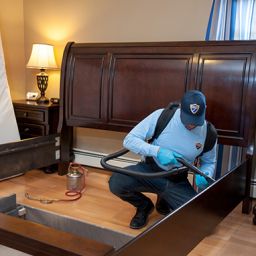




An empty house isn’t necessarily pest-free. Termites and rodents can stay out of sight, and pests may shelter indoors before you move in. For new homeowners, pest control starts with knowing what to look for and when a professional inspection can help.
Buying a home brings plenty to manage, so it’s worth weighing prevention against the risk of an unnoticed problem. A careful inspection can reveal signs of termite or rodent activity and conditions that may attract common pests.
This guide explains when preventative pest control may be worthwhile, what to inspect in basements, crawl spaces, attics, and other areas, and how professionals can help reduce pest entry. It also covers practical ways to protect a new home, from spotting moisture issues to limiting common entry routes.
Key Takeaways
- Seasonal prevention can help limit pest entry; an inspection can also identify conditions that need attention before belongings fill storage areas.
- Look for mud tubes, damaged wood, discarded wings, droppings, and nesting material in basements, crawl spaces, and attics.
- Moisture, food, and moving boxes can attract cockroaches and other pests, so a professional assessment should consider these entry points and conditions.
- Exterior checks can focus on gaps, vegetation, mulch, gutters, and areas around the foundation where pests may find shelter or access.
- Learn which common pests may affect a new home and how the right response depends on the pest, its severity, and the home’s structure.
Is preventative pest control worth the investment?
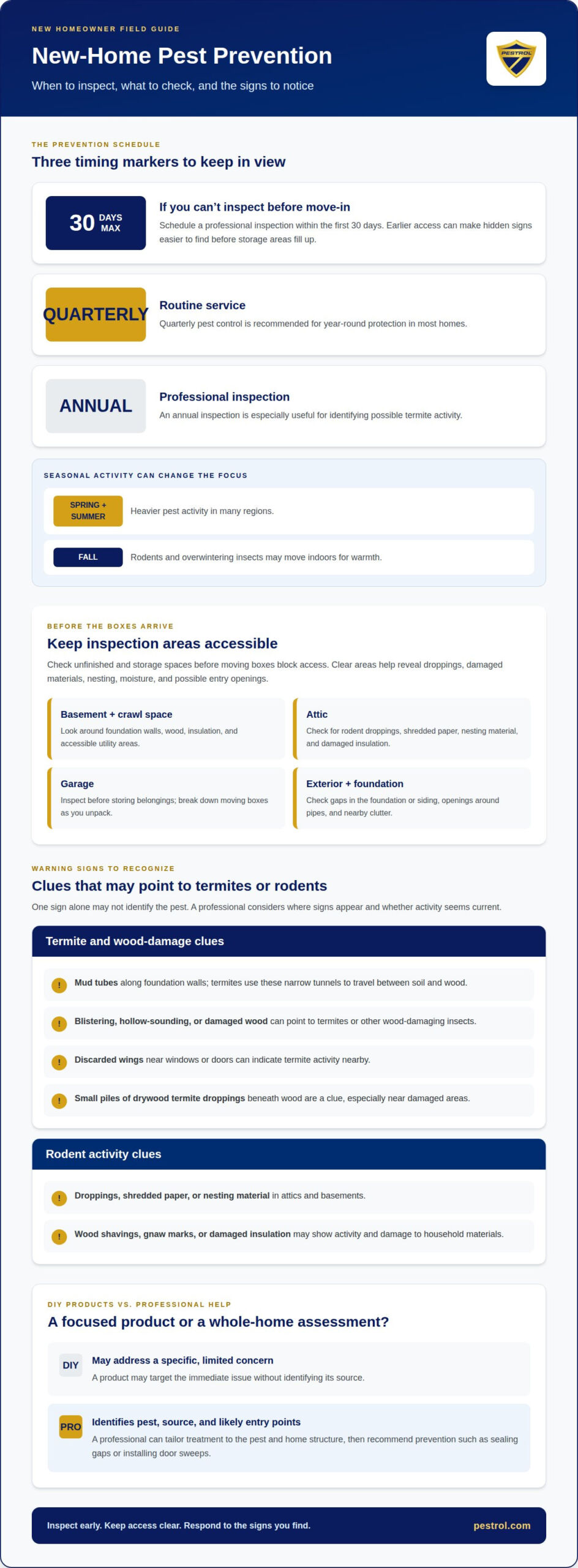
Prevention can be worthwhile when it catches pest access points before an infestation grows. Pest control for new homeowners can start with a professional inspection before or on move-in day. If that timing isn’t possible, schedule one within the first 30 days. A professional can inspect the home, identify regional pest concerns, and recommend steps suited to its structure. That gives a new household a clearer starting point and more peace of mind.
Seasonal activity affects what professionals look for. Spring and summer bring heavier pest activity in many regions, while fall can drive rodents and overwintering insects indoors for warmth. Inspect the basement, attic, garage, and crawl spaces before moving boxes block access. Check the exterior, too: gaps in the foundation, siding, and openings around pipes can give pests a way inside.
- Schedule routine service quarterly. Quarterly pest control is recommended for year-round protection in most homes.
- Plan a professional inspection annually. Annual inspections are especially useful for identifying possible termite activity.
- Clear storage areas before unpacking. Open access helps professionals inspect for droppings, damaged materials, and nesting.
- Break down moving boxes as you unpack. Stacks of cardboard in a basement or garage can provide pests with shelter.
How do DIY pest control products compare with hiring a professional? DIY products may address a specific, limited concern. A professional can inspect the home, identify likely pest sources, and tailor treatment to the pest and structure. They can also recommend prevention steps beyond applying a product.
Do landlords, sellers, or homeowners’ associations have responsibility for pest control? Responsibility depends on the property arrangement, applicable local requirements, and any governing agreement. Review the lease or association documents to understand who handles treatment and upkeep.
How much does professional pest control cost for a house in the United States? Cost depends on the pest, the home’s size and structure, the severity of activity, and the work required. Pricing depends on the case and is provided after a quote request.
How often should homeowners schedule routine pest control treatments? Quarterly service is recommended for year-round protection in most homes, alongside an annual professional inspection, especially for termites. Seasonal activity and signs around the property can also shape the plan.
What pest prevention measures can professionals take around the house? Professionals can inspect for cracks, crevices, gaps around pipes, and other likely entry points, then recommend sealing gaps or installing door sweeps. They can also identify exterior conditions, such as clutter near the foundation, that may support pests.
Are pest control treatments safe for children and pets, and how long should they stay away? Follow the professional’s treatment instructions for children and pets, including any re-entry directions. The appropriate timing depends on the treatment, so there is no universal wait time. For pest control for new homeowners, include household routines and access needs in the service discussion.
Termite and rodent signs in basements, crawl spaces, and attics
A pre-move inspection can reveal pest activity hidden behind stored belongings or in unfinished spaces. A professional checks the basement, attic, crawl space, garage, and accessible areas around the foundation. They look for insects, rodent evidence, moisture, and openings that could provide entry. These findings help distinguish an active problem from old signs that still need attention.
- Look for mud tubes along foundation walls. Termites use these narrow tunnels to travel between soil and wood.
- Check wood for blistering, hollow sounds, or damage. These changes can point to termites or other wood-damaging insects.
- Notice discarded wings near windows and doors. Their presence can indicate termite activity nearby.
- Watch for drywood termite droppings beneath wood. Small piles can be a clue, especially near damaged areas.
- Look for droppings, shredded paper, and nesting material. In an attic or basement, these signs can point to rodents.
- Note wood shavings, gnaw marks, or damaged insulation. These may show rodent activity and damage to household materials.
Termites often work beneath the surface, so visible damage may appear only after activity has been underway. Hollow-sounding wood in walls can also indicate wood-boring beetles. Insects, cobwebs, and scattered wings add clues, but one sign alone may not identify the pest. A professional inspection considers where the signs appear and whether they seem active.
How can a professional inspect a house for pests before you move in? A professional examines accessible storage and utility areas, the foundation, and signs around wood, insulation, and entry points. Inspecting before boxes go into the basement or attic keeps the area clear and makes hidden evidence easier to spot.
What should a professional do when you find pests in a new home? The professional identifies the pest and assesses its activity, location, and likely access points. Next comes a treatment and prevention plan tailored to the pest and the home’s structure.
What signs of termites, rodents, bed bugs, or carpenter ants need urgent professional attention? Contact a professional promptly about mud tubes, damaged or hollow wood, fresh rodent droppings, gnawing, or suspected bed bug activity. Carpenter ants, insect wings, and recurring signs in the same area also call for a closer inspection.
For termite evidence, timely assessment matters because damage can remain hidden until it becomes visible. Termite Control addresses termite concerns, while Rodent Proofing can help address rodent entry and access points.
Preventing cockroaches from moving into a new home
Moving day can create opportunities for cockroaches: doors stay open, food gets unpacked, and cardboard boxes pile up. Professionals assess these conditions alongside signs such as droppings, shed skins, or activity near drains and garbage. Cockroaches can live for weeks without food, so removing one food source alone may not resolve an infestation. Effective prevention considers the home, the pest, and likely hiding places.
During a move-in assessment, professionals can focus on conditions that make kitchens and utility areas inviting:
- Inspect for moisture. Leaky pipes, warped flooring, and condensation near water heaters can attract cockroaches.
- Check food-storage areas. Flour, sugar, cereal, and pet kibble are less accessible when kept in airtight containers.
- Assess moving materials. Cardboard can carry cockroaches or provide mice with nesting material, so unpacked boxes shouldn’t linger.
- Look around appliances and plumbing. Under sinks and behind refrigerator water lines are practical places to check for leaks or pest evidence.
Professionals tailor service to the pest, the severity of activity, and the home’s structure. Cockroach activity around kitchen drains calls for a different assessment than rodent signs in an attic. During a move, an inspection can cover areas before boxes block access, then identify likely entry routes and moisture concerns. This makes treatment and prevention specific to the property, rather than a generic response to every pest problem.
Vegetation and yard materials can also affect pest access. Professionals can identify branches or plants touching the exterior, wood mulch against the house, and firewood stored near the foundation. Trimming contact points and moving wood mulch away from the home can reduce sheltered pathways. Downspouts should direct water away from the foundation, while wire mesh over vents can help limit pest access.
Buying a home with termite damage calls for a separate assessment from cockroach prevention. A professional inspection can assess visible wood damage, mud tubes, and other signs of termite activity. Because termites work beneath surfaces, visible damage may not show the full extent of the issue. If findings indicate termite concerns, treatment and prevention should address termites specifically, rather than relying on general pest measures.
For cockroach concerns during moving or after unpacking, professional cockroach prevention can help assess pest activity and the conditions supporting it. A focused inspection can account for moisture, food storage, and the home’s layout, then guide the next steps for reducing pest access.
Professional exterior perimeter treatments
A professional perimeter treatment begins with an inspection, not an automatic application around every wall. The technician considers pest activity, the home’s structure, and conditions around the foundation. Ants near a doorway, insects around a basement opening, and droppings near an exterior access point each suggest different concerns. The treatment plan should match the pest and its likely route inside.
A baseline professional visit can include:
- Inspecting the exterior. The technician looks for activity near doors, windows, vents, and foundation openings.
- Checking likely harborage. Gutters, leaves, and clutter around the home can create pest problem areas.
- Identifying access points. Gaps around pipes and damaged door seals can provide routes indoors.
- Recommending prevention steps. Findings can guide practical changes around the structure and yard.
- Tailoring the plan. The pest, activity level, and building design determine the appropriate response.
Long-term insect management may include residual control products. Homeowners can discuss products that use insect growth regulators with a pest management professional. These may be one part of a broader strategy, not a substitute for identifying the pest and its source. A professional considers where insects gather and how the property’s exterior affects access.
Perimeter work is different from termite protection. General pest control does not address termites, so visible mud tubes or damaged wood call for termite-specific attention. A professional can assess the signs and determine whether Termite Control is needed. Treating the perimeter for general insects alone does not address a termite concern.
Bed bugs need a different response. They are commonly associated with indoor hiding places, not simply exterior entry routes. Tiny brown stains on wallpaper, baseboards, or around electrical sockets may signal bed bugs. According to the U.S. Environmental Protection Agency, bed bug eggs are pearl-white and have an eye spot if they are more than five days old. A professional should assess suspected signs and tailor treatment to the pest and affected areas.
Keep the inspection focused on evidence. For example, a technician may assess whether insects cluster near a vent, droppings appear by an exterior opening, or signs point to an indoor bed bug issue. That distinction helps avoid treating every pest concern as a perimeter problem. The goal is a plan based on observed activity, the home’s structure, and conditions supporting the problem.
Common pests new homeowners may encounter
Effective pest control for new homeowners starts by identifying which pests suit the property’s conditions. Ants, mice, spiders, wasps, mosquitoes, boxelder bugs, Asian lady beetles, earwigs, stink bugs, and carpenter ants can all appear around homes. The mix depends on local habitat, entry points, and conditions such as damp areas, sheltered gaps, or standing water. A checklist helps connect each pest to its likely source.
- Ants: Tiny cracks and crevices can provide access indoors, so activity may appear far from the yard’s visible ant trails.
- Mice and rats: These rodents can enter through small gaps, then damage wiring or insulation while moving through concealed spaces.
- Spiders: Look for them in quiet corners, storage spaces, and areas where other insects provide a food source.
- Wasps: An unused chimney may shelter wasps or hornets, making the exterior and roofline worth considering.
- Mosquitoes: Standing water in a pool, container, or debris can create favorable breeding conditions.
- Ticks: Overgrown vegetation can offer hiding places, especially where growth touches a home or borders outdoor activity areas.
- Carpenter ants: These ants can weaken structural wood, so repeated activity around wooden features deserves attention.
Season and surroundings can change what appears. Spring and summer are prime times for heavy pest activity in many regions. In fall, rodents and overwintering insects seek warm places, while construction can disturb natural habitat and push pests toward nearby homes. A pest control checklist for new homeowners should cover both indoor rooms and the exterior, rather than focusing only on sightings inside.
Moisture can signal a different concern from food or shelter. Leaking plumbing may attract millipedes, crickets, and silverfish, while water-holding containers can encourage mosquitoes. Note whether pests appear near a drain, damp wall, window, or stored belongings. These details help a professional connect the pest to conditions supporting it and choose a suitable response.
One sighting does not always indicate an infestation, but recurring activity or damage merits a closer assessment. A professional can identify the pest, examine its likely habitat and entry routes, and recommend a response suited to the home’s structure. This focuses treatment on the cause rather than applying the same method to spiders, rodents, and moisture-loving insects. Good pest control for new homeowners begins with that distinction.
Pestrol
Pestrol helps new homeowners address pest concerns with residential protection plans and targeted treatments. For ongoing prevention, consider Home Pest Protection – Basic, Home Pest Protection – Plus, and Home Pest Protection – Premium. For suspected bed bugs, Pestrol also provides Bed Bug Treatment.
The right next step depends on what you’ve found and whether you need ongoing protection or help with a specific pest. Share signs you’ve noticed, such as activity near the foundation, damaged wood, or possible bed bug evidence, so the discussion can focus on your concern.
Contact Pestrol to discuss pest protection for your new home.
Build a pest plan that fits your new home
Your first months in a new home are a good time to establish a practical maintenance routine. Keep notes about recurring activity and changes around the property, then use those details to guide decisions about professional support. A tailored approach to pest control for new homeowners can adapt as you learn more about the house, its surroundings, and the issues that matter most to your household.
Pestrol offers Home Pest Protection – Basic, Home Pest Protection – Plus, and Home Pest Protection – Premium. These options give homeowners different plans to consider for ongoing residential pest management. Sharing the signs you’ve noticed and your prevention priorities can help make the next conversation specific to your home.
A clear next step can make home maintenance feel more manageable. Take it at your own pace, and give your new home the attention it deserves.
Frequently Asked Questions
Can pests survive in a vacant home?
Yes. A vacant home can still offer shelter, moisture, and access to food sources. Rodents may nest in attics or wall spaces, while termites can remain active inside wood without obvious surface signs. Cockroaches may use drains and concealed gaps for shelter. Before unpacking, arrange an inspection if you notice droppings, damaged materials, or insect activity. An empty house does not rule out an existing pest problem.
What Pests Should New Homeowners Look For?
Look for signs of termites, rodents, cockroaches, ants, spiders, bed bugs, and carpenter ants. The location of evidence offers useful clues: damaged wood may point to termites or carpenter ants, while droppings near stored belongings may indicate rodents. Tiny brown stains on baseboards or wallpaper can suggest bed bugs. Outdoor checks should include standing water, dense vegetation, and insect activity around entry points.
Are there pests that home inspectors typically miss?
Yes. A standard home inspection may not determine whether pests are present, and termites can work inside wood before damage becomes visible. Bed bugs may stay concealed in seams, furniture joints, or other indoor hiding places. Rodents can nest in spaces that are difficult to access. If you see droppings, damaged wood, shed wings, or unexplained stains, arrange a separate pest inspection rather than relying only on the general home inspection.
Can you prevent termites?
You can reduce conditions that contribute to termite concerns, but prevention starts with identifying risks and signs around the structure. Keep wood materials away from the foundation, address drainage issues, and arrange professional inspections, especially if you notice mud tubes or damaged wood. Termites can remain hidden beneath surfaces, so a clean-looking room alone cannot rule out activity. A professional can assess the property and recommend termite-specific prevention or treatment.
Do you need a termite letter?
A termite letter, also called a wood-destroying organism inspection or, in some states, a wood-destroying-insects report, documents evidence found during an inspection. In many states, a separate Wood-Destroying Organism inspection is required for mortgage approval. Requirements depend on the state and transaction, so check the applicable mortgage conditions before closing. The inspection can help identify visible evidence of termite damage, active colonies, or other wood-destroying insects.
How soon after moving in should I get a professional pest inspection?
Arrange an inspection before or on move-in day when possible. If that timing isn’t workable, schedule it within the first 30 days after moving in. An early inspection lets a professional check storage and utility areas before moving boxes restrict access. Ask the inspection to cover areas relevant to the property, such as the attic, basement, crawl space, and garage, and share any pest signs noticed during the move.
How soon should I schedule pest control after buying a house?
Schedule a professional inspection before or on move-in day if possible, or within the first 30 days after moving in. Treatment timing depends on whether the inspection finds an active problem or conditions that need attention. Fresh droppings, mud tubes, damaged wood, or repeated insect sightings warrant prompt assessment. If there are no visible signs, an inspection still gives you a clearer baseline for the home.
Is pest control necessary for a brand-new home?
Not automatically, but new construction doesn’t make a home immune to pests. Construction can disturb natural habitats, pushing insects and rodents toward nearby homes. Gaps, moisture, and food sources can also attract pests after move-in. A professional inspection can identify concerns tied to the property and its surroundings. Consider an assessment if you notice activity, live near construction, or want to understand the home’s likely pest entry points.