




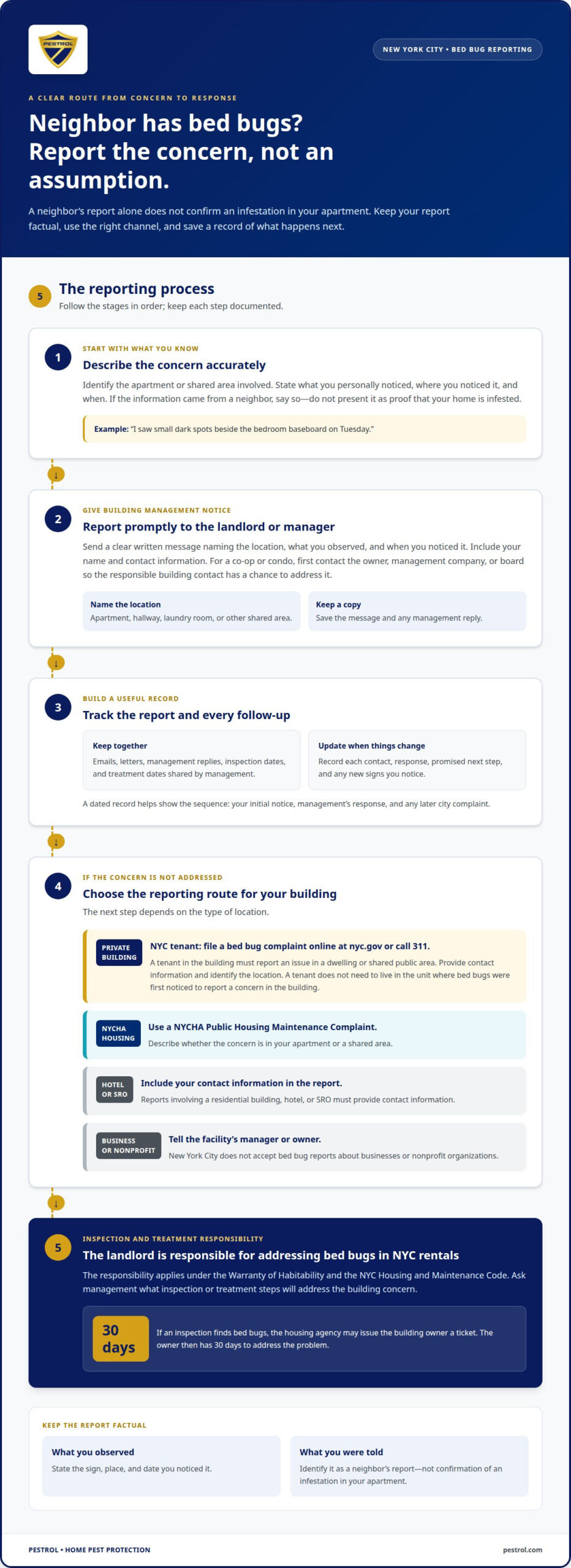
If you’re wondering what to do if your neighbor has bed bugs in Manhattan, notify your property manager promptly and keep a record of the report. If the landlord doesn’t respond, tenants can file a bed bug complaint online or call 311, according to NYC 311. For a private apartment building, a tenant in the building must make a report about the dwelling or its shared areas.
It’s understandable to worry that bed bugs could spread into your home, but a neighbor’s report alone doesn’t confirm an infestation in your apartment. Document what you’ve noticed, report the concern through the right channels, and look for signs in your own living space. This guide explains how to raise the issue, what to do if it isn’t addressed, and how to approach inspection and professional treatment without adding to the stress.
Key Takeaways
- Report a bed bug concern to your landlord or property manager promptly, and keep a record of your communication.
- If your landlord doesn’t respond, NYC tenants can file a bed bug complaint online or call 311, according to NYC 311.
- For a private house or apartment, a tenant in the building must report an infestation in a dwelling or shared area.
- Check beyond the bed: small blood spots, shed skins, black spots, and live bugs can be signs to watch for.
- Learn who handles inspection and treatment in a rental building, and how to document the steps taken if the problem continues.
Bedbug complaints in New York City
In New York City, landlords are responsible for eliminating bed bugs under the Warranty of Habitability and the NYC Housing and Maintenance Code. Report the issue to your landlord or building manager first; if the landlord doesn’t respond, tenants can file online at nyc.gov or call 311, according to NYC 311.
Landlord Inspection and Treatment Duties
A landlord’s duty is to address bed bugs in a New York City rental building. The responsibility applies under the Warranty of Habitability and the NYC Housing and Maintenance Code. If an inspection finds bed bugs, the housing agency may issue the building owner a ticket. The owner then has 30 days to address the problem.
Keep your report focused on the affected unit or shared area. For example, note that you saw bed bugs near a hallway wall, or that your neighbor reported an infestation. Don’t present a neighbor’s report as proof that your own apartment is infested. Ask management what inspection or treatment steps will address the building concern.
For a co-op or condo, first report an apartment maintenance issue to the owner, management company, or board. This gives the building’s responsible contact a chance to address the concern before you file an HPD complaint. Keep copies of messages and record the date of each conversation, including any response or promised next step.
Reporting Bed Bug Problems to Building Management
A building report gives the landlord or manager direct notice of suspected bed bugs in a home or shared space. Send a clear written message identifying the location, what you observed, and when you noticed it. Save a copy so you can document when you raised the concern and what information you provided.
For example, write, “I saw small dark spots beside the bedroom baseboard on Tuesday,” rather than stating that a neighboring apartment definitely has bed bugs. Include your name and contact information. Anyone reporting bed bugs in a New York City residential building, hotel, or SRO must provide contact information.
Use this simple record to keep your report useful:
- Note the apartment or shared area involved, such as a hallway or laundry room.
- Describe the signs you observed and when you saw them.
- Save emails, letters, and management replies together.
- Write down any inspection or treatment dates management shares.
If the landlord doesn’t respond, NYC tenants can submit a bed bug complaint online at nyc.gov or call 311, according to NYC 311. A tenant in a private house or apartment must make a report about the dwelling or its public areas. For NYCHA public housing, use a NYCHA Public Housing Maintenance Complaint to report the problem.
If the issue remains unresolved, keep documenting each contact with the landlord and HPD. A dated record shows the sequence: your initial notice, management’s response, and any later city complaint. Stick to what you observed, and update the record if new signs appear in your apartment or a shared space.
Tenant eligibility to report an apartment or public-area infestation
Reporting eligibility determines who may submit a bed bug complaint about a New York City home or shared area. For a private house or apartment, a tenant in the building must report the dwelling or its public areas.
Private Apartment Buildings
A tenant who lives in the building can report a suspected infestation in an apartment or shared space. You don’t need to be the tenant of the unit where bed bugs were first noticed. For example, if a neighbor tells you about bed bugs, you can report a concern about your own building’s hallway or another public area.
Limit the report to what you know firsthand. Identify the location, describe what you observed, and distinguish that from information you heard from a neighbor. If you haven’t seen bed bugs yourself, say the concern came from another resident. This separates a reported concern from signs confirmed inside your apartment.
For a report about a New York City residential building, the person reporting must provide contact information. Include your name and a way to reach you when submitting the complaint. If you’re reporting a shared space, specify whether it’s a hallway, laundry area, or another part of the building.
Public Housing, Hotels, and Other Locations
NYCHA public housing residents use a NYCHA Public Housing Maintenance Complaint to report bed bugs. This is the reporting route for a resident in NYCHA housing, rather than a private-building complaint. Describe whether the concern involves your apartment or a shared area so the location is clear.
For reports involving a New York City residential building, hotel, or SRO, provide contact information. A clear report can identify the building and affected area without claiming that an uninspected apartment has an infestation. Keep a copy of the details you submit and any response you receive.
Businesses and nonprofit organizations have a different reporting route: New York City doesn’t accept bed bug reports about those locations. Tell the facility’s manager or owner instead. For example, report a concern about bed bugs in a nonprofit facility to its manager, not through a residential-building complaint.
Before submitting, use these checks to keep the report focused:
- Confirm that you’re a tenant in the building if reporting a private residence or its public areas.
- Name the apartment or shared space connected to the concern.
- Separate what you observed from what another resident reported.
- Provide contact information for a residential building, hotel, or SRO report.
These distinctions help direct a concern to the right channel, whether it involves a private apartment, NYCHA housing, or a facility manager.
Bed bug signs to look for
A bed bug sign is a visible insect or mark that may indicate activity. Adult bed bugs are about the size of an apple seed, but stains and shed skins can also draw attention. A neighbor’s report alone doesn’t confirm activity in your apartment, so inspect your own rooms and note exactly what you find.
Start with the bed, then check nearby furniture. Look closely at seams, folds, and edges where fabric meets a frame. Check sofas, dressers, and nightstands too, since bed bugs may be found away from beds. Use a flashlight to inspect dark gaps and corners instead of relying on a quick glance at the bedding.
- Small blood spots: Look for small reddish marks on bedding or furniture fabric.
- Shed skins: Check for discarded skins near the bed or along furniture edges.
- Black spots: Look for dark marks that resemble ink on fabric or surfaces.
- Live insects: Note any insect that resembles an apple-seed-sized adult bed bug.
Inspect methodically. Begin with the mattress and bed frame, then move to the headboard, nightstand, and dresser. Check a nearby sofa if it has fabric seams or creases. Record the location of each mark or insect, and take a clear photo when possible. A note such as “dark spots along the bed-frame seam” is more useful than a general statement that the room looks infested.
Also consider where your apartment borders another unit. Bed bugs can move between apartments through cracks, crevices, electrical outlets, and pipes. Units sharing a wall with an infested apartment face higher risk, so inspect nearby edges and openings as well as the bed. Finding a possible route doesn’t prove insects have entered your home; document the specific signs you see.
Keep your findings separate from secondhand reports. If a neighbor says their apartment has bed bugs, record that as information from the neighbor, not as evidence of insects in your unit. If you find a possible sign, note the room, surface, and date. Share your observations with building management so they can distinguish a confirmed sighting from a concern about a nearby apartment.
A careful inspection helps you decide what to do next. Don’t discard furniture based only on a neighbor’s report. New York City advises throwing away infested furniture only when acceptable treatments can’t rid it of bed bugs, or when a pest management professional advises disposal. Save your notes and photos, then use the signs you observed to guide your report and any follow-up inspection.
Hiring and monitoring pest control companies
A pest management company inspects for pests and carries out a treatment plan. In the New York City area, thousands of licensed pest management professionals work in the field. For a building-wide bed bug concern, focus on clear scope, coordination with management, and written follow-up, not a quick promise based only on a neighbor’s report.
Start by asking the landlord or building manager whether a professional has been engaged. In a rental building, the owner is responsible for addressing bed bugs, so residents should understand who is arranging the work. Ask which apartments or shared areas are included, how inspection findings will be shared, and how residents should report new signs.
Before treatment begins, request practical instructions in writing. They should explain which rooms or items need preparation, what residents should do before the visit, and how to handle belongings during the work. For example, if a technician needs access to a bedroom and nearby furniture, ask management to specify what must be moved and what should remain in place.
Use this checklist to monitor the process:
- Record the inspection date and areas the professional examined.
- Save written preparation instructions and management notices.
- Ask how to report fresh signs after the visit.
- Keep notes on follow-up visits and the areas addressed.
During an inspection, share precise observations rather than conclusions. Point out where you found a live insect, shed skin, or dark marks, and show the location in the room. If the concern came from another apartment, distinguish that report from signs you personally saw. This helps the professional assess your unit without treating an unverified neighbor report as proof.
After the visit, ask for a written summary of the areas inspected and any next steps. If the professional identifies preparation tasks or recommends another visit, ask management how residents will be notified. Keep the summary with your earlier reports so you can compare what changed between visits and communicate specific concerns.
Monitor the result by checking the same locations you documented before treatment. If you notice a new sign, record its location and date, then send that information to management through the established reporting channel. Avoid discarding furniture solely because a neighbor reports bed bugs; New York City advises disposal only when acceptable treatments cannot remove them or a pest management professional recommends it. Clear records help residents and building staff follow the work from inspection through follow-up.
Who is responsible for bed bug inspection and treatment in a New York City rental building?
In a New York City rental building, the landlord is responsible for eliminating bed bugs under the Warranty of Habitability and the NYC Housing and Maintenance Code. Notify the property manager promptly so the owner can address the reported problem and arrange appropriate inspection or treatment.
A report about a neighbor’s apartment doesn’t establish that bed bugs are present in your unit. Still, the building manager needs enough detail to understand the concern. Identify the apartment or shared area involved, explain what you personally observed, and separate firsthand signs from information another tenant shared.
For a complaint involving a residential building, HPD may inspect the home. An inspection may use a bed bug-sniffing dog. If bed bugs are found, the housing agency may issue the building owner a ticket, and the owner has 30 days to address the problem. Keep the inspection outcome with your report and any management updates.
Keep a dated record to make the process easier to follow. Save the message sent to management, note any response, and record inspection or treatment dates. Keep any instructions about preparing rooms or providing access. For example, note which rooms the building says will be inspected and whether the professional identifies another step.
- Report the concern to the property manager and identify the affected location.
- Keep copies of messages, replies, and inspection details.
- Record any new signs and send management a factual update.
- Save HPD complaint information and follow-up communications.
If the owner hasn’t corrected a reported problem, tenants can take legal action in Housing Court. Document contacts with both the landlord and HPD, including when you reported the issue and what response followed. A record of notices and follow-ups can help explain the situation if you pursue that option.
Condo and co-op residents should first direct apartment maintenance concerns to the owner, management company, or board. The correct contact depends on the building’s arrangement, so use the established maintenance channel and keep a copy of your notice. For rental tenants, the landlord remains responsible for eliminating bed bugs, even when a building manager or pest professional handles communications or inspection arrangements.
Clear responsibilities help keep the response organized: residents report concerns and preserve records, while the rental property owner addresses bed bugs. If a neighbor’s report raises concern, focus on your own observations, notify management, and track the steps taken. This creates a practical record for follow-up with the landlord or HPD.
Pestrol: Home Pest Protection – Basic
Pestrol offers Home Pest Protection – Basic for residents seeking a home pest management plan. If you’ve found bed bug signs in your apartment, Pestrol’s Bed Bug Treatment addresses that specific concern. A neighbor’s report alone doesn’t establish an infestation in your home, so keep reporting building concerns to management while distinguishing them from signs you’ve personally observed.
Home Pest Protection – Plus and Home Pest Protection – Premium are also available options. Choose the service that matches your concern: use Bed Bug Treatment for suspected bed bug activity, or consider a home protection plan for broader pest management needs. Clear observations help identify the right service without confusing a building-wide report with an inspection of your apartment.
Contact Pestrol to discuss Bed Bug Treatment or home protection for your situation.
Take the Next Step With Confidence
If you’re deciding what to do when a neighbor has bed bugs in Manhattan, focus on the next practical action for your own home. Keep your observations clear, communicate calmly, and choose support that fits the concern. A measured response helps you stay organized without letting uncertainty make decisions for you.
When you want professional help addressing a bed bug concern in your apartment, Pestrol can discuss Bed Bug Treatment and relevant home protection options. You don’t have to work through the next step alone.
Take it one step at a time. A clear plan can help you feel more in control of your home.
Frequently Asked Questions
My Neighbor Has Bed Bugs – Now What?
Tell your building manager about the neighbor’s report, then focus on what you can observe in your own apartment. Another tenant’s report isn’t proof that your home has bed bugs. Keep your communication factual, and ask management how it will handle the building concern. If you find possible signs, note their location and date so you can describe them clearly during follow-up.
Why are apartment buildings more likely to have bed bugs?
Connected walls and shared building features can give bed bugs routes between apartments. They can move through cracks, crevices, electrical outlets, and pipes, so a unit sharing a wall with an infested apartment faces higher risk. That doesn’t mean every nearby apartment is infested. It does mean residents should report concerns and pay attention to signs in rooms beside the shared wall.
What should I do if I suspect my Manhattan neighbor has bed bugs?
Notify your building manager without treating a neighbor’s report as confirmed evidence about your apartment. If you’ve noticed signs, describe the location and what you saw. Avoid handling or moving items from the neighbor’s apartment. Keep your belongings separate, and follow management’s instructions about building access or inspection arrangements. This keeps communication useful and avoids assumptions about where bed bugs have spread.
Can bed bugs travel between apartments in a Manhattan building?
Yes. Bed bugs can move between units through cracks, crevices, electrical outlets, and pipes. An apartment next to an infested unit is at higher risk, particularly around a shared wall, but proximity alone doesn’t establish an infestation. If the neighboring report concerns you, inspect nearby areas in your own home and share specific findings with management rather than relying only on the report.
How can I check my apartment for bed bugs after a neighbor reports an infestation?
Inspect the mattress and bed frame, then check upholstered sofas, dressers, and nightstands. Look for live insects about the size of an apple seed, small blood spots, shed skins, or black marks resembling ink. Use a flashlight to examine seams and furniture edges. Record where you find each sign, and take a photo if possible, so you can describe the location accurately.
What steps prevent bed bugs from spreading between neighboring apartments?
Keep laundry in clean bags when using shared laundry areas, and protect mattresses and box springs with bedbug-resistant covers. Check used furniture before bringing it home, vacuum often, and seal cracks or crevices around your apartment. Bedbug traps can be placed on bed-frame and furniture legs. These steps support prevention, but they don’t replace reporting a suspected building infestation to management.
How can I file a 311 complaint about bed bugs in a Manhattan apartment?
If your landlord doesn’t respond, tenants can file a bed bug complaint online or call 311, according to NYC 311. For a private house or apartment, a tenant in the building must report the dwelling or its public areas. Give your contact information and describe the location and signs you observed. Keep a record of the complaint and related landlord communications.
How much does professional bed bug inspection and treatment cost in New York City?
The cost depends on the case and is provided after a quote request. Relevant factors include the inspection findings, the areas needing treatment, and whether the concern involves one apartment or connected spaces. A neighbor’s report alone doesn’t establish what work your home needs. Share your observations and the affected locations so the proposed service can address the actual concern.