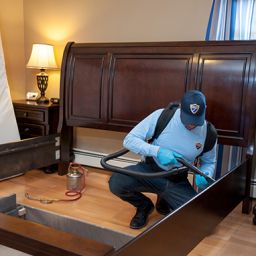




The small, silvery moth fluttering near your closet light isn’t actually the one eating your $500 cashmere sweater. While adult moths are a frustrating warning sign, they have non-functional mouthparts and cause zero percent of the physical damage to your textiles. The real culprits are the tiny, worm-like larvae that feed exclusively on keratin proteins found in wool, silk, and fur. Finding a hole in a cherished heirloom is a sinking feeling, and it’s natural to feel overwhelmed by the thought of pests in your bedroom.
You don’t have to watch your wardrobe disappear. This guide provides a clear, actionable plan for an effective clothing moth larvae treatment that eliminates the infestation and protects your future purchases. We’ll walk you through identifying these hidden pests, implementing thermal eradication thresholds, and setting up a professional-grade defense. By the end of this article, you’ll have the peace of mind that comes with a truly pest-proofed home in 2026. Let’s reclaim your closet and secure your most valuable textiles once and for all.
Key Takeaways
- Identify the specific signs of an infestation by spotting creamy white, worm-like larvae and distinguishing between webbing and casemaking species.
- Understand the “keratin connection” to learn why your expensive wool, silk, and cashmere are at high risk from rapidly multiplying larvae.
- Master the precise thermal and chemical protocols for clothing moth larvae treatment to ensure 100% eradication across every life stage.
- Follow our essential preparation checklist to properly sort, deep-clean, and seal your textiles before professional intervention.
- Discover how specialized Clothing Moth Control acts as a high-value insurance policy to protect your wardrobe from future infestations.
Identifying the Enemy: What Do Clothing Moth Larvae Look Like?
Finding a hole in your favorite wool sweater is a sinking feeling. To stop the destruction, you have to find the culprit. While flying adults are a warning sign, the actual damage is caused by the larvae. These tiny, worm-like pests are the primary focus of any successful clothing moth larvae treatment. They are elusive, but knowing what to look for can save your wardrobe from total loss.
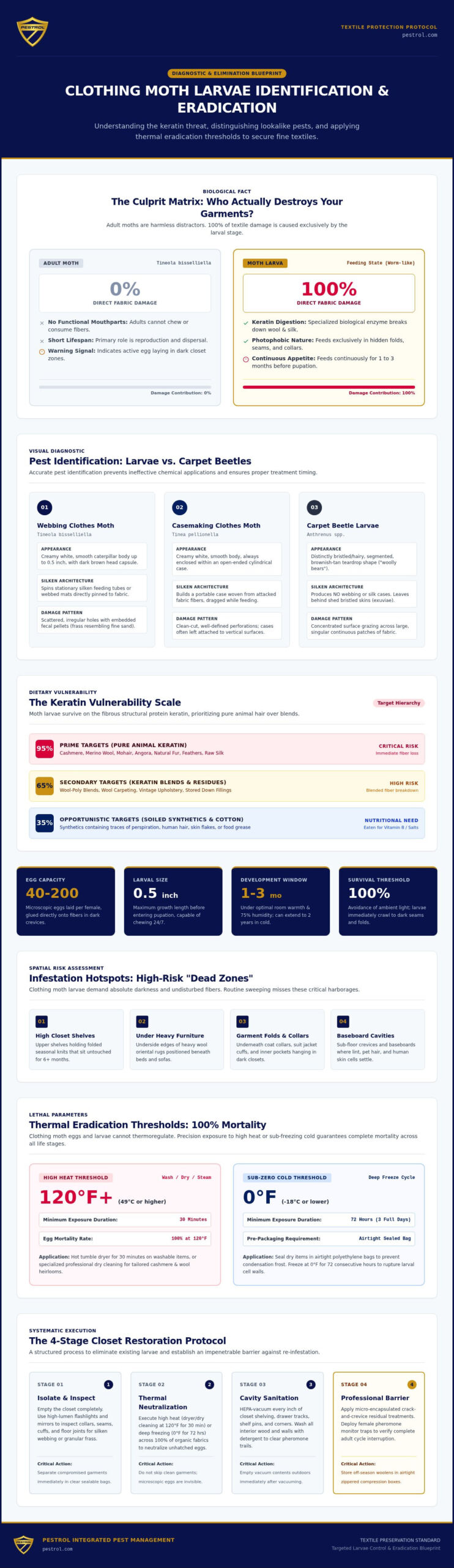
Larvae typically appear as creamy white caterpillars with distinct golden or dark brown head capsules. They grow to about half an inch in length before pupating. The most common species found in local homes is the Tineola bisselliella, also known as the webbing clothes moth. You can distinguish them by their behavior. Webbing larvae spin silken tubes or sheets directly on your clothes. Casemaking larvae build a portable, tubular shell out of the fabric they’re eating and drag it with them wherever they go.
Keep an eye out for these specific signs of activity:
- Silken tubes or cocoons attached to natural fibers.
- Irregular holes in cashmere, silk, or wool garments.
- Frass, which consists of larval droppings that look like fine, colored sand.
Check dark corners, the undersides of heavy furniture, and deep within the fibers of wool rugs. These areas provide the undisturbed environment larvae need to thrive without being detected by your weekly cleaning routine.
The Secret Life of Larvae in NYC Closets
Manhattan apartments and Hudson Valley estates offer ideal conditions for these pests. Larvae love humidity and total darkness. In NYC, “dead zones” often include high closet shelves or the back corners of walk-in closets that rarely see light. We recommend using a flashlight and a hand mirror to inspect these hidden spots. If you see activity, it’s a clear sign that a professional clothing moth larvae treatment is necessary to protect your high-end investments.
Larvae vs. Carpet Beetles: Don’t Treat the Wrong Pest
Misidentification leads to failed treatments and wasted time. Carpet beetle larvae are easy to spot because they are bristly and hairy, while moth larvae are smooth and worm-like. Damage patterns also differ. Moths create irregular, scattered holes throughout a garment. Carpet beetles usually graze in large, concentrated areas. Our team uses a specialized inspection process to confirm the pest before beginning our Clothing Moth Control protocol, ensuring we use the right tools for the job from the start.
Why Larvae Are the Real Threat to Your Wardrobe
Adult moths are essentially a distraction. While they fly around your closet, they lack functional mouthparts and cannot consume a single fiber of your clothing. The real destruction comes from the larvae, which are among the few organisms capable of digesting keratin, the tough protein found in wool, cashmere, silk, fur, and feathers. This biological specialty turns your high-end wardrobe into a primary food source, making a comprehensive clothing moth larvae treatment essential for protecting your investments.
The scale of the threat is significant. A single mated female can deposit between 40 and 200 microscopic eggs during her short lifespan. These eggs are often tucked into crevices or lightly glued to fibers, making them nearly impossible to see with the naked eye. Once they hatch, you’re suddenly facing hundreds of hungry mouths. Because larvae avoid light, they often feed in the folds of garments or under collars. You might not notice the “invisible” damage until you pull out a designer blazer for a special event, only to find it riddled with holes. Professional Clothing Moth Control is often a fraction of the cost of replacing a curated collection of woolens or heirloom textiles.
The Diet of Destruction: Beyond Just Wool
Larvae are surprisingly resourceful. While they prefer natural animal fibers, they also target hair, lint, and dust trapped in closet corners. They’ll even consume soiled synthetic fabrics if those garments contain traces of perspiration, skin flakes, or food spills. These residues provide the Vitamin B and mineral salts that clean wool lacks. In historic Orange County homes or pre-war Manhattan apartments, this means even antique furniture and heirloom rugs are at risk. Following UC IPM clothes moth management guidelines can help you identify these secondary food sources before they fuel a larger infestation.
The Larval Timeline: From Egg to Ruined Sweater
The speed of destruction depends heavily on your home environment. Under optimal conditions, such as high humidity and warmth, larvae can complete their development in as little as one to three months. However, if your closet is cool or food is scarce, they can remain in the larval stage for up to two or three years, slowly grazing on your clothes. This makes dormant larvae in seasonal storage bins a ticking time bomb for your winter wardrobe. An instar is the peak period of fabric consumption between larval molts when the pest grows most rapidly. Because this stage can be so prolonged, an effective clothing moth larvae treatment must address all life stages to prevent a recurring cycle of damage.
Effective Treatment Methods: Professional vs. DIY
Choosing an effective clothing moth larvae treatment requires a shift in strategy. You aren’t just fighting a few bugs; you’re interrupting a biological cycle. High heat is one of the most reliable methods for immediate results. Washing items at temperatures exceeding 120°F for at least 30 minutes achieves 100% mortality across all life stages. For delicate woolens that can’t handle a hot wash, deep freezing is a viable alternative. You’ll need to seal the items in polyethylene bags and keep them at 0°F for at least 72 hours, though home freezers often require up to 14 days to ensure the cold penetrates the center of thick garments.
Chemical controls offer another layer of protection. Professional residual sprays are applied to cracks and crevices where larvae hide, providing long-term protection that space treatments like fogging often miss. Don’t rely on sticky pheromone traps as a primary solution. These tools only capture adult males and won’t stop the larvae currently eating your clothes. Similarly, while cedar and lavender smell pleasant, they are strictly for prevention. They lack the potency to eliminate an active infestation once larvae have already settled into your fibers.
The Failure of Home Remedies
Homeowners often try to use vinegar or essential oils to solve the problem. These substances fail because they don’t reach larvae buried deep within the seams of heavy coats or inside rug piles. There’s also the “mothball myth” to consider. Naphthalene and paradichlorobenzene are chemical pesticides that are legally restricted to airtight containers. Using them in open closets or drawers is a violation of federal law and can expose your family to toxic fumes. Following the NPIC clothes moth prevention and treatment checklist is a much safer way to ensure your DIY efforts don’t accidentally spread the pests to other rooms.
Pestrol’s Integrated Pest Management (IPM) Approach
Our team uses a methodical, results-first strategy to protect your home. We begin with intensive HEPA vacuuming to physically remove eggs, larvae, and frass from baseboards and shelving tracks. This is followed by targeted applications of low-toxicity residuals in high-risk areas. Our specialized Clothing Moth Control service is designed to be a high-value insurance policy for your wardrobe. We address the immediate infestation while providing the preventative exclusion needed to keep your expensive woolens and heirloom textiles safe for the long term.
The Essential Preparation Checklist for Moth Treatment
Total eradication depends on a rigorous partnership between you and your exterminator. While we handle the structural application, your role is to sanitize the textiles that serve as the larvae’s food source. Professional clothing moth larvae treatment cannot be applied directly to your entire wardrobe, so you must prepare the space to ensure no hidden eggs survive. This process is intensive, but it’s the only way to guarantee your home becomes a pest-free environment.
Start by emptying every closet, drawer, and storage bin in the affected rooms. There are no exceptions to this rule. A single forgotten wool scarf or silk tie can harbor enough eggs to restart the entire infestation within weeks. Once the space is empty, sort your garments by material and level of damage. Items with heavy structural damage should be discarded in sealed bags immediately. For the remaining pieces, you’ll need to choose between heat, cold, or professional dry cleaning to ensure they are safe to return to your closet.
Finally, focus on the infrastructure of your storage areas. Use a HEPA-filter vacuum to clean every inch of shelving, clothing rods, and baseboard cracks. Larvae often hide in the dust that accumulates in these narrow tracks. Once you’ve vacuumed, wipe down all hard surfaces with a damp cloth to remove any lingering debris. This deep clean removes the “keratin dust” that can sustain a small population of pests even after the garments are gone.
Laundering and Heat Protocols
Heat is a fast and effective way to kill all life stages of the clothes moth. To achieve 100% mortality, items must reach a minimum temperature of 120°F for at least 30 minutes. Most household dryers can reach this threshold on a medium-to-high setting. For items that are not washable but can withstand heat, running them through a 45-minute dry cycle is an excellent sanitization step. For your most delicate silks and designer woolens, professional dry cleaning remains the gold standard for safety and efficacy.
The Freezing Method for Delicates
If you have items that cannot handle high heat, such as fine furs or feathered accessories, freezing is a reliable alternative. Seal these items in polyethylene bags using a “double-bagging” technique to prevent moisture from damaging the fibers during the thawing process. You must maintain a temperature of 0°F for at least 72 continuous hours to kill the larvae. Household freezers often require longer durations than industrial units, sometimes up to 14 days, because they cycle temperatures and cool much slower than professional blast freezers.
Professional Clothing Moth Control in New York
Protecting a high-end wardrobe in New York requires more than just a few cedar blocks. Whether you’re managing a compact walk-in closet in a Manhattan high-rise or an expansive dressing room in a historic Hudson Valley estate, the structural density of our region creates unique pathways for infestations to spread. In these environments, professional clothing moth larvae treatment is often the only way to break the cycle of damage. Our family-owned team understands the specific challenges of local real estate, from the pre-war moldings of the Bronx to the sprawling attics of Orange County.
We don’t believe in one-size-fits-all solutions. Every home receives a customized clothing moth larvae treatment plan based on a thorough inspection of your storage areas and textile types. We prioritize your peace of mind by using targeted protocols that focus on the cracks, crevices, and “dead zones” where larvae thrive. Our goal is to provide a results-first service that treats your home with the same care and respect we’d give our own family.
Serving Manhattan to Warwick: Local Reliability
Our service area covers the diverse landscape of the New York metro region. In the Hudson Valley, we often see infestations that migrate from natural outdoor sources or nested materials. To provide a truly comprehensive solution, we often integrate rodent proofing services into our protection plans. Mice and rats frequently use natural fibers and hair to build nests in wall voids, creating hidden reservoirs for moth larvae that can re-infest your closets even after the garments are cleaned. By addressing these structural entry points, we ensure your wardrobe remains secure from all angles.
Peace of Mind with Pestrol
Long-term security comes from consistent monitoring rather than one-off treatments. We offer tiered Home Pest Protection plans, including Basic, Plus, and Premium levels, designed to grow with your home’s needs. These plans focus on preventative exclusion and recurring inspections, catching potential re-infestations before they can ruin another designer blazer or heirloom rug. This proactive approach acts as a high-value insurance policy for your most precious investments, giving you the confidence that your home is truly pest-proofed.
Protect Your Wardrobe for the Long Term
Your wardrobe is more than just a collection of clothes; it’s a significant investment in your personal style and history. Defeating an infestation requires a shift in focus from the flying adults to the destructive larvae hidden in the dark corners of your closet. By following a rigorous preparation checklist and choosing a professional clothing moth larvae treatment, you can stop the damage and reclaim your peace of mind.
Our expert specialists have protected homes across NYC and Orange County for years with specialized protocols. Whether you need immediate elimination or want to start a preventative Home Pest Protection – Basic plan, we have the tools to keep your textiles safe. You don’t have to face this stressful situation alone. We are here to act as your knowledgeable partner in maintaining a comfortable, pest-proofed home.
Take the first step toward a secure closet today. Your favorite cashmere and woolens will thank you for the extra layer of protection. We are ready to help you safeguard your home and your most cherished belongings.
Frequently Asked Questions
Can clothing moth larvae live in rugs or carpets?
Yes, clothing moth larvae frequently inhabit area rugs and wall-to-wall carpets made from natural fibers like wool or silk. They thrive in undisturbed areas, such as the fibers beneath heavy furniture or along baseboards. In historic Warwick estates, these rugs are often primary breeding grounds. Regular vacuuming and professional inspections are essential to prevent these pests from migrating from your floors to your expensive wardrobe.
Will dry cleaning kill all clothing moth larvae and eggs?
Professional dry cleaning is the gold standard for sanitizing delicate textiles. The combination of high heat and specialized solvents effectively destroys 100% of eggs and larvae on contact. It’s a critical step in any comprehensive clothing moth larvae treatment plan. We recommend dry cleaning all natural fiber items before returning them to a treated closet, ensuring you don’t accidentally reintroduce hidden pests into your clean storage environment.
How do I know if the holes in my clothes are from moths or silverfish?
You can distinguish the two by looking for specific debris. Clothes moth larvae leave behind silken tubes, cocoons, and granular droppings known as frass. The holes they create are usually irregular and scattered. Silverfish, common in humid Manhattan basements, tend to graze on the surface of fabrics, leaving thin spots or yellowish stains rather than clean-cut holes. A professional inspection can confirm the pest and the necessary treatment protocol.
Are pheromone traps enough to stop an infestation?
Pheromone traps are excellent monitoring tools but are not a standalone solution for eradication. These traps only attract and capture adult male moths, leaving the egg-laying females and the destructive larvae completely untouched. Relying solely on traps allows the infestation to continue growing behind closed doors. For total protection in NYC apartments, you need a targeted treatment that addresses the larvae currently feeding on your natural fibers.
What is the fastest way to kill clothing moth larvae naturally?
The most effective natural method is the application of extreme temperatures. Running washable items through a high-heat dryer cycle (above 120°F) for at least 30 minutes will kill all life stages. Alternatively, you can deep-freeze items at 0°F for a minimum of 72 hours. While cedar and lavender are popular for prevention, they lack the potency required to eliminate an active population of larvae once they have settled into your clothes.
How long does a professional clothing moth treatment take?
A typical service appointment for a professional clothing moth larvae treatment usually takes between one and three hours, depending on the size of your home and the number of closets involved. Residents and pets are generally required to vacate the treated area for 2 to 4 hours after the application. Our team works efficiently throughout the Bronx and Orange County to minimize disruption while ensuring a thorough application in every high-risk zone.
Can clothing moth larvae bite humans or pets?
Clothing moth larvae do not bite humans or pets. Their mouthparts are biologically designed to process keratin, a protein found in animal-based fibers like wool, fur, and feathers. While they aren’t a direct physical threat to your family, the stress of a ruined wardrobe can be significant. Our focus is on providing a protective environment where your textiles are safe and your home remains a comfortable, pest-free space for everyone.
Should I throw away clothes that have moth damage?
You don’t always need to discard damaged items. If a garment is a cherished heirloom or an expensive designer piece, it can often be repaired by a skilled re-weaver after it has been properly sanitized. However, you must treat the item immediately through dry cleaning or freezing to kill any remaining eggs. If a garment is heavily infested or beyond repair, seal it in a plastic bag and discard it outside your home.