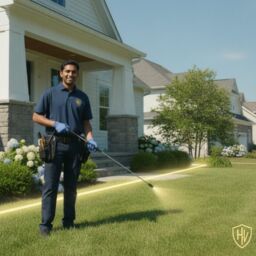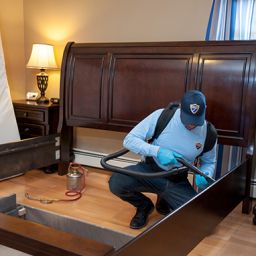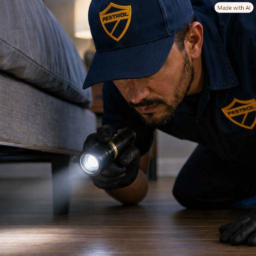




Did you know that standard New York homeowners insurance policies provide exactly zero dollars in coverage for termite damage? It is a startling fact for many, especially when you are preparing for a high-stakes real estate transaction. We understand the anxiety of wondering if a hidden infestation will cause your deal to fall through at the last minute. A termite inspection for home sale should be a straightforward step toward closing, not a source of confusion or distrust.
You deserve to know that your property is structurally sound and that you are meeting every legal requirement. With New York’s recent elimination of the $500 disclosure credit, sellers now face stricter mandates to be transparent about pest history. Whether you are navigating new VA loan flexibilities or trying to secure a clear NPMA-33 report, we have you covered. This guide provides expert advice on 2026 requirements and costs to ensure your investment remains protected. We will walk you through the inspection process, explain how to handle findings, and show you how to keep your closing on track with local, reliable expertise.
Key Takeaways
- Understand how the removal of the $500 PCDS credit in New York changes your disclosure obligations and helps prevent post-closing legal liabilities.
- Learn the current lending requirements for a termite inspection for home sale and how recent VA rule changes impact who covers the cost.
- Master the technical language of the NPMA-33 form so you can distinguish between active threats and harmless historic damage.
- Secure your investment beyond the closing date by learning how to transition from a one-time inspection to a permanent defense strategy for your new property.
Understanding the Termite Inspection Requirement in Real Estate
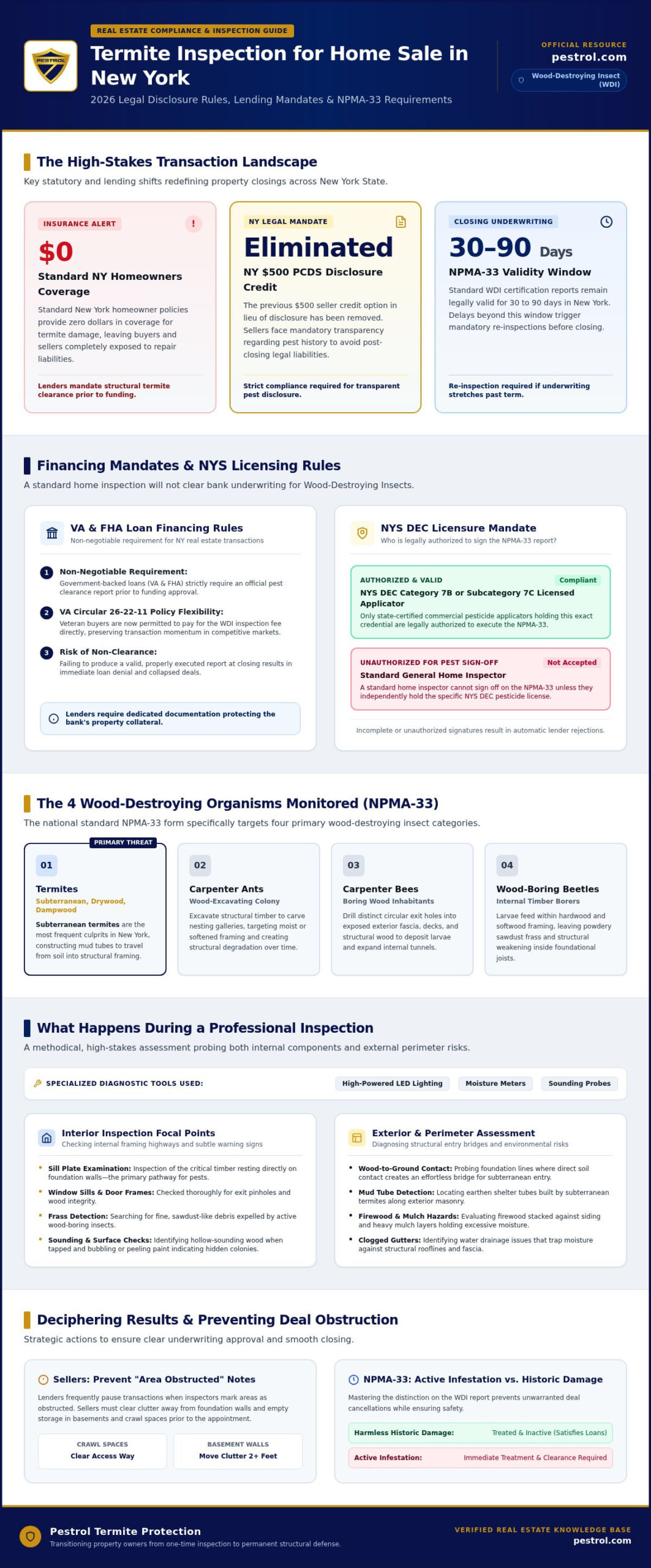
Closing on a property in Manhattan or Orange County is a complex process. A Wood-Destroying Insect (WDI) report is often the final hurdle between a signed contract and a funded loan. While a general home inspection covers broad issues like roofing and plumbing, it doesn’t satisfy lender requirements for pest clearance. A specialized termite inspection for home sale focuses exclusively on organisms that compromise wood. This ensures the bank’s collateral isn’t being eaten away from the inside.
A professional WDI report identifies more than just active infestations. It documents evidence of past wood-destroying insect activity and identifies areas of the home that are vulnerable to future attacks. This level of detail is necessary because termites operate in ways that standard inspections might miss. Specialists look for subtle signs like mud tubes, exit holes, or “frass” that indicate a problem is present even if no live insects are visible on the surface.
The NPMA-33 Form: The Industry Standard
Most lenders require the NPMA-33 form, which stands as the national standard for reporting wood-destroying insects. This document is comprehensive. It requires the inspector to check for termites, carpenter ants, carpenter bees, and wood-boring beetles. Understanding termite biology and colony structure is vital for this task. These pests often remain hidden deep within the foundation or wall voids, requiring a trained eye to spot their entry points. In New York, these reports generally carry a validity window of 30 to 90 days. If your closing is delayed beyond this period, you’ll likely need a re-inspection to satisfy underwriting requirements.
VA and FHA Loan Mandates
For those using VA or FHA financing, a termite inspection for home sale is non-negotiable in New York. The Department of Veterans Affairs recently updated its policies through VA Circular 26-22-11. This change allows veteran buyers to pay for the WDI inspection fee themselves, which helps keep deals moving in competitive markets. However, the qualifications for the inspector are strict. In New York State, the individual signing the NPMA-33 must be certified by the NYS DEC under Category 7B or Subcategory 7C. A standard home inspector cannot sign off on these reports unless they hold this specific pesticide applicator license. Failing to provide a clear, properly signed report at the closing table can result in a denied loan and a collapsed deal.
What Happens During a Professional Termite Inspection?
A professional termite inspection for home sale is a methodical, high-stakes search for hidden damage. It isn’t a simple walk-through. It requires a dedicated effort to access every corner of the property. Before the inspector arrives, sellers should clear clutter away from foundation walls and empty out storage areas in crawl spaces or basements. This transparency allows for a thorough sweep and prevents the “area obstructed” notes that can cause lenders to pause a transaction.
Inspectors use specialized tools like high-powered LED lighting, moisture meters, and sounding probes to identify issues that aren’t visible to the naked eye. They are hunting for the “big three” species: Subterranean, Drywood, and Dampwood termites. In the New York region, Subterranean termites are the most frequent culprits. They build intricate mud tubes to travel from the soil into your home’s framing. Identifying these entry points early is the best way to protect your investment.
Interior Inspection Focal Points
Inside the home, the inspector focuses on the “sill plate,” which is the wood that rests directly on the foundation. This area is a primary highway for pests. They also examine window sills and door frames for exit holes or “frass,” which is a fine, sawdust-like material left behind by wood-boring insects. According to this EPA guide to termite identification and control, wood that sounds hollow when tapped or paint that appears to be bubbling can indicate an active colony working just beneath the surface. These red flags often trigger deeper investigations into the home’s structural framing.
Exterior and Perimeter Assessment
The exterior check is just as critical as the interior one. The inspector probes the entire foundation line, looking for any wood-to-ground contact that provides an easy bridge for termites. They also evaluate the surrounding landscape for conditions that attract pests. Firewood piles stacked against the house, heavy layers of mulch, and clogged gutters that trap moisture are all major risk factors. If you are preparing to list your property, scheduling a professional Termite Control assessment can help you identify these vulnerabilities before they become a hurdle at the closing table. Addressing moisture issues in downspouts and clearing debris from the foundation are simple steps that can lead to a much cleaner WDI report.
Who Pays for the Termite Inspection and Repairs?
Negotiating the cost of a termite inspection for home sale is a standard part of the New York real estate process. Traditionally, the buyer covers the inspection fee as part of their due diligence. However, the landscape shifted significantly on March 20, 2024. New York State eliminated the $500 credit that allowed sellers to opt out of the Property Condition Disclosure Statement. Now, sellers must disclose known termite history or face potential legal action. This change encourages many sellers to pay for a pre-listing inspection to identify problems before they stall a contract.
Loan types also dictate financial responsibility. In the past, the Department of Veterans Affairs strictly prohibited veteran buyers from paying for pest inspections. Under VA Circular 26-22-11, this rule has changed. Veterans are now permitted to pay the fee directly. This flexibility helps buyers stay competitive in tight markets, though the seller or lender can still be asked to cover the cost during negotiations. If a closing is delayed past 90 days, a re-inspection is often required, and the cost of this second check is usually a fresh point of discussion between the parties.
Buyer vs. Seller Responsibilities
While a seller might provide an existing report, savvy buyers should still hire their own independent expert. If active pests are discovered, the responsibility for remediation usually falls on the seller. This often involves a price reduction or a credit at closing to cover the treatment. If structural damage is found, the stakes are higher. Lenders may require a licensed contractor to certify that the home is safe before they fund the loan. Having your own report ensures you aren’t walking into a financial trap. It gives you the leverage needed to demand repairs or walk away with your deposit intact.
The Importance of Independence
It’s tempting to use an inspector recommended by a real estate agent to keep the process moving quickly. This can be a mistake. Some contractors may offer a “realtor-friendly” check that overlooks minor signs of activity to avoid “killing the deal.” You need an inspector who prioritizes your safety over a commission. Identifying signs of the Penn State Extension guide to eastern subterranean termites is critical here. These pests can cause significant damage over a short timeline in the Mid-Atlantic region. Always verify that your inspector holds a NYS DEC Category 7B or 7C license. At Pestrol, we focus on long-term protection rather than quick closings. We provide a thorough, unbiased assessment so you have a full picture of the property’s health before you sign.
Interpreting the Findings: Active Infestation vs. Past Damage
Receiving the results of a termite inspection for home sale can be a tense moment for both parties. The NPMA-33 form uses specific language that can seem alarming if you don’t know how to read it. Section II of this report is the most critical area. It requires the inspector to distinguish between visible evidence of active wood-destroying insects and visible evidence of past activity. Finding old galleries or historic drill marks doesn’t automatically mean the house is currently under attack. It often indicates that a previous owner took the right steps to protect the property.
When “evidence of previous treatment” is noted, it usually refers to visible signs like injection holes in basement floors or bait stations in the yard. For a buyer, this is often a good sign. It shows a history of professional maintenance. However, lenders will want to see documentation of that treatment. Sellers should keep all past invoices and warranty certificates organized. Providing these documents can prevent delays and reassure the buyer that the situation is under control.
When the Report Isn’t Clear
If the inspector discovers live insects or fresh mud tubes, you must act quickly. An active infestation will stop most mortgage approvals in their tracks. The solution is a targeted remediation plan that satisfies both the lender’s requirement for safety and the buyer’s need for security. Professional treatment stops the damage immediately and provides the “clear” letter required for the closing. We recommend securing a transferable termite warranty as part of the deal. This contract moves with the deed to the new owner. It transforms a potential deal-breaker into a long-term benefit by ensuring future protection is already paid for and in place.
Evaluating Structural Integrity
Distinguishing between cosmetic scarring and structural damage is vital. Termites often chew through decorative trim or baseboards first. While this looks bad, it doesn’t threaten the safety of the home. True structural issues involve the sills, joists, and load-bearing studs. If the damage is extensive, a structural engineer may be needed to certify the building’s safety. We work closely with contractors to assess these findings and provide a clear path forward. Structural damage in the context of a WDI report is defined as any wood-destroying insect activity that has compromised the load-bearing capacity or physical integrity of the building’s framing.
Securing Your New Home: Pestrol’s Post-Purchase Protection
Closing on your new property is a major milestone, but a successful termite inspection for home sale is only the first step in a long-term defense strategy. Termites are persistent pests. A “clear” report today doesn’t build a permanent wall against future swarms that might arrive next season. New York’s humid climate and aging infrastructure create unique vulnerabilities that require consistent monitoring. Instead of waiting for a new problem to surface, proactive homeowners establish a baseline of security immediately after moving in.
Recurring service is the most effective way to prevent the re-entry of termites and other structural pests. By maintaining a protective barrier and conducting regular sweeps, you eliminate the conditions that attract infestations. This approach saves you from the stress of future structural repairs and keeps your investment safe for years to come. It’s about moving from a state of reactive anxiety to a position of calm, controlled protection.
Tiered Protection for Peace of Mind
Every home has different needs based on its age, location, and construction type. We offer tiered plans to ensure you get the exact level of coverage you require. The Home Pest Protection – Basic plan is an excellent entry-level security option for new residents. It provides a foundational layer of defense that keeps your living space comfortable and secure from the start.
If you need more comprehensive coverage, our Plus and Premium tiers expand the list of protected pests. These plans are specifically designed to handle common local issues like roaches and mice, which are frequent headaches in high-density areas. Whether you’re moving into a historic brownstone or a modern suburban home, these structured solutions provide a clear path to a pest-free environment. You won’t have to worry about managing separate contractors for different issues; we handle it all under one reliable roof.
The Pestrol Advantage in New York
Working with a family-owned local expert makes a difference in your service quality. We understand the specific dynamics of Manhattan apartments, Bronx row houses, and Orange County estates. Our team doesn’t just apply treatments. We act as a protective guardian for your property. We treat every client with personal care and respect, building long-term relationships rather than focusing on one-off transactions.
Our results-first mentality means we don’t stop until the job is done. We’re deeply rooted in the local community and committed to maintaining healthy environments for our neighbors. When you choose us, you’re gaining a knowledgeable ally who understands the local regulations and pest behaviors unique to the New York area. Don’t leave your home’s safety to chance during or after the sale.
Protect Your Investment and Close with Confidence
A successful real estate transaction depends on total transparency. Navigating a termite inspection for home sale shouldn’t be a source of stress or uncertainty. By understanding the legal disclosure requirements in New York and the technical specifics of the NPMA-33 form, you can handle any findings with complete confidence. A clear report protects your financial interests and ensures your future peace of mind from the moment you sign the contract.
Choosing family-owned local experts ensures you receive comprehensive WDI reporting that lenders and buyers trust. We serve properties from Manhattan and the Bronx through Orange County, providing the thorough assessments needed to keep a deal on track. Once the keys are in your hand, shifting to a recurring protection plan keeps your new property secure year-round. You’ve worked hard to find the perfect home; don’t let wood-destroying insects compromise your investment or your safety.
We are here to guide you through every step of the process with reliable, expert care. You can trust our team to protect your property as if it were our own.
Frequently Asked Questions
Is a termite inspection required for a home sale in New York?
New York state law doesn’t strictly mandate an inspection for every sale, but almost all mortgage lenders require a clear report before funding. The 2024 update to the Property Condition Disclosure Act means sellers in places like Newburgh or the Bronx must now disclose any known pest history. Most buyers in Manhattan and Orange County include a termite inspection for home sale as a standard contingency to protect their investment and satisfy bank underwriting.
How much does a termite inspection typically cost during a real estate transaction?
Industry standards for a standalone report in New York generally range from $100 to $325, though dense areas like Manhattan or the Bronx may see fees up to $400. Bundling the service with a general home inspection often reduces the cost significantly. These figures represent typical market rates for the 2026 season. You should always confirm the exact fee with your local Orange County inspector before scheduling to ensure it fits your closing budget.
Who is responsible for paying for termite treatment if an infestation is found?
Responsibility for treatment is usually determined during contract negotiations. If a termite inspection for home sale reveals an active colony, the buyer typically asks the seller to cover the remediation costs or provide a closing credit. In competitive markets like Goshen or Warwick, these terms are often outlined in the initial purchase agreement. It’s vital to have a licensed expert provide a formal estimate to ensure the negotiation is based on accurate, professional data.
What is the difference between a WDI report and a regular home inspection?
A regular home inspection focuses on general systems like plumbing and electrical. A Wood-Destroying Insect (WDI) report is a specialized search for termites, carpenter ants, and wood-boring beetles. In New York, only inspectors with a specific DEC Category 7B or 7C license can sign the official NPMA-33 form. Whether you’re buying a brownstone in the Bronx or a ranch in Cornwall, you need this specialized document to satisfy FHA or VA loan requirements.
Can a VA loan be approved if termites are found?
A VA loan won’t be approved while an active infestation exists, but it can proceed once the issue is resolved. The property must be treated by a licensed professional, and a clear re-inspection report must be submitted to the lender. In 2026, veteran buyers in Orange County have more flexibility in paying for these fees. However, the home must meet Minimum Property Requirements, which means all structural damage must be addressed before the bank funds the mortgage.
How long does a termite inspection take and do I need to be present?
A thorough inspection usually takes between 30 and 60 minutes, depending on the home’s size and the accessibility of the foundation. While you aren’t strictly required to be present, we recommend it so the inspector can show you any areas of concern in real-time. This is especially helpful in older Manhattan buildings or Orange County homes with crawl spaces. Being there allows you to ask questions about preventative measures and long-term protection plans immediately.
What happens if the inspector finds old damage but no live termites?
Finding old damage is common in historic areas like the Bronx or Warwick. The inspector will document this as inactive on the NPMA-33 form. While this isn’t an active threat, lenders might require a licensed contractor to verify that the wood remains structurally sound. Providing records of previous Termite Control treatments helps reassure the bank that the issue was professionally managed. It’s about proving the property is safe for the long term.
Does a clear termite report guarantee there are no termites in the home?
A clear report indicates that no visible evidence was found in accessible areas at the time of the sweep. It isn’t a guarantee against hidden colonies inside walls or deep beneath the foundation. That’s why a one-time check is just the start. We encourage new homeowners in Orange County and NYC to transition to recurring Home Pest Protection plans to ensure that any future activity is caught and stopped before it causes structural damage.