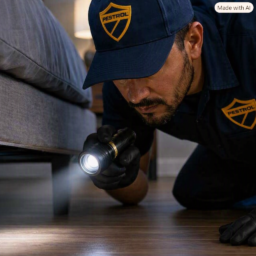




Rodent proofing in Chelsea, NYC, means finding and sealing the openings rodents use to enter, not just setting traps after they get inside. DIY trapping may help with isolated activity, but when rodents keep returning or their access points are hard to find, professional exclusion can address the entry routes. A house mouse can squeeze through a gap about 1/4 inch wide.
It’s frustrating to find signs of rodents at home or work, especially when a trap catches one but the problem continues. The right next step depends on where activity appears, whether entry points are accessible, and whether the issue is limited to one room or affects a larger property.
Learn when trapping may help, what a thorough inspection looks for, and how exclusion and ongoing checks can reduce the chance of rodents getting back inside. We’ll cover practical considerations for homes and businesses in Chelsea, from shared walls and utility openings to places where activity can go unnoticed.
Key Takeaways
- Learn when trapping may help and when sealing entry routes calls for a broader exclusion approach.
- See why concealed openings behind appliances and cabinetry can matter during a thorough inspection.
- Understand which building areas to assess, including cellars, boiler rooms, pipe chases, and exterior foundations.
- Use ongoing perimeter checks and prevention habits to spot conditions that could invite rodent entry.
- Explore how rodent control can be adapted to the different needs of homes and commercial properties.
What Is Pest Exclusion and Proofing?
Pest exclusion is the inspection and sealing of openings rodents and cockroaches use to enter buildings. In Manhattan, shared walls, basements, trash rooms, and older foundations can make entry routes harder to trace.
Entry Point and Vulnerability Identification
A structural inspection follows signs of activity back toward possible entry points. It covers wall and floor joints, foundation edges, utility openings, and shared walls, where gaps may connect rooms or neighboring spaces. In older Manhattan buildings, stone foundations and multiple pipe penetrations can require closer inspection. Rodent and cockroach entry-point identification also checks where building materials meet, since small openings can be easy to overlook.
NYC housing requirements address property maintenance, but the specific repair duty depends on the building and reported condition. Tenants can document the issue, notify the landlord in writing, and report unresolved rodent conditions through NYC 311.
Concealed Gaps Behind Fixtures
Openings behind refrigerators, stoves, sinks, and fitted cabinetry can hide from view during a casual room check. An inspection moves accessible appliances carefully and examines the wall, floor, and pipe openings behind them. A house mouse can squeeze through a gap about 1/4 inch wide, so narrow spaces around plumbing deserve attention. The inspection also checks whether droppings, rub marks, or gnawing appear near an opening.
When comparing rodent-proofing services in Chelsea, look for an inspection that identifies entry routes and addresses the structure, not just visible rodent activity.
Metal and Mesh Sealing
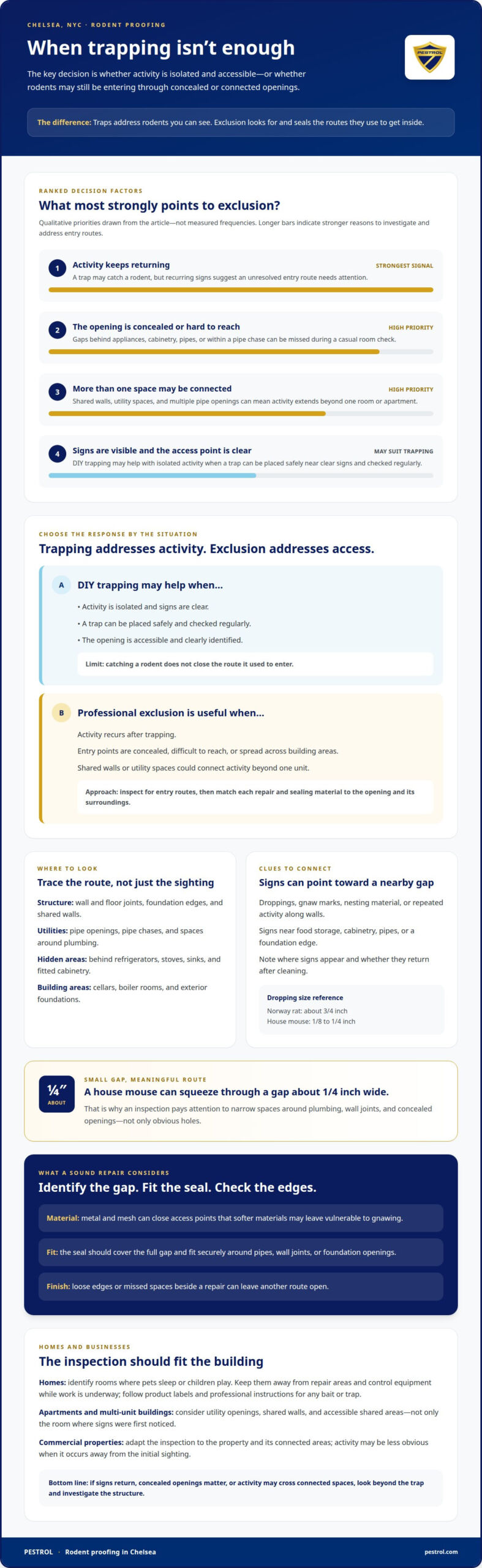
Once an opening is identified, choose a material suited to its location and shape. Metal and mesh can close access points that softer materials may leave vulnerable to gnawing. A proper seal should cover the full gap and fit securely around pipes, wall joints, or foundation openings. The surrounding surface matters too: loose edges or missed spaces can leave another route beside the repair.
Sealing may involve concealed or elevated areas, so an inspection helps determine which openings need repair and which materials fit the job. The goal is to block access without covering features the building needs.
Signs of Rodent Entry
Look for droppings, gnaw marks, nesting material, or repeated activity along walls and near food storage. Norway rat droppings are about 3/4 inch long; house mouse droppings measure 1/8 to 1/4 inch. These signs help direct an inspection, but their location matters as much as their appearance. Activity near cabinetry, pipes, or a foundation edge can point toward a nearby opening.
Note where signs appear and whether they return after cleaning. A structural inspection can connect those clues to concealed gaps, shared walls, or other vulnerabilities in the building.
DIY trapping versus professional exclusion
Traps can help address visible rodent activity, but they do not close the route rodents use to enter. Exclusion combines inspection with repairs, making it useful when activity continues or entry points are difficult to reach.
For a brownstone, townhouse, or apartment building, rodent proofing means inspecting the structure, locating gaps around pipes and doors, and sealing openings with suitable materials. In multi-unit buildings, shared walls and utility spaces matter because activity may extend beyond one apartment.
Exclusion Materials and Sealing Methods
Effective sealing starts with identifying the opening and understanding its surroundings. Metal and mesh can close rodent entry points, but the material and fit should suit the gap, surface, and nearby pipe or building feature. A loose edge or uncovered space beside a repair can leave access open.
DIY methods may work for accessible, clearly identified openings. Concealed gaps or connected building spaces may call for professional exclusion. A thorough approach links each repair to a specific entry point instead of relying on traps alone to address signs indoors.
Pet and Child Safety
Physical exclusion focuses on blocking access, but safety depends on the materials and any other control methods used at the property. In homes with pets or children, placement matters: keep them away from repair areas and any control equipment while work is underway. Follow the product’s label and the professional’s instructions for any bait or trap.
Before work begins, identify rooms where pets sleep or children play. This helps determine where sealing and control measures should take place and how to keep the work area separate during treatment.
DIY trapping is most practical when a trap can be placed safely near clear signs of activity and checked regularly. It may catch a rodent, but it will not show whether another opening remains behind cabinetry, near a pipe chase, or along a shared wall. If signs return after trapping, the unresolved entry route needs attention.
Professional exclusion is useful when activity recurs, openings are concealed, or several parts of a building may be connected. In a Chelsea apartment, for example, an inspection can consider the unit’s utility openings alongside accessible shared areas. The aim is to match each repair to the building’s structure, rather than use one sealing method everywhere.
Rodent-proofing needs vary across New York City boroughs and building types. For an accessible gap, a focused repair may be enough; for a brownstone with multiple penetrations, inspection and coordinated sealing may cover more ground. Rodent Proofing can help address entry points when trapping alone isn’t resolving recurring activity.
Inspecting cellars, boiler rooms, pipe chases, and exterior foundations
A careful inspection follows building features that may connect indoor spaces with exterior access. In Manhattan, cellars, boiler rooms, pipe chases, and foundation edges all deserve attention.
Pipe Chase Inspections
Technicians inspect pipe chases where plumbing passes through floors, walls, or ceilings. They check each opening around the pipe, not just across the visible wall surface. A narrow gap beside a water line can provide access even when the rest of the chase looks intact. Where accessible, the inspection also follows the chase between floors.
In a Chelsea apartment building, a pipe chase may serve several units or connect to shared areas. Technicians look for openings at utility penetrations and where building materials meet. They note visible signs near those points, then trace whether a gap continues beyond the immediate room. This helps distinguish a local opening from a route linked to another part of the building.
Boiler rooms and cellars need the same methodical approach. Technicians inspect around utility lines, wall joints, and transitions between floors, taking care to work safely around building equipment. A visible gap near a pipe is assessed in context: its location, surrounding material, and connection to other spaces help determine whether it needs sealing.
Inspection findings should connect each suspected entry point to a specific building feature. For example, activity beside a cellar pipe chase directs attention to that opening and the route above it. Recording locations clearly helps guide repairs and later checks, rather than treating every room as a separate problem.
Exterior Foundation Checks
Outside, an inspection follows the accessible foundation line and looks for openings, cracks, and disturbed soil. The area where the building meets the ground matters because rats may burrow along exterior edges. Technicians examine visible foundation surfaces and transitions, then compare those observations with signs inside cellars or boiler rooms.
A foundation check also covers utility entrances and the points where exterior materials meet. If a pipe enters near the cellar, the opening around it becomes a specific inspection point. Technicians note whether the gap reaches an interior space and whether nearby material appears loose or incomplete. That connection helps prioritize openings for attention.
Inspection continues along accessible exterior sections rather than stopping at the first visible gap. A Chelsea building may have several foundation transitions, including corners and utility openings. Technicians assess each section and relate it to indoor findings, such as activity near a cellar wall. This broader view helps locate connected access routes.
Cellars, boiler rooms, pipe chases, and exterior foundations are parts of one structure. Comparing findings across these areas can reveal a route that a room-by-room glance might miss. A documented inspection identifies the opening, its location, and the related building feature, giving sealing work a clear target.
Ongoing prevention and perimeter checks
Sealing entry points is one part of prevention. Continued observation helps catch new openings and renewed activity. In Chelsea, connect each check to a specific area, such as an apartment kitchen, cellar, or exterior wall.
Ongoing Prevention
After repairs, keep track of where rodent signs appeared and whether they return. Document activity during the first 48 hours after signs are noticed, then compare later observations with that record. Note locations, such as beside a pipe, near stored food, or along a cellar wall. This makes changes easier to identify.
Reduce conditions that attract rodents by keeping food in closed containers and limiting clutter near walls. In an apartment, check under sinks and around shared utility areas for fresh signs or newly visible openings. NYC rodent activity tends to peak during late summer and early fall, so continued observation is useful during those seasons.
Prevention also means responding to changes in the building. A new opening after maintenance, a damaged seal, or recurring activity near one wall deserves attention. Record the location and arrange removal of accessible attractants, then assess whether the entry route needs repair. Ongoing notes help distinguish a one-time sign from a recurring pattern.
Perimeter Checks
A perimeter check follows the accessible exterior edge of the building. Examine the foundation line, corners, doors, and places where pipes or other utilities enter. Look for gaps, loose material, disturbed soil, and signs of rodent movement. Compare outside observations with activity inside nearby rooms, such as a cellar or ground-floor apartment. Keeping exterior surfaces clean also makes structural cracks and foundation gaps much easier to spot; for routine property maintenance, exterior cleaning specialists like Moores Pressure Washing LLC demonstrate how regular washing helps property owners keep building perimeters clear and easier to inspect.
Check shared spaces as well as private rooms. A trash room, cellar entrance, or utility area can reveal activity connected to an apartment wall. Note where building materials meet and whether a previous seal remains secure. If a new opening appears near a repair, record its exact location for focused inspection and sealing.
Repeat the same route to keep observations consistent. For example, check the foundation beside a cellar wall, then inspect the corresponding indoor area. A clear record of changes helps technicians identify whether activity has shifted or a seal needs attention. Do not consider the perimeter check complete after looking only at the most visible entrance.
Service Duration and Follow-Up
The time required for professional rodent proofing depends on access, the number of entry points, and the repairs needed. A focused repair differs from work involving concealed openings or multiple areas of a building. Follow-up checks help assess whether seals remain intact and whether fresh signs appear around repaired locations.
For a Chelsea property, follow-up checks can compare new observations with the initial inspection record. If activity returns near a pipe opening or foundation edge, that location can guide another assessment. Keep recording changes around the apartment and shared areas, especially after building work or visible damage to a seal.
Rodent control for residential and commercial properties
Rodent control should fit how each property is used. A residential apartment, a shared building cellar, and a food-service workspace have different access patterns and daily routines. Effective pest control connects inspection, exclusion, and activity monitoring rather than treating every property alike.
In a home, the inspection considers where residents store food, prepare meals, and see signs of activity. A mouse near a kitchen cabinet may point to a different access route than activity beside a cellar wall. Technicians use those observations to focus the inspection, identify possible entry points, and determine where sealing is needed. Residents can document signs during the first 48 hours after noticing them, noting the room and nearby features.
Shared residential buildings need a wider view. Activity in an apartment may relate to a cellar, trash room, or utility area used by other occupants. Coordinating observations across these spaces can help distinguish a unit-specific issue from a building-wide route. Property teams can record reported locations, note repairs, and keep shared areas accessible for inspection.
Commercial spaces need a plan that respects their work routines. A restaurant, for example, must account for food storage, deliveries, cleaning, and areas where staff prepare meals. Inspection and control measures should consider these operating zones and the routes connecting them. Rodent control can include exclusion, eco-friendly bait stations, and birth-control bait for rats, with placement based on the property and its activity.
For residential and commercial properties alike, one method rarely answers every question. Exclusion addresses access, while monitoring helps reveal whether activity continues or shifts. A control measure does not replace identifying openings or maintaining the building. The key is to match each step to the signs, structure, and daily use of the space.
Keep a simple record for each area: where signs appeared, when they were noticed, and whether activity returned after removal or repair. At home, note a kitchen or cellar location. At a business, staff can report signs near storage or service areas to the property manager. These details give technicians a practical starting point and help focus follow-up checks.
Choose an approach that considers the entire property, not just the room where rodents were seen. In Chelsea, shared building spaces and separate commercial work zones can affect how inspection, exclusion, and monitoring fit together. A plan based on the property’s layout and use gives each step a clear purpose.
Pestrol: Rodent Proofing
Pestrol provides Rodent Proofing for homes and businesses dealing with recurring activity or hard-to-find entry routes. It’s a practical next step when trapping has not addressed how rodents are getting inside, or when a property needs a closer look at openings across connected spaces. An inspection-led approach can identify where exclusion work is needed and which parts of the building deserve attention.
For residential properties seeking broader pest management, Pestrol also offers Home Pest Protection – Basic, Home Pest Protection – Plus, and Home Pest Protection – Premium. The right option depends on the property’s needs and its pest concerns.
Contact Pestrol to discuss rodent proofing for your property.
Make the Next Step a Practical One
Choose a next step that fits your property and the signs you’ve noticed. If rodents keep returning, a focused plan for rodent proofing in Chelsea, NYC, can address access issues rather than relying on traps alone. Share where activity appears and whether it affects a home, shared building space, or business. These details help focus the inspection on your property’s needs.
For broader residential pest management, Pestrol offers Home Pest Protection – Basic, Home Pest Protection – Plus, and Home Pest Protection – Premium. If your concern is specifically rodent access, Rodent Proofing is the relevant service.
A clear starting point can make the problem easier to address. Take the next step toward a more comfortable, protected property.
Frequently Asked Questions
Do It Yourself Or Hire A Professional?
DIY trapping may suit limited, visible activity when you can place and monitor traps appropriately. Professional help makes more sense when rodents return, signs appear in separate rooms, or access seems connected to shared building spaces. For rodent proofing in Chelsea, NYC, note where activity occurs and whether it returns after trapping. Those details help determine whether the next step is a focused repair or a broader inspection.
What does rodent proofing in Chelsea NYC include?
Rodent proofing generally combines an inspection of likely access routes with sealing work targeted at identified openings. The scope may include a private apartment, connected utility spaces, or accessible building areas, depending on where activity appears. For example, signs near a kitchen wall may lead an inspection toward plumbing or cabinetry. The property’s layout and the location of activity shape which openings need attention and which areas need continued observation.
How do you seal mouse and rat entry points in a NYC apartment?
Start by locating the opening and checking what passes through it, such as a pipe or cable. Clear loose material around the gap, then use a suitable rodent-resistant seal, such as metal or mesh, fitted to the opening and surrounding surface. Pay attention to edges and the space behind fixtures. The seal should close the access route without interfering with the pipe or other building feature.
What materials are best for rodent-proofing gaps and pipes?
Metal and mesh can help close openings, including gaps around pipes. The best fit depends on the opening’s shape, the surrounding building material, and whether a utility passes through it. For a narrow pipe opening, the seal must fit around the pipe rather than leave exposed space. For a wider gap, the material needs to cover the opening securely, including its edges.
How does rodent exclusion compare with traps and pest-control treatments?
Exclusion blocks access through openings, while traps are intended to catch rodents already inside. Pest control treatments can address active rodent populations, but they do not replace repairs to entry routes. For example, a trap may catch a rodent near a pantry while an opening remains near a utility line. Combining appropriate control with exclusion addresses both the rodents present and the access conditions that may allow them inside.
What NYC laws require landlords to prevent or address rodent infestations?
NYC housing requirements address property maintenance, but the specific repair duty depends on the building and reported condition. Tenants can document the issue, notify the landlord in writing, and report unresolved rodent conditions through NYC 311.
Which rodent-proofing companies serve Chelsea NYC?
Pestrol provides Rodent Proofing in Chelsea, including inspection and exclusion.