



Imagine waking up at 3:00 AM, scanning your sheets with a phone flashlight, and wondering if that tiny red mark on your arm is a bed bug or just a mosquito. It’s an exhausting feeling that turns your bedroom into a source of constant stress. You aren’t alone in this. Many homeowners find themselves stuck between the fear of a massive infestation and the confusion of conflicting DIY advice. Scheduling a professional bed bug inspection is the most effective way to replace that late-night anxiety with a concrete, expert-backed plan.
We understand that your peace of mind is the priority. You need to know for certain whether these pests have entered your home, and if they have, you need a clear path forward. This guide explains exactly how a professional detection works, what specialized tools experts use in 2026, and how to prepare your home for a successful visit. We’ll also look at the latest New York disclosure laws and why modern bed bugs are increasingly found in unexpected places like electronics and wall voids. By the end of this article, you’ll have the facts you need to protect your family and reclaim your home.
Key Takeaways
- Learn why a professional bed bug inspection is a forensic investigation that identifies harborages DIY methods often miss.
- Discover the systematic “concentric circle” technique and the high-intensity UV tools experts use to spot biological traces.
- Compare visual, canine, and DNA detection methods to determine which approach offers the best peace of mind for your specific situation.
- Understand the critical preparation steps, including why you should avoid moving furniture or stripping beds before the expert arrives.
- See how detailed inspection data transitions into a specialized elimination protocol tailored to your home’s unique needs.
Why a Professional Bed Bug Inspection is Your Essential First Step
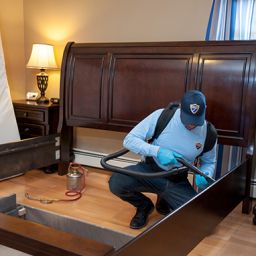
Think of a professional bed bug inspection as a forensic investigation rather than a simple walkthrough. While many homeowners start by pulling back their sheets with a flashlight, these pests are masters of concealment. They hide in wall voids, behind electrical faceplates, and inside the joints of bed frames. A professional sweep uses specialized training to uncover biological evidence that the untrained eye simply cannot see. Our team focuses on finding the source, ensuring we don’t just treat the symptoms of a problem.
The psychological toll of a suspected infestation is heavy. The constant “phantom itching” and loss of sleep can disrupt your entire life. Getting a definitive answer from a local expert provides immediate relief. Whether the result is positive or negative, you gain a clear plan of action. This also prevents the significant financial risk of misdiagnosis. Treating your home for the wrong insect is a costly mistake that allows bed bugs to multiply further while you waste resources on ineffective solutions. A targeted diagnosis is the only way to ensure your investment in pest control actually works.
The Limitations of DIY Bed Bug Detection
Flashlight-only searches are notoriously unreliable. Industry observations suggest these methods miss a significant portion of early-stage infestations because bed bugs are photophobic and avoid light at all costs. Homeowners often mistake carpet beetles, spider beetles, or even simple lint for an active problem. A professional bed bug inspection confirms the species before you spend a dime on treatment. Another danger is “disturbing the nest.” Using over-the-counter sprays without an expert diagnosis often causes the colony to scatter. This pushes the bugs deeper into your walls or into adjacent rooms, making the eventual elimination much harder and more expensive.
When to Call a Professional Exterminator
You should act if you notice unexplained bites that appear in clusters or linear patterns, often called “breakfast, lunch, and dinner.” Check your mattress seams for secondary signs like tiny black fecal spotting or translucent cast skins. In high-traffic areas like Manhattan and the Bronx, shared walls and public transit increase your risk of an introduction. If you’re moving into a new apartment, remember that New York law requires landlords to disclose bed bug history. A pre-lease inspection is a smart way to ensure your new home is safe before you move your furniture in. We recommend scheduling a check whenever you return from international travel or host guests from out of town.
The Anatomy of a Professional Inspection: Tools and Techniques
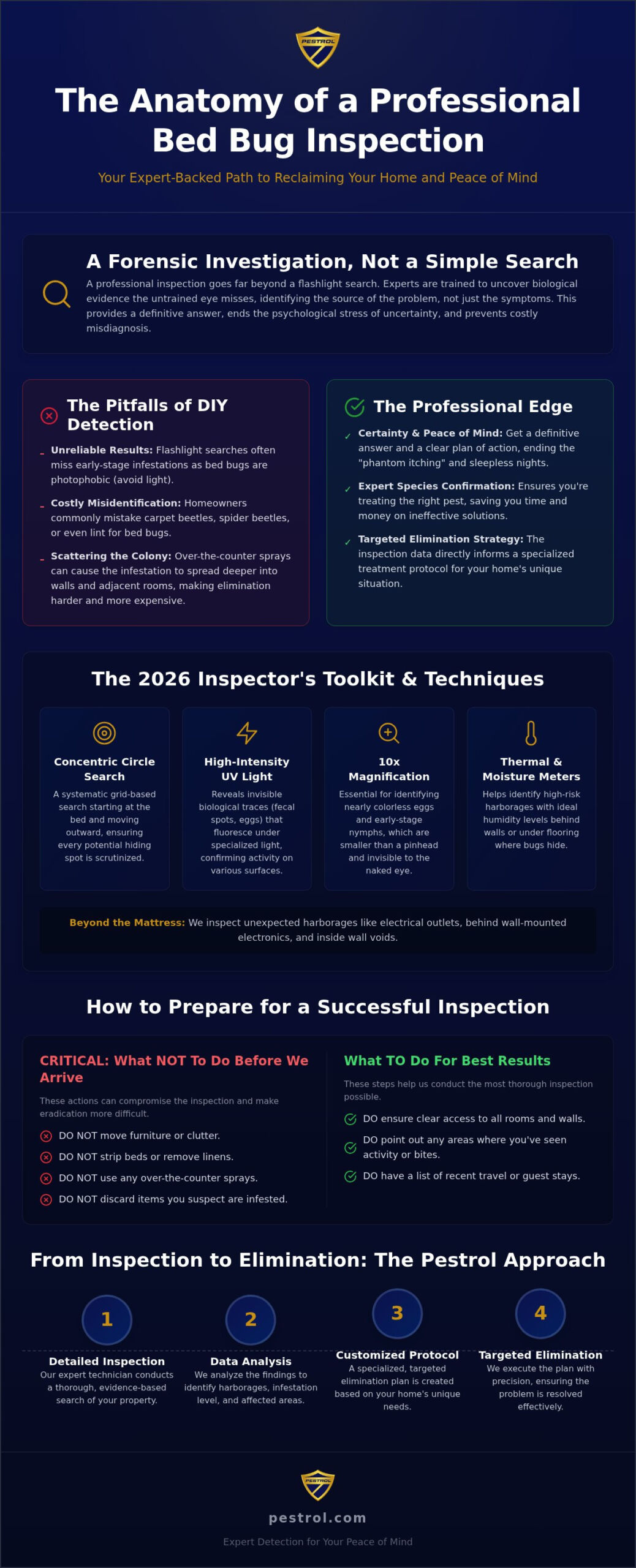
A professional bed bug inspection is a methodical, grid-based search that leaves nothing to chance. We follow a strict protocol, starting at the bed and moving outward in concentric circles. This systematic approach ensures that every potential hiding spot is scrutinized, from the mattress seams to the furthest corners of the room. Our technicians don’t just look for live bugs. They search for the subtle evidence of their presence, such as translucent eggs or tiny dark spots of fecal matter.
Technology plays a vital role in modern detection. We use high-intensity LED UV lights to reveal biological traces that are invisible to the naked eye under standard lighting. These specialized lights cause organic materials to fluoresce, helping us spot evidence on headboards and linens quickly. We also utilize moisture meters and thermal cameras. Since bed bugs prefer specific humidity levels, these tools help us identify high-risk harborages behind walls or under flooring. If you are getting ready to Prepare for treatment, these technical insights help you understand exactly why a flashlight search is never enough.
Magnification is another essential part of our toolkit. Our experts use 10x magnification lenses to identify eggs and early-stage “nymphs.” These nymphs are nearly colorless and smaller than a pinhead, making them almost impossible to see without professional equipment. By identifying the problem at this microscopic level, we can stop an infestation before it spirals out of control. If you suspect an issue, scheduling a thorough professional bed bug inspection is the most reliable way to protect your family.
Beyond the Mattress: Hidden Harborages
Bed bugs are hitchhikers that find safety in the most unexpected places. We inspect electrical outlets and the areas behind wall-mounted electronics, as the warmth from routers and televisions creates an ideal nesting ground. Our team also examines the internal “voids” of furniture like recliners and nightstands. In NYC apartments, we pay close attention to crown molding and the gaps beneath hardwood flooring. These architectural crevices provide deep, dark shelters where bugs can hide undisturbed for months.
Advanced Detection: K9 and Electronic Sensors
For large properties or high-density buildings, we may employ scent-detection canines. These highly trained dogs can identify the unique pheromones of live bed bugs with remarkable accuracy, often finding pests hidden deep inside walls. We also use CO2 lures and passive interceptors. CO2 lures mimic human respiration to draw bugs out of hiding over a 24-48 hour period, providing definitive proof of activity. This multi-method approach is the gold standard for maintaining a healthy home. If you want a partner who treats your property with care, consider a specialized Bed Bug Treatment plan to ensure long-term protection.
Comparing Inspection Methods: Visual vs. Canine vs. DNA
Not every property requires the same diagnostic approach. While a studio apartment in Manhattan might only need a focused visual check, a sprawling office complex in the Bronx requires a different strategy. Choosing the right professional bed bug inspection method depends on your property size, the suspected severity, and your specific goals for peace of mind. In 2026, we categorize these methods into three primary tiers: traditional visual sweeps, high-speed canine detection, and microscopic DNA testing.
The visual inspection remains the baseline for all professional pest management. It’s the most common starting point because it allows a technician to immediately identify the “level” of an infestation. If you see active bugs on a mattress seam, a visual check confirms the problem instantly. According to the EPA, a thorough professional bed bug inspection involves looking for physical signs like molted skins and fecal spots. While this method is generally more affordable, its success is highly dependent on the technician’s experience and persistence. It’s best suited for suspected active infestations in single rooms or small homes where harborages are likely localized near the sleeping area.
The Visual Inspection: Reliable and Detailed
A visual search is about more than just finding a bug; it’s about mapping the colony’s layout. Our experts examine the “hot zones” such as headboards, baseboards, and nightstands. This method provides immediate results, allowing you to move directly into a treatment plan. It’s the most practical choice for homeowners who have already seen a bug or have clear, physical evidence of an issue. Because it requires no specialized animals or lab work, it’s often the quickest way to get a professional eyes-on-site assessment of your bedroom.
Canine Scent Detection: Speed and Scale
For larger environments, canine scent detection is the industry standard for speed and scale. These dogs are ideal for clearing Manhattan office buildings or large Bronx apartment complexes where a manual search would take days. A dog can clear a standard room in minutes, whereas a human technician might spend an hour or more. However, a “hit” from a dog requires visual confirmation by a human handler before it’s considered actionable. This ensures that treatment is only applied where live activity is actually present, preventing unnecessary chemical use in multi-unit residential settings.
As we move through 2026, environmental DNA (eDNA) swabbing is becoming a powerful diagnostic tool. Instead of looking for a bug, technicians swab surfaces for microscopic DNA remnants left behind by the pests. This is incredibly useful for “clearance” checks after a treatment or for homeowners who have unexplained bites but no visible signs. It provides a scientific “yes or no” answer that removes the guesswork from detection. To choose the right method for your home, consider this framework:
- Small Apartments: Use a visual inspection for immediate, cost-effective confirmation.
- Large Properties: Opt for canine detection to ensure comprehensive coverage in less time.
- Post-Treatment Verification: Utilize eDNA swabbing to confirm 100% elimination.
How to Prepare Your Home for a Professional Inspection
Many homeowners feel an instinctive urge to deep-clean before a technician arrives. While this comes from a place of pride, “over-cleaning” can actually hinder a professional bed bug inspection. Scrubbing surfaces or vacuuming away debris can remove the very evidence, like cast skins or fecal spotting, that an expert needs to confirm an infestation. Your goal is to provide a clear view of your home’s current state, not a sanitized version of it. Practical preparation ensures that the technician can work efficiently and accurately.
Start by leaving your furniture exactly where it is. Don’t strip the beds or move nightstands away from the walls. These are the primary harborages where bugs congregate. If you disturb these areas, you may cause the insects to retreat deeper into wall voids, making them harder to detect. Instead, focus on clearing floor clutter. Pick up clothing, toys, and books, but keep them within the same room. Moving these items to a “clean” part of the house risks spreading the problem to areas that were previously unaffected.
Safety and access are equally important. Secure your pets in a crate or a separate room that isn’t under suspicion. This allows the inspector full access to closets and baseboards without distractions. Finally, document your experience. Keep a “pest log” of where you’ve seen activity or when you noticed new bite patterns. This data helps the technician focus their efforts on the most likely hiding spots during the walkthrough.
The “Don’ts” of Inspection Prep
Resist the urge to use store-bought “bug bombs” or foggers before the expert arrives. These products are often ineffective against bed bugs and typically serve only to scatter the colony into adjacent rooms or even neighboring apartments. You should also avoid throwing away mattresses or expensive furniture prematurely. In most cases, professional treatments can salvage these items, saving you thousands of dollars in replacement costs. Most importantly, never move laundry or suitcases to a neighbor’s home. This is the fastest way to spread an infestation throughout your community.
Access Requirements for Technicians
A thorough professional bed bug inspection requires access to every corner of a suspected room. Clear a two-foot perimeter around the baseboards to ensure the technician can examine the gaps where walls meet the floor. Ensure that closets, crawl spaces, and utility rooms are unlocked and accessible. Be prepared to provide a brief history of your recent travels or any guests who have stayed over. This context helps the inspector determine if the introduction was a one-time event or part of a larger pattern in the building. Before your appointment, it’s also worth reviewing the bed bug exterminator cost breakdown for New York in 2026 so you have a clear picture of what treatment may involve financially.
Schedule your professional bed bug inspection today
From Inspection to Elimination: The Pestrol Approach
A professional bed bug inspection is more than just a search; it’s the blueprint for your home’s recovery. We don’t just tell you that you have pests. We show you exactly where they’re hiding and how they entered your space. We use the data gathered during this detection phase to build a surgical plan for elimination. This ensures every localized colony is targeted specifically, rather than relying on broad, ineffective applications. For residents in Orange County and NYC, this level of precision is necessary to prevent pests from simply migrating to a neighbor’s unit and returning later.
Once the inspection is complete, you’ll receive a comprehensive forensic report. This document outlines our findings in plain English, supported by the evidence our technicians uncovered. We follow this with a transparent treatment quote, so you know exactly what to expect before we begin. Whether you’re currently enrolled in our Home Pest Protection – Basic plan or are reaching out for the first time, we provide a clear roadmap. This transition from detection to action is seamless, allowing us to begin the specialized elimination protocol without delay.
Customized Treatment Protocols
Complex New York environments require flexible, site-specific solutions. A high-rise in the Bronx has different structural vulnerabilities than a single-family home in Orange County. We integrate our findings into a professional bed bug treatment NYC strategy that accounts for shared walls, laundry chutes, and complex ventilation systems. One-size-fits-all treatments often fail because they don’t address the unique architecture of your building. Follow-up inspections are a non-negotiable part of our process. We return to verify total eradication, ensuring no eggs have hatched and no survivors remain to restart the cycle.
The Pestrol Peace of Mind
As a family-owned and operated business, we treat your home with the same care we’d our own. We understand the stigma and deep stress that bed bugs cause. That’s why our service is discreet and professional, designed to restore your comfort without drawing unnecessary attention from neighbors. We’ve spent years navigating the unique challenges of high-density housing in Manhattan and the Bronx, developing a “results-first” mentality that prioritizes your safety. Our team is deeply rooted in the local community, and we take pride in being a knowledgeable ally for our neighbors. You don’t have to face this alone.
Reclaiming Your Home and Your Sleep
You now have the tools to move from uncertainty to decisive action. A professional bed bug inspection is the only way to confirm an infestation with 100% certainty while avoiding the high costs of misdiagnosis. By following the specific preparation steps and choosing the right detection method for your property size, you set the stage for a successful elimination. You’ve learned that “over-cleaning” can actually hide evidence, and that local expertise is your best defense against the unique challenges of New York housing.
As a family-owned and operated institution, we’ve spent years developing specialized protocols specifically for the architecture of NYC apartments and homes in Orange County. We offer tiered protection plans designed to fit every budget, ensuring that high-quality care is always accessible. We pride ourselves on being a results-first partner who treats every client with personal respect and persistence. Don’t let another night of anxiety or “phantom itching” disrupt your life. We have this under control and are ready to help you restore safety to your bedroom.
Frequently Asked Questions
How long does a professional bed bug inspection take?
A standard visual inspection usually takes between 30 and 60 minutes per bedroom. This timeframe allows our technicians to perform a deep forensic sweep of your mattress, furniture joints, and baseboards. If we use canine scent detection, the process is much faster, often clearing a room in under 10 minutes. The total time depends on the size of your home and the amount of furniture we need to examine.
Is a bed bug inspection worth it if I haven’t seen a bug?
Yes, an inspection is highly valuable even if you haven’t seen a live bug. Bed bugs are photophobic and nocturnal, meaning they excel at hiding in microscopic crevices during daylight hours. A professional bed bug inspection identifies early-stage signs like translucent eggs or fecal spotting that homeowners often overlook. Catching a problem early prevents a minor introduction from becoming a full-scale, expensive infestation.
Should I strip the bed before the inspector arrives?
No, you should not strip the bed or move your linens before the inspector arrives. Leaving the bed intact preserves the evidence we need to find, such as cast skins or biological traces on the sheets. Moving bedding can also accidentally spread pests to other areas of your home, making the detection process much more difficult for the technician.
Can a professional inspector tell the difference between bed bug and flea bites?
While bite reactions vary by person, a professional can distinguish between them by looking at the location and pattern of the marks. Bed bug bites often appear in linear clusters of three, while flea bites tend to be concentrated around the ankles and lower legs. We combine this observation with a physical search of your home to confirm which pest is actually present before recommending a treatment plan.
What happens if the inspector doesn’t find anything but I’m still getting bitten?
We may recommend placing passive monitors or using CO2 lures to catch activity over the next 48 hours. If a visual search is inconclusive, advanced 2026 technologies like eDNA swabbing can detect microscopic DNA remnants left behind by pests. These tools ensure we don’t miss a cryptic colony that is just beginning to establish itself in your space. We’ll work with you until we find the source of your discomfort.
How much does a professional bed bug inspection cost in NYC?
Costs for a professional bed bug inspection in the NYC market vary based on the size of the property and the detection method used. A traditional visual check by a technician is priced differently than a specialized canine scent detection visit. You should always request a clear, transparent quote that outlines the scope of the search and any included reporting before the technician arrives at your property. For a full breakdown of what to expect, our 2026 bed bug exterminator cost guide for New York covers heat versus chemical treatment pricing, hidden fees, and the legal protections available to you.
Do bed bug inspectors check my car or office as well?
Yes, we can inspect vehicles and office spaces if you suspect you’ve transported pests between locations. Bed bugs are notorious hitchhikers and can easily hide in car upholstery or office chair seams. Identifying these secondary harborages is essential for ensuring that you don’t accidentally re-introduce the pests into your home after a residential treatment is completed.
Will the inspector need to take apart my furniture?
Technicians may need to perform minor disassembly, such as removing headboards from wall mounts or turning over box springs. We do this carefully to inspect the deep joints and crevices where bugs prefer to hide. Our goal is to be as thorough as possible while respecting your property and ensuring we don’t cause unnecessary disruption to your living space during the walkthrough.