




What should commercial kitchen pest services in Pelham Bay cover beyond treating a pest sighting? For food-service businesses, a useful plan connects observed activity with the conditions that may support it, such as food residue, moisture, building openings, and delivery routines. The work also needs to account for food handling and kitchen operations.
Choosing a service is easier when you can compare its inspection scope, pest focus, prevention steps, and monitoring process. A kitchen-specific plan considers the whole property, from prep and storage areas to receiving doors and refuse zones, instead of treating one sighting as an isolated problem.
This guide explains what to look for, how to prepare for service, and how treatment, prevention, and monitoring fit together. Pestrol provides commercial and restaurant pest management tailored to food-service properties, including commercial rodent proofing. The goal is a practical approach that addresses the property’s pest concerns while keeping its daily operation in view.
Key Takeaways
- Choose commercial kitchen pest services in Pelham Bay that account for the property’s pest activity, layout, and food-service routines.
- Look for a process that connects inspection, targeted treatment, prevention, and monitoring.
- Compare service scope by pest focus, prevention steps, follow-up, and coordination with kitchen operations.
- Prepare for service by arranging access, sharing staff observations, and noting where and when pests appear.
- Pestrol provides restaurant pest management and commercial rodent proofing tailored to food-service properties.
What Pelham Bay kitchens need from commercial kitchen pest services
A commercial kitchen pest service should do more than respond to a sighting. It should address active pest activity and the property conditions that may attract or shelter pests. For commercial kitchen pest services Pelham Bay restaurants can use, the plan should account for how food moves through the kitchen, where moisture collects, and how staff handle deliveries and waste.
Different areas call for different checks. Prep areas, dry storage, receiving doors, drains, and refuse zones can each reveal distinct signs or conditions. An Integrated Pest Management (IPM) approach connects inspection, prevention, monitoring, and treatment to the conditions found at the site.
Why a food-service kitchen needs a different pest plan
Food residue, water, warm equipment, and frequent deliveries can give pests access to food, moisture, or a way inside. Treatment addresses identified activity; prevention and monitoring focus on conditions and changes that may contribute to future activity. A useful plan considers both and coordinates work with food handling, kitchen schedules, and access to the areas being assessed.
Monitoring should follow the layout and flow of work. At receiving, check door gaps and the area where deliveries arrive. In dry storage, look around shelving and stored ingredients. In prep and wash areas, note drains, leaks, and hard-to-reach spaces. Refuse areas need their own review of waste handling and possible access points, rather than being treated as part of the cooking line.
Pelham Bay property conditions that can affect pest activity
Pelham Bay kitchens may operate in storefronts or mixed-use buildings, but each property has its own layout. Nearby commercial corridors such as Westchester Avenue, Buhre Avenue, Middletown Road, and Crosby Avenue help describe a business’s setting, but do not determine its pest issues. An assessment should focus on the kitchen, its service areas, and possible routes into the space.
Shared walls and utility openings deserve attention because gaps around pipes, cables, or other building connections can create potential routes between spaces. Receiving areas and refuse zones also merit inspection, particularly where doors open frequently or waste is stored close to the building. The aim is to identify conditions at the property, not assume that a neighboring business has the same pest concerns.
- Food prep: Note where crumbs, spills, or food residue may collect.
- Storage: Identify shelves and corners that are difficult to inspect regularly.
- Drains and wash areas: Flag persistent moisture or leaks for attention.
- Receiving and refuse: Track door use, deliveries, and waste handling that may affect access.
Targeted kitchen pest management responds to observed activity and the conditions behind it. A one-time general treatment does not, by itself, provide ongoing prevention or monitoring. This distinction helps managers choose a plan that fits the kitchen’s layout, routines, and pest concerns instead of relying on a broad, one-size-fits-all visit.
How kitchen pest management works: inspection, treatment, and prevention
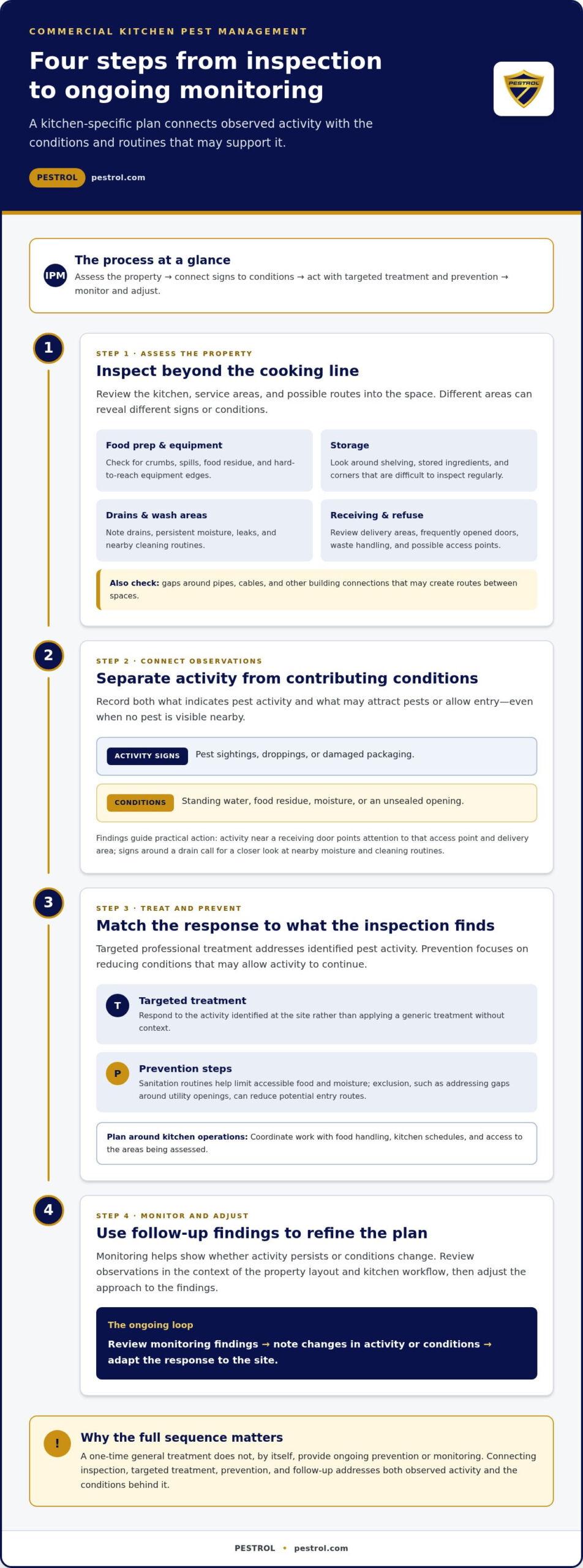
A practical kitchen pest plan follows a clear sequence: assess the property, identify signs of activity, address conditions that may support pests, then monitor findings and adjust the approach. Each step clarifies what is happening and where attention is needed. The plan should reflect observed activity, building conditions, and kitchen operations rather than assume every site needs the same response.
It also helps distinguish evidence of activity from conditions that may contribute to it. Droppings, damaged packaging, or pest sightings can indicate activity. Standing water, food residue, or an unsealed opening may be relevant even if no pest is visible nearby. Recording both gives staff and the service team a more useful starting point.
What a commercial kitchen assessment should examine
An assessment should cover more than the cooking line. Food storage, delivery and receiving areas, refuse zones, drains, equipment edges, and building access points can all provide useful clues. The inspection looks for signs such as pest activity or damaged packaging, along with conditions such as moisture or gaps that may attract pests or allow entry.
Findings should guide the next steps. Activity near a receiving door calls for attention to that access point and delivery area. Signs around a drain warrant a closer look at nearby moisture and cleaning routines. The aim is to connect observations with practical action, not apply a generic treatment without context.
How treatment and prevention work together
This preventive approach also complements broader food-safety planning. The FDA’s Food Safety Modernization Act (FSMA) outlines preventive controls for human food, providing context for businesses managing food-safety risks. For a New York City-focused overview, restaurant pest control guidance for NYC businesses connects pest management with food-service operations.
Monitoring gives the business and pest professional a way to review observations, identify changing conditions, and refine the plan. For commercial kitchen pest services Pelham Bay businesses can tailor to their property and routines, Pestrol provides customized commercial and restaurant pest management. Explore Pestrol’s commercial pest management to learn more about its food-service approach.
How to compare commercial kitchen pest services in Pelham Bay
Compare the service plan with your kitchen’s actual needs, not a broad promise of “complete protection.” The right scope depends on observed pest activity, building conditions, and the business’s workflow. A targeted visit can address a specific issue, while ongoing pest management can also include prevention, monitoring, and adjustments as conditions change.
Use these factors to compare scope and practical value:
Inspection scope: Does the assessment consider the kitchen, storage, receiving, refuse areas, and relevant access points, or only the area where activity was reported?
Pest focus: Does the plan address pests identified at the property, rather than rely on a standard list unrelated to the findings?
Prevention: Does the approach consider contributing conditions and potential entry points alongside treatment?
Monitoring and follow-up: Is there a way to record activity and review whether the plan needs adjustment?
Operational coordination: Does the work account for access needs, food handling, and the kitchen’s working routine?
Service scope, pest coverage, and follow-up
Look for a clear connection between findings and the work proposed. If signs point to rodents near a delivery entrance, for example, the plan should address the activity and relevant access conditions. Commercial rodent proofing can help address entry points as part of a property-specific pest management approach. If activity returns or shifts to another area, monitoring helps inform next steps instead of treating each sighting as an isolated event.
A single treatment visit may have a narrower purpose than ongoing pest management. The key comparison is whether the scope matches the situation. Does the plan explain what it addresses, how prevention contributes, and how observations will inform adjustments? Pestrol tailors commercial and restaurant pest control to the needs and operating context of each food-service property.
Operational fit and records for food-service teams
A plan should work for the people in the kitchen. Consider whether staff can prepare relevant areas, provide access, and share observations with clear responsibilities. Keep internal notes on sightings, locations, and dates alongside service records. Managers can use these details to review patterns and share useful information with the pest professional.
For compliance decisions, use current guidance from the NYC Department of Health and Mental Hygiene rather than relying on general claims or outdated summaries. A service description alone does not establish that every requirement is met; the property’s practices and records also matter.
- Match the proposed scope to observed activity and site conditions.
- Include prevention and relevant rodent proofing where needed.
- Understand how monitoring and follow-up observations inform adjustments.
- Organize service records and staff reports for internal review.
This checklist helps Pelham Bay operators compare commercial kitchen pest services Pelham Bay by the work that matters: a property-specific scope, practical coordination, and a clear way to use findings over time.
Prepare a Pelham Bay kitchen for pest service without disrupting the workflow
A little preparation helps make a service visit more focused without turning the kitchen schedule upside down. Managers can share useful observations, arrange access to relevant areas, and tell staff what to expect. For commercial kitchen pest services Pelham Bay kitchens need, this coordination helps the service team account for the property and its daily routines.
Before the service visit
Start with a brief record of pest sightings. Note the date or shift, location, what staff observed, and any recent changes, such as delivery-area adjustments, maintenance work, or a leak. Specific notes are more useful than a general report because they direct attention to the areas and conditions involved.
- Gather observations: Record where and when activity was seen, and share relevant staff reports.
- Plan access: Identify work areas, storage spaces, receiving zones, refuse areas, or building access points that need assessment.
- Share workflow needs: Tell the service team which areas are busy, how deliveries are handled, and what access constraints could affect the visit.
- Brief staff: Let employees know who will coordinate access and how they should report new observations.
Keep the kitchen’s food-safety practices in view. Follow the service plan and applicable current guidance for food handling and preparation before, during, and after service. Instructions about protecting food, clearing a work area, or resuming activity should be specific to the service being performed. Do not assume one preparation procedure or re-entry interval applies to every kitchen or treatment.
After service: keep prevention practical
Simple follow-through turns observations into useful information. Assign responsibility for routine checks so the task does not disappear between shifts. For example, a closing-shift lead can note changes in storage or refuse areas, while another team member reports issues near receiving. Choose a routine staff can follow consistently without interrupting food-service responsibilities.
Use the agreed service process to report new activity or changes in conditions. Include the location and timing, and update the record instead of relying on memory or informal handoffs. If observations shift to another area, that detail can inform future monitoring and adjustments. Keep service records and staff notes organized for internal review, and refer to current applicable guidance when deciding how to handle food-area procedures.
- Choose a staff lead for routine checks and recordkeeping.
- Share new sightings through the agreed reporting process.
- Note changes in access, storage, or refuse routines that may affect observations.
- Follow service-specific directions for food handling and kitchen use.
Clear communication and a manageable checklist help the team prepare for service while staying focused on its work.
Choose Pestrol for commercial kitchen pest services in Pelham Bay
Every restaurant kitchen has its own layout, pace, and pest concerns. Pestrol provides commercial and restaurant pest control tailored to food-service properties, with an approach shaped by site conditions and business needs. For operators seeking commercial kitchen pest services Pelham Bay kitchens can build around their operation, the focus is a practical plan rather than a one-size-fits-all residential service.
A food-service approach built around the property
Pest activity, building conditions, and kitchen routines help shape a useful service approach. A concern at receiving differs from activity around storage or a utility opening. Pestrol tailors commercial pest management to the property’s needs and provides commercial rodent proofing. As a family-owned and operated business, Pestrol brings a personal, practical focus to food-service pest management.
A tailored plan keeps attention on the connection between the pest concern and the property. Describe what staff have noticed, where it appears, and whether the location relates to a building feature or part of the kitchen’s routine. These details help frame the work around your operation instead of assumptions based on another type of business.
Turn a pest concern into a clear next step
Start with the basics: the kind of activity observed, where and when it occurs, and any relevant property conditions. Include details about receiving, storage, refuse handling, access, and kitchen workflow. You do not need a complete diagnosis. A clear description gives Pestrol a practical foundation for discussing the property and its pest management needs.
Explain what the kitchen needs to keep running smoothly, including areas that are difficult to access during service, how staff report sightings, and any operational considerations that affect coordination. Pestrol uses that context to tailor commercial pest management to the food-service property, including rodent proofing.
For a Pelham Bay restaurant, pest support is about more than responding to a sighting. It brings together the pest concern, building details, and daily operations in a way that makes sense for the business. Pestrol’s customized commercial and restaurant pest services provide a practical starting point for kitchen operators.
Pestrol serves businesses across its local coverage area, including Manhattan, the Bronx, Chester, Cornwall, Crawford, Goshen, Greenville, Highlands, Minisink, Monroe, Montgomery, Mount Hope, New Windsor, Newburgh, Palm Tree, Tuxedo, Wallkill, Warwick, Wawayanda, and Woodbury.
Share your kitchen’s pest concerns, property conditions, and operating requirements with Pestrol to discuss a tailored commercial pest management approach.
Take the next step toward a kitchen-specific plan
Start with a practical conversation about how your kitchen operates today. Share where staff have noticed activity, which areas need attention, and how service coordination can fit your routines. These details give Pestrol a useful foundation for discussing commercial kitchen pest services Pelham Bay businesses can tailor to their property.
Pestrol is a family-owned and operated business specializing in commercial and restaurant pest management. Its property-specific approach includes commercial rodent proofing as part of its food-service work. The aim is a clear next step grounded in your operation, not a generic plan.
Pestrol provides commercial pest management to food-service businesses in Pelham Bay and across its local coverage area, including Manhattan, the Bronx, Chester, Cornwall, Crawford, Goshen, Greenville, Highlands, Minisink, Monroe, Montgomery, Mount Hope, New Windsor, Newburgh, Palm Tree, Tuxedo, Wallkill, Warwick, Wawayanda, and Woodbury.
A well-planned conversation can help you move forward with a pest management approach shaped around your food-service operation.
Frequently Asked Questions
How much do commercial kitchen pest services in Pelham Bay cost?
Costs depend on the service scope, kitchen layout, pest concerns identified, and whether the work focuses on a specific issue or ongoing management. A property with several areas to assess or rodent entry points may need a different plan from a kitchen with a narrower concern. For a useful discussion of commercial kitchen pest services in Pelham Bay, outline the property and the issues staff have noticed.
Can pest control help a restaurant prepare for a NYC health inspection?
Yes. Pest management can support inspection preparation by helping a restaurant address pest concerns and maintain organized service information. It cannot guarantee an inspection result, since overall conditions and the inspector’s assessment also matter. Keep staff sighting notes and pest service records together so managers can review patterns and share relevant information. Refer to current NYC Department of Health and Mental Hygiene guidance for applicable inspection requirements.
Will pest service require my Pelham Bay kitchen to close?
Not necessarily. The work involved, the areas being treated or assessed, and the service-specific directions affect how kitchen activity should be managed. Before service, identify food preparation or delivery periods that affect access. Follow the instructions for the specific work, including directions about food, equipment, staff access, or resuming kitchen use.
How often should a commercial kitchen receive pest service?
There is no universal schedule for every kitchen. Service frequency should reflect the property’s conditions, pest activity, and monitoring observations over time. Recurring activity or changes in the building may call for a different review rhythm than a stable site. Managers can use staff reports and service findings to discuss whether the current schedule still fits, rather than choosing an interval based on another restaurant’s routine.
Can neighboring apartments or businesses affect pest activity in a kitchen?
They can be a factor, especially in mixed-use buildings where spaces share walls, utilities, or service areas. Pest activity in a neighboring unit does not automatically mean pests are present in your kitchen, but shared openings, delivery access, and refuse arrangements may be relevant during an assessment. Keep observations specific to your property and report changes around shared areas to the building manager.
What information should I have ready when requesting commercial pest service?
Have the business address, a brief description of the kitchen layout, and the main pest concern ready. If staff have noticed activity, share the affected area and the shift or business activity at the time. Mention relevant changes, such as repairs, altered storage, or a new delivery setup. A manager or staff member familiar with the site can explain access needs and how service coordination fits the operation.
Does commercial kitchen pest control include rodent proofing?
Yes. Pestrol provides commercial rodent proofing for food-service properties. Pest management addresses the pest concern, while proofing focuses on building access conditions that may allow rodents to enter. Considering both together helps shape an approach around the conditions identified at the site.