




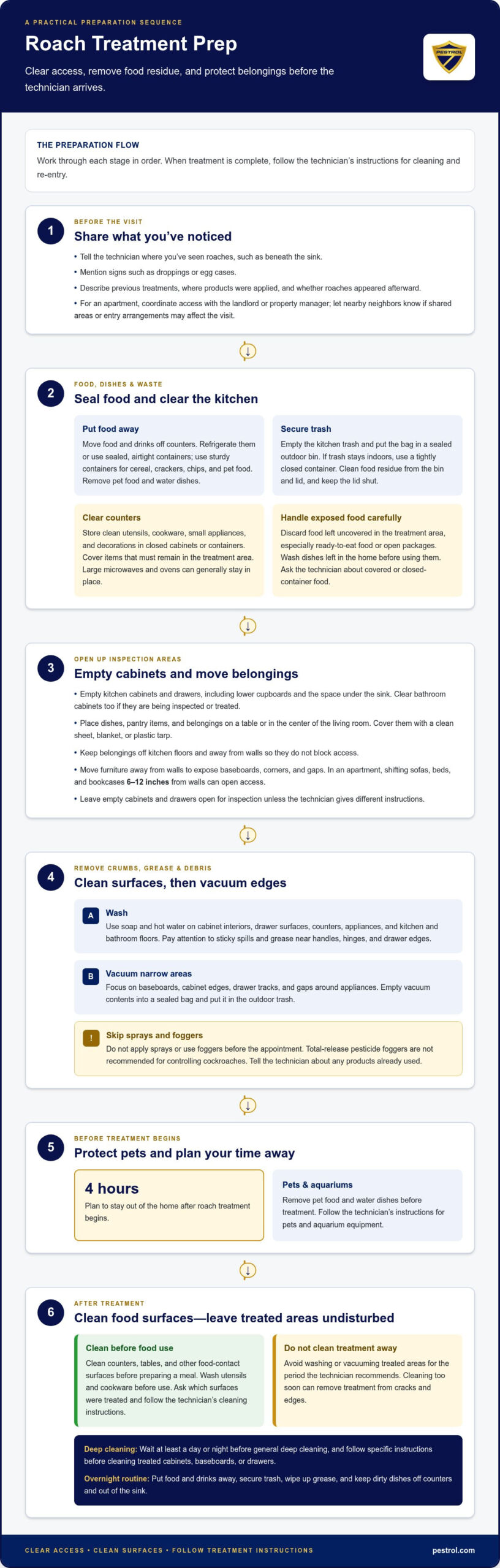
To know what to do before the exterminator arrives for roaches, put food away in sealed containers, secure the trash, clear and clean cabinets and drawers, and tidy counters and floors. Move items away from likely hiding spots so the technician can inspect and reach them, and protect pets and aquariums before treatment begins.
It’s understandable to wonder whether you’ve prepared enough, especially when roaches hide in cluttered spaces. A careful prep routine clears access and removes crumbs, grease, and other food sources. Focus on what to store, what to clean, and how to reduce hiding places without turning the kitchen upside down.
Prepare cabinets and drawers, put away pet food, and follow the technician’s instructions for aquarium equipment. These practical steps help you feel ready and give the treatment team clearer access to the areas that matter.
Key Takeaways
- Seal food and secure trash so crumbs, grease, and other attractants aren’t left within reach.
- Clear and clean cabinets and drawers to make likely hiding spots easier to inspect and treat.
- Reduce clutter near walls and corners to improve access to areas where roaches may hide.
- Plan ahead for pets and aquariums, and follow the technician’s treatment and re-entry instructions.
- Know which surfaces to clean after treatment and which treated areas to leave undisturbed.
Keeping food, trash, grease, and drinks sealed or put away
Tell the exterminator where you’ve seen roaches, such as beneath the sink, and describe signs like droppings or egg cases. Mention any previous treatments, where products were applied, and whether roaches appeared afterward. That history helps the technician plan the visit.
-
Put Away Food and Drinks
Move food and drinks off the kitchen counter before treatment. Store them in the refrigerator or sealed, airtight containers. Use sturdy containers for cereal, crackers, chips, and pet food instead of relying on thin packaging. Put unopened food in a protected location, or cover it if it must stay in the room. Remove pet food and water dishes as well.
-
Prepare Counters and Kitchen Items
Clear counters of small appliances, utensils, cookware, and decorations. Store clean items in closed cabinets or containers, and cover anything that must remain in the treatment area. Large microwaves and ovens can generally stay in place. Remove food, trash, and debris from around and beneath appliances you can safely reach, then wipe away spills and grease.
-
Dispose of Food Left Out During Treatment
Discard food left uncovered in the treatment area, especially ready-to-eat items or food in an open package. Don’t assume a plate, bowl, or loosely closed bag stayed protected. Keep food sealed during treatment, and wash dishes left in the home before using them. Follow the technician’s directions for food that was covered or stored in a closed container.
- Empty the kitchen trash and put the bag in a sealed outdoor bin before the visit. If trash must stay indoors, use a tightly closed container and remove it regularly. Clean food residue from the bin and lid, then keep the lid shut. This limits access to scraps and helps prevent odors that can draw roaches back to the kitchen.
- After treatment, clean counters, tables, and other food-contact surfaces before preparing a meal. Wash utensils and cookware before use, even if they looked clean. Ask which surfaces were treated and follow the technician’s cleaning instructions, since wiping treated areas too soon can affect treatment. Put food and drinks away overnight, and don’t leave dirty dishes in the sink.
Before cockroach treatment, remove food from the kitchen or cover it. Store food kept at home in sealed, airtight containers, or move it out of treatment areas. Keep garbage in sealed containers and dispose of it regularly. This keeps food and waste put away while the kitchen is prepared for service.
After treatment, clean food-contact surfaces, including cabinet undersides. Clean eating surfaces before using them if they were exposed during treatment. At night, put away food, trash, grease, and drinks. Keep dirty dishes off counters and out of the sink. Making this part of your evening routine limits the food residue left in the kitchen overnight.
Cleaning kitchen cabinets and drawers for cockroach treatment
Empty cabinets and drawers, clean away crumbs and residue, and leave hiding places accessible for inspection. Prepare the kitchen and bathroom before the visit, then follow the technician’s instructions about when to clean treated areas.
Plan to stay out of the home for 4 hours after roach treatment begins. For an apartment, notify the landlord or property manager and coordinate access; let nearby neighbors know if shared areas or entry arrangements may affect the visit.
Don’t apply sprays or use foggers before the appointment. Total-release pesticide foggers aren’t recommended for controlling cockroaches. Tell the technician about any products you’ve already used.
- Empty kitchen cabinets and drawers, including lower cupboards and the space under the sink. Clear bathroom cabinets too if those areas are being treated or inspected. This exposes corners and plumbing gaps where roaches may hide and lets the technician see the surfaces.
- Place removed dishes, pantry items, and other belongings on a table or in the center of the living room. Cover them with a clean sheet, blanket, or plastic tarp. Keep the items orderly rather than stacking them against walls or leaving them on the kitchen floor, where they can block access.
- Wash cabinet interiors, drawer surfaces, counters, appliances, and kitchen and bathroom floors with soap and hot water. Pay attention to sticky spills and grease near handles, hinges, and drawer edges. Cleaning removes food residue and makes it easier to spot droppings, shed skins, or other signs of activity before treatment.
- Vacuum floors, focusing on baseboards, cabinet edges, drawer tracks, and gaps around appliances. Empty the vacuum contents into a sealed bag and put it in the outdoor trash. Move slowly along each edge to remove roach eggs and debris that sweeping may leave in narrow corners.
- Leave empty cabinets and drawers open for inspection, unless the technician gives different preparation instructions. Keep them accessible and clear of belongings. This helps the technician inspect likely hiding places and reach treatment areas.
- After treatment, don’t deep-clean right away. Avoid washing or vacuuming treated areas for the period the technician recommends, since cleaning too soon can remove treatment from cracks and edges. Wait at least a day or night before general deep cleaning. Follow the technician’s specific instructions before cleaning a treated cabinet, baseboard, or drawer.
- Use the preparation visit to note where you found roaches, such as inside a drawer or beneath the sink. For help addressing ongoing roach activity, explore professional roach treatment suited to the areas you’ve identified.
Cockroach prevention and reducing hiding places
- Move furniture away from walls so the technician can inspect baseboards, corners, and gaps. In an apartment, shifting sofas, beds, and bookcases 6-12 inches from walls can open access. Clear floor space beside furniture, too. Roaches can hide behind stored items, so move boxes and bags away from corners before the treatment visit.
- Make room around the refrigerator, stove, and dishwasher where you can do so safely. Clearing access helps the technician inspect narrow spaces behind and beside appliances. Pulling appliances out may help, but isn’t required for every visit. If an appliance is difficult to move, leave it in place and clear nearby clutter instead.
- Open interior doors, cabinets, and drawers to make inspection easier. This lets the technician check likely hiding places without shifting objects or forcing access. Keep prepared spaces empty, and don’t block open doors with laundry baskets or storage bins. Clear access gives the treatment team a better view of edges and corners.
- Check for moisture under the kitchen sink, around leaky taps, and beside drainage pipes. Repair leaks before treatment when possible, and dry standing water. Roaches can use moisture as well as food, so fixing a drip removes a resource that may support activity. Check the cabinet floor and nearby wall for dampness, stains, or recurring puddles.
- Reduce piles of paper, cardboard, and bags in corners and storage areas. Move items away from baseboards, under-sink cabinets, and the refrigerator so these spots are visible. Keep belongings organized instead of packed tightly against walls. Less clutter makes hiding places easier to inspect and gives the technician better access to edges where roaches may travel.
- A key part of preparing for the exterminator is noting where you’ve seen roaches. Point out locations such as a gap beside the refrigerator or a dark corner under a cabinet, and mention recurring sightings or other signs. Clear observations help direct the inspection to areas that need attention.
- Another useful part of what to do before the exterminator arrives for roaches is to plan how you’ll keep access clear afterward. Return furniture and stored items without crowding walls or blocking corners. Continue cleaning crumbs and spills promptly, and address leaks if water returns beneath a sink or around a tap. These habits reduce food, moisture, and shelter that can support cockroach activity.
Protecting pets, fish, and aquariums
Plan where pets, fish, children, and household members will stay during treatment and re-entry. Before the technician arrives, share relevant health concerns and prepare each animal’s space, including a dog’s food bowls and an aquarium’s air pump.
- Remove pets from the home during treatment and keep them away until the technician says it’s safe to return. Arrange care for a skittish dog or cat. Move carriers, bedding, toys, food, and water bowls out of treatment areas so they won’t be exposed.
- Before treatment, tell the technician about pregnancy, asthma, COPD, severe allergies, or chemical sensitivities in your household. Mention children and anyone with breathing issues. This helps the technician explain precautions for the people who use the home and the surfaces they may touch.
- Ask for the pesticide’s active ingredient, label instructions, and safety data sheet. Keep this information available while planning for pets and fish. Ask for the treatment’s re-entry instructions as well, since precautions depend on the product and application used in your home.
- Switch off aquarium air pumps before treatment so they don’t draw airborne material into the water. Tell the technician where the fish tank is, and follow the instructions for the aquarium. Plan how to restore the pump afterward, and don’t leave it off longer than the technician directs.
- Move pet dishes, treats, bedding, and toys out of rooms being treated. Store them where sprays or treated surfaces can’t reach them. If a pet usually rests beside kitchen baseboards or under a table, clear that spot and arrange a separate place outside the home.
- Keep people and pets out of the home for 4 hours after roach treatment begins. After that waiting period, children, pets, and people with breathing issues should remain out until someone checks that surfaces are dry and no odors are present. If odors remain after 4 hours, open windows to air out the home.
- Follow the technician’s directions for windows and doors during treatment, then ventilate as instructed after the waiting period. Don’t let pets back onto floors, counters, or baseboards until the re-entry instructions allow it. Check the rooms your animals use, including sleeping areas, before bringing them inside.
Use the technician’s product information, including the active ingredient, label instructions, and safety data sheet, to plan for animals staying elsewhere or outside during the visit.
Should you clean before or after cockroach extermination?
Clean before treatment to remove crumbs and make inspection easier. Afterward, protect treated areas by following the technician’s cleaning and re-entry instructions.
- Vacuum floors, carpets, and upholstery before the appointment. Focus on baseboards, cabinet edges, and spaces beneath furniture, where roach debris may collect. Dispose of vacuum contents in a sealed bag. Cleaning first removes loose debris before treatment is applied.
- Wipe counters, appliances, and kitchen floors with soap and hot water. Clear food, trash, and debris from beneath and around the refrigerator, dishwasher, and stove. Move appliances only if you can do so safely. If moving them isn’t practical, clear access around them instead.
- Finish cleaning before the technician applies treatment, then leave treated surfaces alone. Avoid deep cleaning for at least a day or night after application. Wiping too soon can remove treatment from surfaces or cracks where it needs to remain. Clean food-contact surfaces before preparing meals, and wash dishes left in the home before using them.
- Ask which areas were treated and when you can clean each one. Follow the technician’s instructions for cracks, crevices, and baseboards. Don’t wipe or vacuum those treated areas for the period the technician specifies, often 7-14 days after treatment. The timing depends on where the product was applied and the treatment instructions.
- Stay out of the home for 4 hours after roach treatment begins. After the waiting period, open windows and doors to air out the home, following the technician’s directions. If odors remain after 4 hours, open windows to ventilate. Children, pets, and people with breathing issues should wait until surfaces are dry and no odors are present.
- After re-entry, leave bait in place and don’t touch it. Vacuum dead roaches daily, while avoiding treated cracks and baseboards. Watch for activity and report new sightings promptly. This lets you remove visible insects without disturbing bait or treated areas the technician has asked you to leave alone.
- Keep notes on cleaning and sightings after treatment. Record where you find dead roaches, such as beside the refrigerator or along a kitchen baseboard, and whether activity continues. Share these details with the technician. A clear record helps distinguish cleanup from ongoing pest activity and makes follow-up observations more useful.
Pestrol: Home Pest Protection – Basic
For ongoing residential pest management, Pestrol offers Home Pest Protection – Basic. If you want broader household pest support, compare it with Home Pest Protection – Plus and Home Pest Protection – Premium to find the plan that suits your needs.
Preparing for treatment makes the visit more straightforward, while a home protection plan can support wider pest management needs. Choose what fits your concern: address the current roach issue or explore residential pest protection. Pestrol also offers Bed Bug Treatment for a separate bed bug problem.
Contact Pestrol to discuss your home pest concerns and Home Pest Protection options.
Keep Your Kitchen Ready for the Next Step
Knowing what to do before the exterminator arrives for roaches gives you a practical starting point, but ongoing pest management also depends on the habits you keep afterward. Watch for new activity, manage food and waste, and address moisture or clutter that could make the kitchen inviting again. For support beyond a single treatment visit, consider which kind of household pest protection suits your needs.
Pestrol offers Home Pest Protection – Basic, Home Pest Protection – Plus, and Home Pest Protection – Premium. These plans support households looking for pest management. Choose the conversation that matches your concern and the level of protection you’re considering.
A prepared kitchen and a clear plan can help you move forward with confidence. Contact Pestrol to discuss your roach concerns and the next step for your home.
Frequently Asked Questions
What should you do before a roach exterminator arrives?
Make a short record of where and when you’ve seen roaches, along with any products previously used. Note whether activity appears near a drain, appliance, pantry, or shared wall. This gives the technician useful details beyond a general report. In an apartment, arrange access with the property manager if they need to open a locked utility or service area.
How to prepare a kitchen for cockroach pest control treatment?
Clear a path from the entrance to the kitchen and leave room to reach likely activity areas. For example, move a step stool or recycling bin blocking access to the sink cabinet. List rooms where you’ve spotted roaches, including a pantry or laundry nook. This helps the technician understand whether activity may extend beyond the kitchen.
Should you empty cabinets before roach extermination?
Yes. Empty cabinets and drawers in areas scheduled for treatment or inspection, especially lower cupboards and the space under the sink. Separate pantry goods from dishes as you pack them so you can return them to the right places afterward. Note items stored elsewhere, such as a baking tray or coffee supplies, to avoid searching through covered belongings later.
Should pets and children leave during roach treatment, and for how long?
Keep pets and children out during treatment and for 4 hours after it begins. After that, they should remain away until someone confirms surfaces are dry and no odors are present. The time away can therefore extend beyond the initial waiting period. Plan a place to stay in advance, such as a relative’s home, and bring essentials your child or pet will need.
What food, dishes, and personal items should be covered or stored before treatment?
Store food, drinks, dishes, cookware, and utensils in closed cabinets or sealed containers, or move them out of treatment areas. Protect personal items children may touch, including toys and crib mattresses, by removing or sealing them away. Don’t leave opened pantry packages exposed. Wash dishes left in the home before using them, and clean food-contact surfaces before preparing a meal.