




Spotting a live bed bug crawling across your floor days after an exterminator leaves doesn’t mean your service failed; in fact, it often means the exact opposite. While your instinct may be to panic, seeing disoriented, sluggish insects out in the open is actually one of the most reliable signs bed bug treatment is working as intended.
We know the sleepless nights, relentless itching, and exhausting anxiety that follow pest control visits. After investing your time, money, and emotional energy into reclaiming your home, every stray speck on your bedsheets can feel like a devastating setback. That paranoia is completely normal, but erratic bug behavior usually signals chemical impact rather than a flourishing colony.
You don’t have to stay trapped in second-guessing. You will discover the exact physical evidence, biological behaviors, and recovery milestones that prove eradication is steadily progressing. Here is your clear checklist to track insect lethargy, evaluate die-off timelines, and know with total confidence when your home is officially pest-free.
Key Takeaways
- Learn why increased insect emergence in the first 72 hours stems from chemical flushing rather than a worsening infestation.
- Identify the core physical signs bed bug treatment is working, including reduced bite clusters and visible lethargy along room edges.
- Differentiate normal post-service insect die-off from genuine pesticide resistance using clear behavioral markers.
- Follow a structured, week-by-week tracking protocol with interceptor traps to systematically measure pest reduction.
- Discover the specific forty-five-day milestone needed before officially declaring your home completely bug-free.
The 72-Hour Post-Treatment Reality: Immediate Biological Reactions
Walking into your bedroom three days after an exterminator leaves and spotting a bug on the wall can make your stomach drop. That shock is completely understandable. You expect a clean slate immediately. In insect biology, however, early sightings are often one of the clearest signs bed bug treatment is working. Chemical treatments don’t instantly vaporize an infestation; they set off a progressive physiological chain reaction that fundamentally disrupts insect behavior.
The Insecticide Flush-Out Effect Explained
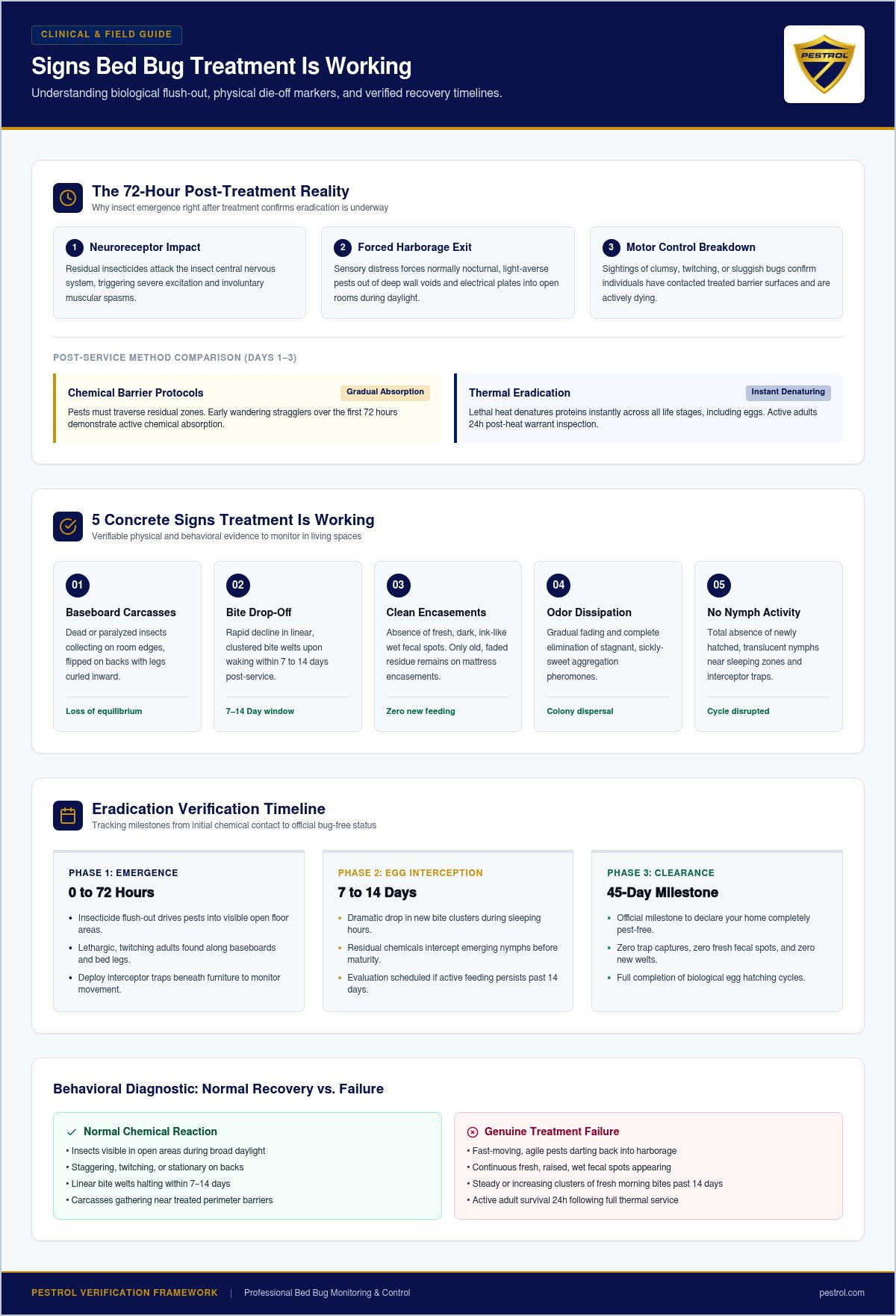
Modern residual insecticides attack the insect nervous system. Active formulations stimulate specific neuroreceptors, triggering involuntary spasms and severe excitation. This sensory distress drives bed bugs out of deep wall voids, floor joints, and electrical faceplates into open living spaces.
Instead of remaining tucked away in hidden harborages, exposed insects stumble onto carpets and light-colored walls during daylight hours. Consult any comprehensive overview of bed bugs, and you’ll find they are strictly nocturnal and light-averse. When you see them staggering clumsily across the floor, twitching, or curling up in plain view, you aren’t witnessing a booming population. You are seeing dying insects losing basic motor control after contacting treated surfaces.
Heat Treatment vs. Chemical Dynamics in Days 1 to 3
Your post-service expectations must match the specific method your exterminator applied:
- Thermal Eradication: Heat treatments raise ambient air temperatures past lethal thermal limits, denaturing insect proteins immediately across every life stage, including eggs. Seeing active adults 24 hours after a full thermal service requires a prompt follow-up inspection.
- Chemical Protocols: Residual applications establish active barrier zones. Pests must physically traverse these surfaces to absorb the active ingredients. Because a single chemical visit does not yield 100% instant eradication, spotting disoriented stragglers across the first 72 hours proves these barrier zones are actively taking down hidden pests.
Understanding these mechanical differences replaces panic with clarity. Observing these early biological shifts provides the proof you need that your recovery is moving in the right direction.
5 Concrete Signs Bed Bug Treatment Is Working
Evaluating your home after extermination doesn’t require guesswork. By shifting your focus from nervous visual checks to systematic monitoring, you can track verifiable biological evidence. Here are five distinct signs bed bug treatment is working across your living areas:
- Dead or paralyzed insects collecting along baseboards and bed legs.
- A rapid drop in linear, clustered bite patterns upon waking.
- Clean sheets free of fresh, dark ink-like fecal marks.
- The fading of stagnant, sickly-sweet pheromone scents.
- A total absence of newly hatched, translucent nymphs near sleeping zones.
Physical and Behavioral Indicators on Surfaces
Check room perimeters closely. When active ingredients penetrate their cuticles, bed bugs lose equilibrium, flip onto their backs, and curl their legs inward. You will find these carcasses resting along baseboards, under box spring corners, and inside frame joints. As detailed in the EPA guide to bed bug control, evaluating physical evidence like fecal spotting helps gauge true population decline. Fresh droppings appear as raised, wet black dots; if you only see old, faded stains on your encasements, feeding activity has stopped.
Bite Frequency Patterns and Biological Egg Cycles
New bites should drop off dramatically within seven to fourteen days. Keep in mind that human immune systems react unpredictably. Lingering skin irritation or delayed allergic responses often masquerade as fresh bites, creating unnecessary panic. Focus on the timing of new welts rather than how itchy existing bumps feel.
Egg biology also plays a decisive role. Because standard residual chemicals rarely penetrate egg shells, a follow-up visit is vital to intercept emerging nymphs before they mature. If your self-monitoring reveals active feeding after two weeks, scheduling an evaluation with professional bed bug treatment specialists ensures stubborn pockets don’t regain a foothold.
Normal Recovery Phenomenon vs. Treatment Failure: A Side-by-Side Comparison
Telling the difference between an active eradication process and complete chemical failure comes down to precise insect observation. When homeowners see bugs after an extermination visit, panic often leads them to assume the pesticide didn’t work. However, distinguishing between normal chemical die-off and true resistance protects your sanity and keeps your recovery schedule on track.
| Observation Factor | Normal Recovery Process | Suspected Treatment Failure |
|---|---|---|
| Bug Movement | Sluggish, uncoordinated, wandering openly during daylight hours. | Darting quickly, climbing walls, scurrying into shadows when lights turn on. |
| Physical Appearance | Flat, dehydrated, curling inward, or already dead. | Plump, bright red, and actively engorged with blood. |
| Bite Frequency | Declining sharply week over week. | Consistent or increasing clusters past day fourteen. |
| Life Stages Seen | Scattered dying adults followed by dwindling, lethargic early nymphs. | All life stages coexisting, including robust third and fourth-stage nymphs. |
Evaluating Insect Mobility and Feeding Behavior
A dying bed bug behaves completely differently from an untreated one. Healthy bed bugs remain strictly nocturnal, retreating into dark harborages the second light hits them. Dying bugs lose their natural photophobia and motor coordination. Seeing these disoriented stragglers across days seven to fourteen remains one of the reliable signs bed bug treatment is working through residual barriers. Conversely, discovering plump, blood-filled adults past day twenty-one signals that bugs are feeding successfully, evading barriers, and requiring immediate professional re-application.
Addressing Structural Harborage in New York Properties
Urban architecture adds unique complications to pest remediation. Shared pipe chases and electrical risers across Manhattan and Bronx pre-war buildings allow bed bugs to migrate between apartments, creating reinfestation cycles that mimic pesticide resistance. In older Hudson Valley and Orange County residences, deep settling cracks in plaster walls grant pests untouched retreats away from surface sprays. Reviewing modern structural management protocols in this guide to professional bed bug treatment NYC helps identify whether shared infrastructure is feeding your problem.
Pairing these multi-unit considerations with a formal long-term monitoring plan gives you the diagnostic framework needed to evaluate insect activity with confidence.
The Homeowner Verification Checklist: A Week-by-Week Protocol
Regaining peace of mind after an extermination visit requires an objective tracking routine. Instead of tearing apart your sheets at 3:00 AM, establish a structured documentation habit. Keep a simple log recording the date, room location, and physical condition of every insect you find. Logging this information eliminates guesswork and provides actionable data if your technician needs to make strategic adjustments.
Implementing Interceptor Traps and Mattress Encasements
Interceptor traps provide undeniable physical proof of your home’s recovery status. Place these dual-ringed plastic cups beneath every bed leg and pull your bed frame at least three inches away from walls. Any insect crawling toward the bed or fleeing baseboards becomes trapped in the slick outer well. Check the wells weekly with a bright flashlight. Pair these monitors with certified bed-bug-proof encasements zipped tightly around mattresses and box springs, permanently sealing interior hiding crevices.
Week-by-Week Progress Milestones
Use this chronological guide to evaluate biological progress throughout the month:
- Days 1 to 7 (Containment and Initial Die-Off): Residual chemicals actively force bugs into the open. Vacuum perimeter floors daily, empty vacuum canisters directly into sealed exterior trash bags, and launder all bedding on high heat cycles.
- Days 8 to 14 (Egg Hatch and Nymph Interception): Any viable eggs hidden during the initial visit will begin hatching. Seeing minuscule, translucent nymphs crawling sluggishly and dying inside interceptors confirms active residual barriers are breaking the reproductive cycle. These dwindling nymph counts are unmistakable signs bed bug treatment is working.
- Days 15 to 30 (Approaching Total Eradication): Trap captures should drop to zero across all rooms. Morning bite reports should completely cease, and sheets should remain pristine. Discovering active, blood-fed adult bugs during this stage indicates an exterior harborage was missed, requiring a targeted secondary visit.
Long-Term Eradication: When Can You Declare Your Home Bug-Free?
Reaching the end of an infestation brings immense emotional relief, but declaring victory requires a firm scientific milestone. Homeowners frequently ask when they can safely rest easy without checking sheets with a flashlight. While recognizing the early signs bed bug treatment is working eases immediate stress, long-term certainty depends on an unbroken timeline of zero insect activity.
Official Criteria for Complete Eradication
A home is officially deemed cleared after forty-five consecutive days with zero live bug sightings, zero bites, and zero interceptor trap captures. This forty-five-day threshold accounts for the full developmental cycle of any lingering eggs that hatched after your initial service. Clean white bedding without unexplained blood specks or fresh fecal drops provides reliable daily confirmation.
For complex properties, townhomes, or heavily furnished apartments, visual checks alone may leave lingering doubts. Professional canine scent detection teams offer an extra layer of scientific validation, pinpointing even a single viable insect hidden behind baseboards or inside electrical conduits.
Preventing Reinfestation with Proactive Protection
Dense residential environments, particularly across New York multi-family buildings, present ongoing structural risks. Insects easily travel along shared plumbing chases, electrical conduits, and steam radiator pipes from adjacent apartments. Sealing baseboard gaps with silicone caulk and installing tight escutcheon plates around radiator risers cuts off these shared migration routes.
Long-term peace of mind often means stepping up from reactive extermination to proactive defense. Reviewing our 2026 Guide: Home Pest Protection for New Yorkers explains how tiered residential coverage stops migrating pests before they settle in sleeping quarters. Structural exclusion also prevents pests from creating hidden pathways into your walls; pairing insect barriers with specialized rodent proofing services seals the building envelope against every level of invader.
When you need complete certainty that an infestation is truly gone, connect with Pestrol Pest Management to schedule an expert post-treatment evaluation and secure your home for the future.
Reclaim Your Peace of Mind and Protect Your Home
Recovering from an infestation is a methodical process requiring patience and sharp observation. Tracking daytime insect disorientation, dwindling trap counts, and vanishing morning bites gives you verifiable proof that chemical barriers are doing their job. Recognizing these proven signs bed bug treatment is working lets you navigate the forty-five-day monitoring window without lingering panic.
When unexpected bugs appear or shared building plumbing complicates your recovery, you don’t have to carry the burden alone. Pestrol brings specialized protocols tailored to both urban apartments and suburban homes. Our family-owned team delivers systematic post-treatment verification to ensure every harborage is cleared and your living space stays protected.
Rest easy knowing that every quiet night brings you closer to permanent relief. With steady monitoring and dedicated defensive support, your home will soon be completely your own again.
Frequently Asked Questions
Why am I seeing more bed bugs immediately after professional treatment?
Increased insect visibility within the first several days happens because residual insecticides excite the bugs’ nervous systems, forcing them out of deep crevices. Instead of staying hidden in walls or baseboards, poisoned insects wander blindly into open floor spaces. Observing these disoriented, sluggish pests during daylight hours is actually one of the primary signs bed bug treatment is working effectively rather than proof of a growing problem.
How long after treatment do bed bugs stop biting entirely?
Bites typically decrease significantly within seven to fourteen days after the initial application. You might experience occasional bites during the first week as exposed insects frantically seek hosts before succumbing to chemical toxicity. However, once residual barriers intercept emerging nymphs and dying adults, all feeding activity should stop completely. If fresh, clustered welts continue appearing regularly past the two-week mark, contact your pest specialist.
Is it normal to find tiny baby bed bugs two weeks after spraying?
Yes, finding newly hatched nymphs roughly ten to fourteen days after treatment is completely normal. Bed bug eggs possess a protective casing resistant to standard chemical applications, allowing them to hatch after the initial visit. As long as these translucent nymphs cross active chemical barriers, they absorb the lethal treatment and perish quickly. This egg cycle is precisely why comprehensive professional treatment plans include scheduled follow-up visits to break reproduction.
Can bed bugs survive professional chemical treatments through insecticide resistance?
Certain bed bug populations have developed genetic resistance to traditional over-the-counter pyrethroids, allowing them to survive amateur spraying. Professional exterminators counter this by rotating advanced EPA-registered formulations, including modern pyrroles and insect growth regulators. In dense residential areas across Manhattan and the Bronx, experienced technicians combine multi-action chemical barriers with targeted physical methods to ensure resistant strains cannot survive or establish a foothold in your home.
What should I do if I find a live bed bug three weeks post-treatment?
Capture the insect on a piece of clear tape or seal it in a plastic bag for species confirmation. Note whether the bug appears sluggish and flat or active and filled with fresh blood. Live, engorged adults discovered three weeks post-treatment indicate a hidden harborage was missed or bugs migrated from an adjacent unit. Contact your exterminator immediately to schedule a targeted follow-up inspection and perimeter re-application.
How do I know if my bites are fresh or simply delayed allergic reactions?
Differentiating fresh bites from delayed histamine reactions comes down to precise physical tracking. Old bed bug bites can flare up, itch, and redden for up to two weeks due to warm showers, sweat, or simple psychological stress. True signs bed bug treatment is working include an absence of new, raised linear clusters appearing overnight. Mark existing skin reactions with a skin-safe pen to track whether genuinely new welts develop.
When is it completely safe to unpack belongings after bed bug eradication?
You should wait until your home reaches the forty-five-day mark with zero live insect sightings, empty interceptor traps, and no new bites before fully unpacking sealed items. Unpacking prematurely risks reintroducing hidden pests or contaminating freshly treated baseboards and closet perimeters. For Orange County homes and New York apartments alike, maintaining sealed storage bins throughout the active monitoring phase ensures your belongings stay completely isolated while treatments settle.