




Bed bugs can spread beyond the room where they first appear. These apple-seed-sized insects hide in beds and nearby cracks, and can travel between rooms in multi-unit buildings. A bed bug exterminator serving the Upper East Side can identify signs of activity and determine what treatment your home needs.
Bites don’t always reveal an infestation: reactions vary, and some people don’t notice them. This guide explains how to recognize bed bugs, what a professional inspection and treatment can involve, and how cleaning habits and building conditions affect control. You’ll also learn why checking likely hiding places matters and how activity in one apartment can concern neighboring rooms. With clear signs to look for and a better understanding of the process, you can take a calm, practical next step.
Key Takeaways
- Look beyond bites: inspect beds and nearby cracks for signs of bed bug activity, since some people don’t react to bites.
- Bed bugs can move between rooms in multi-unit buildings, so activity in one apartment may matter to neighboring homes.
- Steam can help treat beds and furniture, but keep it away from hazards such as electrical outlets.
- A professional inspection focuses on likely hiding places and helps shape a treatment plan for the conditions in the home.
- For laundering, New York State Department of Health recommends putting washed bedding in a hot dryer for at least 30 minutes as part of bed bug control.
Recognizing signs of a bed bug infestation
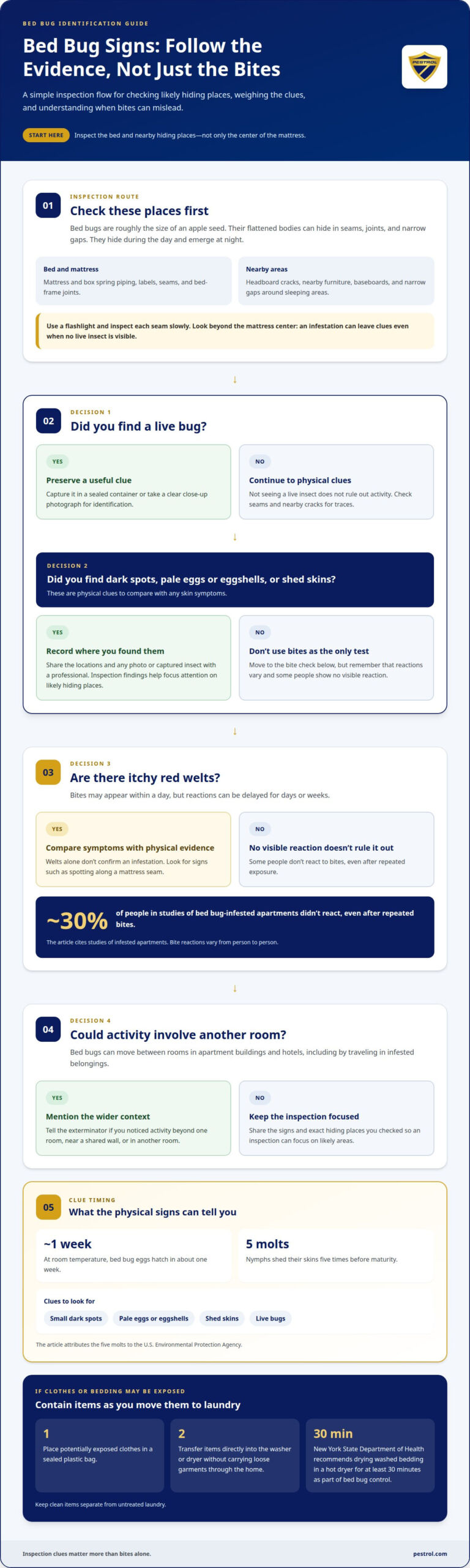
Bed bugs are roughly the size of an apple seed, so check beyond the center of a mattress. Adult bed bugs are small before feeding. Their flattened bodies help them hide in seams, joints, and narrow gaps around sleeping areas. An infestation may leave signs even when no live insect is visible.
Look closely at the mattress and box spring, especially piping, labels, seams, and bed-frame joints. Check nearby furniture, baseboards, and cracks around the headboard. Clues include small dark spots, pale eggs or eggshells, shed skins, and live bugs. Bed bugs hide during the day and emerge at night, so use a flashlight and inspect each seam slowly.
- Dark spots: Small marks on bedding or furniture can signal bed bug activity.
- Shed skins: Nymphs molt five times before maturity, according to the U.S. Environmental Protection Agency.
- Eggs: At room temperature, bed bug eggs hatch in about one week, so small pale eggs deserve attention.
- Bites: Itchy red welts may appear within a day, but reactions can be delayed for days or weeks. Some people show no visible reaction.
Bites alone don’t confirm an infestation. Studies of bed bug-infested apartments found about 30 percent of people didn’t react, even after repeated bites. Compare skin symptoms with physical clues, such as spotting along a mattress seam. If you find a live insect, capture it in a sealed container or take a clear close-up photograph for identification. A bed bug exterminator Upper East Side residents consult can use these details to focus an inspection.
Bed bugs can travel between rooms in apartment buildings and hotels. They may spread when people carry infested belongings, including clothes, bedding, or luggage, from one space to another. In a multi-unit building, activity near a shared wall or in another room makes a careful inspection more useful than treating one visible spot alone. Tell an exterminator serving Upper East Side apartments if you’ve noticed activity beyond one room.
Keep potentially exposed clothes contained while moving them to laundry. Place items in a sealed plastic bag, then transfer them directly into the washer or dryer without carrying loose garments through the home. New York State Department of Health recommends putting washed bedding in a hot dryer for at least 30 minutes as part of bed bug control. For clothing, hot-water washing followed by high-heat drying can help address bed bugs; handle clean items separately from untreated laundry.
Steam treatment for beds and furniture
Steam can treat bed bugs on reachable surfaces, including mattress seams, bed frames, and upholstered furniture. The steam must reach the hiding place, not just warm the exposed fabric. Move slowly across seams and joints to give the heat time to penetrate. A quick pass over a cushion won’t address insects tucked inside a deep fold.
Temperature matters. Steam used to kill bed bugs must be at least 113 degrees Fahrenheit, and guidance for steaming beds and furniture recommends 120 degrees or more. Bed bugs and their eggs cannot survive temperatures higher than 130 degrees Fahrenheit. These figures describe heat at the treated area, so a warm surface does not prove that hidden insects received enough heat.
Prepare the room before using a steamer. Keep steam away from electrical outlets and other hazards, and follow the equipment’s safety instructions. Avoid soaking mattresses or furniture, since excess moisture can create another household problem. Treat a small, suitable area at a time, paying attention to seams, tufts, folds, and frame joints. Delicate fabrics may not tolerate steam, so check the care label first.
A vacuum can remove visible insects and debris from seams and floor edges, but it won’t reach every hiding place. After vacuuming, seal and discard the contents outside. Steam can then address accessible cracks and upholstery, while freezing may suit certain small items. Cold treatment depends on the item reaching a low enough temperature for long enough. At 32 degrees Fahrenheit, unprotected adult bed bugs may take 15 days to die, while eggs may take 30 days. Freezing temperatures below 32°F must be maintained for one to two weeks to kill bed bugs.
Heat treatments differ from targeted steaming. Professional heat treatment gradually raises room air to about 120-130°F, while bed bug heat treatments typically circulate heat between 140 and 150 degrees Fahrenheit. Those figures describe different treatment measures, not a guarantee that every hidden area reaches the same temperature. Heat also doesn’t prevent a structure from being reinfested afterward.
No single tool reaches every hiding place. An estimated 10 to 20 percent of bed bug heat treatments fail to kill all bed bugs present, so pest management may combine inspection, heat, steam, vacuuming, and other methods. Pesticides are another distinct tool, not a substitute for careful placement. New York State Department of Health recommends pesticides registered by the U.S. Environmental Protection Agency and labeled for bed bug control. Match the approach to the furniture, the hiding spots, and the treatment area.
Professional inspections and customized treatment plans
A professional inspection checks likely hiding places, not just the bed. In an apartment, the findings help match treatment to the activity, furniture, and possible spread.
Professional Heat and Cold Treatments
Professional heat and cold treatments use controlled temperatures to address bed bugs in affected items or spaces. An inspection should examine hiding places within 20 feet of beds and other spots where residents sleep or rest. That range helps direct attention to bed frames, furniture joints, and nearby rooms. For a shared-wall apartment, inspection findings also help identify where activity may have spread.
DIY treatment can miss hidden insects or move them when furniture and belongings are shifted. Incorrect pesticide use can also expose residents without reaching the hiding places. A professional can inspect first, then choose an application and treatment approach based on the locations and evidence found.
Before treatment, point out where you found signs and describe which rooms residents use for sleeping or resting. Mention specific places, such as a bed-frame joint, bedside table, or sofa where someone naps. This gives the inspection a practical starting point, but the specialist should also examine surrounding seams, furniture, and gaps rather than treating only the reported spot.
Treatment Methods and Visit Timelines
A treatment plan sets out the method and any follow-up needed for the apartment. Timing matters because bed bugs can hide in multiple places, and access to each area affects how thoroughly it can be treated. Heat, pesticide application, or a combination may be used. The inspection determines which approach fits the activity and conditions.
Upper East Side exterminators may use heat treatment, pesticide application, or both. A plan can combine methods when inspection findings show different treatment needs across furniture and rooms. For pesticide use, New York State guidance recommends products registered by the U.S. Environmental Protection Agency and labeled for bed bug control.
Treatment duration and visit count depend on the extent of the infestation, the chosen method, the rooms and items involved, and whether follow-up finds continued activity. An apartment with activity limited to accessible furniture requires different work from a case involving several rooms or shared building spaces. Ask what preparation is needed for each visit, which areas will be treated, and how follow-up inspection will assess results.
Cleaning, laundering, and mattress encasements
Before treatment in an Upper East Side apartment, follow the preparation instructions for each room. Move loose items into sealed bags, keep clean clothes separate, and clear access to the mattress, bed frame, and nearby furniture. Don’t automatically discard an expensive mattress or furniture. Cleaning and encasement may help preserve items, depending on their condition and the treatment plan.
New York State Department of Health recommends putting washed bedding in a hot dryer for at least 30 minutes as part of bed bug control. Transfer bedding directly from the washer to the dryer, then place dried items in a fresh sealed bag or clean container. This separation helps prevent treated linens from contacting belongings that haven’t been handled yet.
Sort clothes by what can tolerate laundering, and check each care label before washing or drying. For washable items, use a hot dryer cycle; drying clothing and rugs in a hot dryer for 20 minutes or more kills all bed bug life stages. Keep clean garments sealed after drying, rather than returning them to an untreated closet or hamper.
- Bag first: Seal exposed bedding and clothes before carrying them through the apartment.
- Separate loads: Keep untreated laundry away from items already washed and dried.
- Clear access: Remove clutter beside the bed and along the route to the laundry area.
- Protect clean items: Store dried clothes in sealed bags or containers until the room is ready.
Vacuum around bed legs, floor edges, and molding to support cleaning. Empty the vacuum immediately after use, and place its contents in a sealed bag outside. Repeating this during control efforts can remove debris and insects from accessible areas, but vacuuming won’t reach every hiding place. Keep pathways open so inspection or treatment can reach furniture and room edges.
A mattress encasement is a zippered cover designed to enclose the mattress. Choose one made for bed bug control, close the zipper fully, and check for gaps or damage along the seams. An encasement can contain insects already inside the mattress and make the outer surface easier to inspect. It won’t address bed bugs in a box spring, bed frame, or nearby furniture, so those areas still need attention.
Preparation is about keeping treated and untreated belongings apart, not moving everything from room to room. In a small apartment, label sealed bags by contents or room, and don’t open them until the items are ready to return. Follow treatment instructions for furniture and bedding, since cleaning steps and access needs can vary by method.
Which Upper East Side bed bug exterminators are licensed and insured?
Choose a pest control company with bed bug experience, an integrated pest management approach, and licensed applicators. These are selection factors recommended in New York guidance. Licensing matters because bed bug treatment can involve pesticide application, heat, or a combination, and the approach should fit the inspection findings.
“Licensed and insured” combines two separate considerations. A licensed applicator has the required professional authorization for pesticide work; insurance concerns coverage for specified risks. One does not establish the other. For an apartment treatment, ask separately who performs any pesticide application, what treatment methods are planned, and what insurance documentation applies to the work.
Integrated pest management, or IPM, means building a plan around inspection and conditions in the home rather than relying on one method alone. For example, an inspection may locate activity around a bed frame, while another affected area calls for a different treatment approach. A clear plan explains how the findings shape the work and what preparation is needed in each room.
Use these points to understand whether a proposed plan addresses the actual infestation:
- Bed bug experience: The company should understand common hiding places, including mattress seams, bed frames, and nearby furniture.
- Licensed applicators: Confirm that pesticide work is handled by licensed applicators, as recommended by New York guidance.
- IPM approach: Look for an inspection-led plan that considers treatment, cleaning, and follow-up rather than a single blanket application.
- Method details: A plan should identify whether it uses heat, pesticides, or both, and explain preparation for the apartment.
- Insurance clarity: Treat insurance as a separate matter from applicator licensing, and review relevant documentation for the work.
Pay attention to how the plan addresses building conditions. Bed bugs can move between rooms in multi-unit buildings, so an inspection of one apartment should consider nearby areas and reported activity. A thorough explanation distinguishes confirmed findings from places that need closer inspection, rather than promising one treatment will automatically cover an entire building.
Clear communication also helps residents prepare safely. Before treatment, understand which furniture and belongings need access, how to handle bedding, and what instructions apply after pesticide use. New York State guidance recommends using pesticides registered by the U.S. Environmental Protection Agency. Product labeling and the planned application are relevant parts of the treatment discussion.
Pestrol: Home Pest Protection – Basic
Pestrol offers Home Pest Protection – Basic for homeowners seeking residential pest management. If you’ve found signs of bed bugs, Pestrol’s Bed Bug Treatment is the targeted service for addressing the infestation. The next step depends on what an inspection finds, where activity is present, and the treatment your home needs.
Home Pest Protection – Basic is a separate option from targeted Bed Bug Treatment. Consider Bed Bug Treatment if you’re dealing with suspected or visible bed bug activity; choose a home protection plan for broader residential pest management. Clear findings help you understand which service fits your situation.
Contact Pestrol to discuss Bed Bug Treatment for your home.
Take the next step toward a more comfortable home
Choosing a bed bug exterminator on the Upper East Side is a chance to turn concern into a clear plan. Keep a brief record of where you noticed activity and any changes since then. Those details can help focus the conversation on your home’s needs.
Pestrol offers Bed Bug Treatment for bed bug concerns, alongside Home Pest Protection – Basic, Home Pest Protection – Plus, and Home Pest Protection – Premium for broader residential pest management. Consider the option that best matches your situation, then discuss the next step with the team.
With a practical plan in place, you can move forward with greater confidence and focus on making your home comfortable again.
Frequently Asked Questions
What are bed bugs?
Bed bugs are small, blood-feeding insects that hide near places where people sleep or rest. They can shelter in a bed’s seams, a headboard joint, or a crack in nearby furniture. Their presence isn’t proof of poor housekeeping. Finding an insect or suspected sign calls for careful identification, since other insects and marks can look similar.
How can I avoid bringing bed bugs into my home?
Reduce the chance of carrying bed bugs home by checking luggage and belongings after travel. In a hotel, keep luggage on a suitcase stand, away from the bed, floor, walls, and furniture. Before unpacking at home, inspect suitcase seams and pockets, then keep travel clothes apart from clean laundry until you can handle them. Avoid bringing discarded furniture indoors without examining its seams and joints.
How do I control a bed bug problem in my home?
Control starts by identifying where activity is present, then coordinating treatment and preparation across affected rooms. Keep belongings from moving between rooms, and separate items that have been handled from those still awaiting treatment. Follow the treatment instructions for your home rather than adding products or changing the plan. In an apartment building, tell property management about suspected activity so nearby concerns can be considered.
How do I know if I have a bed bug problem?
Look for several kinds of evidence, not just itchy skin. Inspect the sleeping area for a live insect, dark spots, shed skins, or eggs near mattress seams and furniture joints. Bites can support a suspicion, but can’t confirm bed bugs on their own. A clear photograph or safely contained specimen can help distinguish an insect from a look-alike.
Is my landlord responsible for ridding my unit of bed bugs?
Your landlord’s role can depend on your lease and circumstances, so report suspected bed bugs promptly in writing. Include the room where you found evidence, the date, and a photo or sample if available. Keep a copy of your message and coordinate access for inspection or treatment. Mention shared areas or neighboring apartments if they may also be affected.
Should I also try pesticides?
Don’t add pesticide applications without a plan. Using the wrong product or applying it incorrectly can create additional risks and may not reach hiding places. New York State Department of Health recommends choosing pesticides registered by the U.S. Environmental Protection Agency. Read and follow the product label, and coordinate any application with your home’s treatment plan.
So, there really isn’t any link between bed bugs and sanitation?
Bed bugs aren’t a reliable sign that a home is dirty. They can arrive in luggage, clothes, or used furniture, and activity can move between rooms in a multi-unit building. Clutter may make inspection and treatment harder by limiting access to seams, furniture, and floor edges, but removing clutter alone won’t eliminate an infestation. Focus on evidence and access, not blame.
How can you verify a bed bug infestation before booking an exterminator?
Look for physical evidence and record where you found it before arranging treatment. Photograph a suspected insect beside a familiar object for scale, or preserve it in a sealed container. Note whether signs appeared on bedding, a bed frame, or another piece of furniture. If you only have bite marks, don’t assume their cause; an inspection can distinguish bed bugs from other possible explanations.