



For five consecutive years, New York City has been ranked as the top city in the United States for clothing moth infestations. It’s a frustrating reality for many local homeowners who are searching for how to get rid of clothing moths after finding holes in their favorite suits or rugs. You’ve likely tried the cedar blocks and the supermarket sprays, only to find another ruined cashmere sweater weeks later. The anxiety of discovering holes in a cherished heirloom is enough to keep anyone up at night.
We understand how overwhelming it feels when your best efforts don’t stop the damage. This guide is here to end that cycle of frustration. You’ll learn a professional-grade strategy that targets the larvae where they actually hide. We’ll walk you through our systematic “Clean, Kill, Shield” method to eliminate the infestation, sanitize your space, and build a permanent defense for your wardrobe. By the end of this article, you’ll have a clear, actionable routine to keep your home moth-free for good.
Key Takeaways
- Identify the specific species in your closet to ensure your treatment targets the larvae, which are the only life stage that actually consumes fabric.
- Master the “Clean, Kill, Shield” framework to learn how to get rid of clothing moths and prevent them from ever resurfacing.
- Sanitize your wardrobe using the “Empty and Inspect” rule and high-heat laundry techniques that effectively eliminate hidden eggs and larvae.
- Transition from monitoring with pheromone traps to active prevention using breathable storage and strategic wardrobe rotation.
- Recognize when a luxury wardrobe requires specialized professional protocols to preserve high-value heirlooms and expensive natural fibers.
Identifying the Enemy: Is it Webbing or Case-Making Moths?
Understanding how to get rid of clothing moths begins with a surprising biological fact: the moths you see fluttering in your closet aren’t actually eating your clothes. Adult clothing moths lack functioning mouthparts; their only purpose is to mate and lay eggs. The real destruction is caused by their larvae. These microscopic caterpillars are the primary reason your expensive wool suits and silk dresses are at risk. They seek out keratin, a tough protein found in animal fibers. If your wardrobe contains wool, cashmere, fur, or silk, you’ve essentially provided a buffet for these pests.
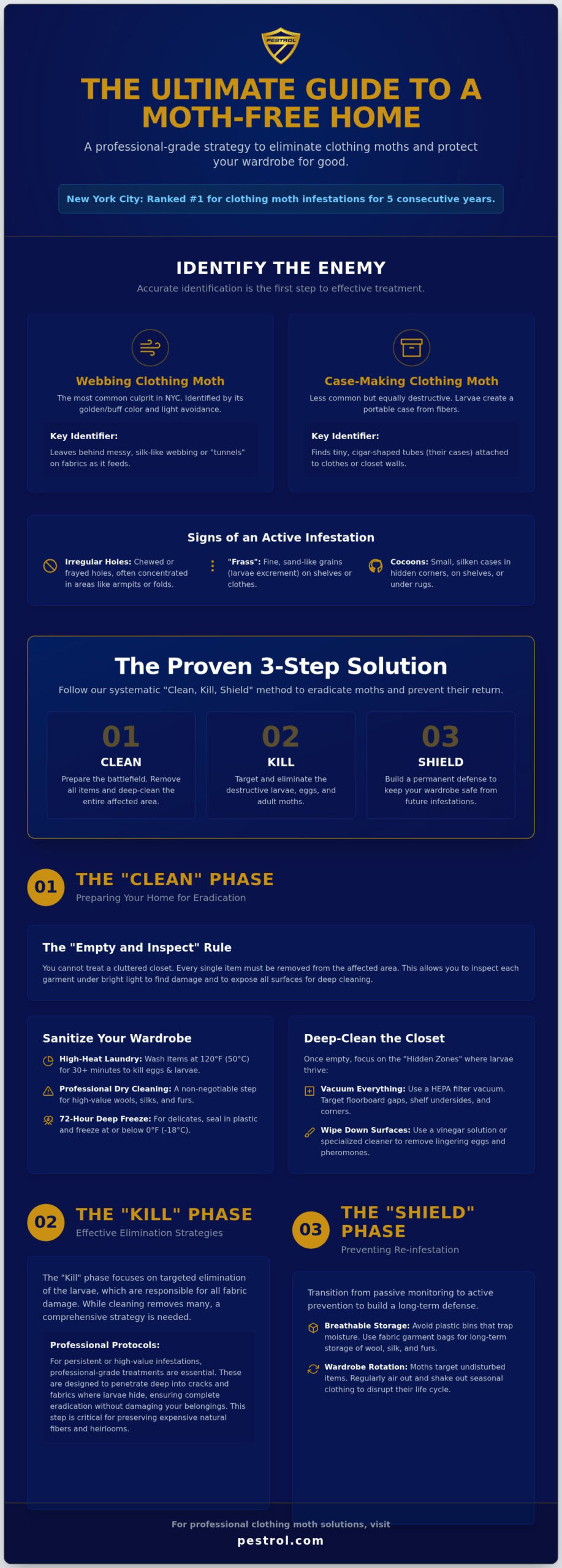
In New York City, the most frequent culprit is the Webbing Clothing Moth. You can identify them by their distinct golden or buff color and their tendency to avoid light. They’re often found crawling rather than flying. These moths leave behind “silken tunnels” or patches of webbing as they feed. If you notice thin, spider-like webs on your sweaters, you’re looking at a webbing moth infestation. Learning how to get rid of clothing moths often starts with identifying these messy feeding trails.
The Case-Making Clothing Moth is slightly less common in metropolitan areas but equally destructive. These larvae carry a portable “sleeping bag” or case made of silk and the fibers they’ve been eating. As they move, they drag this case with them, making them look like small, moving pieces of debris. If you find tiny, cigar-shaped tubes attached to your clothes or the walls of your closet, you’ve found the source of your problem.
Signs of an Active Infestation
You’ll rarely see the larvae themselves because they hide in dark, undisturbed corners. Instead, look for irregular holes that look chewed or frayed. Unlike a clean snag from a zipper, moth damage is often concentrated in one area, such as the armpits or folds of a garment where sweat or food residue might remain. You should also look for “frass.” This looks like fine, sand-like grains or pepper. It’s actually the excrement of the larvae and is a definitive sign that your closet is currently under attack. Check the back of your shelves and the underside of rugs for small, silken cocoons where the larvae prepare to transform into adults. To ensure your rugs are professionally sanitized to remove hidden pests, you can visit Best Carpet Steam Cleaning Melbourne for expert textile care advice.
Moth vs. Carpet Beetle: Knowing the Difference
It’s easy to confuse moth damage with carpet beetle destruction, but the two require different treatment approaches. Carpet beetles tend to create “grazing” damage, where they eat the surface fibers without necessarily chewing a hole all the way through. They also leave behind bristly, shed skins rather than silken webbing. Because carpet beetles often migrate from baseboards or air ducts into your closet, a general DIY approach usually fails. Accurate identification is critical. Our team provides specialized Clothing Moth Control that distinguishes between these pests to ensure the treatment actually matches the biology of the insect invading your home.
The “Clean” Phase: Preparing Your Home for Eradication
To truly understand how to get rid of clothing moths, you must accept that the closet itself is the battlefield. Washing your clothes is only half the battle. If you leave eggs in the cracks of your shelving or behind your baseboards, the cycle will simply repeat. This is why we insist on the “Empty and Inspect” rule. Every single item, from your winter coats to your spare blankets, must leave the affected area before any treatment begins. Inspecting every piece of fabric under a bright light allows you to identify the specific garments that need immediate attention.
Sanitizing your wardrobe requires a multi-pronged approach. High-heat laundry is your best friend. Eggs and larvae cannot survive temperatures above 120°F. Run your items through a hot cycle for at least 20 to 30 minutes. For items that can’t handle a hot wash, the 72-hour deep-freeze method is effective for delicate heirlooms. Wrap these items in plastic and ensure your freezer stays at or below 0°F. For high-value wools and silks, professional dry cleaning is a non-negotiable step to ensure total elimination. Citing effective moth elimination strategies from university experts confirms that these temperature-based methods are essential for breaking the life cycle.
Deep-Cleaning the Closet Architecture
Once the closet is empty, grab a vacuum with a HEPA filter. Focus on the “Hidden Zones” that most homeowners miss. This includes the gaps between floorboards, the undersides of shelves, and the space behind radiator covers. Larvae love these dark, dusty crevices where hair and lint accumulate. After vacuuming, wipe down every surface with a vinegar solution or a specialized cleaner. This doesn’t just kill lingering eggs; it removes the pheromones that attract adult moths back to the site. If you’re dealing with a large-scale infestation across multiple rooms, our Home Pest Protection – Basic plan can help establish a clean baseline for your entire property.
NYC Apartment Challenges: Shared Walls and Laundry Rooms
Living in Manhattan or the Bronx presents unique hurdles. Moths are notorious for traveling between units through shared walls, electrical conduits, and plumbing stacks. If you’re learning how to get rid of clothing moths in an apartment building, you must be vigilant about shared laundry rooms. Never leave your clean clothes sitting in a common area where they can be exposed. It’s also wise to speak with your neighbors. If they have an active infestation, the moths will likely “ping-pong” back into your unit regardless of how much you clean. Cooperative action is often the only way to achieve long-term success in NYC’s dense living environments.
The “Kill” Phase: Effective Elimination Strategies
Once the physical cleaning is complete, the “Kill” phase focuses on eliminating the survivors. Many homeowners mistakenly believe that pheromone traps are the primary solution for how to get rid of clothing moths. In reality, these are monitoring tools. They utilize female scents to lure adult males, which helps you track the size of the population and identify the source of the activity. However, because they don’t affect the larvae or the egg-laying females, they cannot stop an active infestation on their own. For total eradication, you must combine monitoring with targeted treatments that reach the hidden corners of your closet where larvae actually feed.
We recommend avoiding traditional mothballs entirely. Naphthalene and paradichlorobenzene are older chemicals that produce toxic, lingering odors that can be difficult to remove from natural fibers. These vapors are heavier than air and can settle into flooring, making them a poor choice for modern, health-conscious homes. While biological controls like parasitic wasps are an interesting alternative in museum settings, they are often too slow and inconsistent for residential wardrobes. Instead, following university-backed guidelines for preventing a moth re-infestation ensures you are using the most effective, science-based methods available today.
DIY vs. Professional Moth Control
When you are researching how to get rid of clothing moths, the threshold for professional help is usually based on the scale of the damage. DIY methods are often enough if you catch a localized problem early. If you’ve only found one damaged item and no other signs, a thorough cleaning might solve it. But if you see moths flying in your living room or find holes in multiple rooms, the problem is systemic. Calling a professional is the most cost-effective choice when your wardrobe value exceeds the cost of treatment. Our Clothing Moth Control service uses specialized equipment to treat the structural voids where larvae thrive, providing a level of thoroughness that off-the-shelf sprays simply can’t match.
Targeted Treatments for Historic Homes
Historic homes and estates in Orange County require a specialized touch. These properties often contain “hidden buffets” for moths, such as horsehair insulation or antique wool rugs that are too large for a standard freezer. Treating these deep-seated infestations requires more than a surface spray. We employ best exterminator for clothing moths strategies to protect high-value collections and architectural elements. Our team understands how to treat delicate tapestries and historic floorboards without compromising their integrity, ensuring your heirlooms remain safe for the next generation.
The “Shield” Phase: How to Prevent a Moth Re-Infestation
Once you’ve executed the eradication steps, your focus shifts to long-term preservation. Learning how to get rid of clothing moths is a victory, but keeping them out requires a proactive defensive strategy. Start with your storage choices. Many people reach for airtight plastic bins, but these can trap residual moisture and lead to mildew damage over time. Instead, use breathable cotton garment bags. These provide a physical barrier that larvae can’t penetrate while allowing natural fibers like wool and silk to maintain their integrity.
Adopt a “First-In, First-Out” rotation for your wardrobe. Moths thrive in stagnant, dark environments where they won’t be disturbed. If a cashmere sweater sits at the bottom of a drawer for two years, it becomes a prime target. By regularly moving and wearing your clothes, you disrupt the quiet conditions they prefer. Natural deterrents like cedar and lavender have their place, but don’t rely on them as your only defense. The volatile oils in cedar can repel adult moths, but this effect fades as the wood dries. You must sand your cedar blocks every few months to keep them effective. A dedicated 3-month closet audit is your most reliable tool. Every quarter, take everything out and look for the signs discussed in our earlier steps.
The Importance of Sealing Entry Points
Moths don’t just appear out of nowhere; they enter through gaps in your home’s exterior. High-quality rodent proofing services often provide a double benefit. By sealing the small holes and crevices that mice use, you’re also excluding many larger insects. Check your window screens for tiny tears and ensure your door sweeps create a tight seal against the floor. Be especially careful with “hitchhiker” items. Always freeze or dry clean vintage rugs and thrift store finds before bringing them into your living space.
Ongoing Monitoring Protocols
Maintain a year-round early warning system by keeping a few pheromone traps active. If you catch even a single moth after your initial treatment, don’t panic. It might be a stray, but it’s a signal to re-examine your “Shield” protocols immediately. Integrating these checks into your home protection from pests plan ensures that a small discovery doesn’t turn back into a full-blown crisis. Consistency is the key to protecting your high-value wardrobe from future damage.
Protect your wardrobe with a professional Home Pest Protection plan.
Professional Clothing Moth Solutions in New York
Protecting a high-value wardrobe in the NYC metro area requires more than just luck. Manhattan apartments and Orange County estates face different environmental pressures, but the threat to natural fibers remains the same. Knowing how to get rid of clothing moths for good means looking beyond the closet rod to the very structure of your home. Our family-owned and operated team brings decades of specialized experience to every closet. We don’t just spray surfaces; we employ comprehensive protocols designed to reach the larvae hiding in structural voids and deep floorboard crevices.
Safety is our primary concern. We utilize effective, professional-grade treatments that are tailored to the specific needs of your household, including your pets and children. By focusing on targeted applications rather than broad chemical use, we eliminate the infestation without compromising your home’s comfort. While DIY methods provide a temporary fix, understanding how to get rid of clothing moths permanently often requires the specialized equipment and localized expertise that only a professional team can provide.
Tiered Protection for Every Home
We offer structured solutions to fit different levels of risk and property sizes. Recurring service is the most cost-effective way to save your wardrobe from seasonal re-infestation. Our plans include:
- Home Pest Protection – Basic: This plan provides essential seasonal defense. It’s designed for homeowners who want to prevent common invaders from establishing a foothold in their closets.
- Home Pest Protection – Plus: This tier offers expanded coverage for homes that require more frequent monitoring and a broader range of pest exclusions.
- Home Pest Protection – Premium: our most comprehensive plan. It’s ideal for high-risk environments or large estates with extensive collections of wool, silk, and fur.
Protecting Your Investment with Pestrol
Every home is unique. A pre-war Manhattan apartment has different entry points than a sprawling Orange County home. We create customized treatment plans that address these specific vulnerabilities. Our commitment to professional, discrete, and thorough service means we work around your schedule to provide peace of mind. We treat your property with the same care we’d give our own, ensuring that your investment in quality clothing and home furnishings is protected for the long term.
Take Control of Your Wardrobe Today
Your favorite cashmere sweaters and heirloom rugs are too valuable to leave to chance. By now, you understand that mastering how to get rid of clothing moths is about more than just buying a few traps. It requires a systematic approach that targets the larvae where they hide and creates a lasting barrier against their return. Whether you’re deep-cleaning your closet architecture or implementing a seasonal inspection routine, consistency is your best defense against these destructive pests.
If the damage is widespread or you’re protecting high-value luxury items, professional intervention is the safest path forward. As a family-owned team of local experts, we specialize in delicate fabric care and targeted elimination protocols. We’ve served Manhattan, the Bronx, and Orange County since our inception, providing the thorough, discrete care your home deserves. You don’t have to face this infestation alone.
Restoring your peace of mind and protecting your investments starts with a single proactive step. Let’s work together to make your home a moth-free sanctuary once again.
Frequently Asked Questions
Do clothing moths only eat wool?
No, clothing moths consume any natural fiber containing keratin. While wool is a primary target, they also feed on silk, cashmere, fur, and feathers. They’ve even been known to damage synthetic fabrics if those materials are blended with natural fibers or stained with food or sweat. Larvae are the only ones eating; they seek out these protein-rich sources to survive and grow. Always check your entire wardrobe, not just your sweaters.
How long does it take to get rid of a clothing moth infestation?
Total eradication typically takes between four and six weeks. This timeline accounts for the time needed to break the life cycle of the eggs, larvae, and adults. Because eggs can remain dormant in cracks and crevices, you must maintain a consistent cleaning and monitoring routine. Severe infestations in historic homes or large apartments may require multiple professional treatments to ensure that every hidden pocket of activity is completely neutralized.
Can I get rid of clothing moths without using toxic chemicals?
Yes, you can successfully manage an infestation using non-toxic methods like heat and cold. Washing items at 120°F or freezing them at 0°F for 72 hours are proven ways for how to get rid of clothing moths without harsh chemicals. HEPA vacuuming and thorough surface cleaning with vinegar also play a vital role. These physical removal methods are highly effective when applied systematically across all affected areas of your home.
Will washing my clothes at a regular temperature kill moth eggs?
Regular washing temperatures are often insufficient to kill eggs and larvae. Most household wash cycles don’t reach the sustained 120°F threshold required for total elimination. If your garments are too delicate for high heat, consider professional dry cleaning or the deep-freeze method instead. Relying on a standard “warm” cycle often leaves the most resilient eggs behind, leading to a frustrating re-infestation just a few weeks after you finish cleaning.
Why do I keep seeing moths even after I cleaned my closet?
Is a professional moth treatment safe for my pets and children?
Our professional Clothing Moth Control protocols are designed with the safety of your family and pets as the top priority. We use targeted, low-impact applications that focus on the specific areas where larvae hide, rather than broad chemical sprays. This precise approach minimizes exposure while maximizing the effectiveness of the treatment. We always provide clear instructions on when it’s safe to return to the treated area, ensuring total peace of mind for your household.
How much does a professional clothing moth exterminator cost in NYC?
The cost for professional moth treatment in the NYC area depends on several factors, including the size of your wardrobe and the extent of the infestation. A one-bedroom apartment requires a different approach than a multi-story estate in Orange County. While research provides a general idea of the industry landscape, we recommend a professional inspection to receive a customized quote. This ensures you only pay for the specific level of care your home requires for how to get rid of clothing moths.
Do pheromone traps actually kill moths?
Pheromone traps only catch adult male moths; they don’t kill the larvae or the egg-laying females. Because the larvae are the ones actually eating your clothes, traps alone cannot stop an infestation. They’re best used as an early warning system to monitor activity levels and identify where the moths are most active. For a complete solution, you must combine these traps with the cleaning and elimination strategies outlined in our guide.