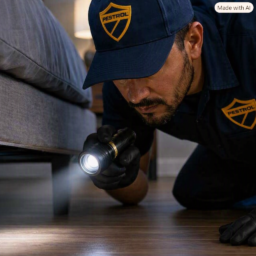




Before moving in, find out what’s there before deciding whether treatment is needed. A pre-move-in pest inspection in Montgomery looks for signs of pest activity and conditions that could let pests become a problem. The U.S. Environmental Protection Agency describes an inspection as a systematic examination of a site for pest activity and contributing conditions.
It’s reasonable to want a clear picture of possible risks before your family settles in. An inspection can identify signs of pests, potential sources, and entry points, helping you understand what needs attention and which prevention steps may help. It doesn’t mean every home needs treatment.
This guide explains what an inspector may examine, how findings are assessed, and what can affect inspection costs without suggesting a one-size-fits-all price. You’ll also learn how to consider pest-control methods with your family’s needs in mind and which practical steps can help protect the home before move-in.
Key Takeaways
- An inspection looks for pest activity and conditions that could let pests become a problem, helping you understand what needs attention before move-in.
- Ask what the inspection covers and whether a consultation is included, since those are separate details from any treatment plan.
- Follow the evidence from signs of activity back to likely sources, moisture-prone areas, and possible entry points.
- Use inspection findings to prioritize practical prevention, such as addressing standing water, vegetation, gaps, and moisture concerns.
- If the inspection identifies an active issue, use the findings to decide whether targeted treatment or ongoing pest protection fits your household’s needs.
Free inspections and consultations
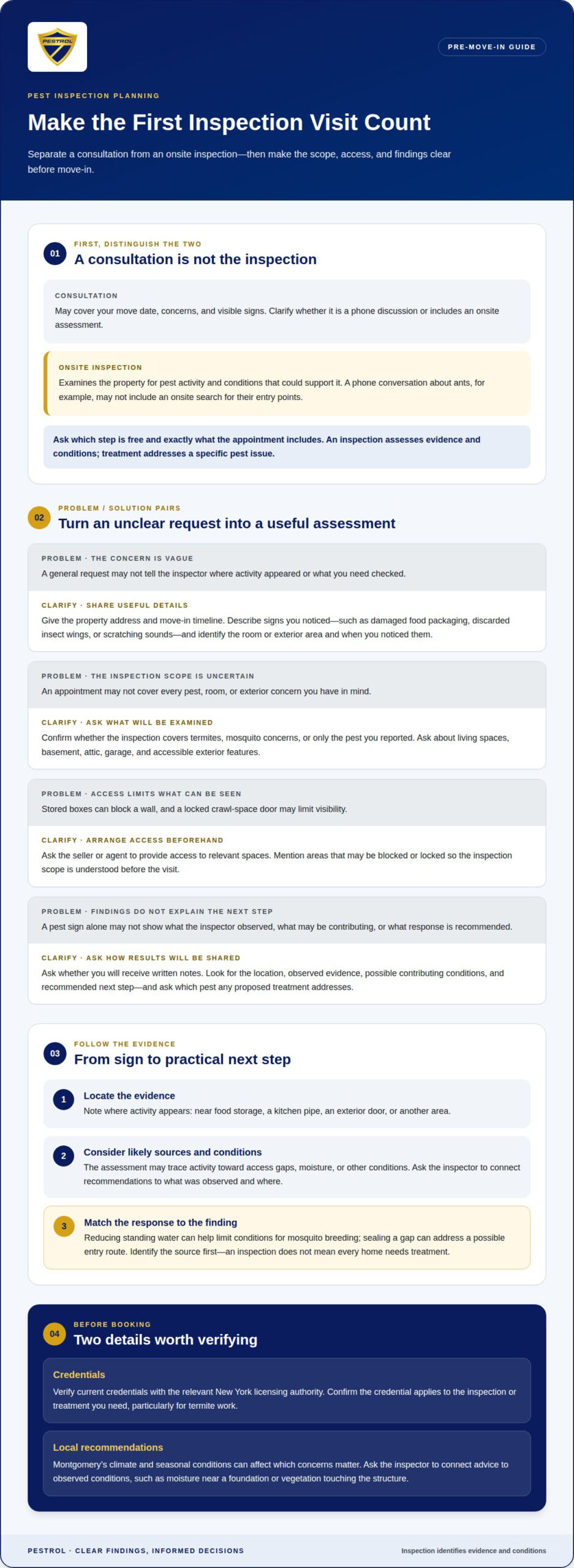
A free consultation and an onsite inspection are different steps. A consultation may cover your move date, concerns, and visible signs. An inspection involves examining the property for pest activity and conditions that could support it. Before scheduling, clarify which step is free and what the appointment includes. For example, a phone discussion about ants may not include an onsite search for their entry points.
To find licensed pest inspectors in Montgomery, search for professionals serving the area, then verify their current credentials with the relevant New York licensing authority. Confirm that the credential applies to the inspection or treatment you need, particularly for termite work.
Use the first conversation to explain the inspection’s purpose. Share the property’s address, move-in timeline, and known concerns. Droppings in a pantry call for different attention than a request to check a basement for damp conditions. Specific details help clarify whether the appointment includes an onsite assessment, written findings, or treatment recommendations.
Ask which areas the inspection will cover. A useful scope may include living spaces, the basement, attic, garage, and accessible exterior features. For example, an inspector may examine gaps around utility lines, plumbing areas, and places where moisture collects. Access matters: stored boxes can block a wall, while a locked crawl-space door may limit visibility. Clarify access before the visit.
Use these steps to make the consultation more useful:
- Describe signs you have noticed, such as damaged food packaging, discarded insect wings, or scratching sounds.
- Identify the rooms or exterior areas where activity appeared, including when you noticed it.
- Ask whether the inspection covers termites, mosquito concerns, or only the pest you reported.
- Clarify how findings will be shared, including whether you receive written notes or recommended next steps.
These details also help you understand what any quoted work covers. An inspection assesses evidence and conditions; treatment addresses a specific pest issue. For example, reducing standing water can help limit conditions for mosquito breeding, while sealing a gap can address a possible entry route. Neither step replaces identifying the source first.
Montgomery’s climate and seasonal conditions can affect which concerns matter around a home. Ask the inspector to connect recommendations to observed conditions, such as moisture near a foundation or vegetation touching the structure. A professional pest-control assessment should explain the finding, its location, and the practical next step. That clear sequence helps you decide what needs attention before move-in.
Pest inspection and source identification
Timing affects whether findings can inform decisions before move-in. A thorough inspection also traces evidence toward likely sources, not just visible activity.
Inspection Timing Around Home Purchase
Schedule the inspection before closing when you can access the property. Findings may help you discuss repairs or treatment before ownership changes. If access before closing isn’t possible, arrange an inspection after buying and before unpacking. Either way, share your move date and concerns, such as suspected termites or rodent activity, especially when coordinating delivery schedules with Atlas International Movers & Cargo Shipping. That context helps shape the assessment.
Consider the purchase timeline and property access together. An empty home may make basements, closets, and storage areas easier to examine. A furnished property can limit visibility behind appliances or stored items. Ask the seller or agent to arrange access to relevant spaces. The goal is a useful inspection window, not a rushed visit that overlooks likely hiding places.
Before closing, findings can inform your next conversation about the property. After purchase, they can help you prioritize prevention and treatment before daily routines begin. Neither timing replaces a careful inspection. Choose the earliest practical opportunity that allows access to the areas connected with your concern.
Inspection Duration and Results
Inspection time depends on the home’s size, accessible areas, and evidence that needs closer examination. A small, clear concern may take less time to assess than activity across several rooms. A basement with stored belongings, for example, may require additional access before the inspector can examine suspected rodent routes.
The time needed to share results depends on the findings and the explanation required. Straightforward observations may be easier to summarize than signs needing closer identification. Ask how findings will be delivered and whether the report separates observed evidence from possible contributing conditions. That distinction helps you understand what the inspector saw and what remains a likely source.
Use the report to organize next steps. A clear report should identify the location, evidence, and recommended response. For example, notes about insect activity near a damp utility area can direct attention there. If treatment is recommended, the findings should explain which pest it addresses and why. Effective pest control starts with that connection.
Pest Source Identification
Inspectors work from evidence toward likely sources. They may connect droppings near food storage with access gaps, or trace insect activity toward moisture. Location matters: a trail near a kitchen pipe points to different conditions than activity beside an exterior door. Local pest patterns can guide attention, but evidence from the property determines the assessment.
Identifying a source means considering what pests need and how they move. Rodents may use gaps around pipes, doors, or foundation openings. Moisture can make a basement corner more favorable to some pests. An inspector looks for related clues, such as damaged materials, debris, or repeated activity along a route. No single clue explains every infestation.
Ask the pest-control professional to distinguish direct observations from likely causes. For example, a visible gap is an entry point, while droppings nearby suggest activity in that area. An inspector can connect these details without treating every sign as proof of a larger infestation. This source-focused assessment gives you a practical basis for choosing prevention or targeted treatment.
Pest inspections and identification of entry points
Entry-point checks connect indoor activity with routes pests may use to get inside. Technicians examine openings, damaged seals, and nearby conditions, then compare them with signs indoors. For example, roaches near a kitchen cabinet may prompt a closer look at plumbing gaps and moisture. The goal is to distinguish a possible route from evidence of actual pest activity.
Pay close attention to foundation edges. Inspectors look for visible gaps, cracks, and openings around utility lines, where pipes or cables pass through walls. In Montgomery, sealing gaps around foundations and utility lines, and addressing moisture-prone areas, are fall pest-prevention measures. A damp spot beside an opening deserves attention because moisture can contribute to conditions that attract pests.
Doors and windows offer another inspection path. A technician checks whether seals meet the frame and looks for light or visible gaps around the edges. A worn door sweep, for example, may leave space beneath an exterior door. The inspection also considers nearby activity, such as insect evidence along a sill, rather than assuming every opening is in use.
Indoors, technicians compare signs across rooms. Roaches near a sink, droppings beside a pantry, or damaged material near a pipe can help focus the search. One clue alone may not identify an entry point. Inspectors consider its location, nearby openings, moisture, and whether similar activity appears elsewhere in the home or business.
A clear inspection record can separate observed conditions from possible routes:
- Note the opening’s location, such as a foundation gap or utility-line passage.
- Record nearby evidence, including insect activity or rodent signs.
- Describe moisture or damaged seals that may contribute to the problem.
- Connect each suggested repair with the relevant inspection finding.
This approach keeps recommendations focused. A visible gap may need sealing, while recurring roaches near a drain may call for closer assessment of the surrounding area. A professional inspection should explain how each finding relates to the suspected route. That gives you a practical basis for prioritizing repairs and any needed pest treatment before moving belongings inside.
Identifying entry points also helps distinguish prevention from treatment. Closing an opening can reduce access, but it doesn’t explain existing activity inside. Technicians can use the location and pattern of signs to assess whether the problem appears localized or connected to another area. For a pre-move-in inspection, ask that findings identify both observed evidence and specific entry points needing attention.
Pest inspections and infestation assessment
An infestation assessment separates confirmed signs from conditions that could support pests. It helps you understand what inspectors found, where they found it, and what steps may follow before move-in.
Inspection Coverage
The U.S. Environmental Protection Agency describes an inspection as a systematic examination for pest activity and conditions that could allow pests to become a problem. For a Montgomery, New York, home, an inspection can cover accessible indoor rooms and relevant parts of the property. Inspectors look for droppings, damaged materials, shed wings, mud tubes, and structural changes. They also note moisture or other conditions that may support pest activity.
A useful report separates observations from interpretations. For example, an inspector may record a mud tube and explain that it can be a sign of termites. The report should identify where it appeared and what follow-up is recommended. This detail helps distinguish a specific finding from a general concern about possible infestations.
Pests Checked in Montgomery Homes
Inspectors assess pest concerns based on signs at the property and concerns raised before the visit. Termites, ants, roaches, rodents, and spiders are examples of pests they may consider. Activity in a kitchen differs from signs near a foundation or in an attic, so location helps guide the assessment.
Possible termite signs include hollow wood, mud tubes, droppings, shed wings, and structural distortion. No single sign identifies every pest or confirms activity throughout a home. Inspectors consider the pattern and location of the evidence to decide what needs closer attention and whether findings suggest an active issue.
Inspection Reports and Validity
A report should describe observed signs, their locations, and conditions that may support pest activity. It can also outline recommended next steps, such as further assessment or treatment. Its value reflects the property’s condition at the time of inspection. New moisture, repairs, or pest activity can change the picture, so use the report as a record of that inspection, not a permanent guarantee.
There isn’t one report-validity period that applies to every home. Consider how much time has passed and whether the property has changed since inspection. A new leak or fresh indoor signs may warrant another assessment before move-in.
Findings Before Move-In
If inspectors find termites or other pests, use the report to identify the affected area, evidence, and recommended response. Signs such as hollow wood or mud tubes call for focused termite assessment. The next step depends on the pest and extent of activity, rather than one isolated clue.
For Montgomery homeowners, annual termite inspections are recommended, with early spring suggested as a scheduling time. Before moving belongings inside, prioritize documented active issues and conditions that could contribute to recurrence. Clear findings help you decide which repairs or treatment steps to address first.
Montgomery’s hot, humid climate and mild winters contribute to an extended pest season. Timing matters when weighing inspection findings: an assessment captures conditions at a particular point, while continued attention to reported signs can help determine whether further evaluation is appropriate before move-in.
What does a pre-move-in pest inspection include?
A pre-move-in pest inspection in Montgomery follows a practical sequence: review concerns, examine accessible areas, document findings, and explain possible next steps. The scope should fit the property and reason for inspection. For example, reported activity near a kitchen may call for attention to that room and nearby areas, rather than just a general walkthrough.
The inspector considers the property’s layout and reported signs before examining accessible spaces. These may include living areas, a basement, an attic, a garage, and relevant exterior areas. Stored belongings or locked access points can limit visibility. A useful report notes which areas were examined and which could not be accessed, so you understand the inspection’s scope.
During the walkthrough, the inspector looks for evidence and conditions that may contribute to pest activity. Examples include damaged materials, droppings, shed wings, moisture, and openings that could allow entry. A sign near a pipe can prompt a closer look at that area. The inspector records where evidence appears rather than treating one clue as proof of activity throughout the home.
The assessment considers how findings relate to each other. A possible opening, nearby evidence, and damp conditions may point to a connected concern. An isolated mark, however, may need identification before it supports a treatment recommendation. For a pre-move-in pest inspection in Montgomery, clear notes can distinguish what the inspector observed from an explanation of its possible significance.
A useful inspection report explains the areas examined and the findings. Look for specific locations, observed evidence, conditions that may contribute to pest activity, and recommended next steps. If the inspector identifies a concern, the report should connect the recommendation to that evidence. This can help you prioritize repairs or treatment before furniture and food supplies arrive.
Inspection and treatment are separate decisions. A report may identify a concern without recommending treatment throughout the property. The response depends on the pest, evidence, and affected area. For example, a documented termite concern differs from a possible entry gap without signs of active pests. Keep the findings available as a reference while planning your move, and coordinate your schedule with professional relocation specialists like Orange Movers & Storage to ensure any treatments are completed before your belongings arrive.
Before the appointment, gather details about known activity, areas with limited access, and your move-in timing. These details help focus the inspection. Afterward, use the findings to plan follow-up, address contributing conditions, and decide whether treatment is appropriate for the identified concern.
Pestrol
Pestrol can help address pest concerns identified in inspection findings. Share observations from the report, such as suspected termite activity or signs of bed bugs, so the next step can focus on the issue. For broader household pest concerns, Home Pest Protection – Basic, Home Pest Protection – Plus, and Home Pest Protection – Premium offer options to consider. Bed Bug Treatment is relevant when the findings identify bed bugs.
An inspection report clarifies what needs attention, while pest control addresses the identified concern. Use the documented signs and affected areas to guide the conversation and choose a suitable next step for your home.
Contact Pestrol to discuss the findings and your pest control needs.
Make Your Move-In Plan With Confidence
Use the inspection findings to set priorities before your household settles in. If the report identifies an issue, let its location and evidence guide the next step instead of treating every room alike. For a pre-move-in pest inspection in Montgomery, a focused discussion of the property’s findings can help shape a practical plan for your home.
After addressing immediate concerns, consider whether you also want ongoing household protection. Pestrol offers Home Pest Protection – Basic, Home Pest Protection – Plus, and Home Pest Protection – Premium. The right choice depends on the protection you want, not a one-size-fits-all assumption. You can discuss the inspection findings and your goals together.
A clear plan can make the transition into a new home feel more manageable. Take the next step when you’re ready.
Frequently Asked Questions
Are the Pest Control Methods Safe for My Family?
Safety depends on the treatment selected and how it’s used; an inspection itself assesses the property rather than applying treatment. Before any application, ask which method is planned, which areas it affects, and what preparation or re-entry directions apply. Tell the technician about children, pets, aquariums, or household sensitivities so these can inform the plan. Follow product directions and keep family members away from treated areas as instructed.
Are pest inspections required before moving into a home in Montgomery?
Whether an inspection is required depends on the purchase terms and financing conditions, so don’t assume the same rule applies to every Montgomery home. Review your purchase agreement and lender requirements before closing, including whether termite documentation or another pest report is requested. If no inspection is required, you can still choose one as a preventive step to learn about pest concerns before moving belongings into the property.