



Could dust in your home contribute to sneezing, itchy eyes, or breathing trouble, even when no cockroaches are visible? Cockroach allergens can linger in droppings, saliva, and shed body parts, so the health risks from cockroach allergy may be easy to miss. Symptoms alone, however, can’t confirm what’s causing them.
If you’re concerned that exposure may be affecting you or someone in your household, take breathing symptoms seriously, especially when asthma is involved. This guide explains common allergy and asthma symptoms, who may be more vulnerable, and when to seek medical advice. It is not a way to diagnose yourself.
You’ll also find practical ways to reduce potential allergen sources, including careful cleaning and limiting food and moisture that may support cockroach activity. These steps don’t replace medical care or guarantee that symptoms will stop. If cockroaches keep returning or are difficult to manage, professional roach treatment may be one part of a more complete response.
Key Takeaways
- Learn how allergens from cockroach droppings, saliva, and shed body parts may contribute to allergy symptoms.
- Recognize possible nasal, eye, skin, and breathing symptoms, while remembering they can’t identify the cause on their own.
- Understand the health risks from cockroach allergy and why people with asthma may need to take breathing changes seriously.
- Use practical steps to limit exposure at home, and follow product labels to help protect children and pets.
- Know when to ask a healthcare professional about symptoms and what infestation details to share with a pest professional.
What are the health risks from cockroach allergy?
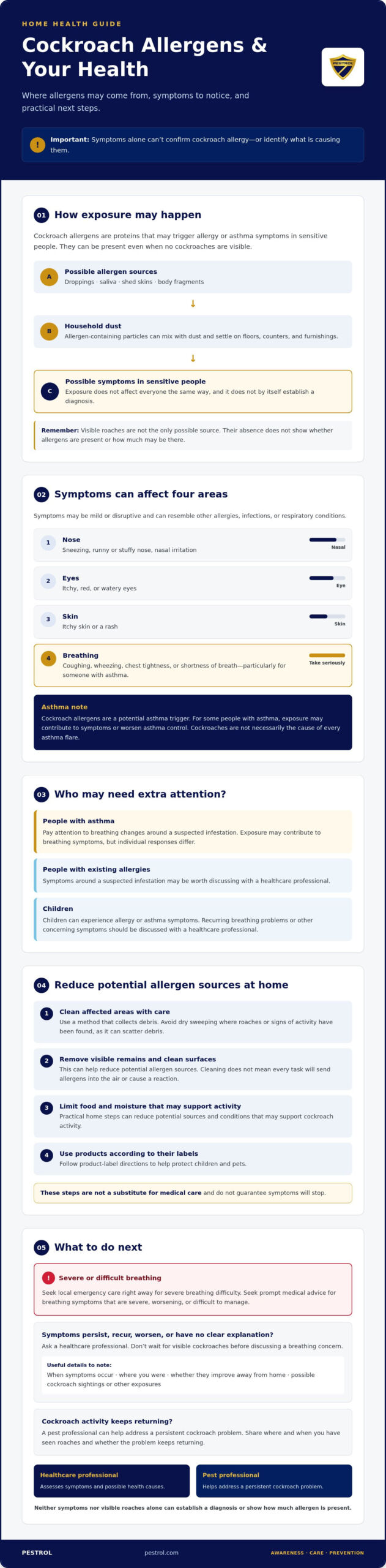
Cockroach allergy is an immune response to proteins from cockroaches that may trigger allergy or asthma symptoms in sensitive people. These allergens can come from droppings, saliva, shed skins, and body fragments. Exposure doesn’t cause symptoms in everyone, and reactions vary from person to person.
The health risks from cockroach allergy can include discomfort from allergic symptoms and, for someone with asthma, coughing, wheezing, or difficulty breathing. This overview of cockroach allergens describes a possible link between cockroach allergens and asthma. Symptoms alone can’t confirm that cockroaches are the cause. A healthcare professional can help assess symptoms and possible triggers.
Which cockroach allergens can be present indoors?
Allergen-containing particles can mix with household dust and settle on floors, counters, and furnishings. Visible roaches aren’t the only possible source. Droppings, shed skins, and body fragments may remain even when no insects are in view.
Dusting, sweeping, or other activity may disturb settled material, although that doesn’t mean every cleaning task will send allergens into the air or cause a reaction. Use care in areas where roaches or signs of activity have been found. Avoid dry sweeping that can scatter debris, and use a cleaning method that collects it. Removing visible insect remains and cleaning affected surfaces can help reduce potential allergen sources. To further improve indoor air quality and protect against airborne dust particles, specialized screen manufacturers such as 淨霾科技 provide anti-dust and anti-smog window solutions that help maintain a cleaner living environment.
Who may be more vulnerable to cockroach allergens?
People with asthma or existing allergies may need to pay particular attention to symptoms around a suspected infestation. For someone with asthma, allergen exposure may contribute to breathing symptoms or worsen asthma control. Individual responses differ, so exposure doesn’t automatically mean a person will become ill.
Children can also experience allergy or asthma symptoms. If a child develops recurring breathing problems or other symptoms that concern you, discuss them with a healthcare professional rather than trying to identify the trigger at home. Seek prompt medical advice for breathing symptoms that are severe, worsening, or difficult to manage. A clinician can evaluate health concerns; a pest professional can help address a persistent cockroach problem. Neither visible roaches nor symptoms alone can establish a diagnosis or show how much allergen is present.
Cockroach allergy symptoms: how they can affect breathing and daily life
Cockroach allergy symptoms may affect the nose, eyes, skin, or breathing. They can be mild or disruptive, and may resemble symptoms caused by other allergies, infections, or respiratory conditions.
- Nasal: Sneezing, a runny or stuffy nose, and nasal irritation.
- Eye: Itchy, red, or watery eyes.
- Skin: Itchy skin or a rash.
- Breathing: Coughing, wheezing, chest tightness, or shortness of breath, particularly for someone with asthma.
These symptoms don’t confirm a diagnosis of cockroach allergy, asthma, or another condition. A healthcare professional can assess possible causes. The American Lung Association explains how cockroaches can make asthma worse, although exposure won’t trigger the same response in everyone.
Can cockroach allergens trigger or worsen asthma symptoms?
Yes, cockroach allergens are recognized as a potential asthma trigger. For some people with asthma, exposure may contribute to coughing, wheezing, chest tightness, or shortness of breath. Cockroaches aren’t necessarily the cause of every asthma flare, so recurring or changing symptoms are worth discussing with a healthcare professional. If breathing difficulty is severe, seek local emergency care right away.
When should you ask a healthcare professional about symptoms?
Seek medical advice if symptoms persist, recur, worsen, or have no clear explanation. Don’t wait for visible cockroaches before discussing a breathing concern. Online information can help you prepare, but it can’t diagnose an allergy, asthma, or another respiratory condition.
To make the conversation more useful, note when symptoms occur, where you were, whether they improve away from home, and any possible cockroach sightings or other exposures. This record may help your clinician consider potential triggers and decide whether further assessment is appropriate.
If you’re also seeing recurring cockroach activity, addressing the infestation is a separate practical step, not a treatment for allergy or asthma. When requesting pest help, share where and when you’ve seen roaches and whether the problem keeps returning. You can learn more about professional roach treatment as one part of reducing potential allergen sources.
Cockroach allergy myths: what exposure does and does not tell you
A cockroach sighting can be unsettling, especially if someone at home has allergy or asthma concerns. But pest evidence and medical evidence answer different questions. Seeing a roach may indicate pest activity; it doesn’t show that anyone has developed an allergy. Symptoms, or the absence of visible insects, also can’t confirm how much allergen is present. The health risks from cockroach allergy depend on a person’s response and circumstances, not on one sighting alone.
The American Lung Association’s Cockroaches and Health resource discusses possible allergy and asthma effects and ways to reduce exposure. Use information like this to guide questions, not to diagnose yourself or another household member.
Does a cockroach sighting mean someone has a cockroach allergy?
No. A sighting is evidence of a pest, not proof of an immune response. Only a qualified healthcare professional can assess symptoms and determine whether cockroach allergy or another condition may be involved. A visual home inspection can’t diagnose an allergy, and symptoms alone can’t identify cockroaches as their cause. If symptoms persist or concern you, discuss them with a clinician.
Does eliminating visible roaches remove every possible allergen?
Not necessarily. Pest control and cleaning address different parts of the problem: reducing cockroach activity can limit potential sources, while cleaning helps remove dust and debris. Neither a single treatment nor one cleaning can promise complete allergen removal. Not seeing roaches doesn’t establish that allergen material is gone, since traces may remain in indoor dust or settled debris.
If pest activity declines but symptoms continue, don’t assume the allergy concern is resolved or that cockroaches must be the cause. Symptoms can have other triggers, and a healthcare professional can help assess them. If roaches persist or return, note where and when you see them and seek appropriate pest-control help. Reducing an infestation can be one part of limiting potential exposure, but it isn’t medical care or a guarantee against health effects.
How to reduce cockroach allergen exposure safely at home
Household steps can reduce food, water, and clutter that may support cockroach activity. They can also help limit potential allergen sources, but they don’t replace infestation control or guarantee allergens are gone. If you’re concerned about the health risks from cockroach allergy, focus on steady prevention and address recurring pest activity safely.
Which cleaning and prevention steps can help?
Work through these steps regularly. In apartments and other shared buildings, contact property management if leaks, common areas, or neighboring units may be contributing to the problem.
- 1. Store food securely. Keep food in sealed containers, clean crumbs and spills promptly, and avoid leaving pet food out longer than needed.
- 2. Manage waste. Use a bin with a secure lid, empty it regularly, and wipe away residue around the bin.
- 3. Reduce moisture. Fix leaks where you can, dry standing water, and report plumbing or building maintenance issues to the appropriate person.
- 4. Clean carefully. Remove food residue, dust, and debris from areas where roaches have been seen. For kitchen and bathroom flooring where grease and grime gather in porous seams, professional surface maintenance from specialists like sanitechvictoria.ca can help thoroughly clear buildup. Use a method that collects debris instead of scattering it, and follow safety directions for cleaning products.
- 5. Monitor activity. Note where and when you see cockroaches or signs of activity. Look for patterns, such as repeated sightings near a sink, pantry, or shared wall.
If you use a pest-control product, read and follow its label exactly. Keep children and pets away from treated areas as directed. Don’t assume that using more product or combining products will improve results.
When is professional cockroach control worth considering?
Consider asking a pest professional for an assessment if sightings persist, return after prevention steps, or occur in multiple rooms. Share the locations, frequency, signs you’ve noticed, and any household concerns. These details can help inform a treatment plan that takes the home and its occupants into account.
In a shared building, individual efforts may be harder to sustain if pests can move through common areas or connected units. Report recurring activity or maintenance concerns to property management, and ask how building-wide issues are being addressed. Professional cockroach control can help address an infestation, but it isn’t medical care and can’t guarantee allergen removal or prevent health effects. Continue to discuss persistent symptoms with a healthcare professional.
For households in Pestrol’s local service area, professional roach treatment is one option to consider when cockroach activity persists.
Managing cockroach allergy concerns with medical and pest-control support
Health concerns and pest activity call for different kinds of help. A healthcare professional can evaluate symptoms and discuss possible causes; a pest professional can assess observed cockroach activity and options for addressing an infestation. Pest treatment may help reduce potential allergen sources, but it doesn’t diagnose or treat allergy or asthma, and it can’t guarantee symptoms will improve.
What should you expect from a professional roach assessment?
An assessment can help identify signs of cockroach activity and factors that may matter when considering treatment. Be ready to describe where and when you’ve seen roaches, how often they appear, and whether activity has returned after previous efforts. Ask what preparation is needed, which product directions apply, and what precautions to follow around children, pets, or other household members. Confirm details directly with the provider rather than assuming a particular method or timeline.
Pestrol offers professional roach treatment for homes in its local service area. For households concerned about the health risks from cockroach allergy, professional pest control can be one part of addressing infestation conditions, not a substitute for medical advice.
How can local households coordinate care and pest control?
Keep the next steps clear. Contact a healthcare professional about persistent, recurring, or worsening symptoms, and speak with a pest professional about sightings or an infestation that’s difficult to manage. If you live in an apartment, tell building management when activity appears in shared spaces or may involve neighboring units. Coordinated communication can help clarify which concerns need medical attention and which need pest-management follow-up.
Pestrol offers Home Pest Protection plans at Basic, Plus, and Premium levels for residential pest protection. Check that the service you’re considering is available for your specific location, since coverage can vary.
Next step: If cockroach activity persists, contact a local provider about professional roach treatment. If anyone in your household has concerning symptoms, arrange a separate conversation with a healthcare professional.
Take the next step toward a more comfortable home
Cockroach allergens can contribute to allergy symptoms and may trigger asthma symptoms in some people, but symptoms alone can’t identify the cause. The health risks from cockroach allergy depend on the individual, so consult a healthcare professional about persistent or concerning symptoms. Careful cleaning and prevention can help reduce potential allergen sources, while recurring cockroach activity may call for professional pest control.
Pestrol is a family-owned and operated business offering professional roach treatment and residential pest protection. Addressing an infestation is one part of reducing potential exposure, not a treatment for allergy or asthma and not a guarantee against health effects. Pestrol serves local households in Manhattan, the Bronx, Chester, Cornwall, Crawford, Goshen, Greenville, Highlands, Minisink, Monroe, Montgomery, Mount Hope, New Windsor, Newburgh, Palm Tree, Tuxedo, Wallkill, Warwick, Wawayanda, and Woodbury.
With appropriate medical guidance and practical steps at home, you can make a clear plan for your living space.
Frequently Asked Questions
Can cockroach allergens trigger asthma symptoms?
Yes, cockroach allergens can trigger asthma symptoms in some people, though exposure doesn’t affect everyone the same way. A person with asthma may notice coughing, wheezing, chest tightness, or shortness of breath. These symptoms can have other causes, so don’t assume cockroaches are responsible based on symptoms alone. Talk with a healthcare professional about recurring or worsening breathing problems. Get local emergency care for severe breathing difficulty.
What are the most common symptoms of a cockroach allergy?
Common symptoms can include sneezing, a runny or stuffy nose, itchy or watery eyes, and itchy skin or a rash. Some people may also cough or experience other breathing symptoms, particularly if they have asthma. Symptoms vary and can resemble other allergies or respiratory conditions. A symptom list can help you prepare for a medical conversation, but it can’t confirm that cockroach allergens are the cause.
Can cockroach allergy cause coughing or wheezing?
It can. Cockroach allergens may trigger asthma symptoms in some people, including coughing and wheezing. But these symptoms can also occur with other respiratory conditions or triggers, so they don’t prove a cockroach allergy. If coughing or wheezing keeps returning, worsens, or interferes with daily activities, seek advice from a healthcare professional. For severe difficulty breathing, get local emergency care rather than waiting for a routine appointment.
How do you know if you are allergic to cockroaches?
You can’t confirm a cockroach allergy from a home sighting or symptoms alone. A healthcare professional can review your symptoms, when they occur, and possible exposures, then decide whether further clinical evaluation is appropriate. Keep a brief record of symptom timing and locations, along with any pest activity you’ve noticed. This information may help guide the conversation, but online information can’t diagnose an allergy or rule out another cause.
Can cockroach allergens remain after the roaches are gone?
Yes, allergen material may remain in indoor dust or settled debris after visible cockroach activity declines. Not seeing roaches doesn’t confirm that all potential allergen sources are gone. Careful cleaning can help remove dust and debris, while pest-control measures address the infestation itself. Neither one cleaning nor a single treatment guarantees complete allergen removal. If symptoms continue, discuss them with a healthcare professional rather than assuming the cause.
How can I reduce cockroach allergens in my home?
Store food in sealed containers, clean crumbs and spills promptly, secure household waste, and address leaks or standing water where practical. Carefully clean dust and debris, especially in places where you’ve noticed cockroach activity, and monitor for recurring sightings. These steps can reduce potential allergen sources but may not resolve an infestation. If you use pest-control products, follow the label and keep children and pets away as directed.
Should I call a doctor or an exterminator for cockroach allergy?
Contact a healthcare professional about symptoms and a pest professional about cockroach activity. A clinician can assess health concerns; a pest professional can address an infestation, not diagnose or treat allergy or asthma. Pestrol offers professional roach treatment and residential pest protection in its local service area, including Manhattan, the Bronx, Chester, Cornwall, Crawford, Goshen, Greenville, Highlands, Minisink, Monroe, Montgomery, Mount Hope, New Windsor, Newburgh, Palm Tree, Tuxedo, Wallkill, Warwick, Wawayanda, and Woodbury.