




You pull your favorite cashmere sweater from the shelf only to find a series of jagged holes where the fabric used to be. For many New Yorkers, this discovery brings a wave of sudden panic and the realization that their wardrobe is under attack. Finding effective clothing moth control NYC is about more than just buying a few cedar blocks. It’s about protecting your financial investments and reclaiming your home from silent invaders that thrive in the dark, quiet corners of your closet.
We know how frustrating it is to see designer pieces ruined or to feel anxious every time you rotate your seasonal layers. It’s common to feel confused about whether you’re dealing with harmless pantry moths or the destructive larvae that feed on keratin. This 2026 guide provides the professional grade strategies you need to identify, eliminate, and prevent these pests for good. We’ll walk you through the specific steps to eradicate every life stage of the moth, from eggs to adults. You’ll learn how to secure your most valuable items and establish a long term protection plan that actually works in the unique environment of a New York apartment. Let’s get your peace of mind back and ensure your wardrobe stays pristine for years to come.
Key Takeaways
- Learn why the larvae, not the flying adults, are the real threat to your natural fibers and expensive designer pieces.
- Discover why professional clothing moth control NYC relies on growth regulators rather than simple pheromone traps to break the breeding cycle.
- Master the essential resident’s checklist for laundering and heat treating items to kill hidden eggs and larvae instantly.
- Understand how professional sealing and regular closet audits can prevent recurring infestations in your NYC apartment.
- Shift from reactive trapping to a proactive protection strategy that ensures your seasonal wardrobe remains pristine for years.
Identifying Clothing Moth Infestations in NYC Apartments
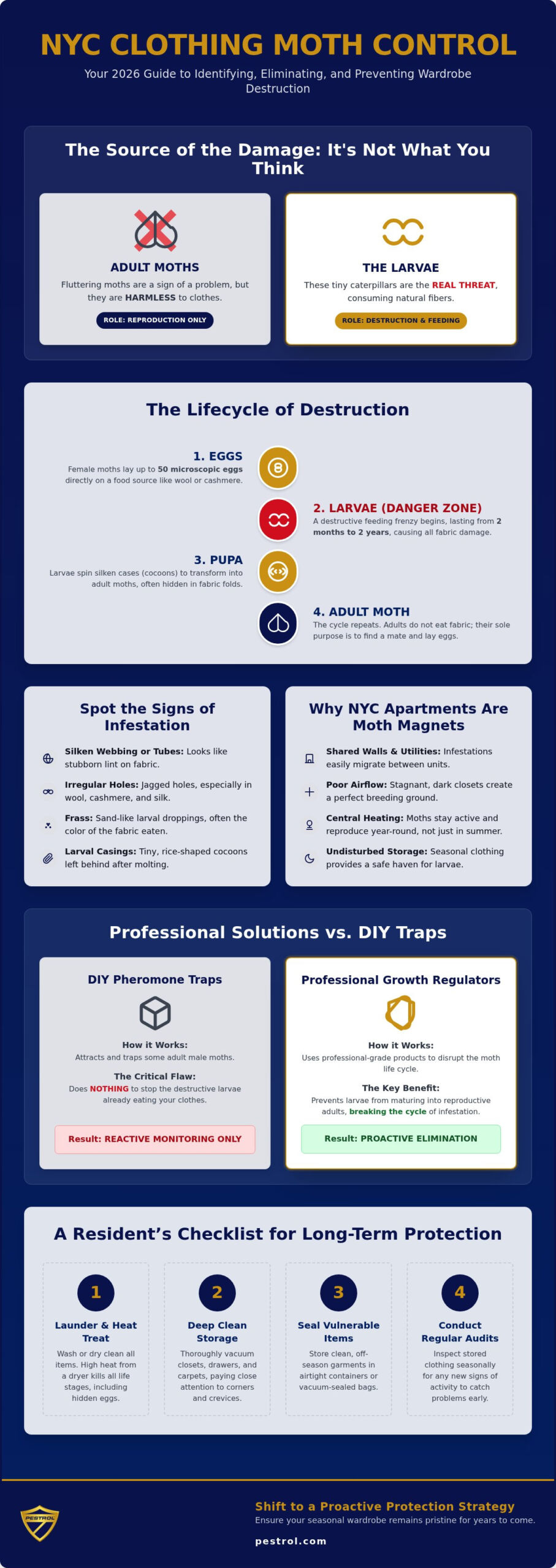
Identifying the culprit is the first step toward effective clothing moth control NYC. The real predator in Manhattan and the Bronx is almost always the Webbing Clothes Moth (Tineola bisselliella). While you might see small, buff-colored moths fluttering in the corner of your eye, they aren’t the ones eating your sweaters. These adults are one of the common species of clothes moths found in urban environments, but they don’t actually have functional mouthparts. Their only job is to reproduce. The devastation is caused entirely by the larvae, which hatch from microscopic eggs and immediately begin searching for animal-based proteins.
You’ll know they’ve arrived by the evidence they leave in dark, undisturbed areas. Look for silken webbing or tubes that look like small patches of stubborn lint. You might also find frass, which is a sand-like substance that is actually larval excrement. It often takes on the color of the garment they are currently consuming. Don’t confuse these with common pantry moths. If you see moths in your kitchen near the cereal or flour, those are likely Indian Meal Moths. Clothing moths are smaller, golden-hued, and highly secretive. They avoid light and prefer the deep, quiet corners of a crowded closet.
Signs of Damage in High-End Fabrics
Larvae target keratin, a protein found in wool, silk, cashmere, and fur. They don’t just chew holes; they often graze on the surface of the fabric first, leaving thin, weakened patches that eventually give way. Check the hidden spots where they love to hide:
- Under garment collars and inside cuffs.
- Deep within the seams of expensive suits.
- Inside the folds of stored blankets or scarves.
- Larval casings that look like tiny, rice-shaped cocoons tucked into fabric folds.
Why NYC Apartments are Moth Magnets
New York City living creates a perfect storm for infestations. Many older buildings in Manhattan feature high-density closets with poor airflow, providing the dark, stagnant environment moths crave. Because apartments share walls and ventilation systems, an infestation in one unit can easily migrate to yours through gaps in floorboards or shared utility lines. Our central heating systems also mean these pests stay active year-round rather than going dormant in the winter. While professional rodent proofing helps seal common entry points, specialized clothing moth control NYC requires a targeted approach to protect your specific storage spaces from these persistent invaders.
The Biology of Destruction: Why They Target Your Clothes
Understanding the lifecycle of these pests is essential for effective clothing moth control NYC. Female moths lay up to 50 microscopic eggs directly onto a food source within just a few days. Once these eggs hatch, the larvae begin a feeding frenzy that can last anywhere from two months to two years. According to the UC Statewide IPM Program, the speed of this development depends entirely on the temperature and the quality of the food available. While the adults are harmless, the larvae are relentless consumers that require specific proteins to grow.
Larvae aren’t just looking for fabric; they’re looking for nutrition. They are highly attracted to soiled materials. Sweat, skin oils, and microscopic food spills provide the essential vitamins and minerals that larvae need to thrive. If you store a “clean” blazer that still carries traces of perspiration or perfume, you’ve created a high-protein environment for an infestation. These insects prefer dark, undisturbed areas where they won’t be bothered. This makes under-bed storage bins and the deep, shadowed corners of Manhattan walk-ins the perfect nurseries for a growing colony.
The Keratin Connection
Keratin is the primary food source for moth larvae. This fibrous protein is found in all natural animal fibers, including wool, silk, cashmere, and fur. Synthetic fabrics like polyester or nylon are generally safe because they lack this specific protein. However, if a garment is a wool-synthetic blend, larvae will still chew through the synthetic fibers to reach the natural ones. This threat extends beyond your wardrobe. In Orange County homes, expensive wool rugs and upholstered furniture are frequently targeted. If you notice thinning patches on an heirloom carpet, it’s a good idea to consult a specialist in Clothing Moth Control before the structural integrity of the piece is lost.
Environmental Triggers for Infestations
NYC summers are notoriously humid, and this moisture significantly impacts moth breeding. High humidity levels keep natural fibers soft and easier for larvae to digest, leading to faster growth and more frequent egg-laying cycles. Many infestations start with “hitchhiking” moths that enter the home on vintage clothing or second-hand rugs. You should always inspect and treat these items before they enter your living space. Seasonal wardrobe rotation is another vulnerable time. Moving items from storage to the closet can spread hidden eggs or introduce them to new, nutrient-rich environments. Constant vigilance during these transitions is your best defense against a sudden outbreak. For a deeper look at protecting your natural fiber garments and rugs from these destructive pests, our comprehensive wool moth control guide for New York homes covers the full range of professional strategies available in 2026.
Professional Moth Control vs. DIY Pheromone Traps
Many homeowners reach for sticky pheromone traps the moment they see a fluttering moth in their closet. These retail products are excellent for monitoring, but they’re fundamentally limited as a control method. The traps use a synthetic scent to lure adult males, leaving the egg-laying females and the destructive larvae completely untouched. While you might feel a sense of accomplishment seeing a few moths stuck to a card, the infestation continues to grow in the shadows of your closet. Effective clothing moth control NYC requires a strategy that addresses the entire life cycle, not just the visible adults.
Natural remedies like cedar blocks and lavender sachets are popular, yet they function strictly as mild repellents. They lack the potency to kill existing larvae already burrowed into your cashmere. Research from University of Kentucky Entomology highlights that once larvae are established, these botanical scents do little to stop their feeding. Over-the-counter sprays often contain harsh chemicals that only provide a temporary knockdown effect. For residents seeking a proactive, long-term shield, Pestrol’s tiered Home Pest Protection plans offer a comprehensive alternative that adapts to the specific needs of your home.
The Failure of Retail “Mothballs”
Traditional mothballs rely on volatile chemicals like naphthalene or paradichlorobenzene. In the tight quarters of a Manhattan or Bronx apartment, these vapors can become overwhelming and potentially hazardous to pets and children. The pungent, medicinal smell often clings to high-end fabrics for months, making your favorite coats unwearable. Professional treatments provide odorless, low-impact solutions that target the pests without compromising your indoor air quality. Modern professional methods offer several advantages over these old-fashioned chemicals:
- Odorless applications that won’t ruin the scent of your fine garments.
- Targeted placement in wall voids and crevices away from common touchpoints.
- Long-lasting residual effects that continue to protect your closet for weeks.
Pestrol’s Targeted Elimination Protocol
Our team uses a precision approach that goes far beyond surface-level sprays. We focus on the microscopic cracks, baseboards, and dark crevices where eggs and larvae hide. By using Insect Growth Regulators (IGRs), we stop the population from expanding by preventing larvae from ever reaching adulthood. This specialized pest elimination ensures that the reproductive cycle is broken permanently. For superior clothing moth control NYC, we don’t just treat the visible symptoms; we protect the structural integrity of your home and the financial investment you’ve made in your wardrobe. We treat your property with the same care and persistence we would use in our own homes.
How to Get Rid of Clothing Moths: A Resident’s Checklist
Discovering an active infestation is a stressful experience, but a structured response is the only way to stop the cycle. Taking these immediate steps alongside professional clothing moth control NYC ensures your home becomes a hostile environment for these pests. You must be thorough; missing even a single larvae-infested seam can lead to a resurgence in just a few months. Follow this resident’s checklist to prepare your space for total eradication.
- Empty every closet: Remove all items from storage bins and closets in the affected rooms. This includes shoes, luggage, and non-fabric items that might be harboring eggs.
- Heat treat natural fibers: Launder all wool, silk, and cashmere items on a high-heat cycle of at least 120°F. For delicate pieces, professional dry cleaning is the safest way to ensure all life stages are destroyed.
- HEPA vacuuming: Use a vacuum with a HEPA filter to clean every inch of the closet. Focus on the corners, shelf brackets, and the gaps behind baseboards where larvae love to hide.
- Airtight sealing: Once items are cleaned, seal them in airtight plastic bins or heavy-duty vacuum bags. Do not return them to the closet until the area has been professionally treated.
Immediate Steps for Active Infestations
Isolate any garments with visible damage immediately. Place them in sealed bags to prevent cross-contamination while you wait for treatment. For items that cannot withstand high heat, use the “Deep Freeze” method. Wrap the garment in plastic and place it in a sub-zero freezer for at least 72 hours to kill hidden eggs. Don’t forget to inspect unusual keratin sources. In many NYC apartments, moths find food in taxidermy, natural bristle brushes, or even the wool-felt hammers inside an antique piano.
Preparing for Your Pestrol Technician
To get the best results from your service, clear the perimeter of your closets. Our technicians need direct access to baseboards and floor cracks to apply targeted treatments. Ensure pets and children are out of the treatment area during the application for their safety. Most importantly, don’t throw away infested items before the professional arrives. We need to inspect the damage to identify the specific species and the primary nesting sites. This information is vital for creating a customized plan that protects your home long-term.
Request a specialized clothing moth elimination service for your home
Long-Term Prevention and Seasonal Security
Eliminating an active infestation is only half the battle. To ensure permanent clothing moth control NYC, you must shift your focus toward long-term prevention. Moths thrive on neglect. They choose the items you rarely wear, tucked away in the darkest corners of your storage. Implementing a regular closet audit is your first line of defense. Every few months, take your natural fiber garments out, shake them, and expose them to natural light. This simple disruption prevents larvae from settling into the fibers and keeps your wardrobe safe from silent damage.
Structural integrity plays a surprising role in pest prevention. In many Manhattan buildings, tiny gaps around radiator pipes or floorboards act as highways for insects. Professional rodent proofing does more than just keep out mice; it seals the common entry points that moths use to travel between apartments. By closing these breaches, you create a fortified barrier that protects your home from multiple threats simultaneously. Just as homeowners in the Hudson Valley are increasingly researching wasp nest removal cost to budget for professional pest services before problems escalate, NYC residents benefit from understanding the full scope of professional pest protection available to them. This holistic approach is essential for maintaining a pest-free environment in a high-density urban setting.
Adopting a “Clean Before Store” rule is non-negotiable for winter woolens. As discussed earlier, larvae are attracted to the microscopic traces of skin oils and perspiration left on “lightly worn” items. Never pack away a cashmere sweater for the season without professional cleaning first. This removes the nutritional triggers that draw moths to your storage bins. For the most reliable clothing moth control NYC, Pestrol stands as your dedicated partner, providing the expert oversight needed to maintain your home’s safety year-round.
The Value of Home Pest Protection – Basic
Our Home Pest Protection plans include a Basic tier designed specifically for proactive residents. Quarterly visits allow our technicians to catch small moth sightings and signs of activity before they escalate into full infestations. Whether you live in a compact Manhattan studio or an expansive Orange County estate, we customize our monitoring to fit your specific layout. This recurring service provides the ultimate peace of mind, knowing that your high-value fashion investments are protected by seasoned professionals who treat your property with personal care.
Schedule Your Wardrobe Inspection Today
Don’t wait until you find another hole in your favorite blazer to take action. Saving the rest of your wardrobe requires immediate, decisive steps. Pestrol is a family-owned and operated institution with a deep-rooted reputation for reliability across the Bronx and Manhattan. We bring a “results-first” mentality to every home we protect. Our team is ready to help you reclaim your closet and secure your seasonal clothing for years to come.
Secure Your Wardrobe for the Future
Protecting your investment in high-end fashion requires more than just reactive trapping. We’ve explored how the destructive larvae of the webbing clothes moth target the keratin in your most valuable pieces. By combining a thorough resident’s checklist with professional clothing moth control NYC, you can break the breeding cycle and prevent future damage for good. It’s time to move past the anxiety of discovering new holes and embrace a proactive strategy that works.
As a family-owned local institution, we understand the unique pressures of Manhattan and Bronx apartment living. We use specialized treatment protocols designed for delicate fabrics and offer tiered protection plans that fit your specific needs and budget. You don’t have to face the stress of a recurring infestation alone. Our team is here to act as the protective guardian of your home and your wardrobe, providing the expert care you deserve.
Take the first step toward total peace of mind today. We are committed to seeing this task through and ensuring your favorite garments remain pristine for years to come.
Frequently Asked Questions
How do I know if I have clothing moths or pantry moths?
You can distinguish them by where they appear and their physical markings. Clothing moths are small, golden, and prefer dark closets where they feed on natural fibers. Pantry moths are slightly larger with reddish-brown wing tips and congregate near grains or flour. If you see moths fluttering near your wool sweaters instead of your cereal boxes, you’re likely dealing with a wardrobe infestation that requires professional attention.
Can clothing moths travel through walls in NYC apartment buildings?
Yes, clothing moths frequently travel through shared walls, ventilation ducts, and gaps around utility pipes. In high-density NYC apartment buildings, an infestation in a neighboring unit can easily migrate to your closet. This is why sealing entry points and maintaining a proactive defense is essential for long-term protection. Professional exclusion services can help fortify these common bridges between apartments to keep your home secure.
Will dry cleaning kill all stages of clothing moths?
Dry cleaning is one of the most effective ways to eliminate moths from your wardrobe. The high heat and specialized solvents used during the process destroy eggs, larvae, and adult moths on contact. It’s the safest option for delicate items like silk or cashmere that can’t handle a standard hot water wash. Always dry clean your natural fiber garments before storing them for the season to ensure they are pest-free.
Is professional moth treatment safe for my expensive silk and cashmere?
Professional clothing moth control NYC is specifically designed to be safe for your home and your high-end fabrics. Technicians apply treatments to the cracks, crevices, and baseboards where larvae hide rather than directly onto your garments. This precision application ensures that the reproductive cycle is broken without risking damage to your expensive silk or cashmere investments. You get total eradication without compromising the integrity of your wardrobe.
How long does it take to get rid of a moth infestation for good?
Eradicating an infestation completely typically takes several weeks to ensure all life stages are addressed. While adult moths die quickly, hidden eggs and larvae can take longer to emerge. Professional growth regulators break the reproductive cycle, preventing new generations from forming. Success depends on a combination of professional treatment and the resident’s commitment to laundering and cleaning the affected storage spaces as instructed by their technician.
Do pheromone traps actually work to eliminate moths?
Pheromone traps do not eliminate an infestation because they only attract and catch adult males. While they are useful for monitoring activity levels and identifying which rooms are affected, they leave the egg-laying females and destructive larvae untouched. Relying solely on these traps allows the population to continue growing in the shadows. For total elimination, you need a comprehensive approach that targets the larvae where they feed.
What is the best way to store wool clothes during the summer in NYC?
The best storage method is to clean every item before placing it in an airtight container. Use heavy-duty plastic bins with gaskets or vacuum-sealed bags to create a physical barrier that moths cannot penetrate. Avoid using cardboard boxes or cedar chests alone, as these don’t provide a perfect seal. Storing your woolens in a cool, dry place after a professional cleaning ensures they remain pristine until the temperature drops again. For a complete breakdown of how to protect wool garments and rugs year-round, our 2026 wool moth control guide for New York provides detailed strategies tailored to city living.
Are clothing moths active during the winter in New York?
Clothing moths remain active throughout the New York winter because of our indoor climate control. While outdoor pests go dormant, the consistent warmth from central heating in NYC apartments allows moths to breed year-round. You shouldn’t lower your guard just because it’s snowing. Maintaining professional clothing moth control NYC ensures these silent invaders don’t take advantage of your winter wardrobe while it’s in use.