



New York City has ranked as the top city in the United States for clothes moth infestations for five consecutive years, making your home a prime target for these destructive pests. If you’ve discovered a jagged hole in a cashmere sweater or thinning fibers on an heirloom rug, the anxiety is immediate. Effective wool moth control in 2026 requires more than just hanging a few cedar blocks. It demands a strategic search and destroy mission targeting the invisible larvae that do the real damage while hiding in floorboards and closet crevices.
We understand the frustration of watching expensive property suffer damage while DIY pheromone traps fail to solve the root problem. You deserve to feel confident that your valuables are safe. This guide promises to show you exactly how to identify, eliminate, and prevent infestations to save your wardrobe and rugs from permanent ruin. We will walk you through professional protocols for total eradication, explain how to distinguish between moth species, and provide a clear prevention plan to keep your New York home protected for the long term.
Key Takeaways
- Stop focusing on the flying adults and learn to target the larvae responsible for destroying natural fibers.
- Understand why New York’s historic architecture and high-end textiles require specialized wool moth control strategies.
- Identify the critical limitations of cedar, lavender, and pheromone traps when dealing with an established infestation.
- Implement the “Clean, Dry, and Sealed” rule to effectively moth-proof your wardrobe and heirloom rugs.
- Transition from temporary DIY fixes to professional, tiered protection plans that ensure long-term security for your home.
Understanding Wool Moth Infestations in New York Homes
Finding a hole in your favorite cashmere sweater is a gut-wrenching experience. In New York, this damage is usually the work of the Webbing Clothes Moth (Tineola bisselliella). Unlike the moths you see circling your porch light, these pests avoid glare and prefer the quiet corners of your closet. They thrive on a diet of natural fibers, specifically targeting anything containing animal proteins. Effective wool moth control begins with recognizing that the adult moths aren’t the ones eating your clothes. It’s the larvae, tiny caterpillar-like creatures, that do the damage.
Many homeowners mistake these for pantry moths. While pantry moths look for grains in your kitchen, webbing clothes moths hunt for textiles in your bedroom. You’ll know you have an infestation when you see silken tubes, tiny sand-like fecal pellets called frass, or irregular holes in your fabrics. Local residences in Manhattan and historic Orange County are particularly at risk. The combination of high-end textiles and older building materials provides the perfect environment for these pests to hide and multiply.
Why Wool Moths Target Your Valuables
These pests are specialized feeders. They seek out keratin, a structural protein found in wool, silk, hair, and feathers. While clean wool is a target, soiled fabrics are even more attractive. Sweat, skin oils, and food spills act as an “appetizer,” providing the essential nutrients larvae need to grow quickly. They prefer dark, undisturbed areas. This means the underside of a heavy Persian rug or a storage trunk in your attic is a prime breeding ground. Regular inspection of these hidden spots is a vital part of wool moth control.
Common Entry Points in Local Residences
Moths don’t simply materialize in your home; they’re usually brought inside. In Orange County, they often hitch a ride on outdoor items or seasonal gear. In the city, Manhattan brownstones offer unique challenges. The gaps in historic floorboards and shared ventilation systems allow moths to migrate between apartments with ease. Other common entry points include:
- Second-hand vintage clothing that hasn’t been professionally cleaned.
- Antique rugs purchased from estate sales or flea markets.
- Woolen blankets or pillows stored in damp basements.
Once inside, they settle into the structural crevices of your home. This makes them difficult to reach without professional intervention, especially in older buildings with complex architectural details.
The Science of Destruction: Lifecycle of the Webbing Clothes Moth
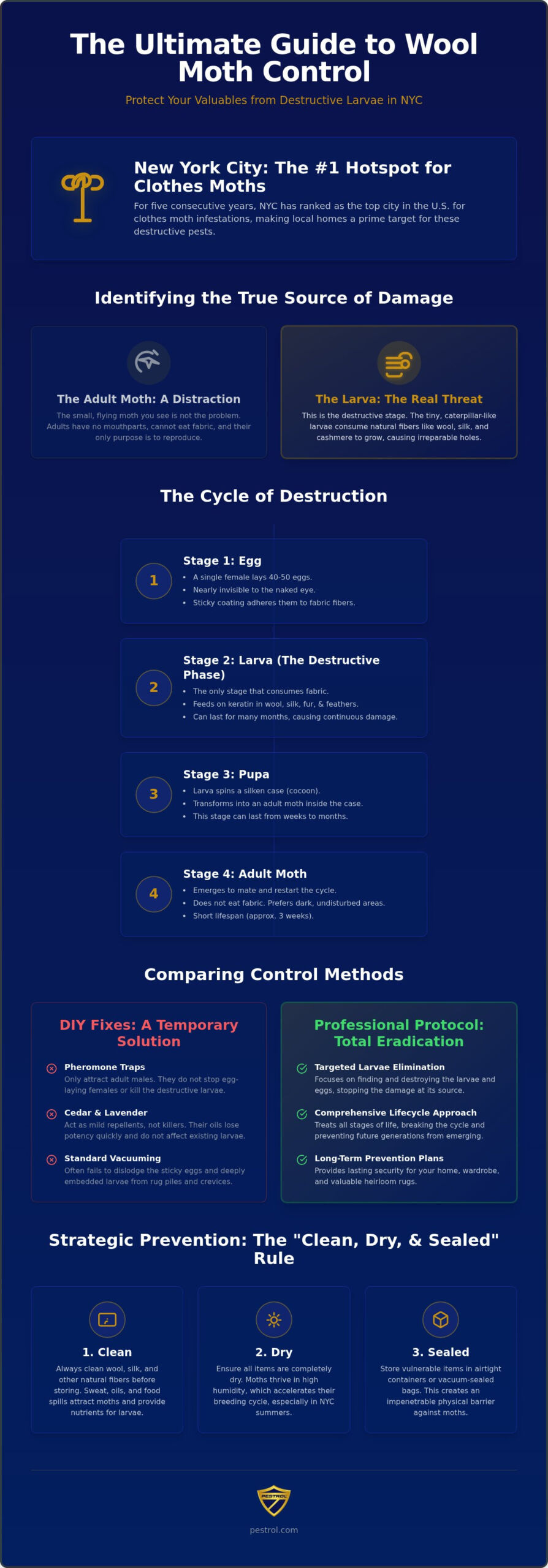
Breaking the cycle of destruction in your home requires a clear understanding of the webbing clothes moth lifecycle. These pests progress through four distinct stages: egg, larva, pupa, and adult. While most homeowners panic when they see a small, buff-colored moth fluttering in the closet, that adult is actually a harmless distraction. Adult moths have no mouthparts and cannot eat. Their only job is to mate and lay eggs. The real “feeding machines” are the larvae, which can remain in this destructive stage for many months before pupating, depending on the environment. Effective wool moth control focuses on eliminating these larvae before they can ruin another garment.
The Invisible Threat: Eggs and Larvae
Damage starts with eggs that are nearly impossible to see without the naked eye. A single female can lay between 40 and 50 eggs in just three weeks. These eggs are coated in a sticky substance that allows them to cling tightly to the fibers of your rugs and sweaters. Once they hatch, the larvae begin their search and destroy mission. Some larvae exhibit “case-making” behavior, where they spin a silken cocoon around themselves as they feed, effectively camouflaging their presence. This is why standard vacuuming often fails; the eggs and larvae are embedded so deeply into the pile of a rug that suction alone won’t dislodge them.
Environmental Triggers for Infestations
New York’s climate plays a significant role in how quickly an infestation spreads. High humidity levels in the summer accelerate the breeding cycle, allowing populations to explode. In the winter, our reliance on central heating creates a consistent, warm microclimate inside Manhattan brownstones and Orange County estates. This prevents the natural die-off that would occur in colder temperatures, keeping the larvae active year-round. According to University of Kentucky Entomology, these pests thrive in dark, stagnant areas where air circulation is minimal.
If you have items in long-term storage or closets that haven’t been aired out in months, you’ve created the perfect breeding ground. Persistence is key when protecting your home. If you suspect your wardrobe is already under attack, it’s time to consult the best exterminator for clothing moths to break the lifecycle and prevent future generations from hatching. Professional intervention ensures that eggs hidden in floorboard gaps and structural crevices are completely eradicated.
Professional Wool Moth Control vs. DIY Home Remedies
Many homeowners reach for cedar blocks or lavender sachets at the first sign of a moth. While these scents are pleasant, they are merely repellents, not killers. They won’t stop an active infestation where larvae are already feasting on your wool. Store-bought pheromone traps often create a false sense of security. These traps only attract adult males, leaving the egg-laying females and hungry larvae untouched. For comprehensive wool moth control, you need a strategy that targets every stage of the lifecycle, not just the visible adults.
DIY “bug bombs” and aerosols are equally problematic. These products often fail to penetrate the structural crevices or deep rug piles where larvae hide. Instead of solving the problem, they can drive pests deeper into your walls or baseboards. The UC Statewide Integrated Pest Management Program emphasizes that effective control requires a combination of physical removal and targeted treatments rather than broad chemical applications. Professional application ensures the right products reach the right places without putting your household at risk.
Why DIY Often Leads to Re-infestation
We call it the “iceberg effect.” You might kill a few flying moths and think the battle is won, but thousands of microscopic eggs remain hidden in your floorboards. Over-the-counter sprays can also lead to resistance if used incorrectly, making future treatments more difficult. There’s also a significant risk of damaging delicate fibers. Improper cleaning or harsh chemicals can permanently stain or weaken high-value wool and silk items. We see many clients who spent hundreds on retail products only to suffer thousands in property damage later.
The Professional Extermination Protocol
Professional intervention offers a level of precision that retail products simply cannot match. Our team conducts detailed inspections of baseboards, headers, and rug underlays to locate every breeding site. We utilize high-temperature steam treatments to kill eggs instantly without damaging your fabrics. By combining this with specialized insect growth regulators (IGRs), we stop the larvae from maturing into breeding adults. This multi-tiered approach is essential for clothing moth control NYC residents can rely on. We don’t just treat the symptoms; we secure your home’s structure to prevent a return. Our local expertise allows us to navigate the unique architectural challenges of Manhattan brownstones and historic Orange County estates with ease.
Strategic Prevention: How to Moth-Proof Your Wardrobe and Rugs
Once the active threat is gone, your focus must shift to maintaining a moth-proof environment. Effective wool moth control relies on the “Clean, Dry, and Sealed” rule. Larvae thrive on the organic residues left behind on worn clothing, such as skin cells, perspiration, and food spills. Never store a garment that hasn’t been recently cleaned. Even a single wearing can leave enough nutrients to attract a female moth looking for a nesting site. After cleaning, ensure items are bone-dry before sealing them away. Moisture trapped in storage is an invitation for mold and creates a favorable microclimate for pests.
Agitation is another powerful, low-tech tool. Moths are reclusive and hate light or movement. Make it a habit to rotate your wool rugs every six months. This exposes hidden areas under heavy furniture to light and air, making them less attractive for breeding. Similarly, move the items in your closet regularly. Shake out your winter coats and brush your suits to crush fragile eggs and disturb developing larvae before they cause significant damage. In historic New York homes, sealing the gaps in floorboards and closet baseboards with clear caulk removes the structural hiding spots where these pests often pupate.
Best Practices for High-Value Textiles
Professional dry cleaning is your most effective weapon. The high heat and specialized solvents used in the process are lethal to every stage of the moth lifecycle. For long-term storage, skip the breathable garment bags often recommended by retail stores. These offer little protection against a determined larva that can crawl through tiny openings. Instead, use heavy-duty, airtight plastic containers. These bins create a physical barrier that moths cannot penetrate. Be especially diligent with “forgotten” items. Tuxedos, evening gowns, and heavy winter coats often sit undisturbed for years, making them the most vulnerable pieces in your collection.
Home Maintenance for Moth Prevention
Your vacuum is a critical piece of equipment. Use a HEPA-filtered vacuum to clean baseboards, closet corners, and the spaces under heavy furniture. These filters are fine enough to capture microscopic eggs that standard vacuums might simply blow back into the air. Managing humidity is equally important, particularly in Manhattan apartments where steam heat can create damp microclimates. Keep your home’s air circulating to discourage breeding. For year-round peace of mind, consider setting up a defensive perimeter with home protection from pests. This proactive approach ensures that your property remains a hostile environment for any stray moths that manage to find their way inside.
Protect your wardrobe with a professional prevention plan.
Professional Elimination: Why Pestrol is the Local Expert
Pestrol stands as a family-owned institution dedicated to protecting New York homes from the quiet devastation of fabric pests. We’ve built our reputation on reliability and a results-first mentality, serving neighbors across Manhattan, the Bronx, and Orange County. Our team understands that wool moth control is about more than just saving a single sweater; it’s about preserving your family’s history and investments. We treat every home with the personal care and respect it deserves, ensuring that your high-value textiles remain intact for generations to come.
Our commitment to thoroughness sets us apart from standard pest services. We don’t just treat the surface of your rugs or the visible areas of your closet. Instead, we target the structure of your home. Larvae often hide in the dark, stagnant gaps behind baseboards or within floorboard crevices. By focusing on these architectural hiding spots, we eliminate the infestation at its source. We implement the best exterminator for clothing moths protocols to ensure that eggs and larvae are completely eradicated, providing a level of security that retail products can’t match.
Localized Expertise for Diverse New York Homes
New York residences present unique challenges that require specialized strategies. A high-rise apartment in Manhattan requires a different approach than a sprawling estate in Orange County. In the city, we focus on the shared walls and ventilation systems that allow pests to migrate between units. Our team is deeply rooted in the local community, providing fast and responsive care to Manhattan and Bronx residents who need immediate solutions for their wardrobe protection.
For those living in historic properties in Warwick, Goshen, or Newburgh, we offer seasoned expertise tailored to older architecture. Historic wood and complex moldings provide ample hiding spots for webbing clothes moths. We use specialized tools to reach deep into these structural elements without compromising the integrity of your home’s historic details. This localized knowledge ensures that our treatments are both effective and respectful of your property’s unique character.
Long-Term Peace of Mind with Pestrol
One-off treatments often provide only temporary relief. To achieve true peace of mind, you need a comprehensive defense plan. Our Home Pest Protection – Basic plan offers a foundation for seasonal security, keeping your home protected from a variety of pests year-round. This proactive approach prevents stray moths from establishing a new colony, saving you from the stress and financial burden of future infestations. We move beyond simple extermination to provide a structured, long-term plan for your home’s safety.
Don’t wait for another piece of clothing to be ruined before taking action. Our team is ready to provide a specialized assessment of your home’s vulnerabilities. We’ll walk you through our tiered protection options and help you choose the plan that best fits your needs and budget. Contact us today to schedule your specialized wool moth control inspection and take the first step toward a moth-free home.
Secure Your New York Home Against Textile Damage
Protecting your high-value wardrobe and heirloom rugs requires moving beyond temporary DIY fixes that only address the symptoms. You now understand that effective wool moth control starts with targeting the invisible larvae hiding in your home’s structural crevices. By prioritizing professional cleaning, agitated storage, and airtight containers, you can stop the cycle of destruction before it costs you thousands in irreparable property damage. These proactive steps ensure your natural fibers remain intact for years to come.
Pestrol provides the specialized Clothing Moth elimination protocols needed to safeguard your most prized investments. We bring family-owned care and deep local expertise to every home we service in NYC and Orange County. You don’t have to live with the constant anxiety of hidden pests destroying your valuables. Our team is ready to restore your peace of mind and help you maintain a healthy, pest-free environment with a comprehensive defense plan. Take the final step toward securing your home today.
Frequently Asked Questions
Do wool moths only eat wool?
Wool moths eat a variety of natural fibers containing keratin, not just wool. This includes silk, cashmere, mohair, and even leather or feathers. They are especially attracted to items stained with perspiration or food oils. In many New York homes, we find them infesting down pillows or hair-based rug pads. If a material comes from an animal, it is a potential food source for the larvae.
How can I tell if I have wool moths or pantry moths?
You can distinguish between them by their location and behavior. Pantry moths stay near the kitchen to feed on grains and dried goods. Wool moths avoid light and hide in closets or under furniture to eat animal fibers. If you see small moths in your bedroom or jagged holes in your sweaters, you likely need professional wool moth control. Webbing clothes moths are a solid buff color.
Will cedar chests really protect my clothes from moths?
Cedar chests act as a repellent for adult moths but won’t kill existing larvae or eggs. The natural oils that deter pests evaporate over time, making older chests less effective. If you place an infested item inside, the larvae will continue to feed regardless of the scent. For true protection, ensure all items are professionally cleaned before storage in an airtight container rather than relying solely on wood scents.
Can wool moth larvae live in my carpet?
Yes, larvae frequently thrive in wool or silk carpets, particularly in dark areas under heavy furniture. They feed on the fibers and the organic debris trapped deep in the pile. Standard vacuuming often misses these pests because they anchor themselves to the rug’s foundation. We recommend rotating your rugs every six months and using a HEPA-filtered vacuum to reach the edges where larvae often congregate.
Is professional moth treatment safe for my pets and family?
Professional treatments are designed with the safety of your household in mind. We use targeted applications and specialized growth regulators that focus specifically on the pest’s biology. Our team provides clear instructions on when it’s safe to re-enter treated areas, ensuring your children and pets are never at risk. We prioritize precision over broad chemical use, which makes our protocols both effective and responsible for indoor environments.
How long does it take to get rid of a wool moth infestation?
Total eradication usually takes several weeks to ensure all lifecycle stages are addressed. While an initial treatment kills active larvae, eggs can hatch later, requiring a multi-tiered approach. We often schedule follow-up inspections to confirm the cycle is broken. Persistence is key in New York’s humid climate, where pests can breed quickly. A structured plan ensures that no hidden eggs are left behind to start a new colony.
Should I throw away clothes that have moth holes?
You don’t necessarily need to discard damaged items, but you must treat them immediately. Dry cleaning is a lethal weapon that kills all moth stages through high heat and solvents. Once cleaned, a skilled tailor can often repair the holes in high-value wool or cashmere. However, you must remove these items from your closet instantly to prevent the infestation from spreading to your other healthy garments.
What is the best way to store wool blankets in the summer?
The best method is the “Clean, Dry, and Sealed” rule. Professionally clean your blankets to remove skin oils that attract larvae, then ensure they are completely dry. Store them in heavy-duty, airtight plastic bins rather than breathable fabric bags. This creates a physical barrier that moths can’t penetrate. This proactive wool moth control step is the most effective way to protect your bedding during the warm New York summer months.