




The quickest-looking option isn’t automatically the right one. If you’re weighing heat treatment vs chemical for bed bugs, it’s natural to want a method that reaches hiding places without turning your home upside down or leaving you worried about a return infestation. Both approaches can help, but they work differently, and neither is a one-size-fits-all answer.
Heat treatment can address bed bugs at every life stage when applied correctly, while chemical treatment uses targeted products and often requires follow-up visits. The right fit depends on how far the infestation has spread, your home’s layout and contents, and how much preparation and disruption you can manage.
This guide compares how each method works, what to consider when preparing your home and belongings, and why follow-up matters. You’ll learn which factors can shape a professional treatment plan. Pestrol provides professional bed bug treatment for residential homes, with an approach tailored to the situation.
Key Takeaways
- Heat and chemical treatments work differently, so the best option depends on the home and infestation, not a universal winner.
- Use the heat treatment vs chemical for bed bugs comparison to weigh coverage, residual activity, preparation, disruption, and treatment limits.
- Inspection findings and access to hiding places help shape a plan for affected rooms and belongings.
- Keep treatment of the home separate from decisions about washable or portable items, and follow the preparation guidance for your plan.
- A professional bed bug treatment plan should reflect your home’s conditions and needs, including whether follow-up is appropriate.
Heat Treatment vs. Chemical Treatment for Bed Bugs: What the Choice Really Means
Choosing between heat and chemical treatment affects more than how bed bugs are addressed. It can determine which parts of the home are treated, how belongings are handled, and whether follow-up is part of the plan. Start by understanding what each method does, then compare it with the inspection findings and conditions in your home.
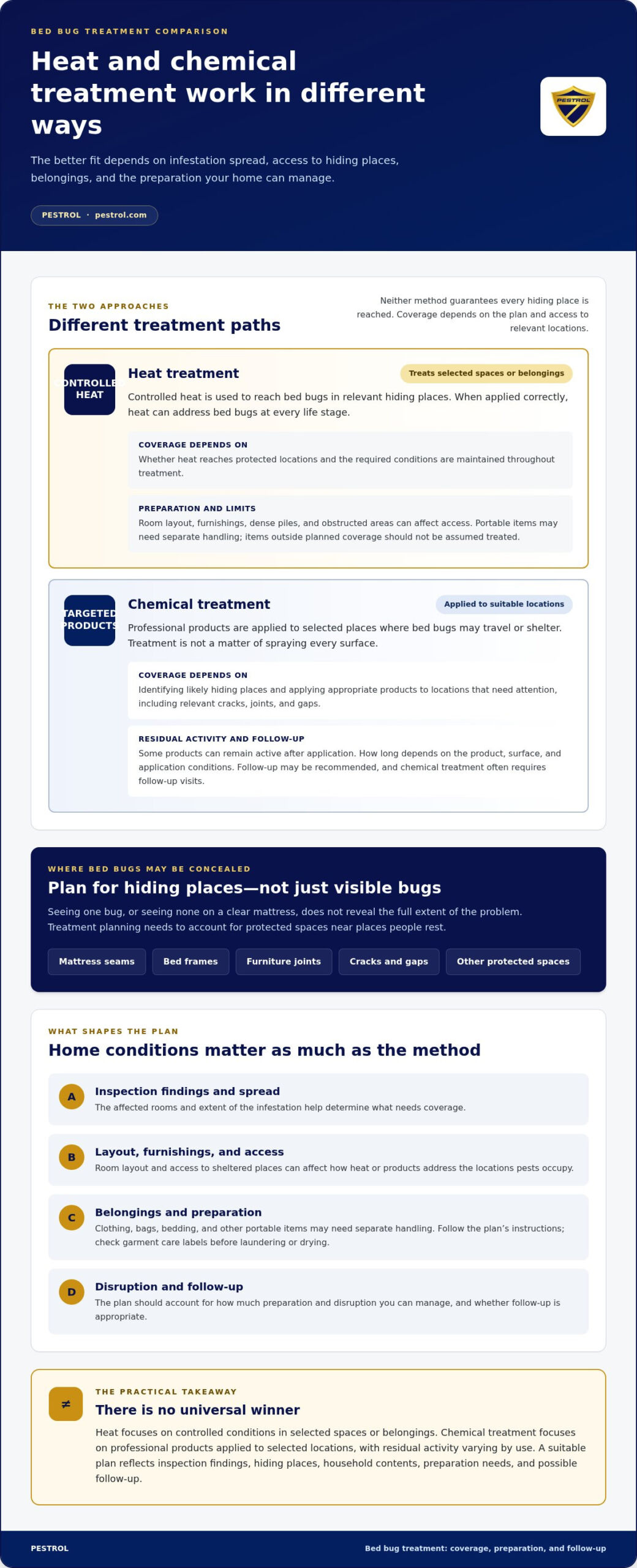
Heat treatment uses controlled heat to treat targeted spaces or belongings where bed bugs may be hiding. Chemical treatment applies professional pest control products to appropriate locations in the treatment area. Neither definition means every bug will necessarily be reached. Results depend on the treatment plan and how well it addresses the places pests occupy.
Bed bugs can shelter in mattress seams, furniture joints, cracks, and other protected spots, so seeing one bug doesn’t reveal the full extent of the problem. Their behavior and biology help explain why treatment needs to account for more than exposed surfaces. The Bed Bug Overview provides broader background on bed bugs and their habits.
In the heat treatment vs chemical for bed bugs decision, the method is only one part of the picture. The affected rooms, access to hiding places, household belongings, and what happens after treatment all matter. A professional plan should reflect those conditions rather than treating heat or chemicals as a universal solution.
What is heat treatment for bed bugs?
Heat treatment uses controlled heat to treat selected areas or belongings. The goal is to reach bed bugs in relevant hiding places, not simply warm the middle of a room. Its effectiveness depends on whether treatment reaches the locations that need attention and whether the required conditions are maintained throughout the process.
Room layout, furnishings, and access can affect how heat reaches sheltered areas. Heat also doesn’t automatically mean every portable item is treated. Belongings may need separate handling based on the treatment plan. A professional assessment helps determine the intended coverage and any preparation needed.
What is chemical treatment for bed bugs?
Chemical treatment involves applying professional products to suitable places in the treatment area, such as locations where bed bugs may travel or shelter. The product and application are selected for the situation. Chemical treatment doesn’t mean spraying every surface, and it isn’t a substitute for identifying likely hiding places.
Some products can leave residual activity after application, but how long that activity lasts depends on the product, surface, and application conditions. Follow-up may be recommended as part of the plan. For more detail on the professional process, see Pestrol’s professional bed bug treatment guide.
Both methods require a clear understanding of the infestation and the home. Heat focuses on treating spaces or belongings through controlled conditions. Chemical treatment focuses on applying products to selected locations, with residual effects varying by use. Inspection findings help establish what needs coverage and what preparation may be involved. The practical choice is a plan that accounts for where bed bugs may be hiding and how treatment will address those areas.
How Heat and Chemical Treatments Affect Bed Bugs and Their Hiding Places
Bed bugs don’t stay in one obvious spot. They can shelter in mattress seams, bed frames, furniture joints, cracks, and other protected spaces near places people rest. A clear mattress or a lack of visible bugs doesn’t necessarily mean nearby hiding places or belongings are unaffected. Treatment planning needs to consider where pests may be concealed, not just where they’ve been spotted.
Heat and chemical treatments address these locations in different ways, but coverage still depends on access and the treatment plan. A space may be treated while portable items, such as clothing, bags, or bedding, need separate handling. The University of Arizona Bed Bug Control resource offers additional guidance on bed bug control and treatment considerations.
Where heat treatment may reach, and where coverage still matters
Heat treatment relies on controlled conditions in the areas or belongings included in the plan. Simply warming the center of a room isn’t the same as addressing protected spaces around furniture, bed frames, and other potential hiding places. Dense piles of belongings, tightly packed furniture, or obstructed areas can affect access and the conditions needed for treatment.
That’s why preparation matters. Clearing access can help a professional address relevant areas, while some portable belongings may require separate treatment or handling. Not every item necessarily receives identical exposure, and heat shouldn’t be assumed to treat objects or spaces outside the planned coverage. Follow the professional’s instructions for items that can be washed, dried, moved, or set aside, and check garment care labels before laundering or drying.
How chemical treatment and residual activity differ
For chemical treatment, a professional applies suitable products to selected locations according to the product label. These may include areas where bed bugs travel or shelter, rather than every surface in the room. Cracks, joints, and gaps can be difficult to access, so identifying likely hiding places and preparing the space as directed are important parts of the process.
Some products can leave residual activity on treated surfaces, meaning they may continue to affect bed bugs that encounter them later. That activity isn’t a blanket shield. Performance varies by product and surface, and it doesn’t mean every hidden bug will contact the treated area. Residual products also shouldn’t be assumed to prevent bed bugs from being brought back into the home.
Untreated belongings can complicate either approach. For example, a bag stored beside an affected bed may need attention even if the surrounding room is treated. Keep potentially affected items separate as directed, and avoid moving them from room to room without a plan. This helps make treatment coverage easier to manage and reduces the chance of overlooking an item.
The practical question in heat treatment vs chemical for bed bugs is where each method can reach in your home and what needs separate handling. Pestrol provides professional bed bug treatment with an approach suited to the home’s conditions and treatment needs.
Heat vs. Chemical Bed Bug Treatment: Compare Effectiveness, Disruption, and Limits
Neither heat nor chemical treatment is the automatic winner. Each can be useful, but coverage, preparation, household needs, and what happens after treatment all affect the choice. Treating a room also isn’t the same as treating every belonging. Mattresses, furniture, clothing, and other items may need different handling within the professional plan.
Coverage
Heat: Treats the spaces and suitable belongings included in the heat plan. Access and conditions affect reach.
Chemical: Targets selected locations where bed bugs may travel or hide. Product placement affects coverage.
Residual activity
Heat: Doesn’t leave residual protection after treatment.
Chemical: Some products may remain active on treated surfaces, depending on the product and surface.
Preparation
Heat: The space and items may need arranging to allow access and appropriate treatment conditions.
Chemical: Access to target locations and preparation instructions can affect application.
Disruption
Heat: May require temporarily clearing or rearranging rooms and belongings.
Chemical: May involve preparing treated areas and following product-specific instructions after application.
Key limitations
Heat: Doesn’t mean every item receives equal exposure or that excluded areas are treated.
Chemical: Doesn’t reach every hiding place or prevent every reintroduction.
Quotable summary: The right bed bug treatment is the one whose coverage, preparation, and follow-up fit the home and the inspection findings.
When heat treatment may be a better fit
Heat may suit a plan where treating a defined space or certain suitable belongings is relevant. The decision still depends on access. Tightly packed items, blocked areas, or furnishings that limit treatment conditions can affect what can be addressed. Item sensitivity matters, too. Heat isn’t appropriate for every possession, so preparation should account for what’s in the room and what needs separate handling. Heat provides no lasting residual protection.
When chemical treatment may be a better fit
A targeted chemical application may fit a plan focused on selected hiding or travel locations, especially when a product’s possible residual activity is useful. Product choice and placement must follow label directions and suit the treated surfaces. Furniture and belongings may need to be moved or prepared to reach target areas. Follow-up may also be recommended, so the plan should account for access and continued monitoring.
Use the comparison to focus on practical trade-offs, not broad claims that one method always works better. For example, heat may be relevant when a suitable item can be treated under controlled conditions, while targeted chemical application may be considered for appropriate locations where residual activity could help. Neither choice means every belonging or hiding place is automatically covered. A professional plan should clarify the scope of treatment, preparation needed, and any next steps based on the home’s conditions.
How to Choose a Bed Bug Treatment for Your Home
Choose a treatment plan based on inspection findings, not on which method sounds simplest in theory. The affected rooms, furniture, belongings, access, and household schedule all shape what’s practical. Use this framework to organize the details for a suitable professional approach.
- Start with the inspection. Note where activity has been found or reported, including bedrooms, seating areas, and adjoining spaces. A single visible bug is useful information, but it doesn’t establish how far the issue extends.
- Map the affected areas. Identify the rooms, beds, furniture, and storage spots that may need attention. Room layout matters: tight spaces, built-ins, or furniture that’s difficult to move can affect access to treatment locations.
- List belongings and access needs. Record washable items, portable possessions, sensitive belongings, and anything that may need special handling. Note clutter or blocked areas that could make it harder to reach relevant spaces.
- Factor in household logistics. Consider who needs access to rooms, scheduling constraints, and any instructions residents must follow during and after treatment. For an apartment, coordinate access to affected areas and communicate with relevant building contacts so the plan accounts for the spaces involved.
A practical checklist before deciding
Before treatment, gather notes on where signs appeared, which furniture is involved, and what belongings may need separate handling. Share access concerns and household scheduling needs during planning. Then follow the specific preparation instructions for the chosen treatment. Don’t substitute general online advice for directions tailored to the treatment and your home.
Preparation isn’t an optional extra. Moving or organizing items as directed can provide access to planned treatment areas. At the same time, avoid relocating potentially affected belongings from room to room without guidance. Add questions about delicate or sensitive possessions to your preparation list so they can be addressed before work begins.
Why follow-up and monitoring belong in the plan
Follow-up guidance should reflect the method used and the inspection findings. If you notice a possible new sign afterward, record the date and exact location, and take a clear photo if practical. Share those details through the appropriate service channel rather than assuming one sighting proves the treatment failed or that the infestation has returned.
Consistent monitoring gives professionals useful information to assess next steps. Don’t add sprays or change preparation routines without guidance, since that could interfere with the treatment plan. Neither one visit nor one method guarantees a permanent result. Follow the instructions provided for your home.
The heat treatment vs chemical for bed bugs decision becomes clearer when you match inspection findings to access, belongings, and household needs. For more details about professional treatment in the city, explore bed bug treatment in New York City.
Pestrol Bed Bug Treatment: Turn the Comparison Into a Clear Next Step
Once you understand the trade-offs, connect them to your home. Pestrol provides professional bed bug treatment for residential customers in New York, including homes in Manhattan, the Bronx, and communities across Orange County. A suitable approach should reflect what’s happening in the home, which areas are affected, and the practical needs of the household. It shouldn’t be based on a blanket preference for heat or chemicals.
That matters in New York homes with different layouts and living arrangements. In an apartment, access to rooms and communication with relevant building contacts can help clarify which areas need attention and how treatment can be coordinated. Share what you’ve observed and any access constraints so the plan can account for the home’s conditions.
What a professional treatment conversation should clarify
Useful details include where signs have appeared, which rooms or furnishings may be involved, and whether belongings or household routines create special considerations. A clear discussion connects the heat treatment vs chemical for bed bugs comparison to your specific situation, without assuming the same method fits every home.
Be ready to describe what you’ve noticed and where, even if you’re unsure what it means. Mention sensitive items, rooms that are difficult to access, and household scheduling needs. These details can help shape the approach and make preparation instructions more practical. Follow the directions provided for your treatment plan rather than relying on generic steps that may not apply to your home.
Keep expectations clear as well. Understand which areas the plan addresses, what preparation is needed, and what steps may follow treatment. If follow-up is recommended, ask how the guidance relates to the treatment and inspection findings. Knowing the next steps can make the process more manageable and help you respond calmly if you notice something afterward.
Protect the home while staying focused on bed bugs
During treatment, focus on the specific bed bug instructions. Afterward, continue sensible monitoring and note any new signs, including their location and when you noticed them. Share those observations with the pest professional involved in your treatment. A new sign deserves attention, but it doesn’t by itself explain whether bed bugs remain, were missed, or have been introduced again.
Broader household pest prevention is a separate consideration from addressing an active bed bug issue. If you’re also thinking about routine protection for the home, Pestrol’s home pest protection for New Yorkers offers information on that wider topic. Keep the two needs distinct so the immediate treatment plan stays focused on bed bugs.
Bed bug concerns can feel unsettling, but a clear, home-specific plan gives you a practical way forward. Contact Pestrol to discuss professional bed bug treatment and your home’s needs.
Take the Next Step Toward a Clear Treatment Plan
Bed bug concerns can make home feel unsettled, but you don’t have to make the treatment decision alone. Use what you’ve observed to start a focused conversation about the next step. Sharing where signs appeared and what matters most in your household can help turn uncertainty into a practical plan.
The question of heat treatment vs chemical for bed bugs is ultimately about finding an approach suited to your home, not choosing a winner in the abstract. Pestrol is a family-owned and operated business with a dedicated bed bug treatment service for residential customers. A professional discussion can help you understand the plan and feel more prepared for what comes next.
Take it one step at a time. With clear guidance and a plan shaped around your home, you can move forward with greater confidence and work toward feeling comfortable in your space again.
Frequently Asked Questions
Is heat treatment more effective than chemical treatment for bed bugs?
Neither approach is automatically more effective in every home. The heat treatment vs chemical for bed bugs decision depends on inspection findings, access to treatment areas, preparation, and which belongings need attention. For example, a plan for a furnished bedroom may differ from one involving several rooms and stored items. Heat and chemical treatments also differ in residual activity and disruption, so a professional assessment can help determine whether one method or a combination suits the conditions.
Can heat treatment kill bed bugs in all furniture and belongings?
No, don’t assume every item receives equal treatment. Dense contents, material sensitivity, access, and how belongings are arranged can affect what heat treatment reaches. A packed closet, for example, may need different handling from an open bedside table. Some items may require separate preparation or treatment. Follow the instructions for your specific home, and don’t expose delicate belongings, electronics, or heat-sensitive materials to heat unless the treatment professional has provided guidance.
Can bed bugs return after heat or chemical treatment?
Bed bugs may remain if an area or item isn’t addressed, or they may be introduced again later. Heat leaves no residual protection after treatment. Chemical products may have residual activity depending on the product and surface, but that doesn’t guarantee ongoing protection. If you notice a possible sign, note its location and date, and report it as directed. A single sighting alone doesn’t establish whether bugs survived treatment or were reintroduced.
How much preparation is needed before bed bug heat or chemical treatment?
Preparation varies with the treatment, affected rooms, and belongings involved. You may need to clear access to a bed frame, separate certain items, or adjust how household members use an area. Don’t rely on a generic checklist: steps suitable for one treatment may not apply to another. Keep the instructions provided for your home handy, and resolve any unclear step before treatment so you can prepare safely and consistently.
What happens if bed bugs are found in an apartment building?
Start with the areas where signs were found, and coordinate access with building management when needed. Shared walls and hallways make communication useful, but they don’t prove where an infestation began. Pestrol serves customers in Manhattan and the Bronx, as well as Chester, Cornwall, Crawford, Goshen, Greenville, Highlands, Minisink, Monroe, Montgomery, Mount Hope, New Windsor, Newburgh, Palm Tree, Tuxedo, Wallkill, Warwick, Wawayanda, and Woodbury. Treatment needs depend on observed conditions.
Can heat and chemical treatments be used together for bed bugs?
Yes, a professional may consider using more than one approach when the home’s conditions and treatment goals support it. Combining methods isn’t automatically necessary. Different areas or belongings may call for different handling, while product directions and access still guide any chemical application. Don’t combine treatments independently or add products between professional steps. Follow the plan provided for the home, including any instructions about preparation and follow-up.
Should I stay home during bed bug treatment?
That depends on the treatment being performed, the areas involved, and the directions for your service. Don’t assume occupancy guidance for a chemical application also applies to heat treatment, or vice versa. Before work begins, follow the specific instructions for household members and pets, which rooms to avoid, and when treated spaces can be used again. If your schedule or living arrangements create a concern, share that before the treatment plan is carried out.