



The cost of rodent proofing a basement in Goshen depends on the number of entry points, how accessible they are, and whether rodents have damaged materials that need repair. Mice can squeeze through a quarter-inch gap, so small openings matter. Start by identifying where rodents are entering and what work those areas require.
It’s understandable to want a clear figure before deciding what to do. Rodent proofing basement cost in Goshen varies with the openings, damage, and materials involved. Understanding how exclusion differs from extermination and DIY sealing can help you assess what the job requires.
A thorough basement assessment considers gaps around pipes and foundations, along with signs of damage to wiring or insulation. Noting these details helps clarify the work involved and which next step suits your home.
Key Takeaways
- Learn how exclusion blocks rodent entry, while extermination addresses existing activity, and when combining approaches may make sense.
- See why a one-time sealing project differs from recurring pest treatment, so you can compare the work each option addresses.
- Understand how the number and severity of openings, rodent damage, and repair scope can change the size of a basement project.
- Find out why sealing materials and the terms of any warranty matter when assessing the work and its long-term value.
- Use the cost factors and project-size examples to better understand what an assessment should cover before deciding on a next step.
Exclusion compared with extermination and DIY
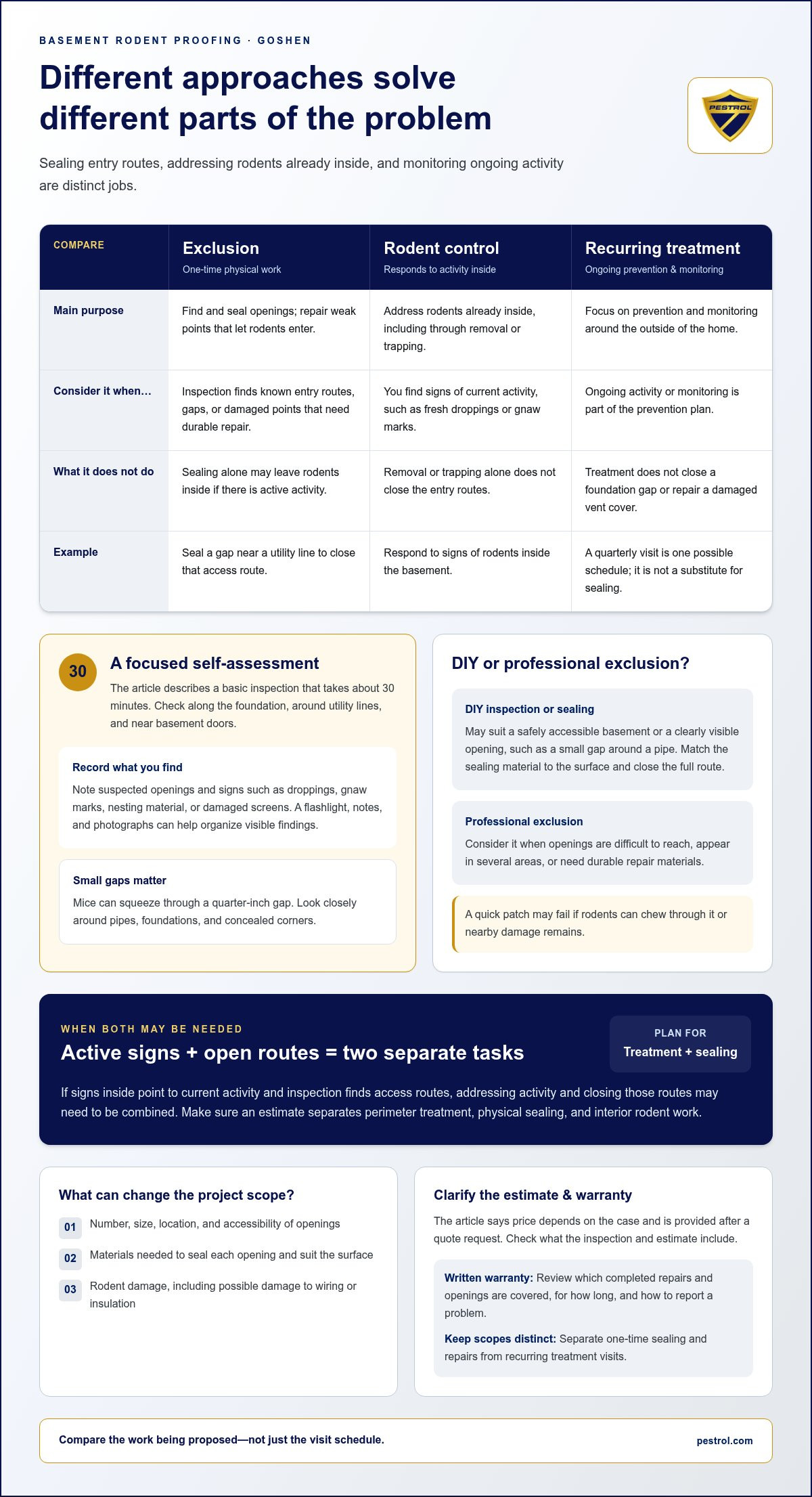
Exclusion blocks rodents from entering; extermination targets rodents already inside. They address different parts of a basement problem. Removing a mouse without sealing its entry route leaves that access open, while sealing openings without addressing active activity may leave rodents inside. In Goshen, the right approach depends on signs of entry, where rodents are active, and the openings around the basement.
A practical first step is a basic self-assessment, which takes about 30 minutes. Look along the foundation, around utility lines, and near basement doors. Note droppings, gnaw marks, nesting material, and damaged screens. Then record each suspected opening and where you found signs. This list helps distinguish a single access point from a wider pattern that may call for broader pest control.
Monthly exterior pest treatment focuses on prevention and monitoring outside the home. It may help manage pest activity around the perimeter, but it won’t close a foundation gap or repair a damaged vent cover. Clarify which areas a treatment covers and whether exterior entry points are inspected. An estimate is easier to assess when it separates perimeter treatment from physical sealing and interior rodent work.
Mouse Control and Rat Control address active rodents, while exclusion addresses the routes they use. Signs can guide the inspection: scratching near a basement ceiling, droppings beside stored boxes, or gnawing around a pipe each points to an area to check. For mice, look for small gaps and concealed corners. For rats, inspect larger openings, damaged materials, and routes near the foundation. Removal or trapping alone does not close those routes.
- Choose DIY inspection when you can safely access the basement and document visible gaps. A flashlight, notes, and photographs can help organize findings.
- Consider professional exclusion when openings are difficult to reach, appear in several areas, or require durable repair materials.
- Address active activity when you find fresh signs, then pair that response with sealing where needed.
DIY sealing may suit a clearly visible, accessible opening, such as a small gap around a basement pipe. Identify the opening, choose material suited to the surface, and close the full route. A quick patch may fail if rodents can chew through it or nearby damage remains. In a more complex basement, a detailed inspection can connect signs of entry with repair needs and the right combination of exclusion and pest control.
One-time exclusion versus recurring pest treatment
One-time exclusion focuses on physical access: identify openings, seal them, and repair weak points. Recurring pest treatment follows a schedule to address ongoing activity and changing conditions. The approaches can complement each other, but they serve different purposes. Sealing a gap near a utility line closes that route; if fresh signs appear inside, treatment may also be needed.
Begin with an inspection that connects evidence to a practical plan. Check basement corners, storage areas, pipe openings, and the exterior foundation. Note any droppings, gnaw marks, or disturbed materials. Then group your findings: access points that need sealing, and signs of current activity that need attention. This makes an estimate clearer by showing what work is being considered.
A customized pest management plan can account for the home’s layout, observed activity, and prevention needs. A basement with recurring signs near stored food, for example, may need a different response from one with a single visible opening. Clarify the scope: what the inspection covers, what treatment addresses, and whether sealing is included. Separating these tasks helps you understand the proposed work and distinguish recurring visits from one-time repairs.
Quarterly pest treatments are one possible recurring schedule, not a substitute for sealing an entry route. Their value depends on what visits include and whether activity persists between appointments. A treatment visit may focus on monitoring and response, while exclusion means locating and closing physical gaps. For a useful comparison, note the visit frequency, included tasks, and any separate repair work. Compare the details, not just the schedule.
- Choose exclusion when the main issue is a known opening that needs a durable physical repair.
- Consider recurring treatment when activity returns or ongoing monitoring is part of the plan.
- Combine approaches when signs inside point to current activity and inspection finds access routes outside.
Home pest protection plans can organize recurring prevention and treatment, while a targeted exclusion project focuses on openings and repairs. Before choosing, match the scope to your findings: note the affected basement area, the signs you observed, and the gaps that need attention. A customized pest management approach can help connect inspection findings with an appropriate prevention plan. Keep sealing work distinct from scheduled visits so you can see what each part is intended to handle.
Sealing materials and warranty coverage
The price depends on the case and is provided after a quote request. Opening size, access, materials, and damage all shape the work. A basement inspection should match each repair material to the surface and the rodents’ access route.
Exclusion Warranty Coverage
An exclusion warranty explains which completed repairs are covered and for how long. Read the written terms for covered openings, repair materials, and how to report a problem. Check whether coverage applies only to the original sealed area or also to nearby locations. A warranty for one basement opening, for example, may not cover a separate gap found later.
Review conditions that could affect coverage, such as damage to a vent cover or changes made after installation. Ask for the completed work and covered locations to be documented in writing. Warranty and financing terms serve different purposes: coverage concerns specified repairs, while financing describes payment obligations. Consider them separately before approving the work.
Common Entry-Point Repair Costs
Sealing gaps and installing vent covers have no single cost because each repair differs. A narrow crack beside a pipe requires different materials and access than a damaged foundation opening. A vent cover’s cost also depends on its size, condition, and fit. The estimate should identify each repair, the material used, and any preparation required before installation.
For a useful comparison, separate labor and materials by repair location. Note whether the work includes removing damaged material, fitting a cover, and sealing its edges. This helps explain why several difficult spaces require a different scope from one accessible gap. Published market ranges for whole-home exclusion appear in the cost section, not as prices for individual repairs.
Material choice affects whether a repair suits the opening. Metal mesh can reinforce spaces around pipes, while mortar or sealant may close gaps in masonry. Vent covers need a secure fit that leaves the intended airflow path clear. An exposed edge can leave rodents access, so inspect the full perimeter after installation.
Seasonal changes matter when planning repairs. In summer, inspect basement vents and exterior openings for loose covers or worn seals. Check that the repair surface is sound before applying sealant; crumbling masonry may need attention first. For a commercial building, include utility penetrations and service areas in the inspection, since those spaces may have different access needs.
- Record each opening’s location and visible condition.
- Match the material to the surface and opening.
- Document finished repairs and written warranty terms.
These steps can also help distinguish an active infestation from an old repair issue. If fresh signs appear near a sealed point, compare the location with the original work record. This can show whether the same repair needs attention or another entry route should be inspected. A clear scope, suitable materials, and written coverage terms make the repair easier to assess.
Average exclusion costs and job-size price ranges
Rodent exclusion costs depend on the number of openings, access, repairs, and materials. The cost of basement rodent proofing in Goshen is best assessed by the specific work required.
Published price ranges for rodent proofing are not Pestrol’s prices. The cost depends on the case and is provided after a quote request. Key factors include the number and condition of entry points, access difficulty, material choice, and any damage requiring repair.
Project size helps explain why estimates differ. A small home with minor sealing needs requires less work than a property with several affected areas. A larger project may involve multiple foundation sections, vents, and utility penetrations. Work extending into an attic or crawlspace adds more locations to inspect and seal.
To compare estimates, make sure each describes the same scope. One may cover a basement gap, while another includes inspection of the foundation and nearby vents. Clarify whether the work includes surface preparation, materials, installation, and cleanup. Separate repair tasks from pest treatment to keep activity management and exclusion work clear.
A simple assessment helps organize details before reviewing a quote. Sketch the basement and mark visible openings, damaged covers, and signs of rodent activity. Note blocked access, stored items, or crumbling masonry. These details help explain why homes with similar layouts may require different labor and repair materials.
- Minor scope: one accessible opening and limited sealing.
- Standard scope: several basement access points requiring inspection and repair.
- Expanded scope: multiple zones or work involving an attic or crawlspace.
These categories describe project complexity, not fixed prices. One gap beside a reachable pipe differs from several concealed openings behind finished surfaces. A loose vent cover may need replacement, while a damaged foundation edge may need preparation before sealing. Access and material requirements change the work involved.
When reviewing an estimate, look for specific locations, tasks, and materials rather than a broad promise. A guarantee should be described in writing, including which repairs it covers and any limits. A “free estimate” label alone doesn’t explain the work or coverage. Compare the documented scope, not just the headline.
Before requesting a quote, prepare your inspection notes and identify areas with fresh signs. Share which basement spaces are accessible and where you’ve noticed damage. This gives the assessment a practical starting point. A clear work description helps you understand what the proposed exclusion covers and which repairs address the entry routes.
Costs depend on the number and condition of openings, access, materials, and any preparation or repairs required. A reachable gap may need limited sealing, while a damaged vent cover or foundation edge can involve additional work. The price is determined after a quote request.
Entry-point severity and rodent damage
Opening size, location, and nearby damage determine how thorough an exclusion inspection needs to be. A small gap can still matter: mice can squeeze through a quarter-inch opening, while rats can enter through a gap the size of a quarter.
A dime-sized hole can admit mice, and a young rat can enter through an opening of the same size. Don’t judge a gap by appearance alone. Check basement corners, pipe penetrations, vents, and foundation joints, then note each opening’s size and nearby signs.
For work in Goshen, New York, ask the local building department whether permits apply to planned changes involving structural elements or vent systems. This clarifies local requirements without assuming one rule applies to every basement repair.
Common signs include droppings, gnaw marks, nesting material, and scratching sounds near walls or stored items. Fresh droppings beside a pipe opening, for example, connect activity to an area that needs inspection. Repeated signs, damaged materials, or activity across several basement spaces make a prompt professional assessment especially useful.
Rodent droppings and urine can contaminate basement surfaces, so avoid disturbing them during an initial inspection. Keep children and pets away from affected areas, and document where signs appear. Chewed wiring also deserves attention: according to the National Fire Protection Association, rodent damage to wiring causes thousands of house fires each year.
Damage can require more than closing an entry point. A thorough assessment should identify whether rodents have affected wiring, insulation, stored materials, or vent covers. Sealing one gap without addressing a damaged cover nearby may leave another route open. The repair plan should connect each opening with its condition and surrounding damage.
The price depends on the number and severity of openings, access, sealing materials, and any damage requiring repair; the exact figure is provided in a quote for your case. A basement with five entry points, for example, may need less sealing work than one with twenty-five, especially if some openings are difficult to reach.
Before arranging an inspection, record each opening’s location, nearby damage, and signs of activity. These details help focus the assessment on entry routes and repairs, rather than treating every visible mark as the same problem.
Pestrol: Home Pest Protection – Basic
Pestrol’s Home Pest Protection – Basic is an option when concerns extend beyond a single basement opening. Exclusion blocks entry routes, while a home pest protection plan may suit homeowners looking for broader pest management. Keep these needs distinct: a plan and physical basement repairs address different parts of the problem.
If you’ve noticed rodent activity alongside other household pest concerns, consider which areas and issues need attention. Pestrol also offers Home Pest Protection – Plus and Home Pest Protection – Premium. Choose a next step based on the concerns you want addressed, rather than assuming a plan replaces sealing or repairs.
Contact Pestrol to discuss Home Pest Protection – Basic and your home’s pest concerns.
Take the Next Step Toward a Protected Basement
Make your next decision easier by noting the basement areas you want addressed and any concerns beyond rodent entry. This gives your conversation a clear focus, whether you need targeted rodent proofing or broader help with household pests. Understanding rodent proofing basement cost in Goshen starts with matching the work to your home’s specific needs.
Pestrol offers Rodent Proofing for entry-point concerns, along with Home Pest Protection – Basic, Home Pest Protection – Plus, and Home Pest Protection – Premium for broader pest-management needs. Share what you’ve observed so the conversation can focus on the right next step for your home.
A thoughtful plan helps you move forward with greater confidence and take practical steps toward a more protected home.
Frequently Asked Questions
What is the average cost to rodent-proof a basement in Goshen, New York?
There isn’t one fixed average for every basement; the cost of rodent proofing a basement in Goshen depends on the work required. A basement with accessible gaps and sound surrounding surfaces differs from one needing repairs to damaged vents or foundation areas. The estimate should outline the locations, labor, materials, and repairs included, so you can compare like-for-like scopes instead of relying on a broad average.
How much do rodent inspection and exclusion services cost in Goshen?
Inspection and exclusion costs depend on what the visit covers and what repairs follow. A visual assessment of an accessible basement differs from investigating concealed areas, documenting suspected routes, and sealing openings. The quote should distinguish inspection, rodent treatment, and physical repairs. A vent-cover replacement and sealing around a pipe, for example, are separate tasks even when included in one basement work plan.
What factors affect the cost of basement rodent proofing?
The main factors are the number and location of openings, surface condition, access, materials, and related damage. A finished basement may require extra access work to reach a suspected route. A cracked surface may need repair before sealing can hold. Ask for each work area to be described separately, including whether the scope covers cleanup or damaged components, so you can see what drives the proposed work.
Do pest control companies in Goshen offer warranties or follow-up visits for rodent exclusion?
Warranty and follow-up terms vary by service, so don’t assume a treatment plan covers exclusion repairs. Pestrol’s Home Pest Protection packages state: “WE KEEP COMING BACK AT NO COST UNTIL PEST ARE GONE.” This wording applies to those packages; it does not establish coverage for standalone sealing work. Review the written terms for the specific repair, including which locations and follow-up tasks are covered.
Can homeowners rodent-proof a basement themselves, and what materials and costs are involved?
Homeowners can handle an accessible, clearly identified opening if they can match the repair to its surface and close the full route. A vent cover, for example, must fit securely, while a gap around a pipe needs a suitable seal. Material and tool costs depend on the repair and the area’s condition. Photograph the opening first, then inspect the finished edge for remaining gaps.