




Mice can squeeze through gaps smaller than many residents expect. Preventing mice from entering an apartment building in NYC starts with sealing openings larger than a quarter inch, as the CDC recommends, and checking shared routes around pipes, wiring, and walls. Sealing one gap helps, but a building-wide problem requires attention beyond a single apartment.
Clean rooms and securely stored food help, but they cannot block mice moving through shared spaces or entering near trash and exterior openings. That can be frustrating when activity returns after cleaning or setting traps. Practical prevention reduces food sources and makes entry more difficult.
This guide explains where mice find food, how to spot common entry points, and why coordinated action in apartments and common areas matters. It also covers how shared infrastructure can create routes between floors, helping you focus on prevention beyond the signs inside your unit.
Key Takeaways
- Store food securely, keep covered trash closed, and remove crumbs and grease that can attract mice.
- Check gaps near doors, baseboards, plumbing, and wiring, since even small openings can provide access.
- Report mouse activity promptly and coordinate inspections and control across apartments and common areas.
- Reduce outdoor attractants by managing garbage, pet food, and vegetation around the building.
- Look beyond a clean apartment: mice can move between units through shared walls and building spaces.
1. What Food Sources Are Attracting Mice to Your NYC Apartment?
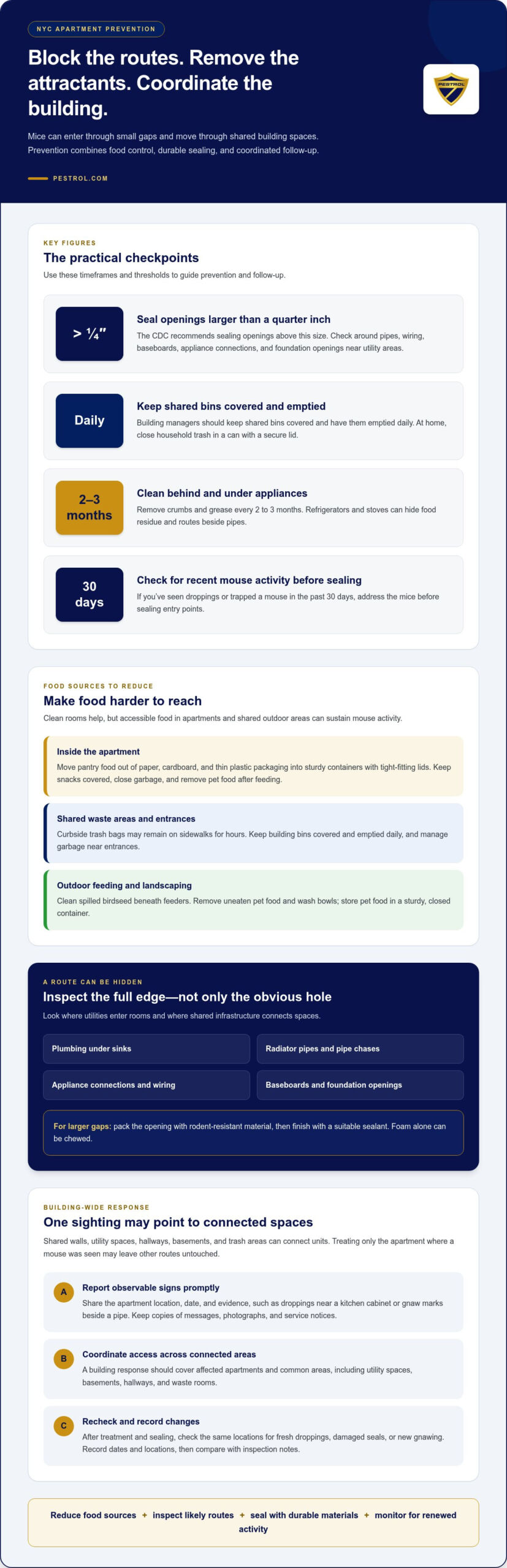
Food and shelter go together: crumbs can sustain mice after they enter through a small gap. In New York City, curbside trash bags may remain on sidewalks for hours, giving rodents access to food near building entrances. Inside, uncovered snacks, open garbage, and pet food can keep mice coming back. Put household trash in a can with a secure lid and keep it closed. Building managers should keep shared bins covered and emptied daily.
Protect pantry staples before checking hidden entry points. Move food from paper, cardboard, or thin plastic packaging into sturdy containers with tight-fitting lids. Check closets and kitchen cabinets for torn packages, droppings, or gnaw marks. Discard food with suspicious holes because mice may have touched it. Clean crumbs and grease behind and under appliances every 2 to 3 months. A refrigerator or stove can hide both food residue and a path beside a pipe.
Inspect where utilities enter each room. Check plumbing under sinks, radiator pipes, appliance connections, wiring, baseboards, and foundation openings near utility areas. The CDC recommends sealing openings larger than a quarter inch to help keep mice out. Inspect the full edge, not just the most visible hole. For larger gaps, pack the opening with rodent-resistant material, then finish with a suitable sealant. Foam alone can be chewed, leaving a route open.
Choose a control plan that begins with inspection, not just scattered traps. Map droppings, gnaw marks, food sources, and gaps; note whether activity appears near a radiator, pipe chase, or appliance. If you’ve seen droppings or trapped a mouse in the past 30 days, address the mice before sealing entry points. Otherwise, sealing active routes without considering current activity can leave rodents moving inside the apartment.
After treatment and exclusion, recheck the same locations for fresh droppings, damaged seals, or new gnawing. Record each sign’s date and location, then compare it with inspection notes. Check trash areas and food containers, too. Preventing mice from entering an apartment building in NYC takes a combined approach: reduce food sources, inspect likely routes, seal gaps with durable materials, and monitor for renewed activity.
2. Coordinating rodent control across units and common areas
In New York City, landlords or property owners must provide habitable conditions, including addressing pest infestations. Building management generally coordinates inspections, repairs, and access. Tenants should report mouse activity promptly and cooperate with scheduled service.
A mouse in one apartment may signal activity elsewhere. Shared walls, utility spaces, hallways, basements, and trash areas can connect units. Treating only the apartment where a mouse was seen may leave other routes and hiding places untouched. A building response should cover affected units and common areas, not just one room.
Report sightings to the owner or manager promptly. Include the apartment location, date, and evidence, such as droppings near a kitchen cabinet or gnaw marks beside a pipe. Keep copies of messages, photographs, and service notices. A clear record helps management determine whether activity is isolated or recurring across floors.
Ask the manager to coordinate pest control in connected spaces, including reported apartments, shared utility areas, basements, hallways, and waste rooms. Residents can help by following sanitation instructions and allowing access for scheduled service. If an appointment is missed, an untreated area may remain accessible to rodents.
Keep responsibility clear. Tenants should promptly report pests, maintain reasonable sanitation, and provide access for service. Owners remain responsible for addressing building conditions and infestations; check the lease for terms about pest-control duties and extermination fees. If the owner or manager doesn’t correct the problem, NYC tenants can call 311.
When making a 311 complaint, share the building address and describe the problem plainly. Note when you reported it to management and what response followed. Documentation gives housing officials specific details to review. Avoid making unsupported assumptions about the source; record observable signs and locations instead.
Managers can support effective service by sharing appointment instructions with affected residents, arranging access to common areas, and recording inspected locations. Follow-up matters: compare new reports with earlier sightings and note whether activity has shifted to another unit or shared space. This information helps guide the next inspection instead of repeating an incomplete response.
For recurring activity that needs coordinated inspection and treatment, professional rodent control can help address the problem across relevant areas. A building-wide plan works best when residents report signs, management arranges access, and service can inspect both apartments and common spaces.
3. Outdoor food sources such as bird feeders and pet food
Food sources can begin outside the building. Bird feeders may scatter seed onto sidewalks, ledges, and planting beds, where mice can forage near entrances. Building management should clean beneath feeders and remove seed buildup. Check nearby landscaping and dumpster areas for food scraps. Even a spotless apartment kitchen cannot prevent accessible outdoor food from drawing rodents toward the building and its sheltered openings.
Pet food needs the same attention. Cornell’s pest management program identifies pet food left out overnight as a common mouse attractant. Feed pets indoors when possible, then remove uneaten food and wash the bowl. If a building’s outdoor area is used for feeding, don’t leave bowls or food scraps behind. Keep pet food in sturdy, closed containers rather than an opened bag beside a door.
Make garbage handling consistent. Put tied garbage bags down the chute or in building trash bins daily. Don’t leave bags in hallways, beside the entrance, or on a landing while waiting for another trip. Managers can reduce outdoor rodent activity by controlling trash, trimming vegetation, and arranging regular exterior service. Check dumpster surrounds and parking areas for spilled food.
Protect food before mice can reach it. Transfer cereal, rice, snacks, and pet kibble from paper, cardboard, or thin plastic packaging into sturdy containers with secure lids. Wipe kitchen counters after preparing food and clear crumbs from shelves and drawers. Keep garbage covered, and clean food residue from reusable containers before storing them. These steps limit easy meals and make chewed packaging easier to spot.
Chewed packages, droppings, and gnaw marks are signs to act on, not simply clean around. Mice may contaminate food, and rodent activity can spread bacteria and disease. Discard food products with suspicious holes because mice may have touched them. Note where you found the damage, such as a pantry shelf or a bag near the kitchen bin, and report recurring signs to building management.
For droppings, avoid scattering debris while cleaning. Wear disposable gloves, then disinfect the affected hard surface. For hard-to-remove stains, a mild bleach solution uses 1/2 cup of bleach in 1 gallon of water. Clean the spot and surrounding surface, then discard contaminated food packaging. Keep children and pets away from the area during cleanup, and wash your hands after removing gloves.
Outdoor and indoor habits work together. A clean feeder area, daily garbage disposal, covered pet food, and sealed pantry containers reduce available food. If you keep finding damaged food, share its location and the date with management. This record can help connect an indoor sighting with a nearby dumpster, feeder, or shared waste area.
4. Why isn’t a clean apartment enough to keep mice out?
A spotless kitchen may still share walls with an untreated mouse route. In multi-unit buildings, mice travel through wall voids, pipe openings, and other shared spaces. They can move from a basement or neighboring apartment into a clean unit. Crumbs and food waste may attract them, but they are not the only reason activity continues. A sighting in one apartment can signal a broader building problem.
That’s why treating one unit may not stop an infestation. Traps may catch a mouse inside the affected apartment while others keep moving through shared walls or utility spaces. If entry points remain open in a neighboring unit or common area, mice can return. Cleaning and sealing one home still helps, but it cannot address untreated routes beyond that unit.
In New York City, landlords must provide habitable living conditions, including addressing pest infestations. The Housing Maintenance Code requires landlords to address infestations that cross unit lines. A building response should consider reported apartments and connected spaces, rather than treating each sighting as isolated. Management can arrange inspection and pest control across affected units and common areas, then coordinate access with residents.
Give management useful details as soon as you notice activity. Record the date, room, and exact location of droppings, gnawing, or a mouse sighting. For example, note whether signs appeared beside a shared pipe chase, under a sink, or along a wall bordering another unit. Photos can show changes over time. Keep copies of messages to the landlord and any replies.
Track each pest-control visit, too. Write down the date, areas inspected, and any follow-up instructions. If signs return, add the new location and date to the same record. This timeline can show whether activity persists in one unit or shifts between floors. It also helps management identify areas for another inspection, such as a basement passage connected to reported apartments.
Tenants should report mouse activity promptly and allow access for scheduled service. Keep notes factual: describe what you saw, not what you assume caused it. If the owner or manager doesn’t correct the problem, NYC tenants can call 311. Clear records of sightings, exterminator visits, and landlord communications help explain the history of a cross-unit infestation.
A clean home remains important, but it is only one part of prevention. Pair regular cleaning with prompt reporting and attention to shared routes throughout the building. When mice keep appearing despite a tidy apartment, focus on connected spaces, recurring entry points, and whether neighboring units or common areas need inspection.
5. Mice entering and moving through shared building infrastructure
A mouse seen upstairs may have entered much lower down. Mice can climb through wall voids and follow electrical wiring between floors. Plumbing chases, radiator pipes, and gaps around utility lines can connect apartments with basements or hallways. This shared infrastructure gives rodents routes indoors, even when an individual unit has no obvious exterior opening.
The opening can be tiny. According to the Centers for Disease Control and Prevention, mice can fit through a hole 1/4 inch or 6 millimeters in diameter. Inspect where pipes and wiring pass through floors, walls, and cabinets. Check radiator connections and openings behind appliances, too. A narrow gap at one floor can lead into a concealed route that continues through the building.
Seal the route, not just the visible room. Exclusion work should close gaps around pipes, wiring, and structural openings. For holes wider than 1/2 inch, use stainless steel wool or copper mesh before sealing the opening. Steel wool alone may not last; combine it with spackle or caulk to secure the repair. Choose materials suited to the location, especially near warm radiator pipes or damp basement penetrations.
Construction, renovations, and nearby sidewalk or sewer work can disturb existing openings and create new pathways. Before work begins, building management should identify pipe penetrations, basement access points, utility rooms, and exterior openings near the work area. Protect exposed openings, keep doors to shared spaces closed, and remove construction debris that could conceal a route. After each phase, inspect the affected areas and seal newly exposed gaps.
During renovations, coordinate inspections with the people handling plumbing, wiring, and structural repairs. A newly installed pipe can leave an unsealed gap around it; removing a cabinet may reveal an opening behind it. Record each location before finishes cover it, then confirm the opening is closed. After sidewalk or sewer work, inspect the building edge and basement, especially where utilities enter.
Use a building map or written log to track each opening. Record the floor, room, utility, and repair material. If droppings or gnawing appear beside a radiator on one floor, compare the location with the pipe route above and below. This makes a vague mouse problem a traceable pathway. Recheck repairs during follow-up, since a fresh gap or damaged seal can reopen access.
Shared infrastructure needs coordinated inspection and durable exclusion, not isolated patching. Schedule mouse control
Pestrol: Home Pest Protection – Basic
Pestrol’s Home Pest Protection – Basic is a residential pest management option for households seeking support with pest concerns. After checking food sources and entry routes, consider this plan when you want help managing broader home pest issues, not only a single mouse sighting. Pestrol also offers Home Pest Protection – Plus and Home Pest Protection – Premium, giving households additional plan options to consider. For recurring mouse activity, describe the signs you’ve found and the areas affected when discussing your needs. Clear details can help guide the conversation toward a suitable next step. Contact Pestrol to discuss Home Pest Protection – Basic and your household’s pest concerns.
Make prevention part of your building routine
Make mouse prevention an ongoing building priority, not a response to one sighting. Agree on a straightforward process for reporting activity, arranging access, and tracking repairs. This shared routine gives residents and management a clear way to monitor the problem and address recurring concerns. Preventing mice from entering apartment buildings in NYC depends on steady attention from the people who live in and maintain the property.
For broader household pest-management support, Pestrol offers Home Pest Protection – Basic, Home Pest Protection – Plus, and Home Pest Protection – Premium. Consider which option fits your home’s needs, and share the specific pest concerns you want addressed when you reach out.
Clear communication and a consistent prevention routine help you take practical steps toward a more comfortable home.
Frequently Asked Questions
How Can You Seal NYC-Specific Entry Points to Keep Mice Out?
Seal small openings and check the less-visible routes around a unit’s perimeter. According to the Centers for Disease Control and Prevention, mice can fit through a hole 1/4 inch or 6 millimeters in diameter. Inspect door thresholds, vent screens, and utility openings, especially where a basement or hallway meets an apartment. Use durable materials suited to each opening, then revisit repairs if you see fresh gnaw marks or droppings nearby.
What Are Your Rights as an NYC Tenant When Mice Won’t Go Away?
Report the infestation to your landlord or property manager promptly, and keep a written record. Save dated photos, messages, and notes describing when and where you saw mice. If the owner or manager doesn’t correct the problem, NYC tenants can call 311. Your lease may also describe pest-control responsibilities and extermination fees, so review those terms while documenting reports and any scheduled service.
What Food Sources Are Attracting Mice to Your NYC Apartment?
Look for food mice can reach along their route, not only in the pantry. Check for crumbs beneath a toaster, food residue in recycling, and pet bowls left out overnight. Cornell’s pest management program identifies pet food left out overnight as a common mouse attractant. An evening check of the floor, feeding area, and waste containers can help reveal which routine is providing food.
What Role Do Water, Warmth, and Shelter Play in Drawing Mice Indoors?
Water, warmth, and sheltered nesting spaces make buildings more inviting, especially as outdoor temperatures drop. Mice seek indoor shelter most aggressively during fall and winter. The New York State Department of Health identifies standing water in basements and HVAC drip pans as overlooked moisture sources. Report leaks or pooled water to building management, and note whether mouse signs appear near damp utility areas or sheltered storage spaces.
What’s the Most Effective Way to Keep Mice Out of Your NYC Home for Good?
Use an ongoing prevention routine that combines inspection, exclusion, sanitation, and follow-up. Record where activity appears, then address accessible food and likely openings. Recheck repairs and monitoring points for fresh signs instead of treating one visit as the finish line. In a multi-unit building, involve management because shared spaces and neighboring apartments can affect activity inside your home.
Why Do NYC Buildings Attract Mice More Than Homes Elsewhere?
New York City buildings may combine nearby food waste with connected, sheltered routes. Sidewalk trash, shared basements, utility spaces, and closely adjoining apartments can give mice both food and pathways indoors. Building layouts vary, so focus on where those conditions meet at your property. Consider the relationship between waste areas, basement access, and reports from nearby units to identify possible pressure points.
Why isn’t a clean apartment enough to keep mice out?
Cleaning removes food residue, but it does not close routes through walls, utility spaces, or neighboring units. A mouse may enter from a shared area even if your apartment has no crumbs or exposed food. If activity returns after cleaning, note the room and nearby wall or pipe. Share the pattern with building management so an inspection can include the adjoining space, not only your unit.
What NYC laws require landlords to prevent mice and rodent infestations in apartment buildings?
New York City landlords must provide habitable living conditions, including addressing pest infestations. The Housing Maintenance Code requires landlords to address infestations that cross unit lines. Report the problem to the owner or manager and keep copies of your communications. If it remains unresolved, tenants can call 311. These steps help document the issue and connect a complaint with the building’s response.