



The first sign that treatment is working may be a dead roach, not an empty room. If you’re wondering how long after extermination you’ll see dead roaches, some may appear within hours or days, with more often showing up during the first one to two weeks. Roach activity can even rise during the first week as treated insects leave their hiding places.
Seeing a live roach after treatment can feel discouraging, but it doesn’t automatically mean the treatment has failed. Products take time to work, and newly hatched roaches may still emerge from egg cases. What matters is how activity changes over time.
This guide explains when to expect dead roaches, why live ones may remain, and how infestation size and treatment affect the timeline. You’ll also learn how to clean without disturbing treated areas, what egg cases can mean for progress, and when continued activity may call for follow-up treatment. With a clearer picture of what’s normal, you can track changes and know what to expect next.
Key Takeaways
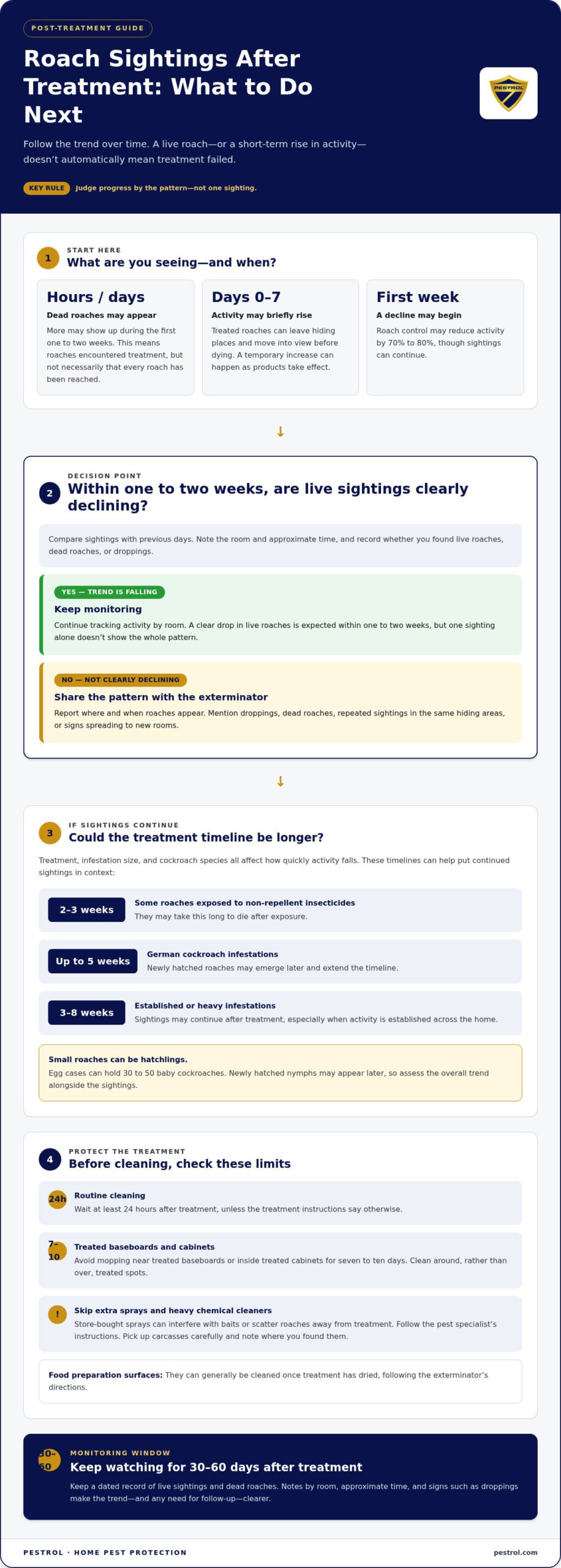
- Judge progress by the trend in sightings, not by one live roach; treatment type, infestation size, and species all affect how quickly activity declines.
- Track roach signs over time, since newly hatched nymphs and established infestations can extend the treatment timeline.
- Follow the treatment instructions before cleaning: routine cleaning should generally wait at least 24 hours, and avoid mopping treated baseboards for seven to ten days after treatment.
- Egg cases can hold 30 to 50 baby cockroaches, so seeing small roaches later may be part of the treatment process.
- Keep monitoring for 30-60 days after treatment and note ongoing activity to help determine whether follow-up care is needed.
How long does it take for roaches to die after exterminator visits?
Dead cockroaches may appear within hours or days after treatment, with more often seen during the first one to two weeks. The timeline depends on the treatment, infestation size, and cockroach species.
Treatment factors affecting die-off
The treatment method, infestation size, and cockroach species all affect how quickly roaches die. Some roaches exposed to non-repellent insecticides may take two to three weeks to die. German cockroach infestations can take up to five weeks to address, partly because newly hatched roaches may emerge later. These timelines help explain why one treatment doesn’t always result in an immediate, complete absence of roaches.
Dead roaches and post-treatment activity
Finding dead roaches after treatment is a sign that cockroaches have encountered the treatment, but it doesn’t mean every roach has been reached. Products can flush roaches from hiding places before they die, so live sightings may briefly rise alongside dead ones. You may see more dead roaches within hours or days, especially near places where roaches hide or travel.
Roach activity in the first days
During days 0-7 after treatment, cockroach activity may increase as treated roaches leave their hiding places. That short-term change can feel alarming, but it can happen as products take effect. After exposure, some roaches move into view before dying. Keep a simple dated record of live sightings and dead roaches; the pattern over several days is more useful than one sighting alone.
Avoiding interference with professional treatments
Don’t add store-bought sprays after professional treatment, because they can interfere with baits. Repellent aerosols sprayed over professional baits may scatter surviving roaches away from the treatment. Avoid heavy chemical cleaners near treated areas when removing dead roaches. Instead, pick up carcasses carefully and note where you found them. Follow the pest specialist’s instructions for treated rooms, surfaces, and products used.
How long to wait before cleaning
Wait at least 24 hours before routine cleaning after roach pest control, unless the treatment instructions say otherwise. Food preparation surfaces can generally be cleaned once the treatment has dried, following the exterminator’s directions. Avoid mopping near treated baseboards or inside treated cabinets for seven to ten days after treatment, since cleaning those areas may disturb the treatment. Clean around, rather than over, those spots.
Why Am I Still Seeing Roaches After Treatment?
Live roaches can remain visible as treatment takes effect, and activity may not drop immediately. Contact the exterminator if sightings aren’t clearly declining within one to two weeks or continue beyond that; report where and when you see them.
Expected activity decline during the first week
During the first week, roach control may reduce activity by 70% to 80%, though sightings can continue. A clear drop in live roaches is expected within one to two weeks after treatment. Compare each day with the days before service, rather than judging results from one night. A simple record of sightings by room can help show whether activity is trending down.
Signs of an active infestation
An active cockroach infestation may leave live or dead roaches, as well as droppings that look like tiny brown specks, spots, or smears. Check walls, shelves, and inside cabinets for these marks. Note whether you find them near food and water, such as around a sink or pantry. These observations help distinguish isolated sightings from ongoing signs that roaches are using the home.
Increased activity after spraying
Sprays and other treatments can drive roaches from hiding places, making activity appear higher shortly after service. This temporary change can happen as cockroaches move through treated areas before dying. Species and infestation size also affect how quickly activity falls. Some cockroaches may resist certain home extermination methods, so consider repeated sightings alongside other signs and the overall trend.
Look at the pattern, not just the count. One roach near a doorway is different from repeated sightings in a kitchen cabinet, especially when droppings appear nearby. The species matters, too: the time needed to control an infestation depends largely on the species and its size. Established or heavy infestations may continue producing sightings for three to eight weeks after treatment.
Keep useful notes for the follow-up conversation:
- Record the room and approximate time of each live sighting.
- Note whether you found droppings, dead roaches, or both.
- Track changes from the first week into the one-to-two-week period.
These details help clarify whether activity is decreasing or continuing in the same hiding areas. If live roaches keep appearing, or the signs spread to new rooms, share that pattern with the exterminator. A targeted roach control service can address an ongoing cockroach infestation and its sources, including access to food and water.
Infestation severity and follow-up visits
The treatment plan and timeline depend on the home, infestation size, and cockroach activity. Many infestations improve significantly within one to three weeks, while severe cases may need additional visits.
How infestation severity affects treatment
A small, localized problem may require a different control plan from roaches appearing across several rooms. The professional considers where activity occurs, the signs found, and likely hiding places before deciding what needs attention. Cracks, crevices, cabinets, and other harborage areas can reveal where roaches travel or shelter. Widespread or persistent signs may mean more areas need treatment and closer monitoring.
Complete elimination can take several weeks, and severe infestations may require multiple follow-up visits. One visit may reduce activity without reaching every roach or addressing every hiding place. That’s why a few continuing sightings should be considered alongside the overall trend, not treated as proof that the plan has failed. Keep track of rooms with activity and any changes after each visit.
What follow-up visits do
Follow-up visits allow pest control professionals to address roaches that remain and adjust treatment based on activity. Treatments are often scheduled one to two weeks apart over a four-to-six-week period. The schedule depends on the infestation’s severity and treatment type, so it can vary from home to home. Each visit gives the specialist a chance to assess results and focus on areas where signs continue.
Follow the recommended treatment instructions between visits. Avoid disturbing treated areas, and don’t add store-bought sprays that may interfere with professional baits. Keep notes on new sightings, including where they occur and whether you also find droppings. A kitchen sighting near a cabinet, for example, gives more useful information than a count alone.
Monitoring between visits
Regular inspections help show whether roach activity is declining or returning. Check the areas where activity was previously reported, including cracks and crevices, and note any fresh signs. Continue monitoring for 30-60 days after treatment. This longer view can help distinguish lingering activity from a renewed infestation and gives follow-up visits a clearer focus.
Repeated treatments and inspections are recommended for long-term control. Follow-up care can also help address conditions that allow roaches to persist, such as accessible food or moisture. Store food properly, reduce standing moisture, and maintain routine cleaning without washing treated areas too soon. These steps support the treatment plan but don’t replace scheduled visits when the infestation is severe.
Use each follow-up as a progress checkpoint. Share your dated notes, point out rooms where activity continues, and describe any new signs since the previous visit. If sightings decline, that information helps track improvement; if they remain steady or spread, it helps focus attention on affected areas. Continued inspection matters because a complete control plan may extend beyond the initial treatment.
Areas to avoid cleaning immediately
After treatment, protect the treated areas from cleaning that could disturb the products. Routine cleaning should generally wait at least 24 hours, and treated baseboards need extra care. The pest control professional’s instructions take priority because the right approach depends on the treatment and situation. Before wiping a surface, identify which areas were treated and which are safe to clean.
Pay special attention to baseboards, cracks, and crevices where roaches may travel or hide. Avoid mopping near treated baseboards or inside treated cabinets for seven to ten days after treatment. Water and cleaning can remove product from those surfaces, reducing contact as cockroaches move through the area. For example, clean the open floor while steering clear of a treated edge.
Food preparation surfaces are different from treated edges. They can generally be cleaned after the treatment has dried, following the exterminator’s instructions. Don’t assume every kitchen surface has the same treatment or cleaning directions. Check the areas identified during service, then clean the countertop without spreading cleaner onto nearby treated cabinet interiors or baseboards.
Remove dead roaches promptly to maintain hygiene, but avoid heavy chemical cleaners around treated spots. Use careful, targeted cleanup instead of spraying or scrubbing the surrounding area. If you find a carcass beside a treated cabinet, pick it up without washing the cabinet interior. Note where you found it; that location can help show where activity continues.
- Wait at least 24 hours before routine cleaning.
- Keep mops away from treated baseboards and cabinet interiors for seven to ten days.
- Clean food preparation surfaces after treatment dries, as directed.
- Remove dead roaches promptly, without heavy chemical cleaners near treatment.
Seeing a live German cockroach in the first days doesn’t mean every treated surface should be washed. Roaches may leave hiding places after exposure, so preserving treatment on travel paths matters. If you’re unsure which edge or cabinet was treated, follow the pest control professional’s written or spoken directions instead of cleaning broadly. This keeps treated areas intact while letting you maintain ordinary hygiene elsewhere.
Cleaning timing also matters after follow-up visits, since newly treated areas need the same care. Keep a simple note of when treatment occurred and which spots to avoid. If a baseboard or cabinet needs cleaning before the recommended period, follow the specific instructions provided for that treatment. Avoid adding store-bought sprays or repellent aerosols over professional baits, since they can interfere with roach control.
Egg cases and newly hatched nymphs
A cockroach egg case can explain why small roaches appear after treatment. Cases can measure a quarter-inch to a half-inch long and an eighth-inch to a quarter-inch wide, making them easy to miss around kitchen cabinets, cracks, and crevices.
Each case can hold 30 to 50 baby cockroaches. That means one overlooked case may lead to several newly hatched nymphs appearing over time. Their presence doesn’t necessarily mean adult roaches survived in the same hiding place. It may mean eggs were already developing before treatment.
Newly hatched nymphs encounter residual treatment as they move around after hatching. They’re expected to die before reproducing, but may be visible while moving through treated areas. This helps explain why homeowners might notice small roaches after adult activity starts to decline. Record where you see them, especially near cabinets or cracks and crevices.
Egg cases can be difficult to spot because they may sit in protected areas rather than on open surfaces. Check accessible edges around kitchen cabinets, behind appliances, and near gaps where pipes enter walls. Don’t pull apart treated areas or clean away treatment while inspecting. Follow the pest control professional’s directions for examining or cleaning those spots.
Size can offer a clue, but it doesn’t confirm the source. A small roach found near a cabinet may be a nymph, while an egg case nearby suggests potential hatching. Note the location, date, and whether you’ve seen similar roaches elsewhere. This practical record helps distinguish an isolated sighting from a pattern that needs attention.
An effective pest control plan accounts for what happens after hatching, not only the adult roaches visible on treatment day. Residual products can affect nymphs as they move through treated areas, while inspections help reveal continuing activity. Store food properly and reduce moisture around sinks, since food and water can support roaches that remain in the home.
After treatment, continue watching for newly hatched nymphs and adult roaches. Monitor areas where you previously found egg cases, including kitchen cabinets and protected crevices. If sightings continue or spread, share your notes and locations with the pest control professional. That information can help focus follow-up attention on active areas rather than relying on a single sighting.
For guidance on ongoing cockroach activity, get help with roach control
Pestrol: Home Pest Protection – Basic
Pestrol’s Home Pest Protection – Basic is an option for homeowners looking for residential pest management. If roach sightings continue after treatment, keep a record of where and when they appear. Those details can help guide a conversation about the pest concern and the right next step. Pestrol also offers Home Pest Protection – Plus and Home Pest Protection – Premium for homeowners considering other plan levels. Discuss ongoing pest concerns and available protection options rather than adding store-bought sprays that could interfere with treatment already in place.
Choose a Clear Next Step for Your Home
Knowing how long after extermination you’ll see dead roaches can help set expectations, but your next decision is what support makes sense going forward. If sightings continue or you want a broader approach to household pest concerns, Pestrol offers Home Pest Protection – Basic, Home Pest Protection – Plus, and Home Pest Protection – Premium. Discuss your situation and the type of help you’re looking for, then decide whether one of these plans fits your needs.
A focused conversation can turn uncertainty into a practical plan. Share what you’ve noticed and what matters most in your home, whether that’s addressing roaches or considering ongoing pest protection. You don’t have to figure out every detail alone.
Take the next step at your own pace and feel better prepared to protect your home.
Frequently Asked Questions
Is it normal to see baby roaches after the house was sprayed?
Yes, small roaches can appear after treatment because egg cases may hatch later. For example, a homeowner might see tiny roaches near a kitchen cabinet even as larger roaches become less common. Note their size and location, then compare those observations with earlier sightings. A cluster in one area gives a more useful clue than a single nymph crossing an open floor.
Need Help Getting Rid of Roaches?
Pestrol’s Roach Exterminator service helps address active roach problems. Pestrol serves Manhattan, Bronx, Chester, Cornwall, Crawford, Goshen, Greenville, Highlands, Minisink, Monroe, Montgomery, Mount Hope, New Windsor, Newburgh, Palm Tree, Tuxedo, Wallkill, Warwick, Wawayanda, and Woodbury. Share where you’ve seen roaches and what signs you’ve found, such as droppings or activity near an appliance. That context helps focus the discussion on the infestation in your home.
Should I leave dead roaches where they are?
No. Remove dead roaches promptly to maintain hygiene, but avoid heavy chemical cleaners around treated areas. A tissue or disposable paper towel lets you pick up a carcass without scrubbing nearby surfaces. If you find several in different rooms, note each location before cleanup. Those details can help show whether roaches are appearing in one concentrated area or across the home.
How soon after professional cockroach extermination should dead roaches appear?
Dead roaches can appear within hours or days after professional treatment. The exact timing depends on the treatment and the roaches’ exposure, so one day without sightings doesn’t tell the whole story. If you’re asking how long after extermination you’ll see dead roaches, look for changes over several days. Record where carcasses appear, especially near areas where you previously noticed activity.
How long does it take for cockroach bait to kill roaches after treatment?
Bait timing depends on the formulation and when roaches encounter and feed on it. Bait isn’t the same as a spray that contacts a roach directly, so results can build as roaches find the bait. Keep bait placements undisturbed and don’t apply repellent aerosols over them. If roaches avoid a placement or activity continues, note the location for the pest specialist.
How long can dead roaches continue appearing after extermination?
Dead roaches can continue appearing during the first one to two weeks after treatment as affected insects emerge from hiding places. Newly hatched nymphs can also contribute to later sightings. Remove carcasses as you find them and record the dates and locations. If dead roaches keep appearing alongside live activity, share that pattern during follow-up rather than relying on carcass counts alone.
Why are more roaches visible after pest control treatment?
Treatment can flush cockroaches from hiding places, so more may become visible shortly after service. A roach crossing the floor after treatment could be reacting to exposure rather than settling into a new area. Track whether sightings stay near previous hiding spots or spread elsewhere. That distinction helps describe the change clearly during a follow-up conversation.
How long does cockroach spray take to work?
Sprays and dusts may show strong results within several days to a week after treatment. The timing depends on the product and where roaches encounter it. Don’t add store-bought sprays around professionally treated areas, since they can interfere with baits or scatter roaches. Follow the treatment instructions and record sightings during that first week to track changes accurately.