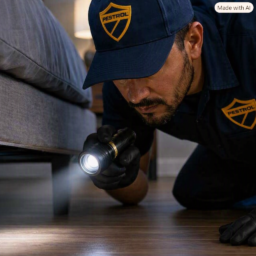




A bed bug finding in one apartment doesn’t automatically mean every unit needs an inspection. A bed bug inspection in Riverdale and the Bronx should begin with the apartments directly above, below, and beside the affected home. This focused approach helps assess whether the concern may have spread through the building.
It’s understandable to worry about a bite or a mark on the bedding, especially in a multifamily building. Bites alone don’t confirm bed bugs, so look for other signs too, such as blood stains or the insects themselves.
This guide explains what an inspection can detect, which signs to look for, and when a finding in one unit may warrant checking nearby homes. You’ll also learn how an inspection can clarify the next step, whether the concern appears isolated to one apartment or calls for wider attention.
Key Takeaways
- A thorough inspection can help distinguish a confirmed infestation from a concern that needs closer assessment.
- Learn which areas an inspection examines and how a building’s layout can shape the scope of checks beyond the first apartment.
- Recognize how bed bugs and their traces may appear, so you can describe what you’ve noticed more clearly.
- Understand when Pestrol’s Bed Bug Treatment may be a practical next step after signs of an infestation are identified.
Bed bugs in a Bronx unit: Inspect the whole building?
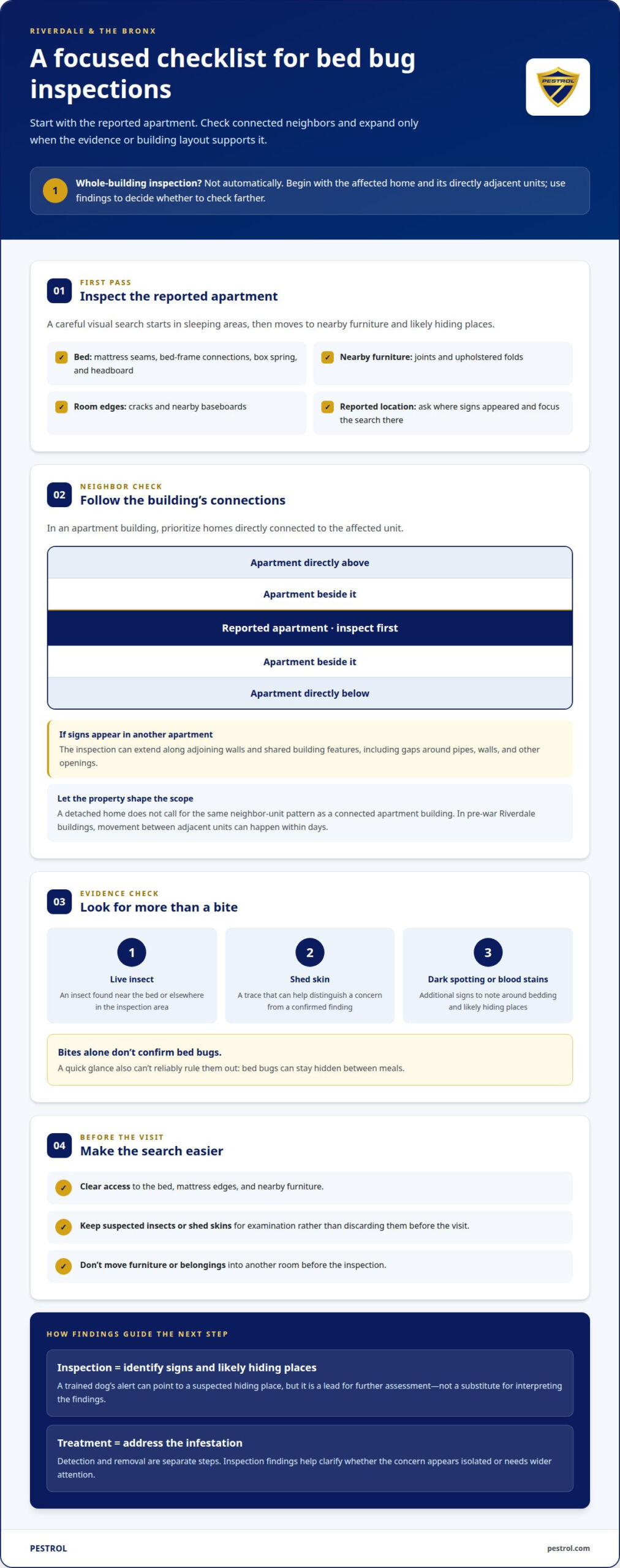
A bed bug finding in one Bronx apartment calls for a focused response, not an automatic inspection of every home. Start with the affected unit, then assess the apartments directly above, below, and beside it. Those neighboring homes share the closest routes for possible movement. A bed bug inspection in Riverdale and other Bronx neighborhoods should account for the building’s layout, connected spaces, and confirmed signs.
For NYCHA and subsidized housing residents in the Bronx, the right is to a habitable unit free from bed bug infestations. That doesn’t establish that every apartment in every New York City building must be inspected after one report. For a landlord, a practical first step is to take the report seriously and assess the affected unit and connected neighbors. Building-wide inspection decisions should follow the evidence and the building’s layout, not alarm alone.
Bed bugs can move between neighboring apartments in connected buildings, including through gaps around pipes, walls, and other openings. In pre-war Riverdale buildings, movement between adjacent units can happen within days. A thorough inspection therefore includes the reported apartment and the closest connected units. If signs appear in another apartment, the inspection can expand along adjoining walls and shared building features. This targeted approach helps direct removal methods to the areas that need attention.
Riverdale covers three square miles and has about 49,000 residents. Its housing includes 6- to 12-story pre-war and mid-century buildings, as well as detached and semi-detached homes dating from the early 1900s. Those differences matter: a connected apartment building presents different movement routes than a detached house. Riverdale’s neighborhood edges, including the area around Van Cortlandt Park, don’t set the inspection boundary. The building’s actual connections do.
A practical inspection sequence starts with the reported unit. The inspector examines likely hiding places, then checks nearby apartments identified by the building’s floor plan. For example, a report in a middle-floor apartment directs attention to the homes above, below, and beside it. A detached Riverdale home doesn’t call for the same neighbor-unit pattern. Findings from each location help determine whether the concern appears isolated or extends farther.
Do Riverdale pest control companies offer free bed bug inspections? Free inspections aren’t universal; whether one is offered depends on the company’s terms. Don’t assume a visit is free simply because it is an inspection.
Should the whole building be inspected? Not automatically. Begin with the affected apartment and its directly adjacent units, then expand the inspection if signs or building connections support it. This gives Bronx property owners a clear way to respond without treating every home in Riverdale as equally exposed.
Bed bug inspection and detection
A Bronx bed bug inspection combines a careful visual search with questions about where signs appeared. The inspector checks sleeping areas first, followed by nearby furniture and other likely hiding places. A report of activity near a bed, for example, directs attention to mattress seams, the frame, and the headboard. The findings help determine whether the concern is limited to one spot or calls for a broader inspection.
Bed bugs often hide in narrow, protected spaces. An inspector may examine mattress seams, furniture joints, upholstered folds, and cracks near the sleeping area. The inspection may also include bed-frame connections, a box spring, and nearby baseboards. Each clue matters: a live insect, shed skin, or dark spotting can help distinguish an infestation from an unverified concern. A termite inspection looks for different pests and evidence, so it doesn’t replace bed bug detection.
Canine bed bug detection uses a trained dog to search for the scent associated with bed bugs. The handler guides the dog through the rooms and observes where it signals. K-9 detection can help direct attention to a suspected hiding place, including areas that are difficult to inspect visually. A dog’s alert is a lead for further assessment, not a substitute for interpreting the inspection findings. The inspection method should fit the property, the reported signs, and access to rooms and furniture.
Preparation helps the inspector reach likely hiding places. In a Bronx apartment, clear access to the bed, mattress edges, and nearby furniture. Keep suspected insects or shed skins for examination rather than discarding them before the visit. Don’t move furniture or belongings into another room, since that can complicate the search. The inspector can provide preparation directions based on the apartment and inspection plan.
How should you prepare an apartment for a bed bug inspection in the Bronx? Make the bed and nearby furniture accessible, and keep any insect or trace you found for inspection. Avoid moving items into other rooms before the visit.
Detection and removal are separate steps. An inspection identifies signs and likely hiding places; treatment addresses the infestation. A spring mattress, for example, may need a close look at its seams and folds, while a wooden frame calls for attention to its joints. No single visible mark tells the whole story, so an inspector considers the evidence across the room. The inspection guides the next action; it doesn’t eliminate bed bugs by itself.
For a suspected infestation, a professional bed bug assessment can help turn observed signs into a practical next step.
Bed bug concerns
A bite can raise concern, but it doesn’t identify the cause by itself. In a New York City apartment, residents may notice marks after waking and suspect bed bugs. Bites are usually not felt until minutes or hours after they occur, so timing alone can’t show when or where exposure happened. Look for additional evidence, such as blood stains on bedding or an insect near the bed, before drawing conclusions.
Bed bugs can stay hidden between meals, which makes a quick glance an unreliable way to rule them out. Well-fed adults can survive for up to 6-7 months. Their ability to persist means a quiet period in a home or business doesn’t establish that the concern has ended. A careful inspection focuses on likely hiding places and the signs found there, rather than relying only on recent bites or visible activity.
Activity can follow a pattern. Bed bugs are generally active at dawn, with peak feeding about an hour before sunrise. That timing may explain why someone finds fresh marks in the morning but never sees an insect during the day. It doesn’t mean every morning mark comes from bed bugs. Check the sleeping area for other clues, then share where and when each sign appeared during an inspection.
Take a calm, evidence-based approach in Riverdale and across the Bronx. Keep a suspected insect or shed skin for identification, if you can do so without spreading it. Note the room and surface where it appeared, such as a mattress seam or upholstered chair. Don’t move bedding or furniture into another room. These details help an inspector focus the search and assess whether the finding points to one area or a wider concern.
A subway commute or a visit between Bronx apartments doesn’t prove bed bugs traveled with someone. Belongings can provide a route between places, but a specific infestation requires evidence. If you’re worried about a bag or coat, keep it separate from beds and upholstered furniture until it can be examined. This practical step avoids unnecessary handling while keeping the item connected to the concern.
Inspection and treatment answer different questions. An inspection looks for signs and likely hiding places; treatment uses methods intended to eliminate bed bugs. After an insecticide application, its effect may be noticed in a couple of days, while complete removal may take weeks. More applications may be needed depending on the infestation level and preparation. A guarantee should never replace a clear account of findings, treatment steps, and follow-up needs.
In a New York City building, a report in one apartment deserves attention, but it doesn’t automatically confirm activity throughout the property. Separate confirmed signs from symptoms or suspicion, record their locations, and use the inspection findings to guide next steps. This distinction helps residents and building managers respond proportionately, whether the concern involves one room, neighboring apartments, or a home or business with different sleeping and seating areas.
Bed bug identification and appearance
An adult bed bug measures 3/16 inch long, about the size of an apple seed. Its body is oval and flattened, with a reddish-brown appearance that may look darker after feeding. A nymph is smaller and paler, which can make it harder to notice against a mattress or light-colored sheet. Identify the insect by its body shape and other signs, not color alone.
Look for bed bugs near places where people rest, including mattress seams, headboards, and upholstered furniture. A live insect may move quickly when disturbed, then disappear into a narrow gap. Eggs and shed skins can also provide clues. Eggs are tiny and pale, while shed skins resemble empty insect shells. Location matters: a trace beside a bed is more relevant than a similar-looking speck elsewhere.
Dark spotting on bedding or furniture may be worth recording, but a mark by itself doesn’t identify its source. Note whether it appears near a seam, frame joint, or upholstery fold. Blood stains can also appear on sheets. Keep the item or take a clear close-up photo for the inspection, and note the exact room and surface where you found it.
Other small insects can be mistaken for bed bugs. For example, a carpet beetle has a different body shape and may look patterned or mottled. Don’t rely on a blurry image or a single stain to identify it. If possible, place a captured insect in a sealed container and avoid crushing it. An intact specimen gives the inspector a better chance to assess its features.
Clothing can carry an insect from one place to another, but finding a bug on a coat doesn’t establish an infestation in every room. Keep the garment separate from beds and upholstered furniture while arranging an inspection. Don’t shake it around the apartment. Record where it was stored and whether you saw another sign nearby. These details help distinguish an isolated finding from a broader concern.
Identification guides the next step in pest control. A confirmed bed bug can prompt a targeted inspection of nearby hiding places; an insect that looks different may point to another issue. Bed Bug Treatment should follow an assessment of the evidence and affected areas. A chemical application isn’t a substitute for correct identification, since the right methods depend on what the inspection finds.
In Riverdale or another Bronx neighborhood, share the insect’s location and any related traces with the inspector. Mention whether it came from a mattress, sofa, or clothing. This simple record keeps separate clues connected and helps focus the inspection on relevant areas, rather than treating every mark or insect as proof of the same problem.
Riverdale and other Bronx-area coverage
Riverdale’s residential buildings don’t all present the same inspection conditions. A detached home, a semi-detached house, and an apartment in a connected building each call for attention to different spaces. For example, an inspector assessing a house may focus on bedrooms and nearby furniture, while an apartment inspection may also consider shared walls and adjoining rooms. The building’s design, not its neighborhood name alone, guides the inspection.
Across the Bronx, start by recording the exact location of each concern. Note the apartment, room, and surface, such as a mattress edge, sofa seam, or bed frame. If a tenant reports an insect in a bedroom, that location gives the inspector a clear starting point. A report from a shared laundry area or hallway calls for a different assessment. Specific details help distinguish a confirmed finding from a general concern.
Neighborhood boundaries don’t determine how far an infestation may extend. The relevant area depends on the property’s physical connections and the evidence found during inspection. In a multi-unit building, that may mean assessing adjacent apartments; in a detached home, the inspection can focus on rooms and belongings within the residence. A Bronx address helps locate the property, while its floor plan and observed signs shape the inspection plan.
Access also affects what an inspection can cover. Before the visit, identify which rooms have reported activity and arrange access to those spaces. If an apartment has several sleeping areas, list each one separately. An inspector can then examine the mattress, surrounding furniture, and other likely hiding places without treating every room as equally affected. If signs appear elsewhere, the inspection scope can respond to that new evidence.
For property managers handling homes in different Bronx neighborhoods, keep reports tied to individual units. Record the date, location, and type of sign reported, then share those details with the inspector. A report of a live insect near one bed differs from a concern based only on bites elsewhere. Clear records help compare locations, identify patterns, and guide the next step without assuming every apartment has an infestation.
Residents can make the visit more useful by keeping a suspected insect or trace and noting where it appeared. Avoid moving a mattress or clothing between rooms before the inspection. In a building with several units, coordinate access to the reported apartment and nearby areas identified for assessment. These steps keep evidence connected to its location and help the inspector focus on relevant spaces.
Whether the property is in Riverdale or another Bronx neighborhood, the takeaway is the same: use the building layout and inspection findings to set the scope. A neighborhood label cannot confirm spread, and an address alone cannot identify affected rooms. A clear report, appropriate access, and a methodical inspection provide a practical basis for deciding whether attention should remain in one apartment or extend farther.
Pestrol
Pestrol provides Bed Bug Treatment when an inspection finds evidence that calls for treatment. Once the signs and affected areas are identified, treatment can address the bed bug concern with a response suited to the situation. For broader household pest concerns, Pestrol also offers Home Pest Protection plans at Basic, Plus, and Premium levels.
Share what you’ve noticed, where it appeared, and whether nearby apartments may be involved. Those details help connect inspection findings with the next practical step. If bed bug signs have become an active concern in your Riverdale or Bronx home, contact Pestrol to discuss Bed Bug Treatment.
Choose a Clear Next Step for Your Building
Use the inspection findings to move from uncertainty to a practical plan. Keep a simple record of the reported location and any follow-up observations, then share it with the person coordinating the response. For a building manager, clear communication between residents and management can help organize next steps without creating unnecessary alarm.
A bed bug inspection in Riverdale and the Bronx can give you a clearer basis for deciding what needs attention. If broader household pest concerns are also on your mind, Pestrol offers Home Pest Protection – Basic, Home Pest Protection – Plus, and Home Pest Protection – Premium. Choose the next step that fits the concern you’re addressing, and keep the response calm and informed.
Taking one informed step at a time can help you feel more in control of the situation.
Frequently Asked Questions
How do I schedule a pest assessment?
Contact Pestrol and describe the pest concern, property location, and where you noticed activity. For a Riverdale apartment, include the unit and room involved, and whether building management knows about the issue. If you have a clear photo or captured insect, mention that too. These details help frame the concern and guide the conversation about an appropriate next step.
I live in a Bronx apartment building and my neighbor has bed bugs. Am I at risk?
Living nearby can create a possible route for bed bugs, but a neighbor’s report doesn’t prove your apartment has them. Note whether your units share a wall, floor, or ceiling, and tell building management about your concern. Keep your belongings in your apartment rather than moving them through shared areas. If you notice signs in your own unit, record their location and report them promptly.
Bed bug inspection services in Riverdale, Bronx, NY
For a bed bug inspection in Riverdale, Bronx, NY, the scope should reflect the home’s layout and reported signs. In an apartment, the assessment may focus on sleeping areas and spaces connected to the concern. A detached home may call for a room-by-room approach within the residence. Pestrol provides Bed Bug Treatment for bed bug concerns. Contact Pestrol to discuss the situation and a suitable next step.
Which pest control companies inspect for bed bugs in Riverdale Bronx?
Pestrol provides Bed Bug Treatment for customers dealing with suspected or identified bed bug activity. If you’re seeking help in Riverdale or another Bronx neighborhood, share what you observed, where it appeared, and whether the property is an apartment or detached home. That context helps clarify the concern and whether treatment is relevant. A neighbor’s report alone doesn’t establish activity inside your unit.
What does a bed bug inspection include, and how long does it take?
A bed bug inspection typically examines places where insects may hide, including bed components, nearby furniture, and room edges. The time required depends on the number of rooms, the furniture needing attention, access to relevant areas, and whether the inspection extends beyond one apartment. For example, several furnished bedrooms require a broader examination than one room with accessible furnishings.
Can bed bug inspectors in New York use dogs, and how accurate are canine inspections?
Some inspection providers use trained dogs to help locate bed bug scent, but canine detection doesn’t guarantee infestation or absence. An alert points an inspector toward an area for further assessment; it should be considered alongside visible evidence and the room’s circumstances. No single accuracy percentage applies to every inspection, because results depend on the dog’s training, handling, and search conditions.
What signs of bed bugs should I check before scheduling a professional inspection?
Before scheduling, look for live insects, shed skins, or small blood stains near beds and upholstered furniture. Bites alone don’t establish that bed bugs are present. Write down the room and surface where you noticed each sign, and keep a suspected insect in a sealed container if practical. A photo showing the insect and where you found it can add useful context.
How soon can I book a bed bug inspection in Riverdale Bronx, and are emergency appointments available?
To discuss a bed bug inspection in Riverdale and the Bronx, contact Pestrol and explain the concern, property location, and access needs. Appointment timing depends on scheduling and the situation’s scope. If the issue feels urgent, describe what you found and whether nearby units are involved. Those details can help inform the scheduling discussion. Avoid moving belongings between apartments while arranging next steps.
Are landlords in New York City responsible for bed bug inspections and treatment?
Landlords should take a bed bug report seriously and assess the affected unit and directly connected neighboring units. The article does not establish a general requirement for every New York City landlord to inspect or treat the entire building.