




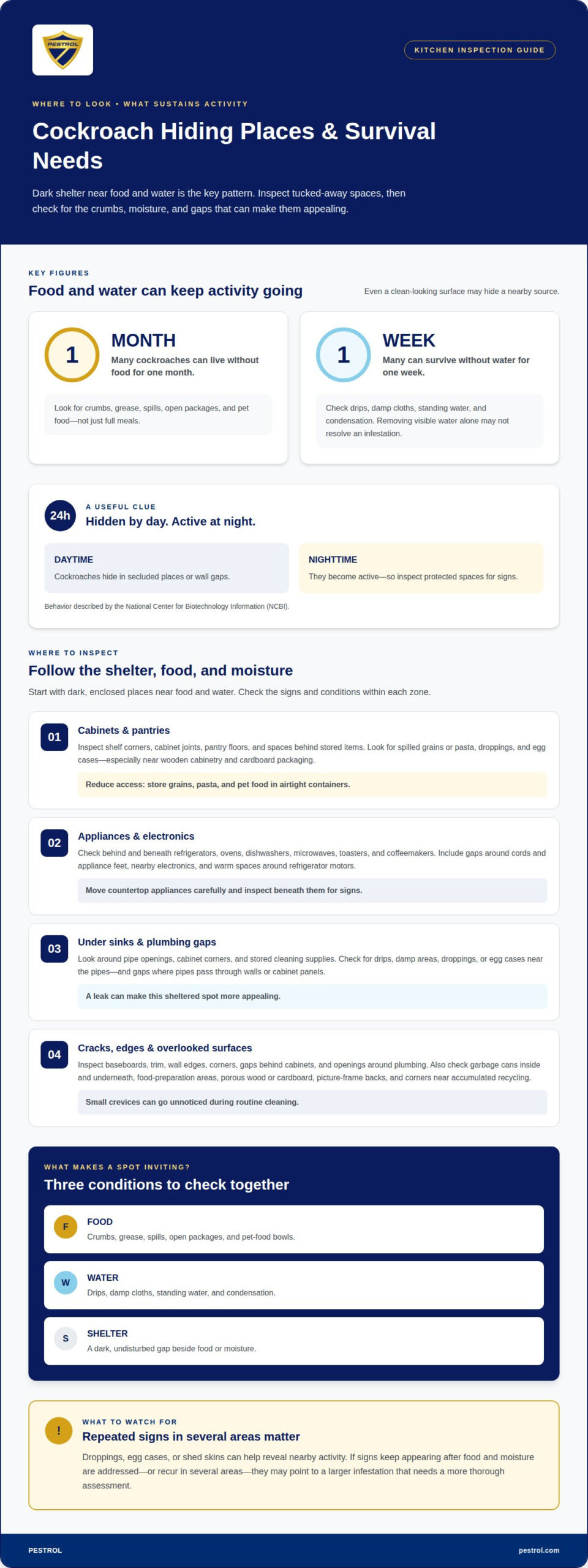
Cockroaches hide in dark, sheltered kitchen spots close to food and water, including behind or beneath appliances, inside cabinets and pantries, and under sinks. To find where cockroaches hide in a kitchen, check tight gaps, warm areas around appliances, and places where crumbs, spills, or moisture collect. The National Center for Biotechnology Information reports that cockroaches hide in secluded places or wall gaps during the day and become active at night.
It’s unsettling to spot one and wonder how many more may be out of sight. A careful look at likely hiding places can help you spot signs such as droppings, egg cases, or shed skins and understand what may be attracting them. This guide covers the kitchen areas to inspect, the food and water sources that make them appealing, and practical ways to make those spots less inviting. Start with the places that are easy to overlook, from appliance crevices to plumbing gaps, then consider whether recurring signs point to a larger infestation.
Key Takeaways
- Look beyond open counters: appliance gaps, cabinets, pantries, and the space beneath sinks can offer shelter.
- Track down crumbs, spills, standing moisture, and leaks that can make kitchen hiding spots more appealing.
- Sealed food containers and a regularly emptied, covered trash bin can help limit easy food sources.
- Check dark crevices around pipes, baseboards, and trim for signs that cockroaches may be nearby.
- Repeated signs in several areas may point to an infestation that needs a more thorough assessment.
Where Do Cockroaches Hide?
Start with enclosed, dark spaces near food and water. Cockroaches may hide inside cabinets, behind appliances, beneath sinks, and in narrow gaps along walls.
Cabinets and Pantries
Cabinets and pantries offer shelter close to crumbs, stored food, and cardboard packaging. Check shelf corners, cabinet joints, and spaces behind stored items, especially where spilled grains or pasta may collect.
Look along the pantry floor and around containers for droppings or egg cases. Cockroaches may lay eggs in or on furniture, so inspect tucked-away crevices near wooden cabinetry. Sealed containers for grains, pasta, and pet food help make these areas less inviting.
Appliance Hiding Places
Cockroaches may hide inside or beside appliances, where narrow openings provide cover. Check behind refrigerators, ovens, dishwashers, microwaves, toasters, and coffeemakers, including gaps around cords and appliance feet.
Warm, sheltered spaces around refrigerator motors and electronic equipment can also provide hiding places. Carefully move countertop appliances and inspect beneath them for signs. Small cockroaches can fit into tight openings, so include nearby electronics and crevices in your search.
Under-Sink Hiding Spots
The cabinet beneath a kitchen sink is an important place to inspect because pipes create dark gaps. Check around plumbing openings, cabinet corners, and stored cleaning supplies, where cockroaches can stay out of sight.
Look for drips, damp areas, droppings, or egg cases near the sink’s pipes. A leak can make this sheltered spot more appealing. Cockroaches may also use gaps where pipes pass through walls or cabinet panels to move between hiding places.
Kitchen Cracks and Gaps
Cockroaches use narrow cracks around baseboards, trim, and wall edges for shelter. Inspect corners, gaps behind cabinets, and openings around plumbing, where small crevices can go unnoticed during routine cleaning.
The National Center for Biotechnology Information (NCBI) reports that cockroaches hide in secluded places or wall gaps during the day and become active at night. Check protected spaces for droppings or egg cases. Include the backs of picture frames and corners near accumulated recycling in your search.
German and brown-banded cockroaches may hide in or near kitchen appliances and electronic equipment, including refrigerator motors, ovens, dishwashers, toasters, and microwaves. Check beneath each appliance and in nearby cabinets, not just on visible surfaces. Clean under appliances and inside cabinets regularly to help prevent infestations. Move items as needed to reach these areas, then return them once the spaces are clear.
Include under-sink cabinets, the inside and underside of garbage cans, food-preparation areas, and porous surfaces such as wood and cardboard in a routine inspection. These spots are easy to miss if you focus only on appliance edges or wall gaps. Store grains, pasta, and pet food in airtight containers to make cabinets and pantries less appealing. Regularly inspect these areas and clean beneath appliances and inside cabinets.
Kitchen food and water sources
Cockroaches stay near places where food, water, and shelter overlap. Crumbs beside a toaster, a leaking faucet, or food left open overnight can make a kitchen more inviting. These sources are easy to overlook, so check everyday routines as well as stored supplies. Finding what sustains cockroaches can help explain why activity keeps returning to a particular area.
Food doesn’t have to come from a full meal. Crumbs beneath a table, grease on a stovetop, residue around a microwave, or a splash of juice can provide scraps. Spilled grains and pasta may collect along pantry edges. Pet food left in an open bowl or paper bag can offer another source. Wiping up residue and closing packages reduces access.
Cockroaches can persist even when food is scarce. Many can live without food for one month, but they still need access to water. Check for moisture near faucets, drains, pipes, and damp sponges. A slow drip can keep a hidden area moist even when the rest of the counter looks dry. Look for recurring dampness, not just obvious puddles.
Everyday kitchen habits can also leave water sources. A wet dishcloth beside the sink, water beneath a plant pot, or condensation near a refrigerator can provide drinking water. Check the cabinet floor after using the sink and notice whether a sponge or drying mat stays wet. Drying these items and addressing a leak can make the kitchen less appealing.
Store dry goods and pet food in airtight containers rather than open bags. Close food packages after cooking, and clean crumbs from food-preparation areas. These steps don’t replace checking for leaks or signs of activity, but they reduce easy access to food and water.
- Food: Check crumbs, grease, spills, open packages, and pet-food bowls.
- Water: Look for drips, damp cloths, standing water, and condensation.
- Shelter: Note whether food or moisture sits beside a dark, undisturbed gap.
Many cockroaches can survive without water for one week, so removing visible water sources alone may not resolve an infestation. If signs keep appearing after you address food and moisture, professional cockroach infestation help can support a more thorough response.
Wipe countertops and sweep floors to remove crumbs and spill residue. Cockroaches may hide in or on couches, particularly when food is spilled while snacking. Store kitchen food in sealed containers to limit access.
Kitchen sanitation and prevention
Prevention works best when cleaning also removes food residue and moisture, and when you address entry points. Focus on places routine countertop cleaning misses, such as appliance undersides, drain edges, and gaps around plumbing. Bringing in a professional provider like Deepclean Services for periodic deep cleans can help eliminate built-up residue in these hard-to-reach spots. These maintenance tasks make the kitchen less inviting and help reveal conditions that could support cockroach activity.
After meals, wipe counters and sweep floors to clear crumbs and spills. Clean beneath countertop appliances, where food fragments can settle beyond the usual wiping area. Pay attention to the toaster, coffeemaker, and other small appliances used near food preparation. A quick look underneath while cleaning can uncover residue that would otherwise remain hidden.
Water control matters just as much. Inspect drains, pipes, and faucets for drips or leaks, including inside the cabinet beneath the sink. Even a small leak can keep a concealed area damp. Seal gaps around plumbing openings in walls or cabinets to reduce access from connected spaces. Keep the area around pipes clear enough to spot moisture or fresh debris.
Reduce sheltered hiding places near walls. Remove accumulated debris and check whether baseboards and trim sit flush against the floor. Cracks or open seams can give cockroaches protected routes through the kitchen. Sealing gaps around plumbing that leads outdoors can also limit a potential entry point. Pay particular attention to openings where pipes pass through exterior walls.
Food storage and disposal complete the prevention routine. Keep pantry goods in airtight jars or sealed containers, and store dry pet food in a sealed plastic container instead of its paper bag. Use a sealed trash bin and take out household garbage regularly. These steps limit access to scraps and reduce lingering odors or residue.
Packaging can carry pests indoors. Cockroaches may enter in grocery bags, infested food, or cardboard boxes. Inspect packaging before putting it in the pantry, and avoid storing cardboard beside food supplies. Remove empty boxes instead of letting them collect near cabinets or recycling. These checks address a route that cleaning surfaces alone cannot cover.
- After cooking: Wipe food-preparation surfaces and sweep crumbs from floors.
- During kitchen cleaning: Clean beneath countertop appliances and clear debris near baseboards.
- During routine upkeep: Look for leaks, plumbing gaps, and loose trim.
- When putting groceries away: Check packaging and transfer pantry goods into sealed containers.
Consistency matters more than a single deep clean. Repeat these checks during ordinary kitchen upkeep, and note recurring dampness, residue, or signs near the same gap. In commercial facilities and workplace breakrooms where shared kitchens require rigorous upkeep, dedicated janitorial teams like RPS Building Services help maintain the continuous sanitation needed to deter pests. If cockroaches continue appearing despite these changes, sanitation may not address every hiding place or entry route.
Trash cans and food crumbs
A kitchen trash can can collect food scraps, sticky residue, and odors that attract cockroaches. Bags, recycling, or debris nearby may offer additional cover. Check the floor beneath the can, the wall behind it, and the cabinet or corner where it sits. These nearby spots can be easier to overlook than the bin itself.
Crumbs are another accessible food source. They can gather beneath a dining chair, along a floor edge, or near a snack-preparation area. Dirty dishes beside the sink may retain food residue, while a small spill beneath a counter can go unnoticed. Check where meals are eaten and dishes are left, not just the main cooking area.
Follow the food trail. Crumbs near a toaster or along a cabinet edge may point toward a nearby source, while residue on the floor may lead toward a trash can. Look for droppings or egg cases in dark corners beside the bin, and inspect where recycling collects. Cockroaches can hide in cracks and crevices near accumulated recycling.
A sealed trash bin helps limit access to food scraps. Empty household garbage regularly, especially when it contains food waste, and keep the lid closed between uses. If a bag leaks, clean the bin’s interior and the floor beneath it. Residue on the outside of a container or lid can also attract cockroaches where kitchen waste is handled.
Outdoor waste matters, too. Trash or lawn clippings collected close to a home may attract cockroaches indoors. If a kitchen bin sits near an exterior door, inspect the threshold and nearby floor edges for crumbs or debris. Keep the route between food waste and the exit clear, and avoid leaving scraps beside the door while taking out garbage.
- Inspect: Check beneath and behind the bin, plus nearby corners and floor edges.
- Notice: Look for crumbs, dirty dishes, spills, droppings, or egg cases around likely food sources.
- Contain: Use a sealed bin, close its lid, and remove household garbage regularly.
- Clear: Keep recycling and outdoor waste from accumulating near kitchen entrances.
One clean surface won’t reveal every hiding place. If signs keep appearing near the same bin, cabinet edge, or doorway, note the pattern. Repeated activity can mean food scraps are only part of the problem, with a nearby sheltered gap or entry route also involved.
Where to check for cockroaches
A useful inspection follows connected hiding places, not just the spot where you saw a cockroach. Start near the sighting, then check nearby gaps, plumbing, and sheltered corners. Cockroaches can move between these spaces while remaining out of view. Droppings or egg cases can help identify areas to examine more closely.
Begin along the kitchen’s edges. Inspect baseboards, trim, cabinet backs, and corners where walls meet the floor. Look for cracks, crevices, or trim that doesn’t sit flush. Check behind picture frames near the kitchen and around corners where recycling collects. These tucked-away places can offer shelter, especially when undisturbed.
Next, follow plumbing and moisture. Look around drainpipes beneath the sink, where pipes pass through cabinets, and near faucets or other fixtures. Drips or leaks can make these dark spaces more appealing. Check the floor and wall around the plumbing for dampness, droppings, or egg cases. Repeated signs near a pipe opening can point to a concealed gap.
Inspect appliances and nearby electronics, including small openings. Check beneath or behind the refrigerator, oven, dishwasher, microwave, toaster, and coffeemaker. Look around refrigerator motors and appliance cords, where narrow spaces provide cover. Some cockroaches can fit through keyboard gaps and hide inside computers. Include kitchen electronics if activity appears near a desk or device.
Use the timing of a sighting to guide your inspection. The National Center for Biotechnology Information (NCBI) reports that cockroaches hide in secluded places or wall gaps during the day and become active at night. A daytime sighting makes nearby concealed spaces especially relevant. Check quiet, dark areas first, then follow connected gaps rather than searching only open surfaces.
- At floor level: Examine baseboards, trim, corners, and gaps behind cabinets.
- Near plumbing: Look around pipes, drains, faucets, and any damp cabinet areas.
- Behind equipment: Inspect appliance edges, motors, cords, and nearby electronics.
- For signs: Note droppings or egg cases and where they appear together.
Record which spots show signs and whether they connect through a gap, pipe opening, or appliance space. Repeated evidence in separate locations can suggest activity beyond one isolated hiding place. If the signs persist or appear across connected areas, professional cockroach control can help assess the infestation and treat it.
Pestrol
Pestrol can help when cockroach signs keep returning after you’ve checked kitchen hiding places and reduced food and moisture sources. Recurring droppings, egg cases, or sightings in separate areas may suggest activity extends beyond one visible gap. Professional pest management can address the infestation rather than focusing on a single spot.
Share where you’ve noticed signs, such as beneath an appliance, near plumbing, or beside a cabinet. Those details can connect the evidence to likely hiding places and guide the next steps. Contact Pestrol to discuss ongoing cockroach activity in your kitchen.
Take the Next Step Toward a Roach-Free Kitchen
Knowing where cockroaches hide in a kitchen gives you a useful starting point, but repeated signs can be difficult to trace to one source. Note where you’ve seen activity and whether it returns near the same area. That pattern can guide the next step, especially when sightings continue after you’ve cleaned and reduced accessible food and moisture.
Pestrol offers Roach Exterminator service for homeowners dealing with cockroach activity. For broader household pest concerns, its Home Pest Protection options include Basic, Plus, and Premium. Choose the option that matches the problem you’re addressing, and share where you’ve noticed signs when you reach out.
A kitchen inspection can reveal clues, but persistent activity can be difficult to manage alone. Getting professional support is a practical next step toward restoring comfort at home.
Frequently Asked Questions
Where do cockroaches hide in kitchen cabinets and drawers?
Cockroaches can tuck into back corners, narrow drawer joints, and gaps around cabinet hardware. Check drawers holding utensils, napkins, or dry goods, especially where crumbs collect beneath organizers. Remove stored items to see the seams clearly, then look for droppings or egg cases along the edges. A clean-looking drawer front doesn’t rule out activity behind the drawer or inside its frame.
Do cockroaches hide behind refrigerators and stoves?
Yes. The floor and wall behind a refrigerator or stove can provide shelter, while motors and tight edges offer concealed spots. Use a flashlight to inspect the wall-facing side and floor line. Look for signs near the appliance’s path to the wall, not only beneath its front edge. Avoid reaching into a space you can’t see clearly.
Do cockroaches hide inside small kitchen appliances?
Yes, cockroaches may hide in or around toasters, microwaves, and coffeemakers. Check exterior openings, crumb trays, and the counter beneath each appliance. Unplug an appliance before cleaning it, and follow its manufacturer’s cleaning directions. Don’t open electrical housings to search inside. If you find signs around one appliance, inspect nearby counter edges and storage spaces for additional activity.
How can you find cockroach hiding places in a kitchen?
Start near the sighting and inspect connected spaces, such as cabinet edges, plumbing openings, and appliance gaps. Use a flashlight to examine dark corners, then note where you find droppings or egg cases. Cockroaches are more active at night, so a sighting after dark may help identify a route. Keep a simple record of locations and repeat sightings.
What signs reveal a cockroach nest or hiding spot?
A cluster of droppings or egg cases can point to a nearby hiding area. Check surrounding crevices and sheltered surfaces rather than assuming the visible sign marks the exact source. Cockroaches hide in secluded places, so activity may extend into nearby gaps. One sign alone doesn’t show how far an infestation reaches; repeated evidence in separate spots gives a clearer picture.
How can you prevent cockroaches from hiding in a kitchen?
Reduce the conditions that make sheltered kitchen spaces appealing: clean food residue, store pantry goods in sealed containers, and keep garbage covered. Address drips beneath sinks and seal gaps around plumbing or trim. Inspect grocery bags and cardboard packaging before storing them, too. These habits limit access to food and water while making concealed routes and activity easier to notice.