



A single cockroach sighting in your dining room can undo years of hard-earned reputation in the time it takes a customer to post one viral review. For New York restaurateurs, the stakes are even higher than just bad PR. A surprise visit from the Department of Health can lead to heavy fines or an immediate closure. Effective cockroach control for restaurants is no longer about setting a few traps and hoping for the best. It requires a disciplined, professional strategy that addresses the root causes of infestations before the inspector walks through your door.
We understand the frustration of seeing DIY treatments fail while your anxiety over the next health inspection grows. You deserve the peace of mind that comes with a truly pest-free kitchen and a consistent “A” grade on your window. This guide outlines the essential protocols for 2026 to help you eliminate roaches for good. We’ll walk you through the latest DOH compliance standards, critical sanitation habits, and the benefits of partnering with a local expert who knows the unique challenges of Manhattan and Bronx food service establishments.
Key Takeaways
- Protect your brand’s reputation and avoid costly DOH closures by shifting from reactive treatments to a proactive prevention strategy.
- Identify the specific nesting behaviors of German and American roaches to apply effective cockroach control for restaurants in grease-heavy environments.
- Move beyond ineffective “spray and pray” methods by implementing an Integrated Pest Management (IPM) framework that targets pests at their source.
- Establish a rigorous nightly sanitation protocol that removes the food, water, and shelter roaches depend on for survival.
- Gain the confidence to pass every health inspection with an “A” grade using professional protocols tailored to New York regulations.
The Real Cost of Cockroaches in Your Restaurant
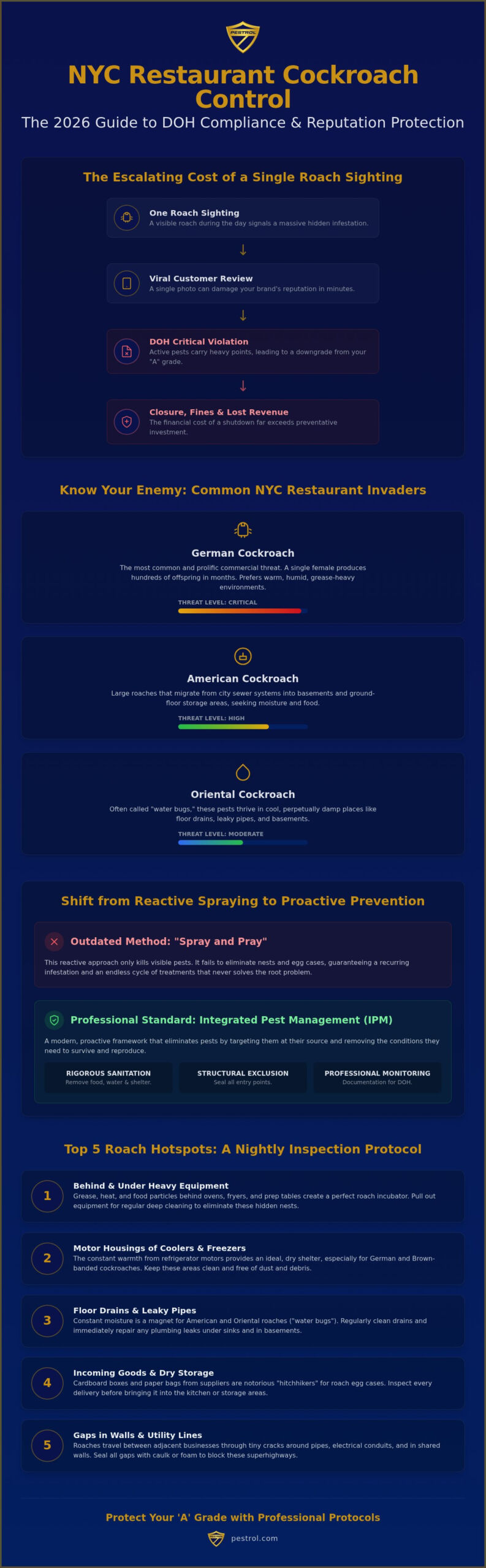
One roach is never just one roach. In the high pressure environment of a commercial kitchen, seeing a single insect during daylight hours is a red flag for a massive infestation hidden in the walls or under heavy equipment. These pests are nocturnal and cautious; they only emerge in the light when their nesting sites are overcrowded. This is why professional cockroach control for restaurants is a necessity rather than a luxury. Beyond the immediate “ick” factor, these insects are dangerous biological hazards. They act as vectors for pathogens like E. coli and Salmonella, spreading bacteria across prep surfaces and utensils. Their shed skins and droppings also release potent allergens that can trigger asthma attacks in both staff and guests. The financial cost of a forced closure by the Department of Health (DOH) far outweighs the steady, predictable investment in preventative maintenance.
Navigating NY Health Department Standards in 2026
The NYC Department of Health and Mental Hygiene (DOHMH) has refined its point system for 2026. Active signs of cockroaches are strictly classified as a critical violation. These carry a heavy point load that can instantly strip your establishment of its “A” grade. While a general violation might involve minor record keeping errors, a critical violation indicates a direct threat to food safety. We help you stay ahead of these inspections by providing detailed professional documentation. Having a clear service history shows inspectors that you’re proactive about pest management. This level of transparency often helps during a surprise visit, as it proves you’re committed to the highest standards of kitchen hygiene in Manhattan and the Bronx.
Protecting Your Reputation in the Digital Age
In our connected world, a single customer photo of a pest can go viral before your shift even ends. Negative reviews on Yelp or Google that mention roaches are incredibly difficult to overcome. These sightings often lead to a “Grade Pending” sign in your window, which acts as a warning to every potential diner walking past your door. Handling customer complaints professionally is vital, but preventing the sighting in the first place is the only real solution. We focus on helping you build a culture of cleanliness where every staff member knows how to spot early warning signs. When your kitchen is spotless and your pest protocols are airtight, your customers can sense that commitment to quality. It protects your brand and ensures your restaurant remains a trusted staple in the community.
Identifying the Enemy: Common Species and Entry Points
Understanding exactly which species has invaded your kitchen is the first step toward effective cockroach control for restaurants. Different roaches require different tactics. German cockroaches are the most common and dangerous commercial threat. A single female can produce hundreds of offspring in just a few months; this leads to an explosion in population if left unchecked. American cockroaches, often much larger, typically migrate from NYC sewer systems and damp basements into your ground-floor storage areas. These pests are resilient, but they are also predictable once you know their habits.
You might also encounter Brown-banded cockroaches in drier, higher locations like the motor housings of your reach-in coolers. Meanwhile, the dark, shiny Oriental cockroach, often called a “water bug,” prefers the damp environment of floor drains and leaky pipes. Knowing these specific behaviors allows for a targeted strike rather than a generic, ineffective treatment. It’s about working smarter to protect your inventory and your reputation.
The “Hitchhiker” Effect: How Roaches Enter Your Kitchen
Roaches rarely just walk through the front door. They usually arrive as “hitchhikers.” Cardboard boxes from produce or dry good vendors are notorious for carrying egg cases. Similarly, employee bags and coats can accidentally bring pests from home into your locker room. In the dense neighborhoods of Manhattan and the Bronx, shared walls are a major factor. If your neighbor has an issue, those roaches can travel through plumbing gaps and electrical lines into your space. Implementing a professional restaurant pest control strategy starts with inspecting every delivery before it ever reaches your prep table.
Top 5 Roach Hotspots in a Commercial Kitchen
To stay ahead of the DOH, your cleaning crew must focus on the areas roaches love most. These aren’t always the most obvious spots. Focus your inspections on these high-risk zones:
- Behind and under heavy equipment: Grease and heat build up behind ovens and fryers, creating a perfect incubator for eggs.
- Motor housings: The warmth from refrigeration compressors and dishwashers provides a steady climate for breeding.
- Electrical conduits: Roaches use these pipes as “highways” to move through walls and between rooms undetected.
- Cracked tiles and grout: Tiny gaps in floor tiles trap moisture and organic matter, providing a feast for hidden pests.
- Suspended ceilings: In older NY buildings, the space above your ceiling tiles can hide an infestation that drops down into food prep areas.
The IPM Framework: Why Spraying Alone Fails
Many managers still rely on a monthly “baseboard spray” to keep pests away. In 2026, this approach is largely ineffective and often counterproductive. Grease, steam, and heavy food residue in busy kitchens quickly neutralize many surface sprays. Urban roach populations have also developed significant resistance to common over-the-counter pesticides. If you only spray the insects you see, you are ignoring the thousands hiding in the walls. Effective cockroach control for restaurants now requires a smarter, multi-layered strategy known as Integrated Pest Management (IPM).
IPM isn’t just about killing the bugs; it’s about changing the environment so they can’t survive. This framework rests on three critical pillars: sanitation to remove food sources, mechanical exclusion to block entry, and targeted treatment to disrupt the breeding cycle. This shift from reactive spraying to proactive management is what keeps New York kitchens DOH-compliant. It ensures that your pest control partner acts as a protective guardian for your business rather than just a technician with a spray tank.
Mechanical Exclusion: Sealing the Perimeter
You must block their path before they ever reach the prep line. Use food-grade, heat-resistant sealants to close gaps around sinks, gas lines, and electrical conduits. These tiny cracks are roach highways that allow pests to move between walls and floors undetected. We often recommend rodent proofing services as a critical secondary barrier. While these services focus on mice and rats, the same high-quality sealing techniques prevent roaches from migrating from neighboring Manhattan storefronts. Install heavy-duty door sweeps and air curtains to keep pests from entering through the loading dock during busy delivery windows.
Targeted Treatments: Baits, Gels, and IGRs
Modern treatments are surgical rather than broad. Gel baits are highly effective because roaches carry the bait back to the nest, eliminating the colony at the source. This is far safer for food-safe areas than traditional baseboard spraying. We also utilize Insect Growth Regulators (IGRs). These products don’t kill adults immediately. Instead, they prevent young roaches from maturing and breeding. By breaking the life cycle, you stop the next generation before it starts. Professional-grade products are essential here. Consumer-level sprays often cause roaches to scatter, making the infestation harder to track and much more expensive to treat later.
How-To Guide: Developing a Daily Kitchen Sanitation Protocol
Organic waste is a primary magnet for pests. You should clean grease traps daily and use enzyme-based cleaners in floor drains to dissolve the organic sludge where roaches feed and breed. Don’t overlook the gaskets on your reach-in coolers and prep tables. Crumbs and moisture trapped in these rubber seals create a perfect micro-habitat for German cockroaches. Ensure your external dumpster area is hosed down regularly and that all bins have tight-fitting lids to prevent attracting American roaches from the street.
For those looking to implement high-level sanitation standards in their facility, check out Distribution Hygiene Services Limited for professional industrial cleaning expertise.
Additionally, for businesses operating in Western Canada, you can discover Advance Cleaning Services Inc. for professional commercial cleaning that helps maintain a pest-free environment.
Step 2: Proper Food Storage Habits
Storage habits can make or break your pest prevention efforts. Always follow the “six inches off the floor” rule for all dry goods and produce; this makes it easier to inspect for signs of activity and ensures no hidden nesting spots exist. You should transition as much inventory as possible from cardboard to airtight plastic containers. Cardboard is a double threat because it provides both a food source and a porous material for roaches to glue their egg cases. A strict FIFO (First In, First Out) inventory system prevents old stock from sitting long enough to become a breeding ground.
Step 3: Daily Inspection of Incoming Goods
Inspect every delivery before it enters your main storage area. Set up a designated “breakdown” zone near your loading dock to unpack produce and dry goods. You must dispose of all cardboard boxes in an outside bin immediately after unpacking. If you spot signs of pests in a shipment, refuse the delivery and report the issue to the vendor. This protects your facility from the “hitchhiker” effect discussed earlier. Training your staff to spot early warning signs like pepper-like droppings or egg cases is the backbone of commercial kitchen pest control.
Get a customized sanitation plan for your New York kitchen
Professional Roach Removal: Customizing Your Protection Plan
NY restaurants aren’t all the same. A basement bistro in Manhattan faces entirely different structural risks than a large catering hall in the Bronx. This is why a generic, one-size-fits-all approach usually fails. You need a strategy built for your specific layout and building history. Effective cockroach control for restaurants involves more than just a monthly visit. It requires a tiered approach that fits your operational budget while meeting strict 2026 DOH standards. We offer Basic, Plus, and Premium protection plans that we can adapt to the unique needs of your food service establishment.
Ongoing Monitoring and Documentation
We use pheromone traps as “silent sentinels” throughout your facility. These tools don’t just catch roaches; they provide vital data on where the activity is highest. This allows us to adjust our treatment strategies before a small issue becomes a critical health violation. You also need a comprehensive “Pest Log.” This digital or physical record is often the first thing a health inspector asks to see. It proves you have a professional partner monitoring your facility. We also perform quarterly audits to adjust for seasonal shifts. As the weather changes in New York, pest pressures change with it, and your plan must stay one step ahead.
Partnering with Pestrol for Long-Term Security
Choosing a local partner means working with someone who understands the unique plumbing and structural quirks of New York buildings. Our team provides specialized restaurant pest control NYC services across Manhattan, the Bronx, and Orange County. We don’t believe in quick fixes that only address the symptoms of an infestation. We focus on the “Pestrol Promise,” which is a commitment to persistent, results-first service that treats your reputation with the same care we give our own. We act as a protective guardian for your kitchen, ensuring you’re always ready for a surprise inspection.
Getting started is a straightforward process. We begin with a thorough facility audit to identify every potential entry point and nesting site. This audit forms the foundation of your customized protection plan. Whether you are managing a small cafe or a high-volume commercial kitchen, we provide the expert care needed for permanent cockroach control for restaurants. Our goal is to give you total peace of mind so you can focus on your guests while we handle the pests.
Securing Your Kitchen’s Future in 2026
Maintaining a pest-free environment is a continuous commitment that protects your brand and your bottom line. By implementing a strict Integrated Pest Management framework and mastering daily sanitation protocols, you’ve already taken the most important steps toward a permanent solution. These habits don’t just stop infestations; they ensure you’re always prepared for a surprise health inspection.
You don’t have to manage these complex regulatory and biological challenges alone. As family-owned NY local experts and DOH compliance specialists, we provide the persistent, results-first care your establishment requires. We offer a 24/7 response for commercial emergencies to ensure your doors stay open and your reputation remains spotless. Comprehensive cockroach control for restaurants is about building a partnership that values your success as much as you do.
Your “A” grade is within reach. With the right protocols and a dedicated partner, you can focus on what you do best: serving your community and growing your business with total confidence.
Frequently Asked Questions
How much does cockroach control for restaurants cost in NYC?
Pricing for cockroach control for restaurants depends on several factors like square footage and the severity of the infestation. A small cafe in Manhattan has different needs than a massive catering hall in the Bronx. We provide tiered plans to fit various budgets. The best way to get an accurate cost is through a professional audit. This ensures you only pay for the specific protection your kitchen requires to stay DOH compliant.
Can I use store-bought roach spray in my commercial kitchen?
You should avoid using over the counter sprays in a commercial kitchen. These products often cause roaches to scatter deeper into the walls, making the problem much harder to solve. Most retail sprays are not labeled for use in food prep areas and can lead to serious DOH violations. Professional grade baits and gels are safer and more effective. They target the nest directly rather than just killing the few insects you see on the surface.
How often should a restaurant have professional pest control services?
Most New York restaurants require at least monthly professional service to maintain high sanitation standards. High volume kitchens or older buildings in dense areas like Manhattan might need bi-weekly visits. The frequency depends on your specific risk factors and history of activity. Regular monitoring allows us to catch small issues before they turn into critical violations. We adjust your service schedule based on seasonal pest pressures and local health department trends.
What happens if a health inspector finds one roach in my restaurant?
Finding a live cockroach is classified as a critical violation by the NYC DOHMH. This carries a high point value that can instantly lower your letter grade. If the inspector finds evidence of a widespread infestation, they have the authority to close your establishment immediately. Having professional documentation and a “Pest Log” on hand shows you are proactive. This transparency can sometimes help during an inspection, but the only real protection is a consistent prevention strategy.
Are the chemicals used in restaurant pest control safe for food areas?
Modern pest control relies on targeted applications like gel baits and Insect Growth Regulators (IGRs) that are safe for food service environments. We use professional grade products specifically labeled for use in commercial kitchens. Our technicians are trained to apply these treatments in cracks, crevices, and motor housings where pests hide. This precision ensures that no chemicals come into contact with your food prep surfaces or utensils, keeping your staff and customers safe.
Why do I still have roaches even though we clean every night?
Cleaning your surfaces every night is vital, but roaches often live in areas that standard cleaning doesn’t reach. They thrive inside equipment motors, behind wall voids, and under heavy appliances where grease builds up. If you share walls with other NYC storefronts, pests can migrate into your space through plumbing and electrical lines. Effective cockroach control for restaurants requires professional exclusion and deep harbor treatments to reach the nests hidden deep within your building’s structure.
How do I know if my roach problem is coming from a neighboring building?
If you see activity concentrated along shared walls or around pipe penetrations, the pests are likely migrating from a neighbor. In Manhattan and the Bronx, roaches use electrical conduits and plumbing lines as highways between storefronts. We use pheromone traps as “silent sentinels” to track movement patterns. If we find roaches entering from outside your unit, we focus on mechanical exclusion. This involves sealing gaps with food grade sealants to create a permanent barrier.
What is the fastest way to get rid of a German cockroach infestation?
The fastest way to eliminate a German cockroach population is a combined approach using high quality baits and Insect Growth Regulators. Baits work by having roaches carry the treatment back to the nest. IGRs break the life cycle by preventing young roaches from maturing and breeding. When you combine these treatments with rigorous sanitation and mechanical exclusion, you can collapse a colony quickly. It’s a results-first mentality that focuses on long-term security rather than just a temporary fix.