



A pest sighting can put food safety, inspection readiness, and customer confidence under pressure. But a treatment visit alone isn’t a prevention plan. Effective restaurant pest control NYC starts with regular monitoring, clear staff responsibilities, and prompt attention to conditions that attract pests.
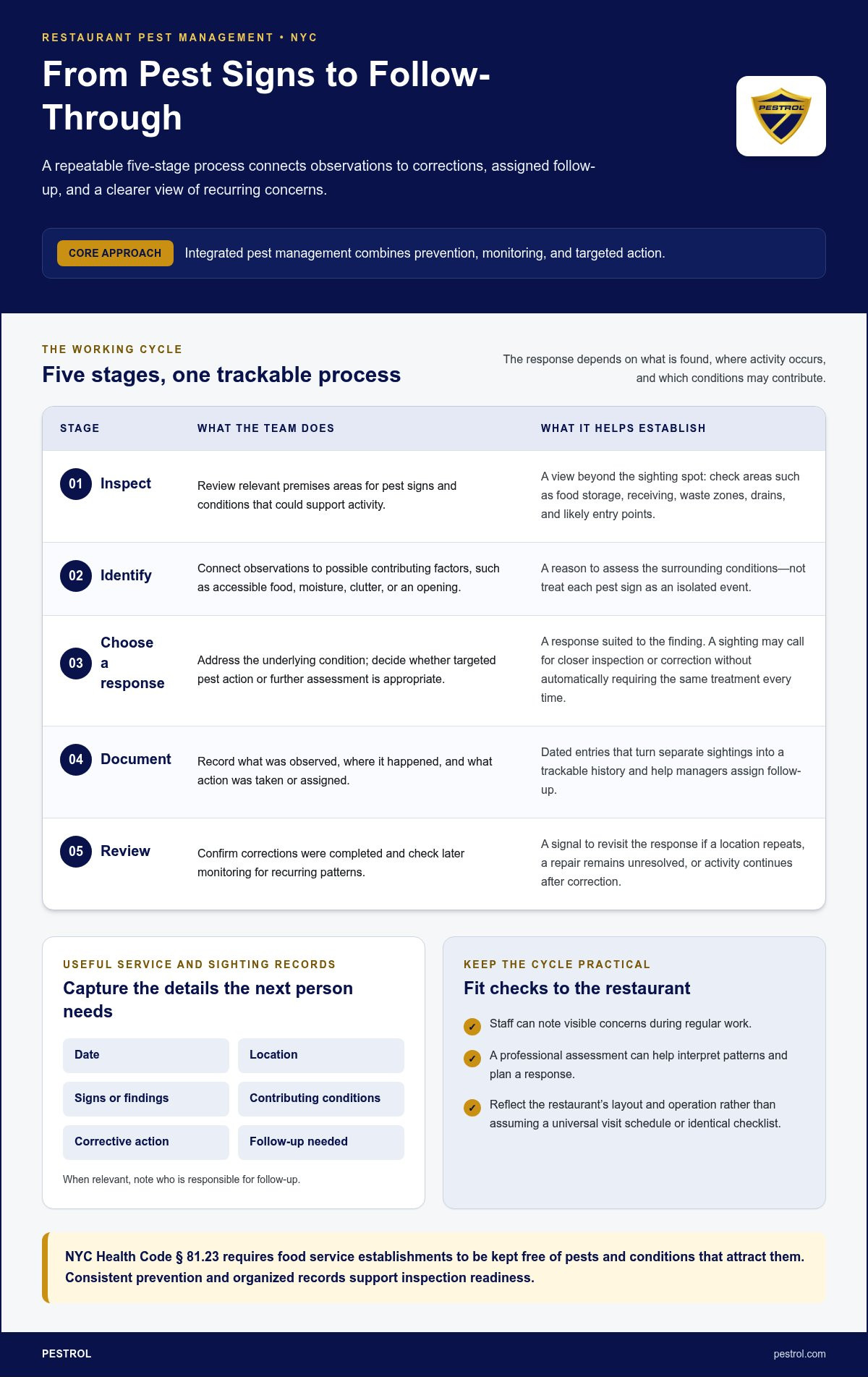
Restaurants need a program that protects food and fits the pace of kitchen work and service. NYC Health Code § 81.23 requires food service establishments to be kept free of pests and conditions that attract them, making consistent prevention and organized records important parts of readiness.
This guide covers practical steps for reducing pest risks, documenting service and sightings, and fitting prevention and treatment into restaurant operations. You’ll also learn how to assess a restaurant-focused plan. Pestrol provides tailored pest management and rodent proofing for food-service businesses, including restaurants in Manhattan and the Bronx.
Key Takeaways
- Map pest risks across the restaurant, including storage, receiving, waste areas, and building openings.
- Use a repeatable inspection-and-review process to turn sightings and contributing conditions into assigned next steps.
- Compare reactive treatment, routine monitoring, and tailored ongoing management by how well each fits your operations and need for visibility.
- Give staff and managers clear responsibilities for reporting activity and protecting affected areas.
- Organize restaurant pest control NYC around food-service needs with tailored monitoring and treatment from Pestrol.
Why Restaurant Pest Control in NYC Protects More Than the Kitchen
Protecting a restaurant means looking beyond the food on the line. Staff, guests, daily service, and the business’s reputation all depend on a clean, well-managed space. A rodent near a delivery entrance, a cockroach by a sink, or flies around a waste area can point to conditions that need attention as well as pests that need to be addressed.
That’s why restaurant pest control NYC should account for the full operation. Kitchens and food-preparation areas matter, but so do dry and cold storage, receiving zones, waste-handling areas, plumbing openings, and doors that don’t close tightly. Regular attention to sanitation and pest conditions also helps operators prepare for health inspections instead of scrambling after a problem appears.
Where restaurant pest risks can enter and persist
Deliveries can bring pests or signs of activity into receiving areas. Waste, pipe openings, and gaps beneath doors can also create problems. Warm, humid areas with food or water nearby may support pest activity, particularly when spills, leaks, or clutter go unaddressed. Staff can help by reporting signs promptly and recording where and when they appeared.
- Inspect receiving areas and packaging as deliveries are handled.
- Keep waste areas orderly, and report damaged containers, spills, or lingering food debris.
- Look for gaps around pipes, doors, and other building openings that may need attention.
- Report droppings, gnaw marks, insect sightings, or repeated fly activity rather than treating each sign as isolated.
One sighting doesn’t always show the source or extent of a problem. Repeated signs, activity in multiple locations, or evidence near stored food warrant a closer assessment. Record the location and details, then pass them to the person responsible for pest management. Those specifics can help reveal patterns and focus attention on the areas that need it.
Why NYC operators need a prevention-first mindset
Prevention supports food protection, customer confidence, and a more predictable workday. It also helps restaurants stay prepared for inspections without treating each one as a crisis. General pest-control methods include preventing access and reducing conditions that attract pests; the Pest Control Overview provides broader background on these approaches.
Early warning signs can include an unsealed opening, standing water, or a recurring spill. Droppings, gnaw marks, or live pests are evidence to document and assess, not a reason to guess at a treatment. Effective restaurant pest management combines prevention, monitoring, and a planned response to activity.
How a Restaurant Pest Management Program Works in NYC
A useful pest management program gives the team a clear process, not just a response for after a sighting. It links observations to practical corrections, assigns follow-up, and helps managers see whether the same concern is recurring. Integrated pest management combines prevention, monitoring, and targeted action. The approach supports food protection, a priority explored in Importance of Pest Control in Food Facilities.
Build the program around a repeatable cycle. The response depends on what staff or a pest management professional finds, where activity occurs, and which conditions may be contributing. Monitoring and treatment are related but not interchangeable. A sighting may call for closer inspection or a correction without automatically requiring the same treatment every time.
- Inspect. Review relevant areas of the premises for pest signs and conditions that could support activity.
- Identify. Connect observations to likely contributing factors, such as accessible food, moisture, clutter, or an opening.
- Choose a response. Address the underlying condition and determine whether targeted pest action or further assessment is appropriate.
- Document. Record what was observed, where it happened, and what action was taken or assigned.
- Review. Confirm that corrections were completed and check whether later monitoring shows a recurring pattern.
What a useful inspection should examine
Look beyond the spot where a pest was seen. Review food storage and receiving areas, waste zones, drains, likely entry points, and nearby surfaces and equipment. The goal is to connect signs, such as droppings or insect activity, with possible contributing conditions. For example, repeated activity near a drain is a reason to review that location and its surroundings, not just record that a pest was seen.
Keep the process practical and suited to the premises. Staff can note visible concerns during regular work, while a professional assessment can help interpret patterns and plan a response. The cycle should reflect the restaurant’s layout and operation rather than rely on a universal visit schedule or identical checklist.
What to document after monitoring or treatment
Make records useful to the next person who needs to act. For each observation or service, note the date, location, signs or findings, contributing conditions, corrective action, and follow-up needed. When relevant, record who is responsible for that follow-up. Clear, dated entries turn separate sightings into a trackable history and help managers assign tasks instead of relying on memory.
Review records for repeat locations, unresolved repairs, or activity that continues after a correction. A recurring pattern may mean the response needs another look. Pestrol provides tailored restaurant pest management and rodent-proofing plans for food-service businesses. Managers considering a restaurant pest management plan can explore how strategic monitoring and treatment can fit their premises.
Reactive Treatment or Ongoing Prevention: Which Fits a NYC Restaurant?
A one-time response may address a specific concern, but it won’t necessarily fix the conditions that allowed activity to occur. A gap beneath a door, a sanitation issue, or an unmonitored receiving area can leave the underlying risk in place. The choice isn’t always reactive treatment or prevention: an active infestation may call for targeted action alongside steps to address contributing conditions.
Compare approaches by the information and planning they provide, rather than assuming one option suits every restaurant. The right fit depends on site conditions, pest activity, the building, and how the restaurant operates.
| Approach | Likely fit | Visibility into recurring activity | Operational planning |
|---|---|---|---|
| Reactive response | A specific, newly reported concern that needs assessment and action. | Limited if records and follow-up don’t track whether the sign returns. | Focused on coordinating a response around the affected area and service needs. |
| Routine monitoring | A restaurant seeking ongoing attention to signs and changing site conditions. | Can help build a record of where and when activity is observed. | Requires a workable process for staff communication and follow-up. |
| Tailored ongoing management | A premises with distinct food-service routines, site conditions, or recurring concerns. | Can connect observations, corrective actions, and review over time. | Can be shaped around the restaurant’s areas and operating needs. |
When a one-time response may not address the underlying issue
Addressing visible activity and reducing the conditions that encourage recurrence are related but separate tasks. A treatment response may address a pest concern, for example, while an unsealed pipe opening or persistent food residue still needs correction. Deliveries can also introduce risk if packaging and receiving areas aren’t included in routine checks. A single treatment isn’t a promise that pests will never return.
After a response, record what was addressed and what remains, such as a repair to assign, a cleaning routine to reinforce, or an area to monitor. That handoff helps keep corrective work from disappearing between shifts. If signs continue, use the record to guide a fresh assessment rather than repeating a response without considering the surrounding conditions.
What to compare in a restaurant-focused service plan
Look for a clear connection between inspection, monitoring, corrective actions, and communication. The plan should account for food-service areas and staff routines, with coordination that fits the restaurant’s operations. Discuss what will be observed, how findings will be shared, and how follow-up needs will be handled. Those details help managers understand the process without assuming every visit or treatment should be identical.
For restaurant pest control NYC, a tailored approach can bring monitoring and treatment together in a practical plan. Pestrol provides customized pest management and rodent-proofing for food-service businesses. Explore restaurant pest management shaped around the premises and operating needs.
A Practical NYC Restaurant Checklist for Staff and Managers
A checklist makes pest prevention part of the working day rather than a task that gets lost between shifts. Give each team member a simple way to report concerns, and assign a manager to follow up. Consistent routines for food, deliveries, waste, and building conditions help staff notice changes early and provide a pest management professional with useful details.
Use this response sequence when someone reports pest activity:
- Receive the report. Ask what was seen, where it occurred, and when.
- Protect the area. Follow workplace procedures for food and food-contact surfaces, and keep affected items from being used until addressed under those procedures.
- Notify the manager. Promptly escalate recurring signs or findings near food, preparation, or storage areas.
- Arrange assessment. Share the observation and relevant context with the pest management professional so the concern can be evaluated.
- Assign follow-up. Record corrective actions, who will handle them, and what needs review afterward.
Daily and shift-change habits that reduce preventable conditions
Make key checks part of opening, closing, or shift handoff. Store food appropriately, clear waste according to the restaurant’s routine, and report leaks or visible gaps rather than leaving them for the next team. At receiving, look for damaged packaging or signs of activity. Keeping storage areas orderly also makes changes easier to spot.
- Confirm food is covered or stored appropriately when not in use.
- Keep waste handling consistent, and note spills or container damage that needs attention.
- Check deliveries and nearby receiving areas for unusual signs before items are put away.
- Pass along leaks, gaps, droppings, gnaw marks, or insect sightings during handoff.
These daily steps support a prevention program, but they don’t replace professional assessment or treatment when needed. For restaurant pest control NYC, staff routines work best when everyone knows who receives reports and how observations reach the manager responsible for follow-up.
How to respond when staff spot pest activity
Ask employees to describe what they observed without guessing at the cause. A useful report identifies the location, time, and type of sign, such as a live insect, droppings, or damaged packaging. If the concern returns or appears in a sensitive area, escalate it to the manager and pest management professional rather than treating each sighting as unrelated.
Keep a shared log that staff can update and managers can review. Include the date, location, observation, immediate steps taken, corrective action, assigned person, and any follow-up needed. A clear record helps the next shift understand what has already been done and helps managers spot repeated locations or unfinished tasks.
Keep entries factual and concise. For example, write “insect observed beside the rear storage door during closing” rather than adding an unverified explanation. Review open items at handoff, then update the log when a correction is complete or further assessment is arranged. This turns a report into an accountable next step.
Restaurant Pest Control NYC: How Pestrol Supports Food-Service Businesses
A restaurant’s pest concerns depend on its layout and daily work. A sighting in storage, activity near a receiving door, or a rodent concern around the building may call for different attention and coordination. Pestrol provides customized pest management and rodent proofing for restaurants and food-service businesses. Its strategic monitoring and treatment support sanitary conditions and compliance goals.
A tailored program starts with the premises and the concerns operators have observed. The aim is to connect pest activity with relevant areas and conditions, then shape a management approach around food-service needs. Monitoring helps track what is happening, while treatment can be part of the response when appropriate. This keeps the plan grounded in the site rather than assuming every restaurant needs the same approach.
A tailored approach for restaurant and food-service environments
Restaurant operations have practical constraints: food preparation must continue safely, staff need clear communication, and attention may need to cover more than the kitchen. Share how the space is used, where activity has been noticed, and which areas are most sensitive to disruption. That context helps shape monitoring and treatment around the premises and operating needs.
Pestrol’s restaurant pest management and rodent-proofing services are designed for food-service businesses. Strategic monitoring and treatment can support sanitary conditions and help operators work toward compliance goals alongside the restaurant’s own sanitation and maintenance practices. Pestrol serves local communities including Manhattan, the Bronx, Chester, Cornwall, Crawford, Goshen, Greenville, Highlands, Minisink, Monroe, Montgomery, Mount Hope, New Windsor, Newburgh, Palm Tree, Tuxedo, Wallkill, Warwick, Wawayanda, and Woodbury.
Preparing for a conversation about your restaurant
Bring specific details rather than trying to diagnose the cause. A concise, factual summary helps focus the discussion on site conditions and operating needs. Gather information such as:
- The areas where staff have noticed activity, including whether signs have appeared more than once.
- What was observed and when, such as a pest sighting, droppings, or damaged packaging.
- Relevant operating constraints, including food-service areas that need careful coordination.
- Corrective steps already taken, such as cleaning, waste-handling changes, or a repair request.
- Notes or records that show where concerns may be recurring.
Clear details make the conversation more useful from the start. If staff have different reports, organize them by location and date. Include any pending action, such as repairing an opening or addressing a leak. That gives the service discussion a practical starting point and connects pest concerns with the restaurant’s routine.
For restaurant pest control NYC, start with the premises, observed concerns, and operating priorities. Pestrol is a family-owned and operated business providing pest management for local food-service environments.
Make Your Next Pest-Management Step Count
Give your prevention plan a clear next move. Assign someone to review open pest-related tasks, make sure staff know how to report new observations, and set a practical point to revisit unresolved concerns. Clear ownership and follow-up help keep important details from slipping between shifts.
If you’re evaluating restaurant pest control NYC, bring site notes and operating priorities into the discussion. Identify the areas that need attention, describe patterns staff have noticed, and explain where service coordination matters most. That context helps shape a practical approach around your restaurant.
A steady plan starts with a clear conversation, useful observations, and a willingness to address conditions as they’re identified. Choose a pest management approach built around restaurant needs and food-service operations.
With a clear next step, your team can keep building a more prepared, confident operation.
Frequently Asked Questions
Is restaurant pest control required in NYC?
Restaurants must follow applicable food-safety and sanitation rules, but specific requirements depend on the operation and current regulations. There isn’t one generic schedule that fits every restaurant. For restaurant pest control NYC, review current NYC Department of Health and Mental Hygiene guidance and applicable New York State requirements. A professional plan can help organize prevention and records, but it doesn’t replace official regulatory guidance.
Can a restaurant stay open during pest treatment?
It depends on the treatment, affected area, food-handling activity, and service instructions. Before work begins, coordinate how staff will protect food, utensils, and food-contact surfaces, and follow treatment directions and workplace procedures. Don’t assume every treatment requires closing or that normal operations can continue in every area. Resume work in treated spaces only according to the applicable instructions and health guidance.
How often should a NYC restaurant schedule pest inspections?
There’s no single inspection frequency that suits every restaurant or pest concern. The appropriate monitoring schedule depends on site conditions, observed activity, operating practices, and applicable rules. Managers can use staff handoffs to catch new signs between professional visits, such as a change in activity near a receiving area. Check current official guidance for any required frequency that applies to the restaurant’s location and type of operation.
What records should a restaurant keep for pest management?
Keep an accessible record of pest observations, service information, dates, locations, and actions taken. Note whether staff reported a concern, which area was affected, and whether a repair or follow-up remains open. Store related service documents with the log so managers can review the history in one place. Check current local requirements before treating this as a complete regulatory recordkeeping standard.
What should a restaurant manager do after spotting a mouse or cockroach?
Record when and where staff saw it, protect food and food-contact areas under workplace procedures, and notify the responsible manager promptly. Don’t move potentially contaminated items into another work area. Note nearby conditions that may help an assessment, such as damaged packaging or moisture. Arrange professional assessment, and follow established procedures and official guidance if the finding affects food safety or restaurant operations.
Are pest-control treatments safe around restaurant food?
Safety depends on the product, application method, location, and label directions. Follow the treating professional’s instructions for protecting food, utensils, and food-contact surfaces, and for determining when staff can resume work in an affected area. Don’t assume a treatment is suitable for an occupied food-preparation space. If instructions are unclear, pause work in the affected area and get direction from the treating professional before proceeding.
Can pests affect a restaurant health inspection in NYC?
Pest evidence may be relevant during an inspection, but the outcome depends on the conditions observed and applicable rules. Avoid relying on broad online claims about automatic penalties or inspection results. If a finding is recorded, review the inspection details, address the stated concern, and document follow-up. For a specific compliance question, consult current NYC Department of Health and Mental Hygiene guidance or the authority responsible for the restaurant.