



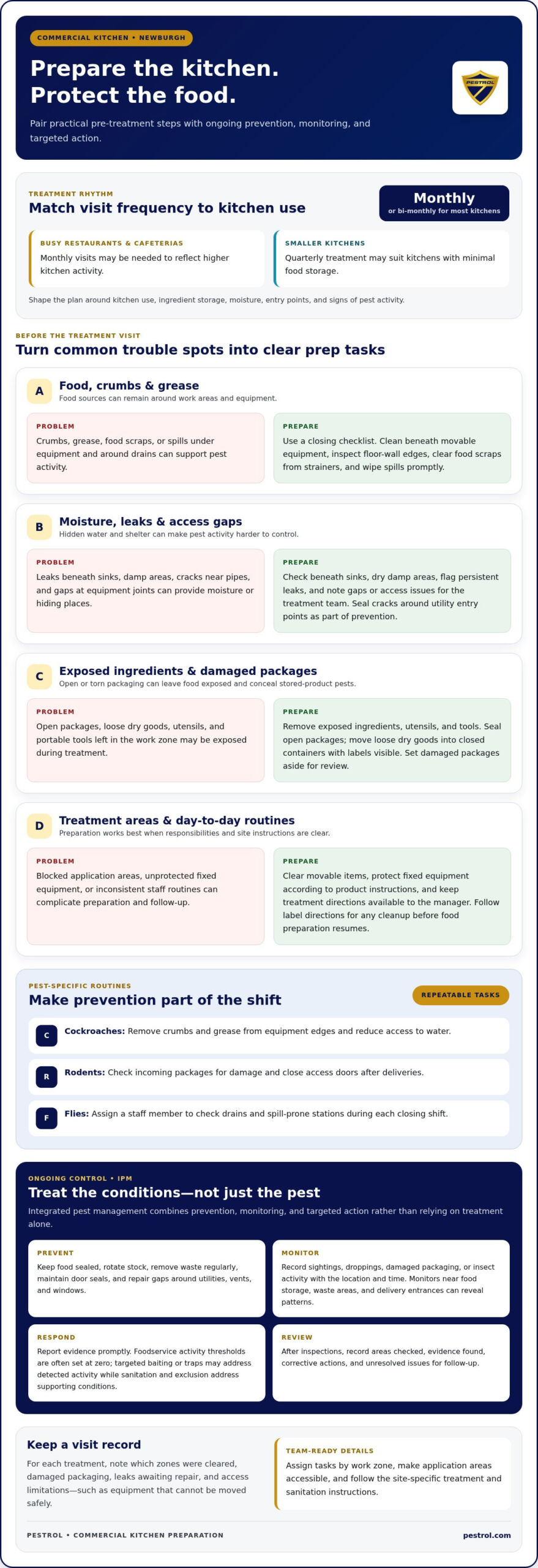
A clean kitchen is only half the plan: commercial pest treatment works best alongside regular prevention and inspections. In Newburgh, professional pest treatments for most commercial kitchens are scheduled monthly or bi-monthly; busy restaurants and cafeterias may need monthly visits, while quarterly treatments may suit smaller kitchens with minimal food storage. Preparing a commercial kitchen for pest treatment in Newburgh means cleaning food and water sources, securing ingredients, and following the treatment instructions for the site.
A clear schedule and practical preparation help protect food, staff, and daily operations. The visit plan should reflect how the kitchen is used, where ingredients are stored, and whether moisture or entry points are contributing to pest activity.
This guide explains how to clean and organize before treatment, reduce contamination risks, and use integrated pest management (IPM) to support ongoing control. You’ll also learn what application and inspection schedules can involve, so you can prepare your team and kitchen with confidence.
Key Takeaways
- Before treatment, clear food and work surfaces, clean spills and drains, and reduce moisture so pests have fewer places to feed and hide.
- Use integrated pest management to pair sanitation with entry-point repairs, monitoring, and staff reporting.
- Keep ingredients sealed, rotate stock, and remove waste regularly to reduce food sources and stored-product pest risks.
- Most commercial kitchens schedule professional treatments monthly or bi-monthly; kitchen activity, food storage, and pest evidence help shape the plan.
- Prepare staff for treatment by following site-specific instructions and keeping records of pest sightings and follow-up inspections.
Kitchen cleaning, moisture control, and food storage
Preparing a commercial kitchen for pest treatment in Newburgh starts by making treatment areas accessible and removing conditions that support pests. Assign tasks by work zone, such as the cooking line, dish area, and dry storage, and note access issues for the treatment team.
Kitchen Cleaning and Moisture Control
Use a closing checklist to clean beneath movable equipment and inspect the floor-wall edges behind it. In dishwashing areas, remove food scraps from strainers and check beneath sinks for leaks. Cockroaches can shelter in narrow cracks, so note gaps near pipe openings and equipment joints. Dry damp areas and address persistent leaks to reduce moisture that can support pest activity.
Food Storage Before Treatment
Before treatment, remove exposed ingredients, utensils, and portable tools from the work zone. Seal open packages and transfer loose dry goods into closed containers, keeping labels visible for stock rotation. A torn flour bag, for example, can conceal stored-product pests and spilled food. Set damaged packages aside for review rather than returning them to shelves unnoticed.
Treatment Preparation and Surface Protection
Clear movable items from the planned application area, then identify fixed equipment that needs protection according to the product instructions. Keep the treatment directions available to the manager, since preparation varies by application site. For New York State and local health-code compliance, follow the kitchen’s sanitation procedures and prevent pest activity from affecting food operations. After treatment, follow label directions for any required cleanup before food preparation resumes.
For cockroaches, remove crumbs and grease from equipment edges and reduce access to water, limiting resources that support their life cycle. For rodents, keep receiving and storage routines consistent: check incoming packages for damage and close access doors after deliveries. For flies, assign a staff member to check drains and spill-prone stations during each closing shift. These task-based routines make preparation easier to repeat.
Keep a dated preparation record for each treatment visit. Note which zones were cleared, any damaged packaging, leaks awaiting repair, and access limitations. If a refrigerator cannot be moved safely, record the obstruction so it can be addressed before the next service. This gives the treatment team useful site details without relying on staff memory.
Preparing a commercial kitchen for pest treatment in Newburgh also means adjusting routines when new evidence appears. If staff find activity near a dry-storage shelf, check adjacent packages and shelf joints before restocking. If a floor drain becomes slow or damaged, flag it for repair. These observations show where preparation needs to change without disrupting unaffected areas.
How Does Integrated Pest Management (IPM) Work in Restaurants?
Integrated pest management combines prevention, monitoring, and targeted action rather than relying on treatment alone. For a Newburgh restaurant, ask a provider to show a current applicable license and explain its commercial food-service work, written treatment plan, monitoring, and follow-up records.
Integrated Pest Management in Kitchens
An IPM plan starts by identifying pest evidence and the conditions supporting it. Staff can record sightings, droppings, damaged packaging, or insect activity, then note the location and time. Pest monitors near food storage, waste areas, and delivery entrances help reveal patterns. Pest activity thresholds in foodservice environments are often set at zero, so report evidence promptly rather than waiting for an infestation to grow.
Sanitation and Preventive Pest Management
Sanitation supports other pest management steps by reducing food, water, and shelter. Keep a written cleaning schedule for floors, drains, food-contact surfaces, and hard-to-reach areas around equipment. Check for leaks and standing moisture during routine closing tasks. Seal cracks around utility entry points, maintain door seals, and keep exterior doors closed instead of propping them open.
Pair routine checks with staff awareness. Train employees to report pest sightings and recognize signs such as gnaw marks or insects around stored ingredients. Assign responsibility for recording findings and passing them to the manager. A simple log can show whether activity clusters near a drain, doorway, or storage shelf, helping focus inspections and corrective work.
Food Storage and Waste Management
Keep food storage tightly sealed and organize shelves so staff can inspect packaging and rotate stock. Wipe crumbs promptly, clean spills, and check deliveries for signs of rodents before putting items away. Use sealed indoor trash containers and remove waste regularly. Keep dumpsters closed and away from building doors to reduce the chance that waste attracts pests near kitchen entrances.
IPM also includes practical exclusion and targeted control. Inspect the building exterior, especially around pipes, utilities, and foundation cracks, then close gaps that may allow pests inside. Maintain screens on vents and windows, and repair damaged weather stripping. If monitoring detects activity, targeted baiting or traps can address the pest while sanitation and exclusion tackle the conditions behind it.
Review the plan after each inspection. Record the areas checked, pest evidence found, corrective actions taken, and unresolved issues for follow-up. Ask how often visits will occur and what each visit covers, then connect those checks to staff cleaning and reporting routines. For kitchens needing ongoing, site-focused support, restaurant pest control can be a practical next step.
Pest-related food contamination and health risks
Pests can contaminate food and food-contact surfaces as they move through a kitchen. House flies can transfer more than 100 pathogens, and cockroaches have been reported to spread at least 33 kinds of bacteria. Treat droppings, damaged packaging, or insects near ingredients as active evidence. Record the location and protect nearby food while the affected area is assessed.
Food, utensils, and food-contact surfaces should be removed from treatment areas or protected as the product label directs. Pesticide exposure can occur if staff or customers contact treated surfaces or enter an area before the label permits. Keep people away during application and follow label instructions for ventilation, re-entry, and cleaning before food preparation resumes.
Harborage Areas and Contamination Routes
Look beyond open counters. Cracks, crevices, drains, and table legs can shelter insects, while moisture and food debris can sustain activity. Inspect edges beneath equipment, floor-wall joints, and spaces around utility lines. A spill reaching a table leg or a damp drain area can draw pests from visible prep surfaces into hidden harborage.
Map each sign to a likely route. For example, note whether fly activity appears near a drain, delivery entrance, or produce storage. Check nearby surfaces for residue, damaged packaging, and signs of movement. This information helps a professional pest program focus treatment and monitoring where evidence appears, rather than applying a broad approach without addressing the source.
Seasonal Pest Pressures in Food Facilities
During warmer months, flies, ants, and cockroaches can be more active. Review monitoring points and sanitation records closely when seasonal activity rises, especially around drains, doors, and waste areas. If sightings increase, record the date, location, and pest type. That record helps the team distinguish a recurring entry route from isolated activity.
Product Labels and Food-Handling Areas
Before treatment, review the product label for approved use locations and application directions. Food facility managers should verify that pest-control products are registered for use at their location and applied properly. If an NSF approval mark appears in facility review procedures, treat it as a separate review point, not a replacement for label directions. The label should guide food removal, surface protection, and re-entry.
After application, follow the label for cleaning and resuming food handling. Wash and sanitize exposed food-contact surfaces, utensils, and equipment when directed, and keep food away until the area is ready. Record the treatment location, product details, and completed cleanup in the facility’s compliance log. This gives managers a clear reference for staff instructions and future inspections.
Product application and inspection schedules
A commercial kitchen needs a clear schedule for treatment, monitoring, and follow-up. Match each visit to pest activity, food volume, storage conditions, and the locations where evidence appears. Keep the schedule in a facility log so managers can track inspections, outstanding problems, and completed actions.
Professional pest control treatments for most commercial kitchens are scheduled monthly or bi-monthly. Monthly visits are recommended for busy restaurants and cafeterias handling large daily food volumes. Quarterly treatments may suit smaller kitchens or operations with minimal food storage. The inspection plan should also state what each visit covers, including monitors, bait stations, drains, delivery areas, and previous problem spots.
Set product checks according to the pest and the product’s intended use. In active accounts, inspect and replenish German cockroach gel bait every 2 to 4 weeks. Replace fly-light glue boards monthly or when full. Check and service rodent bait stations every 1 to 2 weeks. Record each check and any new activity, so staff can see whether the source persists or shifts to another part of the kitchen.
Rodent prevention starts before ingredients enter storage. Inspect deliveries for gnaw marks, droppings, damaged packaging, or other signs before accepting them into food areas. Keep back doors closed, especially during unloading, and note gaps around delivery entrances. Rodents often travel along room edges, making walls and corners useful monitoring locations. Monitors near external doors and frequently used access points can help identify activity inside.
Include the building and equipment in each inspection. Check drains and gullies for damage, then document defects that could provide access or shelter. Review monitor locations near food storage, waste areas, room edges, and delivery doors. A map of these points helps staff repeat checks consistently and spot changes between visits.
Ask the pest-control team to define visit frequency and inspection scope in a written schedule. Each visit should record findings, completed work, and outstanding problems for the next inspection. That record prevents unresolved issues from disappearing between appointments. It also helps managers compare pest evidence with deliveries, cleaning records, and changes in kitchen activity.
After application, follow the product label and site-specific treatment instructions for access, cleaning, and food handling. Don’t move monitors or bait stations during routine cleaning unless the service plan directs it; misplaced devices can weaken monitoring. If staff find fresh evidence between visits, log the location and report it promptly so follow-up can address the source, not just the visible sign.
Use the schedule to reinforce everyday controls: keep food in sealed containers, keep back doors closed, and check deliveries for rodent signs before they enter food areas. Check drains and gullies for damage, and monitor external doors, delivery entrances, and frequently used access points.
Drain treatments are most effective when applied weekly as part of a routine sanitation program. The Kitchen Protocol Guide covers where to look, which products to use, and proper applications when treating a bar or kitchen. A commercial kitchen should establish how often its pest-control company will inspect the premises and what each visit will cover.
How should a commercial kitchen prepare for pest control treatment?
Build preparation around the treatment area, pest evidence, and product instructions. A manager can coordinate the work by assigning tasks, clearing access, and recording what staff complete. For example, if activity centers behind a cooking line, clear that equipment edge and note its location for the treatment team.
Start with a brief pre-treatment walk-through. Mark sightings, droppings, damaged packages, and insect activity on a kitchen map or inspection log. Include the room, nearby equipment, and any relevant delivery or storage area. This helps distinguish an active source from an isolated sign and gives the technician useful context before application.
- Move exposed ingredients, utensils, and small equipment away from treatment areas.
- Protect food-contact surfaces as the product instructions direct.
- Clear floor edges and access points around equipment for inspection.
- Tell staff which rooms or surfaces are included in the treatment.
- Keep the treatment label and site instructions available to the manager.
Assign a lead employee to coordinate these steps. That person can check that food is secured, staff understand which areas are restricted, and treatment instructions are available. If a delivery arrives during preparation, inspect it for rodent signs before bringing packages into storage. Keep the receiving door closed when it isn’t needed.
Preparation should match the pest. For cockroach evidence, make appliance edges, cracks, and damp locations accessible for inspection. For rodents, clear wall edges and inspect incoming packaging, since monitoring often focuses along room boundaries and delivery entrances. For flies, prioritize drains, gullies, and spill-prone areas. Avoid moving established monitors or bait stations unless the service plan calls for it.
Before treatment begins, confirm that the application area is free of people and unprotected food. Follow the product label for preparation, access restrictions, and re-entry. Don’t assume every product uses the same process. The label and site-specific instructions determine what must be covered, moved, or left in place, and when staff can return to the treated space.
After application, use the instructions to guide cleanup and reopening. Wash and sanitize food-contact surfaces, utensils, and equipment if directed, then document the completed work. Record the treatment location, any restrictions communicated to staff, and unresolved pest evidence. During the next inspection, compare those notes with new sightings to see whether activity persists or has shifted.
A severe infestation may require a temporary closure while the kitchen is treated. Plan staffing and food handling around the affected areas, and communicate reopening steps clearly. For focused support preparing a restaurant kitchen, arrange restaurant pest control.
Pestrol: Home Pest Protection – Basic
Pestrol’s Home Pest Protection – Basic is designed for residential pest concerns, separate from commercial kitchen treatment. The preparation steps in this guide help food-service teams organize cleaning, monitoring, and treatment access; a home pest protection plan serves a different setting.
If you also need help with pest concerns at home, Pestrol offers Home Pest Protection – Plus and Home Pest Protection – Premium, as well as Bed Bug Treatment. For a commercial kitchen, the relevant service is Restaurant Pest Control, with preparation guided by the site-specific treatment instructions.
Contact Pestrol to discuss the pest protection option that fits your home.
Keep Your Kitchen Ready for the Next Step
Preparing a commercial kitchen for pest treatment in Newburgh is a practical starting point, but ongoing control also depends on clear ownership. For business owners and managers looking to strengthen operational delegation and leadership within their teams, Charlie Whalley Coaching provides executive and business guidance. Assign a staff lead to maintain the pest log, coordinate access, and share new evidence with the treatment team so each inspection builds on the last instead of treating every visit as a fresh start.
For food-service concerns, Pestrol provides Restaurant Pest Control, tailored to the needs of commercial kitchens. Home Pest Protection – Basic, Home Pest Protection – Plus, and Home Pest Protection – Premium address residential needs and are separate options for pest concerns at home.
A consistent plan gives your team a clear next move and helps keep attention on safe food handling and daily service.
Frequently Asked Questions
Can you spray insecticide in a restaurant kitchen?
Yes, insecticide may be applied in a restaurant kitchen when the product is registered for that location and used according to its label. The application must account for food, utensils, equipment, and food-contact surfaces. For example, staff may need to clear or protect prep areas before treatment. Keep employees and customers away from application areas as directed, and follow label instructions for cleanup and re-entry.
What pest control treatments are safe and effective for restaurants and commercial kitchens?
Effective commercial kitchen pest control pairs targeted treatment with sanitation, monitoring, and exclusion. Depending on the pest and evidence, a program may use baiting or traps, while staff address access points and conditions that attract pests. Managers should verify that products are registered for use at the facility and applied according to their labels. A treatment plan should identify target areas and document follow-up findings.
How long must a commercial kitchen remain closed after pest treatment?
A commercial kitchen must stay closed until the product label and treatment instructions permit re-entry and affected food areas are ready for use. Timing depends on the product, application method, treated surfaces, and any ventilation or cleanup directions. Before reopening, the manager should confirm required cleaning is complete, food-contact surfaces are ready for use, and staff understand any remaining access restrictions.