



With New York City consistently ranking as one of the most moth-infested cities in the country, finding the best exterminator for clothing moths is the only way to protect a luxury wardrobe from a silent, persistent threat. You’ve likely felt that sink-in-the-stomach dread after finding a jagged hole in a cherished cashmere sweater or an irreplaceable silk scarf. It’s frustrating when DIY pheromone traps fail to solve the problem, especially when you’re worried about the safety of using harsh, toxic chemicals near your most personal belongings.
We know that your clothing is a significant investment that deserves expert care. This guide will help you identify professional services that prioritize total eradication through specialized life-cycle disruption rather than just temporary fixes. We will preview the latest 2026 treatment protocols, including forensic inspections and customized prevention plans that provide the long-term peace of mind you need to feel safe in your home.
Key Takeaways
- Learn why the best exterminator for clothing moths focuses on forensic source identification to protect your high-end woolens and silks.
- Understand the “Iceberg Effect” and why retail pheromone traps are only diagnostic tools that cannot stop a full-scale larvae infestation.
- Discover the specific technical qualities required for treating delicate textiles and the unique structural voids found in historic New York homes.
- Compare the effectiveness of professional life-cycle disruption against common DIY methods that often leave your wardrobe vulnerable.
- Identify how customized plans, such as Home Pest Protection – Plus, provide a proactive shield for your home and long-term peace of mind.
What Defines the Best Exterminator for Clothing Moths in 2026?
Identifying the best exterminator for clothing moths requires looking beyond a general pest control license. A true specialist understands that the common Clothes moth, specifically the webbing variety known as Tineola bisselliella, is a cryptic and highly destructive pest. Unlike common household insects that seek out food scraps, these moths are biologically programmed to find keratin. This protein is the primary component of your most expensive natural fibers, including wool, silk, cashmere, and fur.
The leading providers in 2026 prioritize “source identification” over the outdated practice of blanket chemical application. They utilize Integrated Pest Management (IPM) strategies specifically designed for delicate textiles. This modern approach focuses on disrupting the moth’s reproductive cycle through a combination of physical removal, temperature controls, and low-toxicity targeted treatments. It’s about being precise rather than being pervasive, ensuring your home remains a safe environment while your wardrobe is protected.
The Difference Between Generalists and Moth Specialists
A general “bug spray” often fails because it only targets the adult moths you see flying around the room. It’s a common mistake to think the flying moths are the problem; in reality, the adults don’t even have mouths. The damage is caused entirely by the larvae. Generalists often miss the microscopic eggs tucked into dark floor cracks or the larvae hidden deep within the structural weave of an antique rug. Specialists use forensic inspection tools to find these hidden breeding “hot zones.” They possess a deep understanding of fabric composition and know exactly where larvae are likely to congregate based on the specific fibers in your home.
Forensic Inspection: The First Mark of a Pro
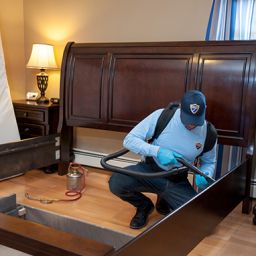
A professional inspection is exhaustive and goes far beyond a quick peek in the closet. True experts examine areas you might never consider, such as:
- Underneath heavy furniture and along baseboards where hair and dust collect.
- Inside the internal felts of pianos.
- The undersides of area rugs and decorative wall hangings.
Specialists use high-intensity UV lighting to spot the faint trails of silk webbing and larvae frass that are invisible under normal light. They also work to identify the original entry point, whether it was a recent vintage rug purchase or second-hand furniture. By finding the source, the best exterminator for clothing moths can offer a warranty that covers the pest’s entire life cycle, ensuring that once the moths are gone, they stay gone.
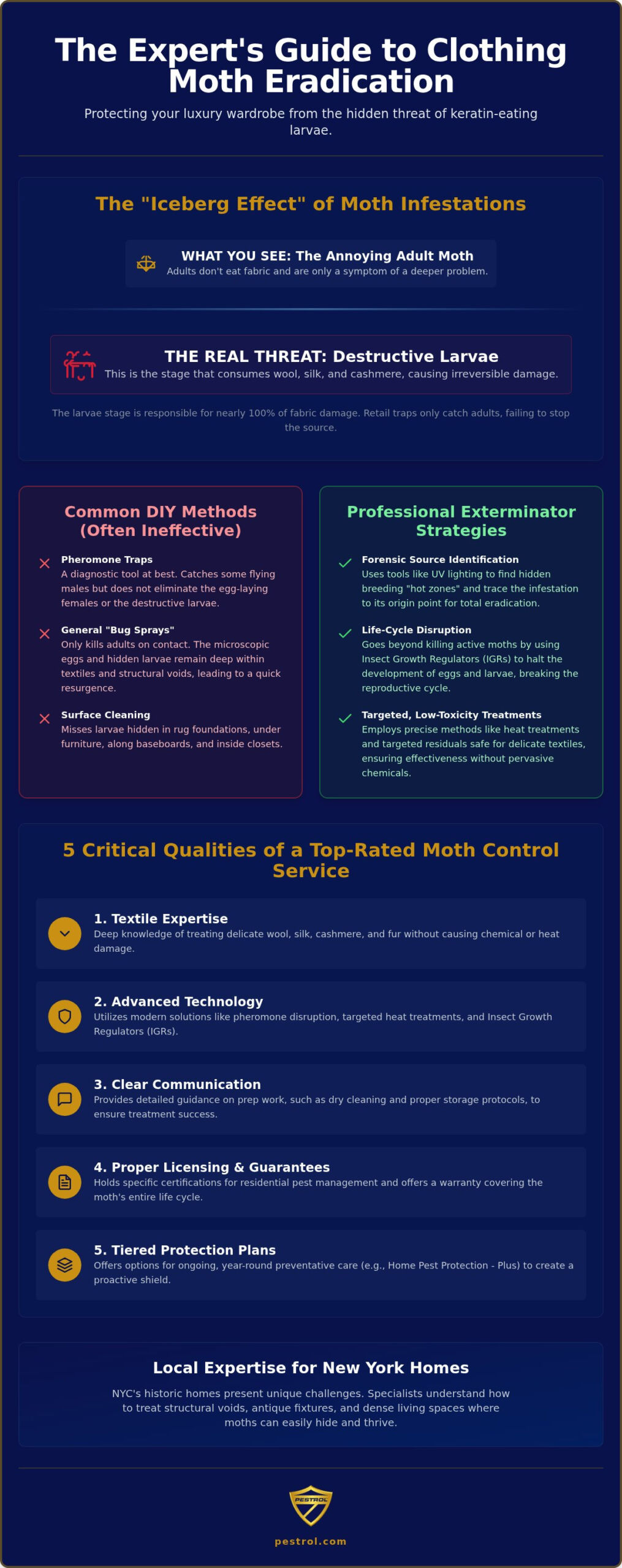
5 Critical Qualities of Top-Rated Moth Control Services
Finding the best exterminator for clothing moths requires looking for technical competency and a deep respect for your property. When your wardrobe contains thousands of dollars in natural fibers, you can’t afford a trial-and-error approach. Top-rated services are defined by five critical pillars:
- Textile Expertise: Deep knowledge of how to treat wool, silk, and fur without damage.
- Advanced Technology: Use of pheromone disruption and growth regulators.
- Clear Communication: Detailed guidance on dry cleaning and bagging protocols.
- Proper Licensing: Specific certifications for residential pest management.
- Tiered Protection: Options for year-round preventative care.
Communication is the hallmark of a professional. They will guide you through the necessary prep work, such as dry cleaning or freezing specific items, before they ever arrive. This partnership ensures the treatment is effective from day one. For those seeking a proactive shield, our Home Pest Protection – Plus plan is designed to catch these pests before they reach your closet.
Advanced Treatment Methodologies
Modern moth control has evolved beyond simple sprays. Professionals now use a combination of heat treatments and precision low-toxicity residuals. Heat is particularly effective for treating delicate items that cannot be easily laundered, as it penetrates deep into fibers to kill eggs and larvae. Effective Integrated pest management for clothes moths also utilizes Insect Growth Regulators (IGRs). These specialized compounds don’t just kill active pests; they disrupt the biological development of the next generation, effectively “sterilizing” the population. Additionally, pheromone monitoring serves as a critical diagnostic tool to track activity levels and identify potential flare-ups before they become full-scale infestations.
Transparency in Safety and Chemicals
Your family’s health is just as important as your wardrobe’s integrity. When selecting the best exterminator for clothing moths, look for companies that use odorless, non-staining solutions that won’t leave a trace on your luxury items or irritate sensitive residents. They should be transparent about how they protect pets and children during and after the application. Integrated Pest Management is a safety-first approach that combines biological, physical, and chemical tools to minimize risks while maximizing results. By focusing on targeted applications rather than broad-spectrum spraying, pros ensure that the treatment stays exactly where it’s needed. This methodical approach gives you the peace of mind that your home environment remains healthy and your clothes remain pristine.
Comparing Treatment Strategies: Professional vs. DIY
Many homeowners start their battle against moths with a trip to the local hardware store. While retail products offer a quick sense of action, they often fail to address the underlying infestation. This is known as the “Iceberg Effect.” Seeing a single adult moth fluttering in your closet is usually just the visible tip of a much larger problem. Beneath the surface, hundreds of larvae could be feeding on your woolens and silks. The best exterminator for clothing moths understands that while DIY traps are helpful diagnostic tools, they are not eradication tools.
Professional intervention utilizes industrial-grade equipment that far surpasses standard home tools. High-heat steam treatments and HEPA-filter vacuums can reach deep into structural crevices where eggs are glued. These areas, like the space behind built-in shelving or under heavy floorboards, are inaccessible to the average homeowner. Relying on professional Clothes moth prevention and control ensures that the treatment reaches every hidden life stage of the pest, rather than just the ones you can see.
Why Pheromone Traps Alone Are Not a Cure
Pheromone traps work by mimicking the scent of a female moth to attract and capture males. While this can reduce the population slightly, it doesn’t stop the females from laying hundreds of eggs before they die. This creates a dangerous “false security” cycle. You might see a dozen moths in a trap and assume the problem is being solved, while the larvae continue to destroy your wardrobe undisturbed. Professionals use these traps as data points to identify “hot zones,” but they never rely on them as a primary solution. A targeted strike requires more than just a sticky trap; it requires disrupting the biological development of the entire colony.
The Hidden Costs of DIY Failure
Choosing to “wait and see” with DIY methods often leads to significant financial loss. Consider the value of a single high-end cashmere sweater or a bespoke suit. The cost of replacing even one luxury item often exceeds the price of a professional service call. Beyond the financial impact, many DIY “remedies” like traditional mothballs carry serious health risks. Naphthalene and paradichlorobenzene, the active ingredients in mothballs, are toxic and leave a persistent, unpleasant odor on your personal items. For a safer and more effective approach, see our 2026 Guide: Home Pest Protection for New Yorkers for value comparisons. Investing in the best exterminator for clothing moths early on saves your health, your home, and your most cherished belongings from preventable damage.
Local Expertise: Why New York Homes Require Specialized Moth Care
New York’s diverse architecture requires more than a one-size-fits-all approach. Whether you’re living in a historic estate in Orange County or a modern Manhattan high-rise, your specific environment dictates the treatment strategy. The best exterminator for clothing moths understands that New York’s climate, with its humid summers and steam-heated winters, creates a year-round breeding ground for these pests. Rising temperatures recorded in early 2026 have only accelerated these reproductive cycles, making local expertise a necessity rather than a luxury. We focus on the unique logistics of the region, from navigating tight NYC parking to understanding the structural quirks of 19th-century brownstones.
Moth Control in Historic Hudson Valley Residences
Historic homes in areas like Warwick, Goshen, and Newburgh often contain structural elements that are a magnet for pests. Old-growth wood, horsehair insulation, and forgotten decorative tapestries provide perfect, undisturbed nesting sites for moth larvae. We’ve found that infestations in these properties often thrive in floorboard gaps and wall voids that general pest control companies simply ignore. Large estates in Monroe or Woodbury require customized strategies that protect heirloom rugs while ensuring the entire perimeter is secure. Our team is specifically trained to handle the delicate nature of these historic materials, ensuring that our presence preserves your home’s history while eliminating the active threat. Hudson Valley homeowners dealing with multiple pest pressures may also want to review our guide on wasp nest removal cost to understand how professional pricing is determined for other common seasonal threats in the region.
Urban Challenges: Manhattan and Bronx Apartment Solutions
In high-density areas like Manhattan and the Bronx, moths don’t stay confined to a single unit. They frequently travel through shared ventilation systems and wall penetrations, making individual DIY efforts almost entirely ineffective. We often find that effective rodent proofing services and moth exclusion go hand-in-hand in NYC because both pests exploit the same structural vulnerabilities. We coordinate closely with building management to ensure comprehensive protection that addresses the source, not just the symptoms. Our team understands the fast-paced New York lifestyle, offering rapid response times for our New Windsor and Warwick neighbors and discreet, efficient service for our city clients. For a deeper look at professional-grade strategies tailored to city dwellers, our clothing moth control NYC wardrobe protection guide covers the full range of identification, elimination, and prevention techniques specific to New York apartments. Business owners in the city should also be aware that the same structural vulnerabilities exploited by moths can create compliance risks; our guide to restaurant pest control NYC and DOH compliance explains how professional pest management protects both your reputation and your bottom line.
Pestrol’s Elite Clothing Moth Protection Protocol
At Pestrol, we understand that your wardrobe is more than just fabric; it’s a collection of significant investments and personal memories. As a family-owned and operated business, we treat every client’s home with the same level of care we’d give our own. Being the best exterminator for clothing moths means looking far beyond the surface. We’ve developed a rigorous, multi-step eradication protocol that focuses on the entire life cycle of the moth, from microscopic eggs to the highly destructive larvae. Our process isn’t just about a single visit. It’s about ongoing monitoring and persistence to ensure these pests don’t return to feed on your woolens, silks, and furs.
Our approach involves a detailed evaluation to identify the source of the infestation. Once we find the breeding “hot zones,” we assign specific treatment zones and work with you to eliminate the conditions that allowed the moths to thrive. This results-first mentality ensures that we don’t just manage the problem; we solve it. By combining specialized expertise with a tireless work ethic, we provide the long-term peace of mind that national franchises often fail to deliver.
Tiered Plans for Every Homeowner
We offer structured solutions that fit your specific needs and budget. Choosing between our Home Pest Protection – Basic, Plus, and Premium plans allows you to customize your level of defense based on your lifestyle and the size of your home. While the Basic plan provides year-round protection from various pests, we position our Home Pest Protection – Plus plan as the gold standard for moth prevention. You can compare our Home Pest Protection plans to see exactly which tier best suits your property. Recurring maintenance is the only true way to prevent moth outbreaks because it creates a consistent, proactive barrier against new arrivals.
The Pestrol Guarantee: Peace of Mind in New York
Our commitment to families across Manhattan, the Bronx, and Orange County is rooted in local reliability. When you schedule your first professional moth inspection, you can expect a thorough forensic sweep of your home. We check everything from closet corners to structural voids in historic New Windsor and Warwick residences. We don’t just apply treatment and leave; we provide a clear prevention plan for the future. Our goal is to build a long-term relationship as your knowledgeable ally in maintaining a healthy, pest-free environment. We take the stress out of home maintenance so you can focus on enjoying your home.
Protect Your Investment with Expert Care
Your luxury wardrobe is too valuable to risk on failed DIY traps or generalist services that ignore the root of the problem. Effective moth control in 2026 requires a deep understanding of textile biology and the unique structural challenges found in New York brownstones and historic Hudson Valley estates. Finding the best exterminator for clothing moths is about securing peace of mind through a partner who understands the forensic details of textile protection and lifecycle disruption.
As a family-owned and locally operated institution, we take pride in our specialized protocol for high-value textiles. Our tiered plans provide year-round protection that fits your specific needs, ensuring your woolens, silks, and furs remain pristine for years to come. We’re committed to being your knowledgeable ally in maintaining a safe, pest-free environment for your family and your most cherished belongings.
You don’t have to face this silent threat alone. Take the first step toward a moth-free home today and rest easy knowing your collection is in expert hands.
Frequently Asked Questions
How much does a professional clothing moth exterminator cost in NYC?
Professional moth treatment in New York City typically ranges between $150 and $350 per treatment. For specialized closet-focused applications, industry averages often fall between $200 and $350. These costs vary based on the home’s size and the infestation’s severity. Always request a detailed inspection to get an accurate quote for your specific situation. This ensures you receive a plan tailored to your property’s unique needs. If you’re also managing outdoor pest pressures, understanding the wasp nest removal cost and 2026 professional pricing factors can help you budget comprehensively for your home’s pest control needs.
Are the chemicals used for moth control safe for my silk and wool clothes?
Modern professional treatments utilize low-toxicity, odorless residuals that are specifically designed for use near delicate textiles. These solutions won’t stain or damage high-value fibers like silk and wool when applied by a specialist. Professionals prioritize safety by using targeted applications rather than broad-spectrum spraying. This approach ensures your most expensive garments remain pristine and safe for you to wear immediately after the drying period.
Can an exterminator get rid of clothing moths in a single visit?
Total eradication usually requires more than one visit because of the moth’s complex life cycle. While the initial treatment eliminates active larvae and adults, a follow-up is often necessary to catch newly hatched eggs. The best exterminator for clothing moths will recommend a multi-step protocol to ensure the entire population is disrupted and cannot rebound. This persistence is what ultimately saves your wardrobe from long-term damage.
How do I know if I have clothing moths or just carpet beetles?
You can distinguish between the two by looking at the damage and the pests themselves. Clothing moth larvae leave behind silky webbing or tubes, while carpet beetles leave only shed skins and jagged holes. Moths prefer dark, undisturbed areas in closets, whereas carpet beetles are often found along baseboards or under heavy furniture. A professional inspection can confirm the species through forensic evidence found in your home.
Do I need to move out of my house during a moth treatment?
You typically don’t need to move out, but you should vacate the specific treatment area for a few hours. Your technician will provide clear instructions on how long to stay away while the products dry. Because professionals use targeted, low-odor solutions, the disruption to your daily life is minimal. Safety remains the top priority for your family and pets, so always follow the specific re-entry guidelines provided.
What is the best way to prevent clothing moths from returning after treatment?
Ongoing maintenance and proper storage are the most effective ways to prevent a recurrence. Dry clean all natural fibers before storing them in airtight containers or garment bags. Utilizing a tiered service like our Home Pest Protection – Plus plan provides a year-round barrier. Regular vacuuming and monitoring with pheromone tools help catch potential issues before they become full-scale infestations again. Consistency is the key to protection.
Can moths live in synthetic fabrics like polyester or nylon?
Moths don’t eat synthetic fabrics because they lack the keratin protein found in natural fibers. However, they might still damage a polyester blend if it contains wool or is soiled with food stains and body oils. Larvae are attracted to organic matter, so keeping even synthetic clothes clean is a vital part of a comprehensive prevention strategy. Clean clothes are far less attractive to foraging pests.
Is professional moth control better than using cedar blocks or lavender?
Professional control is far more effective because it actively eliminates the population, whereas cedar and lavender are only mild repellents. These natural remedies won’t kill existing larvae or eggs already hidden in your wardrobe. Hiring the best exterminator for clothing moths ensures that the current infestation is completely eradicated, which natural scents simply cannot achieve. Use repellents only as a secondary measure after a professional has cleared the area.