




One cockroach in your apartment doesn’t automatically mean your home is dirty or infested. If fear of cockroaches in my apartment is making it hard to relax, remember: one sighting is a reason to pay attention, not proof of a major problem. Cockroaches are generally nocturnal, so seeing one during the day may mean overcrowding has disrupted its usual routine.
It’s understandable to feel unsettled. Roaches can carry bacteria, and their droppings and shed skins may trigger allergies or asthma, especially when they accumulate. But seeing one insect doesn’t tell you how many may be hiding or what brought them inside.
This article explains what one sighting can and can’t tell you, which signs may point to a larger infestation, and how food, water, and hiding places can make an apartment more inviting to roaches. You’ll also learn why these pests can be difficult to control and when professional treatment may help.
Key Takeaways
- Learn how cockroach droppings and shed skins can affect indoor air, and which household members may be more vulnerable.
- Recognize the signs that help distinguish an isolated visitor from activity that may need attention.
- Understand why a strong fear response can happen, and how it differs from evidence of an infestation.
- Identify practical changes to food storage, cleaning, and sealing gaps that make an apartment less inviting to roaches.
- See why cockroaches can be difficult to control and when professional pest management may be a useful next step.
Cockroach contamination and bacteria
Roaches can contaminate surfaces as they move between hiding places, food, and waste. Their gut contains thousands of bacterial species, some of which can be harmful. The practical concern when you spot one in the kitchen is whether bacteria may have reached food, utensils, or food-preparation surfaces.
Salmonella and E. coli O157:H7 can survive on cockroaches for at least two months. That does not mean a single sighting will make someone sick. In an otherwise healthy person, food-poisoning symptoms are associated with a large infestation or with ingesting bacteria through contaminated food or utensils. Keep food covered and clean any surface where a roach has traveled before preparing a meal.
Take extra care with surfaces that touch food. If a roach has crossed a counter, cutting board, or utensil, wash it with soap and water before using it again. Set aside exposed food rather than serving it, and clean crumbs or spills that could attract roaches at night. These steps help limit contamination without treating every sighting as a medical emergency.
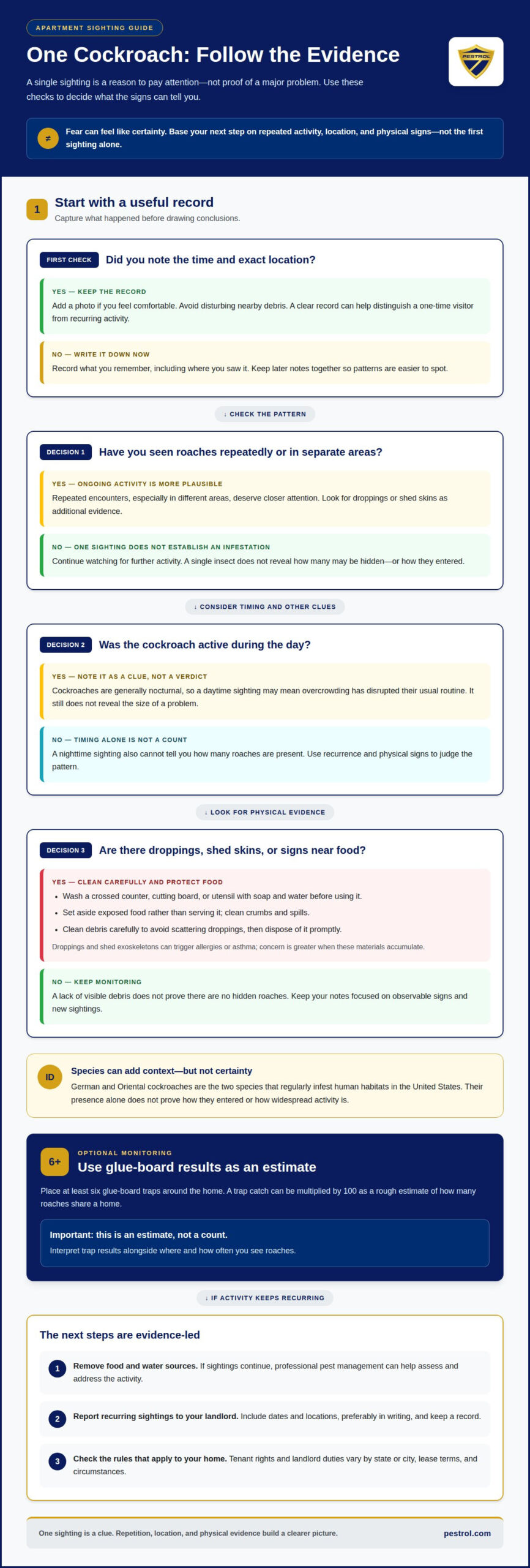
Droppings and shed exoskeletons can also trigger allergic reactions or asthma attacks. The risk can be serious when these materials accumulate in large quantities. For example, someone with asthma may be more affected by debris in a cupboard or behind an appliance than by briefly seeing one insect. Clean carefully to avoid scattering droppings, and dispose of collected debris promptly.
Judge the concern by the pattern of evidence, not fear alone. One roach on a clean counter is different from repeated sightings, droppings near stored food, or shed skins in a cabinet. Those signs suggest ongoing activity and a greater chance that contaminants are accumulating. If sightings continue after you remove food and water sources, professional Cockroach Control can help assess and address the activity.
Who is responsible for treating cockroaches depends on the lease, local rules, and whether the problem relates to building conditions or household practices. Report sightings to the landlord promptly, note where and when they occurred, and keep a record of recurring signs.
For someone with a strong fear of cockroaches, visible signs can make everyday tasks such as cooking feel difficult. Focus on specific actions first: protect food, clean affected surfaces, and document repeated activity. This turns a frightening sighting into useful information for deciding what to do next.
Fear of cockroaches and whether one sighting signals an infestation
One cockroach doesn’t prove there’s an infestation, but its location, timing, and recurrence offer useful clues. A calm response can help distinguish an alarming encounter from signs of ongoing activity.
Fear and the Meaning of One Sighting
Fear of cockroaches is an intense response to seeing or anticipating these insects, and it can make one sighting feel like proof of a larger problem. A fear of cockroaches in my apartment can feel overwhelming even before another roach appears. The sighting alone can’t establish how many roaches are present, so look for patterns such as repeated encounters, droppings, or activity in separate rooms.
Immediate Steps After a Sighting
Start by recording the encounter and watching for further activity. Note the time and exact location, such as beside the kitchen sink, and take a photo if you feel comfortable doing so. Avoid disturbing nearby debris. A clear record helps distinguish a one-time visitor from recurring activity and gives a landlord or pest professional useful details.
Timing can matter. Cockroaches are generally nocturnal, so a daytime sighting may indicate that overcrowding has disrupted their routine. Still, one daytime sighting doesn’t reveal the size of an infestation. Repeated sightings, especially in different areas, make ongoing activity more plausible and deserve closer attention.
Species can also help explain what you’re seeing. German cockroaches and Oriental cockroaches are the two species that regularly infest human habitats in the United States. Their presence doesn’t prove how they entered or how widespread they are. Consider identification alongside evidence such as repeated sightings, droppings, and where the insects appear.
For monitoring, place at least six glue-board traps around a home. A trap catch can be multiplied by 100 as a rough estimate of how many roaches share a home, but treat that figure as an estimate, not a count. Trap results are most useful alongside the location and frequency of sightings.
- Record each sighting’s time and location.
- Look for repeated activity, droppings, or insects in separate rooms.
- Keep monitoring notes together so patterns are easy to see.
There isn’t one answer for every US apartment: tenant rights and landlord duties vary by state or city, lease terms, and circumstances. Review your lease and local housing rules, then report recurring sightings to your landlord in writing, including dates and locations.
If fear of cockroaches in my apartment is making it difficult to respond, use a written record to focus on observable signs rather than imagined possibilities. If sightings continue, professional help with recurring roach activity can help identify the problem and guide treatment.
Causes of katsaridaphobia
Katsaridaphobia is an intense fear of cockroaches that can affect how someone responds to a sighting or even the thought of one hiding nearby. Fear can disrupt ordinary routines, even when an infestation hasn’t been established.
There isn’t one universal cause. A frightening encounter, such as finding a roach in a bed or kitchen cupboard, may shape future reactions. The insect’s sudden movement and ability to disappear into a narrow gap can also make it feel unpredictable. For someone who is already uneasy, a dark corner or rustling sound may prompt thoughts of hidden roaches before any insect appears.
Learning can influence fear, too. A child who sees a family member panic at a cockroach may begin to associate the insect with danger. Media images or stories can reinforce that association, especially when they portray roaches as difficult to remove. These experiences don’t mean everyone will develop a phobia. They can help explain why the same sighting feels manageable to one person and overwhelming to another.
Concerns about contamination or asthma may add another layer. Someone worried about food surfaces, droppings, or breathing triggers might become alert to every possible sign. That concern isn’t proof of an infestation: fear describes a person’s reaction, while repeated sightings or other physical signs provide evidence of pest activity.
People may freeze when they see a cockroach, making it hard to leave a room or respond. One man spent two hours in a hallway after finding a roach in his bathroom. A woman in her 50s sought help because cockroaches were disrupting her life. These examples show how fear can interfere with daily activities, not how often the phobia occurs.
How common is cockroach phobia, and what are its symptoms? People’s experiences vary, and the examples here don’t establish how prevalent it is. A possible response is freezing or feeling unable to move when a cockroach appears; distress may also lead someone to avoid a room or routine where they expect to find one.
If fear is building, separate your emotional response from the practical question of pest activity. Write down what happened, such as “one roach near the bathroom sink,” rather than assuming several are hiding throughout the apartment. If signs recur, record their locations and timing. That information can guide a clear next step and reduce the urge to imagine alarming possibilities without evidence.
Cleaning and home repairs to deter cockroaches
Food, water, and sheltered gaps can make an apartment inviting to roaches. Focus on these three conditions: store food securely, remove spills and standing water, and seal cracks where insects can hide. These steps reduce access to resources without assuming that a clean home can never have roaches.
Start in the kitchen, where crumbs and uncovered food can attract insects. Transfer dry goods to airtight containers, put away pet food after use, and wipe counters after preparing meals. Wash dishes promptly instead of leaving them overnight. A greasy pan or open bag of cereal offers roaches an accessible food source, even when the rest of the room looks tidy.
Check for standing water near sinks, plumbing, and appliances. Dry the sink basin and counter after washing dishes, and address drips that leave water beneath a pipe. Roaches need water as well as food, so removing a damp source can make a hiding spot less useful. Check around the refrigerator and beneath the kitchen sink, where small leaks can go unnoticed.
Make cleaning regular and targeted. Vacuum crumbs along cabinet edges, beneath the table, and beside the stove. Move small appliances when practical, since food debris can collect behind a toaster or microwave. Empty the vacuum contents promptly, and take out trash often, especially when it contains food scraps. A covered bin and clean floor make leftovers less accessible. For households seeking extra support in maintaining thorough sanitation, specialized domestic services like pcs-au.com.au provide residential cleaning to keep vulnerable living spaces free of food remnants and hidden debris.
Close entry points and hiding places with suitable repairs. Seal cracks around baseboards, cabinets, and pipe openings, where a roach may move between rooms or into a wall gap. In an apartment, note gaps or leaks that need building maintenance and report their location; comprehensive providers such as MMA Maintenance & Cleaning Services illustrate how addressing routine repairs and deep sanitation together eliminates the moisture and access points pests rely on. German cockroaches can use narrow spaces near food and water, so repairs should address the actual opening, not just the visible insect.
- Keep pantry food in airtight containers.
- Wash dishes promptly and wipe kitchen surfaces after meals.
- Vacuum crumbs beneath appliances and along cabinet edges.
- Take out food waste often and keep the bin covered.
- Seal visible cracks and report plumbing leaks or structural gaps.
These habits help make a home less attractive to roaches, but they don’t replace attention to recurring activity. Humans and household pets also benefit from keeping food and trash contained; an animal searching for scraps can spill food or leave a bowl accessible. Keep pet dishes clean, remove uneaten food, and continue checking the areas where crumbs, moisture, or gaps tend to gather.
Cockroach resilience and pest control
Cockroaches have existed for about 350 million years, but resilience doesn’t make control impossible. Their life cycle explains why one treatment or a clean surface may not address every egg, nymph, and adult hiding nearby.
German cockroaches pass through three life stages: egg, nymph, and adult. Each egg capsule holds 30-48 eggs, and an adult female can produce 4 to 8 capsules. Nymphs shed their skins 5 to 6 times before adulthood, while eggs take 40 to 125 days to mature into adults. An adult can live up to a year. This cycle can allow activity to continue after visible adults disappear.
That biology matters in apartments, dormitories, and university housing, where insects can travel between rooms through shared walls or openings. Treating only the spot where a roach appeared may miss nearby hiding places. Effective pest control takes the location of activity and the pests’ life stages into account.
Control methods also matter. Bait traps appeared highly effective in the 1990s, but baits began becoming less effective in the early 2000s. For monitoring, use at least six glue-board traps around the home. After an initial do-it-yourself treatment, check again in 1-2 weeks and apply more insecticide if needed. Gel bait spots are usually pea-size; where roaches are numerous, a peanut-size amount may be needed. Bait and dust together may work well.
Avoid fogger-type pesticides. They can drive roaches deeper into hiding and leave no residual insecticide after the fog dissipates. Instead, target treatment to observed activity, monitor the results, and address food, water, and access points. One application doesn’t prove the problem has ended.
Professional cockroach pest-control pricing in the United States depends on the infestation, treatment method, and access conditions; the price is provided after a quote request.
Pesticide exposure risk depends on the product, placement, and contact. To reduce exposure, keep children and pets away from treated areas and follow the product label for application, ventilation, and re-entry. People with asthma should consider the product and application method carefully, since precautions vary. Never mix products or use more than the label directs.
For do-it-yourself control, a combination of cockroach bait and dust may provide the best results. With gel bait, each application spot should contain a pea-size amount. Where large numbers of cockroaches are present, each gel-bait spot may need a peanut-size amount. These amounts apply to individual spots, so choose the size according to the conditions described rather than treating every spot alike.
Avoid fogger-type pesticides. They can drive cockroaches deeper into hiding and leave no residual insecticide after the fog dissipates. Bait and dust offer an alternative for do-it-yourself control, while the gel-bait guidance distinguishes ordinary spots from locations with large numbers of cockroaches. Matching the application method and spot size to those conditions makes the approach more deliberate, without relying on a fog that leaves no residual insecticide.
Pestrol
Pestrol helps apartment residents address recurring pest concerns through residential pest management. If roach sightings continue or you’re unsure whether activity is increasing, professional assessment can help clarify the next step. Home Pest Protection is available in Basic, Plus, and Premium plans for ongoing household pest management. Share where you’ve seen roaches and whether sightings keep returning so the concern can be understood in context. If cockroaches are affecting your comfort at home, contact Pestrol to discuss your situation.
Take the Next Step With Confidence
If fear of cockroaches in my apartment is making it difficult to feel settled, focus on a manageable next step. You don’t need to decide everything at once. Consider whether you want help with a specific concern or broader support for household pest management.
Pestrol offers Home Pest Protection – Basic, Home Pest Protection – Plus, and Home Pest Protection – Premium. These plans let you discuss ongoing pest concerns alongside the details of your apartment and what you’ve noticed. Explain the situation, including what worries you most, so the conversation can focus on the support you need.
Taking action can make the problem feel less overwhelming. Contact Pestrol to discuss your concerns and explore a suitable next step.
You deserve to feel comfortable at home, and a clear next step can help you move forward.
Frequently Asked Questions
Does Finding a Roach Mean My Place is Gross?
No. A roach doesn’t prove that an apartment is dirty. It may arrive with groceries, luggage, or secondhand furniture, or move through gaps shared with neighboring units. Clean habits help, but they can’t control every route into a building. Focus on practical evidence and likely access points rather than blaming yourself. For example, note whether activity appears near a delivery box, a plumbing opening, or a shared wall.
How can I tell if my fear of cockroaches is a phobia or a reasonable response to an infestation?
The difference often lies in how much fear disrupts your life, not simply whether you dislike roaches. Concern tied to a specific sighting may ease as you address the situation; intense distress or avoidance that persists without new evidence may deserve attention. This isn’t a self-diagnosis. If fear interferes with sleep, cooking, or entering rooms, a qualified mental health professional can help assess what’s happening.
How can I prevent cockroaches from entering or spreading in an apartment?
Reduce opportunities for roaches to hitchhike or move between rooms. Inspect grocery bags, delivery cartons, and used furniture before bringing them inside, and avoid storing cardboard beside food or in closets. Keep belongings off the floor during a move, and check potentially infested items before carrying them from one room to another. In a multiunit building, tell management about activity near shared walls or service openings.
What are the safest and most effective ways to get rid of cockroaches in an apartment?
Choose a plan suited to the roach activity and the apartment, rather than applying several products at once. For example, sightings around a shared plumbing wall may call for attention beyond one kitchen cabinet. A pest professional can assess where activity is occurring and recommend an appropriate treatment approach. If you rent, coordinate with building management so related areas can be addressed, and follow product-label directions for any pesticide you use.
What are tenants’ rights and landlord duties for cockroach infestations in my state or city?
Tenant rights and landlord duties vary by state or city, lease terms, and circumstances. Review your lease and local housing rules, then report recurring sightings to your landlord in writing, including dates and locations.