




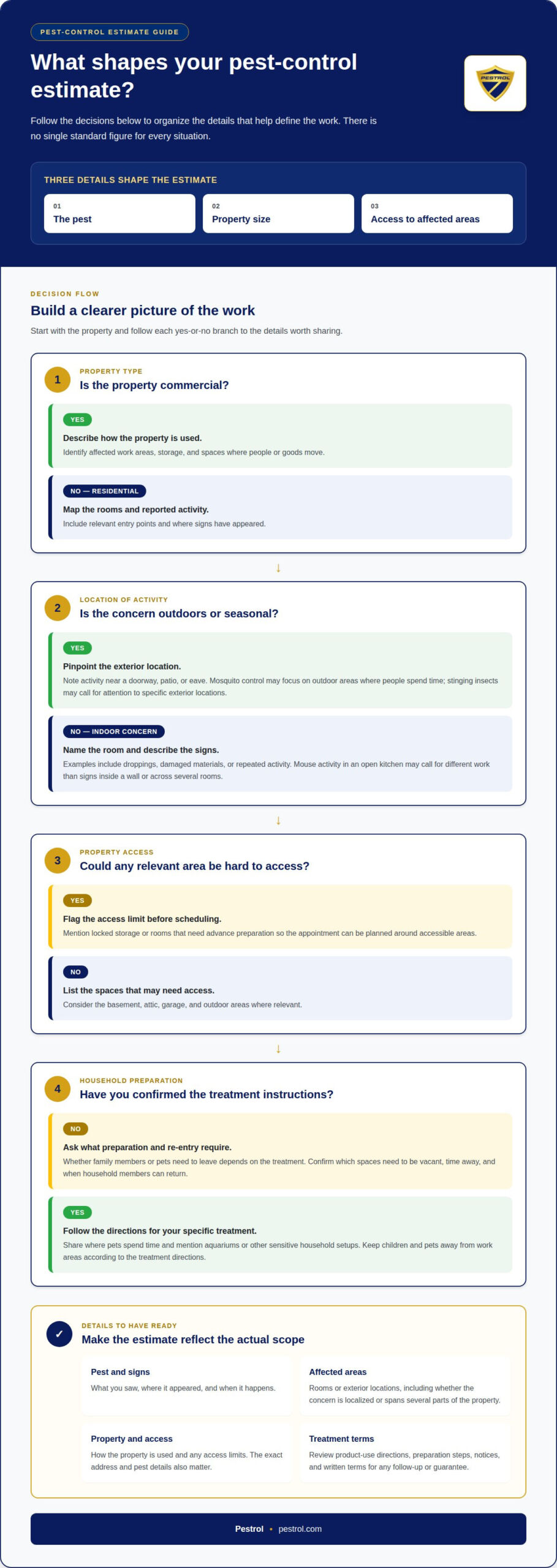
A pest-control estimate for your home depends on the specific pest, the property’s size, and access to affected areas. When searching for exterminator services near me, remember that these details shape the work and estimate, so one standard figure won’t fit every situation.
It’s natural to want a clear idea of the cost before deciding what to do with Pestrol. Start by identifying what’s causing the problem and whether you need treatment for one pest or broader protection throughout your home. This guide explains what affects an estimate, what pest control can involve, and how a full-property approach can help protect your home.
Key Takeaways
- See which details shape a pest-control estimate for a home or commercial property, and what to prepare before requesting one.
- Learn how to plan around treatment for ants, bed bugs, boxelder bugs, cockroaches, mice, and rats.
- Use the signs of pest activity and your property’s needs to understand what a customized treatment plan may address.
- Know what to clarify about return visits and guarantees before relying on them as part of a pest-control plan.
- Explore how full-property protection can address pest concerns beyond a single visible problem.
How much does pest control for my Grayslake home cost?
For a home in Manhattan or the Bronx, an estimate depends on the pest, property size, and access to affected areas. Mouse activity in an open kitchen can call for different work from signs inside a wall or across several rooms. Describe where you’ve noticed activity and what signs you’ve seen so the estimate reflects the scope.
Residential and commercial pest control differ in scope. A home assessment can focus on rooms, entry points, and reported activity. A commercial property may require attention to work areas, storage, and spaces where people or goods move. Explain how the property is used and identify affected locations when requesting an estimate. These details help define the work instead of relying on a generic treatment description.
Outdoor concerns can change with the season. Mosquito Control may focus on areas around the home where people spend time outside. Stinging insects or other seasonal pests may require attention to specific exterior locations. Point out where you see activity, such as near a doorway, patio, or eave. These details help show whether the concern is localized or spans several parts of the property.
The time needed for an appointment depends on the pest, property access, and treatment areas. Before scheduling, note whether the technician may need access to a basement, attic, garage, or outdoor space. A locked storage area, for example, can affect which parts of the property are accessible during the visit. Sharing access details ahead of time helps focus the appointment on relevant areas.
Local rules and disclosure requirements can vary by location and treatment. Before work begins, review the treatment plan’s product-use directions, preparation steps, and applicable notices. For a commercial property, discuss operating needs as part of the plan so instructions account for the spaces and activities involved.
To narrow a local search, use your Manhattan or Bronx address when reviewing service-area information. A ZIP code can help identify nearby coverage, but the exact address and pest details still matter to the estimate. Include the pest, affected rooms or exterior areas, and any access limits when arranging an appointment.
Experience with the specific pest matters more than a broad claim of experience. Describe signs you’ve noticed, such as droppings, damaged materials, or repeated mosquito activity. Explain when and where they appear. If a referral discount is offered, review its eligibility and how it appears in the estimate. Compare the stated work and discount terms to understand what the appointment covers.
Do my family and pets need to leave during treatment?
Whether your family and pets need to leave depends on the treatment and its instructions. Follow the directions for preparation, time away, and re-entry. Requirements can differ between treating ants in a kitchen and addressing bed bugs in sleeping areas. Before the appointment, ask which spaces need to be vacant and when household members can return. Don’t assume every treatment requires the same arrangements.
Prepare by making affected areas accessible and sharing relevant household details. Tell the technician where you’ve noticed activity, whether anyone has concerns about treatment, and where pets spend time. Point out a dog’s resting area or a cat’s usual route through the home, for example. Keep children and pets away from work areas according to the treatment directions. Mention aquariums or other sensitive household setups so the technician can provide relevant instructions. If you plan to freshen up your dog or cat while keeping them out of treated rooms, pet care stores like oscarandzo.com.au offer grooming essentials and gentle shampoos to keep pets comfortable.
The pest involved helps determine which locations need inspection and treatment. Ant trails near a sink, cockroaches behind an appliance, and mouse activity in a pantry each point to different areas. Bed Bug Treatment focuses on sleeping areas and nearby furnishings. Boxelder bugs around windows, spiders in a basement, and termite evidence also call for clear location details. Describe what you saw and where, rather than disturbing suspected hiding places before the visit.
Bed Bug Treatment may involve follow-up, depending on the service plan and inspection findings. A service guarantee isn’t automatic across all pest-control services; written terms define whether follow-up work is covered and under what conditions. Read those terms, including any preparation requirements. Don’t assume a later visit or a particular outcome is included unless the service terms say so.
Scheduling should allow access to the spaces involved. Mention bedrooms for bed bugs, kitchens for roaches or ants, and storage areas for mouse or rat activity. Treatment duration depends on the pest, inspection findings, access, and scope. Share any access limits when arranging the appointment, such as a locked basement or rooms that need advance preparation. This helps make the visit more focused.
A useful process starts with describing the signs, preparing affected areas, and following the treatment instructions. After the visit, track activity by noting the room, location, and timing. If signs continue, those details can help guide a follow-up inspection or re-service, where applicable. Don’t assume spiders or another pest are covered by treatment for ants, bed bugs, or rodents unless the service plan includes them.
Review pest control services to understand options for the pest and areas you’ve identified. A specific treatment plan helps clarify which rooms need access and what directions apply to your family and pets.
Customized pest treatment plans
A useful pest plan starts with the property, not a preset treatment. An inspection should identify the pest, where activity appears, and how the building is used. Ants near a kitchen, clothing moths around stored garments, and mice in a restaurant storage area call for different priorities. Share the locations, timing, and signs you’ve noticed so the plan can address the actual pest problem.
The environment matters, too. A home with a basement, attached garage, and garden has different access points from an apartment or food-service space. During an inspection, note gaps, moisture, stored materials, and places where pests appear. These details help tailor the work to affected areas instead of treating every property identically. Good customer service also means explaining the proposed scope and preparation steps in plain language.
Seasonal treatments respond to changing pest activity and property use. Mosquito Control can focus on outdoor areas where people gather, while wasp or bee concerns may center on a specific exterior location. As seasons change, record where and when pests appear. That information helps distinguish a recurring pattern from a newly observed problem and guides which areas an inspection should cover.
Plans can differ in how visits are structured. A one-time treatment addresses a specific concern during a planned visit. Recurring service schedules follow-up attention over time, while an emergency visit refers to an urgent response requested for an active issue. These are different service models, not interchangeable promises; timing and scope depend on the actual arrangement.
Local pest exterminators serve different cities and property types, so search by the property’s city or ZIP code and check whether the service area includes the address. An Illinois directory lists 504 pest removal companies across 209 cities. Those figures show why a city-level search can narrow results, but an address and pest description help identify the relevant service area and treatment scope.
Before choosing a plan, compare what the inspection covers, which pest it targets, and whether the work is limited to one location or several. For a restaurant, describe storage and food-service areas; for a home, point out bedrooms, utility spaces, or exterior activity. Ask for the treatment steps and any follow-up conditions in writing. That makes it easier to understand what the appointment addresses.
Seasonal pest control is most useful when it reflects observed activity, not just the calendar. Record examples such as mosquitoes near a patio, ants entering by a window, or moths around stored clothing. Bring those notes to the inspection. A focused plan connects the pest, environment, and treatment areas, helping you understand what the service is designed to address.
Off-schedule return visits and money-back guarantee
Free inspections, written estimates, and service guarantees are separate terms, not automatic parts of every pest-control visit. Treat each as included only when the provider’s written terms say so.
An off-schedule return visit addresses activity reported after a planned appointment, outside the regular service schedule. Start by recording the pest, location, and date you noticed it. Note, for example, whether rodents appear in the same pantry or a different room. Share those observations with the technician so the next visit can focus on the affected area and the original treatment’s scope.
Before treatment, review the service terms in writing. Look for what triggers a return visit, whether it covers the same pest and treatment area, and whether preparation steps apply again. A mouse sighting after rodent work may relate to an entry point or an area outside the original scope. A new mosquito concern in the yard differs from indoor treatment, so don’t assume one visit covers both.
A service guarantee and a money-back guarantee are different commitments. A service guarantee might describe follow-up work under stated conditions. A money-back guarantee concerns a refund and should explain eligibility, deadlines, and exclusions. Read the actual wording before scheduling, and keep the estimate, treatment notes, and follow-up instructions together. A spoken assurance does not replace clear written terms.
To make a return visit useful, follow the technician’s instructions and keep relevant details. Avoid moving items or cleaning treated locations in ways the instructions prohibit. If activity continues, record where it occurs and whether it involves the original pest. For example, distinguish fresh rodent signs from an older mark, or note whether mosquitoes are concentrated near one outdoor area.
Use this simple sequence after a visit:
- Save the written estimate and service terms.
- Follow the preparation and post-treatment directions.
- Record new sightings, including the room or outdoor location.
- Contact the provider through the stated process and describe the change.
For Mosquito Control, note whether activity is limited to a patio or extends around the property. For rodents, identify possible access points and rooms where signs recur. These details help distinguish follow-up on the original treatment from a separate pest concern. They also give the technician concrete information to review before deciding what the next appointment should address.
Review any obligation attached to a guarantee, including required access, preparation, or notice. If a written term excludes a pest or location, it defines the service’s limits. Clear records help you understand whether an off-schedule visit falls within the original agreement or requires a separate estimate.
Full-property home protection
A single pest sighting can point to a concern beyond one room. Full-property protection considers the home as connected spaces, including living areas, storage, utility rooms, and exterior entry points. The goal is to identify where insects or other pests appear, how they may access the property, and which areas need attention. This wider view helps protect your home without assuming every room needs the same treatment.
Start with a simple property map. Mark where you have seen activity, then add nearby spaces that may be relevant. Ants by a kitchen window, for example, may prompt a closer look at the window area and nearby rooms. Mouse signs in a garage can make adjoining storage areas relevant. Share these observations during an inspection so the treatment plan can distinguish confirmed activity from places that simply need review.
Full-property coverage is not the same as applying one treatment everywhere. A bedroom, basement, kitchen, and patio have different uses and pest concerns. A plan should connect each proposed treatment area to a specific observation or prevention goal. Ask which areas are included, what the visit addresses, and which preparation directions apply. A clear scope makes it easier to understand the work and follow instructions for each part of the home.
Seasonal concerns can also shape the plan. Mosquito activity around a patio differs from insects appearing indoors near a window. Note when and where sightings happen, such as after spending time outside or around a particular doorway. These details help focus Mosquito Control or other pest attention on relevant spaces. For a recurring issue, record locations and timing rather than simply reporting that pests are present.
Use these steps to make a full-property review more useful:
- List the rooms and exterior areas where you noticed activity.
- Record the pest and visible signs, such as damaged packaging or repeated sightings.
- Identify nearby spaces, including storage areas and entrances.
- Ask which locations the plan covers and what follow-up instructions apply.
Peace of mind comes from knowing what the plan does and does not cover. If an inspection identifies activity in one room, ask whether nearby areas need treatment, monitoring, or no action. If a plan includes recurring visits, understand which areas and pest concerns those visits address. The answer should be specific to the property, rather than an assumption that every visit treats the same places.
Choose protection based on the home’s observed needs. A focused plan may suit an isolated concern, while broader coverage may make sense when signs appear in several areas or prevention is the priority. Clear inspection findings, defined treatment locations, and practical follow-up directions turn full-property protection into a plan you can understand and maintain.
Pestrol: Home Pest Protection – Basic
Pestrol: Home Pest Protection – Basic gives Grayslake homeowners a starting point for discussing home pest protection. If you’re considering broader household needs, Home Pest Protection – Plus and Home Pest Protection – Premium are additional plan options. For a specific bed bug concern, Pestrol also offers Bed Bug Treatment.
Share where you’ve noticed pest activity, which areas concern you, and whether you’re looking for ongoing home protection or help with bed bugs. Those details can focus the discussion on the option that fits your concern. Describe what you’ve seen without assuming one sighting means every room needs treatment. A clear conversation about your home’s needs is a practical next step.
Contact Pestrol to discuss home protection options for your property.
Take the Next Step Toward a More Protected Home
Choosing a pest plan is a practical way to turn concern into a clear next step. If you’re looking for exterminator services near me, focus on your home’s needs and the level of protection you want to discuss. Pestrol offers Home Pest Protection – Basic, Home Pest Protection – Plus, and Home Pest Protection – Premium. Consider which option to ask about, then describe the pest activity or prevention concerns you want addressed.
A productive conversation starts with your priorities. Note the areas that matter most, whether you’re responding to a current pest issue or planning ahead, and what you want a home protection plan to address. That gives you a useful foundation for discussing available options without assuming every home needs the same approach.
A comfortable, well-cared-for home starts with a manageable next step. Reach out when you’re ready to talk through your concerns and move forward with greater confidence.
Frequently Asked Questions
Do you offer recurring service?
Yes. Pestrol offers recurring residential pest protection through its Home Pest Protection plans. Basic, Plus, and Premium are tiered options for ongoing pest defense, with scheduled maintenance and preventative measures. A recurring plan can suit households that want planned attention beyond a single pest incident. The right option depends on the protection you want to discuss for your home and the pest concerns you’re addressing.
How long does the treatment last?
Treatment duration and how long its effects last depend on the pest, treatment approach, and property conditions. Bed Bug Treatment, for example, addresses a different infestation from Rodent Proofing or ant control. Review which areas the service targets and what post-treatment directions apply. Follow those directions carefully, and keep notes if you notice new activity so you can distinguish an ongoing issue from a separate pest concern.
How often will pest control service be done, and why?
Service frequency depends on whether you choose a one-time treatment or recurring protection, along with the pest and property needs. Pestrol’s Home Pest Protection plans provide ongoing defense with scheduled maintenance and preventative measures. A household seeking continuing coverage may consider a plan, while a specific bed bug concern may call for targeted Bed Bug Treatment. Discuss the scope you need before selecting a service.
How quickly can you schedule an appointment?
Appointment timing depends on scheduling and the service requested. Pestrol doesn’t publish a specific booking timeframe here, so avoid relying on an assumed same-day or emergency appointment. When arranging service, describe the pest, affected rooms, and any access considerations. For example, mention whether activity is in a bedroom, kitchen, or storage area. These details help clarify the type of visit to schedule.
Need an Exterminator?
If you’ve found signs of pests in your Manhattan or Bronx home, Pestrol provides residential pest management and targeted treatments. Start by noting the pest and where you’ve seen it, such as roaches near an appliance or mouse activity in a pantry. That information helps frame the service discussion. For ongoing household protection, Pestrol offers Home Pest Protection plans; for a bed bug issue, Bed Bug Treatment is available.
Which exterminators near me are licensed, insured, and highly rated?
Licensing, insurance, and customer ratings are distinct credentials, and service descriptions alone don’t establish them. Pestrol provides pest management for residential and commercial properties in Manhattan and the Bronx. Before making a decision, consider the service scope that matches your concern, such as rodent proofing for rodent issues or targeted treatment for roaches. Review the information available about the specific service and avoid assuming credentials from a company name alone.
How much do exterminator services cost for common pests in my area?
Costs vary with the pest, property size, affected areas, and access conditions. A mouse issue limited to one accessible space may involve different work from pests found across several rooms. Pestrol’s estimate process can account for the pest and property details rather than applying one price to every situation. When requesting an estimate, describe the signs you’ve noticed and the areas involved so the proposed scope reflects your concern.
What pest problems do local exterminators treat, such as ants, roaches, rodents, or termites?
Pestrol treats a range of household and commercial pest concerns, including ants, roaches, mice, rats, and termites. The service should match the pest: options include Ant Exterminator, Roach Exterminator, Mouse Control, Rat Exterminator, and Termite Control. Pestrol also offers Bed Bug Treatment and Clothing Moth Control. Share the pest signs and affected property areas to help identify the relevant service for your situation.