




Can you get a free pest inspection in Greenville? Free inspections aren’t universal, and the scope can vary. An annual pest inspection in Greenville can help identify pest activity, possible entry points, and conditions around your home that may need attention.
It makes sense to want a clear assessment before deciding whether treatment is needed. An inspection and a spray treatment are different services: the right next step depends on what the inspection finds and what may be contributing to pest activity.
This guide explains what a free inspection may cover, how to compare the kinds of services available, and when spraying may make sense. You’ll also learn which home conditions can attract pests, from moisture and gaps around the structure to food and yard debris. With a better understanding of what an inspection can reveal, you can make a practical choice for your home without treating every pest concern the same way.
Key Takeaways
- Free pest checks may differ in scope, so the inspection details matter as much as whether the initial visit is free.
- Use signs of pest activity, the season, and conditions around your home to guide decisions about treatment timing.
- Compare inspection professionals by the issues they assess and whether they address contributing conditions as well as visible pests.
- Read customer ratings alongside review counts to get a more balanced sense of homeowners’ experiences.
- Close entry gaps, manage moisture, clear gutters, and secure food and trash to make your home less inviting to pests.
Pest and termite inspection providers serving Greenville, New York
Greenville homeowners can use an inspection to understand pest signs, possible entry routes, and conditions that support activity. Choose the scope according to your concern: a general pest assessment, a termite-focused inspection, or an assessment of a current issue.
Pest and Termite Service Options
A general pest inspection looks for signs such as insect activity, droppings, damaged materials, and possible entry points. A termite inspection focuses on signs of termite activity and conditions around the structure that may need attention. Ask for a clear description of the areas covered and findings recorded, including any areas the inspector could not access.
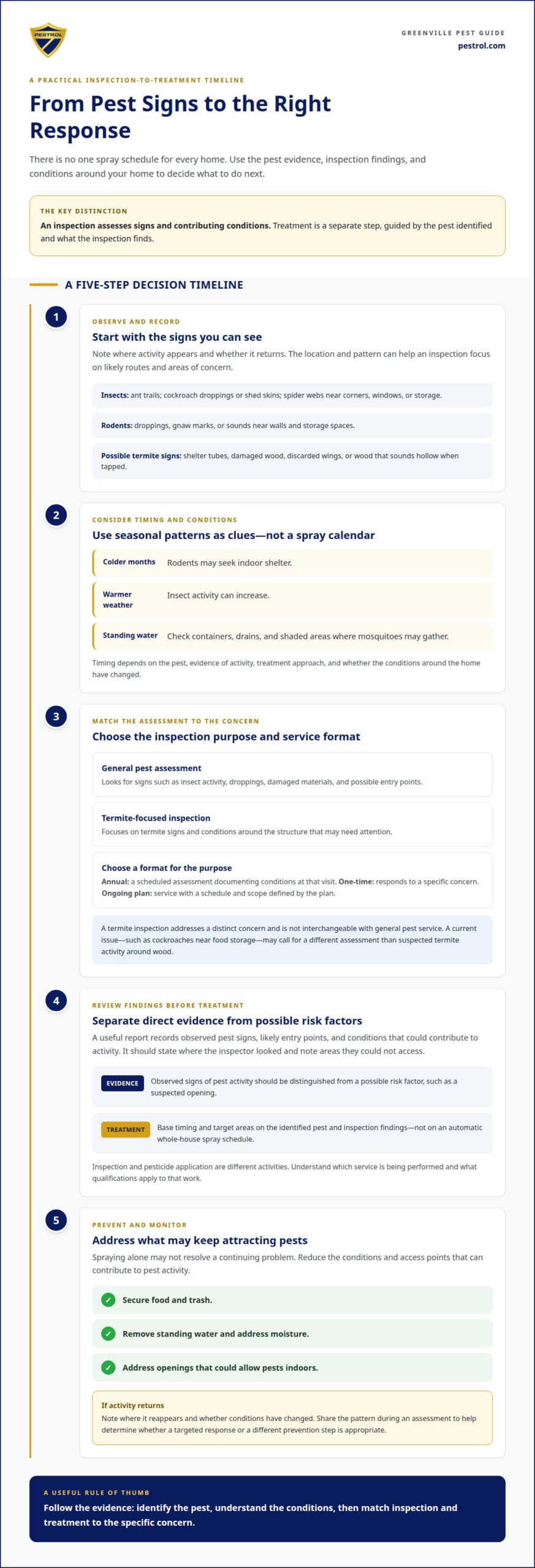
Match the service to the concern. Cockroaches near food storage call for a different assessment from suspected termite activity around wood. An inspection can help distinguish visible pest evidence from conditions that could attract pests. Treatment is a separate step, guided by the pest identified and the findings.
Recommended Inspection and Service Frequency
Inspection timing depends on the pest concern, previous activity, and conditions around the home. A recurring termite concern may call for a different schedule from a single insect sighting. For ongoing pest-control service, consider whether activity returns, where it appears, and whether conditions that attract pests have changed.
Seasonal changes can affect what homeowners notice. In colder months, rodents may seek indoor shelter; warmer weather can bring more insect activity. Use these patterns as cues to observe your home, not as a fixed schedule for spraying. Base treatment timing on the pest and the evidence found.
Annual, One-Time, and Plan Differences
An annual inspection is a scheduled assessment that documents conditions at a particular visit. A one-time inspection responds to a specific concern, such as repeated cockroach sightings or possible damage. A pest-control plan involves ongoing service, with its schedule and scope defined by the plan.
Choose a service according to its purpose. A single reported sighting may call for an assessment to identify the pest and likely source. Recurring activity may need ongoing attention. A termite inspection addresses a distinct concern and is not interchangeable with general pest service.
Inspection Scope and Provider Credentials
A useful inspection records observed pest signs, likely entry points, and conditions that could contribute to activity. The findings should state where the inspector looked and distinguish direct evidence from possible risk factors. For example, a report can describe a suspected opening separately from evidence of an active infestation.
Credential requirements can depend on the work and applicable jurisdiction, especially when pesticide application is involved. Inspection and treatment are different activities. Understand which service is being performed and what qualifications apply to that work. Review the inspection scope, report details, and written service terms before deciding on next steps.
How often should your house be sprayed for pests?
There isn’t one spray schedule that fits every home in Greenville, New York. Timing depends on the pest, evidence of activity, treatment approach, and whether the underlying conditions have changed. A recurring ant trail, for example, calls for identifying its route and food source, not automatically spraying the entire house.
Use inspection findings and changes in pest activity to guide your next step. A one-time sighting may have a different explanation from repeated sightings in several rooms. Treatment should target the identified pest and relevant areas, while prevention addresses conditions that keep attracting it.
Match treatment timing to the pest
Ants may follow a route toward food or moisture, so note where the trail starts and ends. Cockroaches may leave droppings or shed skins near sheltered spaces, while spiders may build webs near corners, windows, or storage. These clues help distinguish pests and direct attention to the areas they use.
Mosquito activity can increase around standing water, so check containers, drains, and shaded areas that hold water. In a yard, visible fire ant mounds can affect where people and pets walk. Avoid disturbing an unknown nest or mound; identifying the pest helps determine an appropriate response.
Recognize signs before activity spreads
Possible termite signs include shelter tubes, damaged wood, discarded wings, or wood that sounds hollow when tapped. Other clues include ant trails, cockroach droppings, spider webs, or repeated mosquitoes near damp areas. These signs deserve attention, but an inspection can help distinguish active pest evidence from conditions that may attract pests.
Rodents may leave droppings, gnaw marks, or sounds near walls and storage spaces. Note the location and timing of signs, such as activity near a pantry or entry door. A pattern can help the inspection focus on likely routes and areas of concern.
Use a practical routine
Rather than choosing spray dates by the calendar alone, track sightings and changes around your home. Record where ants appear, whether cockroaches recur in the same area, and when mosquitoes gather outside. Share those details during an assessment so treatment can address the pest and relevant conditions.
Spraying alone may not resolve a continuing pest problem. Secure food and trash, remove standing water, and address openings that could allow pests indoors. If activity returns after treatment, note where it reappears and whether conditions have changed. This information helps determine whether another targeted response or a different prevention step is appropriate.
Comparing local inspection professionals
Greenville homeowners can compare pest inspection services by scope, reporting, treatment approach, and follow-up. A termite inspection differs from a general pest assessment, so start with the concern you need addressed. A useful comparison focuses on what the inspection examines, what the written findings include, and how any recommended next step relates to observed evidence.
Scope matters. One assessment may focus on visible insect activity, while another may include the structure’s perimeter, accessible interior areas, and conditions that support pests. For example, a report that records a suspected entry gap provides more context than a note that simply says “pests present.” Look for specific findings, not broad labels that leave the source unclear.
Greenville’s climate supports pest activity across much of the year, so seasonal context can be useful. Spring and fall are especially important seasons for pest control locally. Annual termite inspections are recommended for long-term protection in the Greenville area. A professional’s explanation should connect the inspection schedule to termite concerns, recurring infestations, or specific signs found at your property.
Compare treatment recommendations by how closely they relate to inspection results. If cockroaches appear near a kitchen, the explanation should address the observed activity and possible contributing conditions. If signs point to termites, a termite inspection and any proposed termite control should focus on that concern. A treatment plan should state its target and intended scope, rather than suggest one application can eliminate every pest issue.
Consistency is another useful measure. Findings are easier to understand when reports use clear descriptions, identify inspected areas, and separate observed evidence from suggested prevention steps. For recurring service, a consistent record can show whether activity persists in the same location or appears in a new area. Distinguish an inspection visit from treatment: one assesses conditions, while the other addresses a pest concern.
- Inspection scope: Identify whether the service covers general pests, termite concerns, or both.
- Findings: Look for observations tied to specific places, such as a gap near a pipe or activity in a pantry.
- Recommendations: Check that proposed treatment corresponds to the pest evidence described.
- Follow-up: Understand what the service includes after inspection, especially for recurring activity.
Use these points to compare the value of each inspection, not just its label. For an annual pest inspection in Greenville, the practical goal is a clear record of findings and a response suited to the pest, property conditions, and season. This makes it easier to distinguish routine prevention from a response to an active infestation.
An annual inspection may check for visible pest activity, the structure’s perimeter, accessible interior areas, and conditions that could support pests. Findings should identify observed evidence and locations, with recommendations tied to the pest concern.
Customer ratings and review counts for local providers
Customer ratings can help Greenville homeowners understand others’ experiences, but a score alone doesn’t show whether a service fits a particular home or business. Read the review count alongside the rating, then look for comments about the specific work involved. A termite inspection and a response to roaches are different jobs, so relevant details matter more than praise without context.
Review counts provide context for an average. A rating based on fewer comments offers less customer feedback to consider than one supported by more reviews. Still, review volume doesn’t prove that every service is consistent. Compare the experiences described, including whether customers mention inspections, treatment, communication, and follow-up for the local pest issue they faced.
Look for concrete descriptions rather than general statements. A homeowner might describe finding roaches in a kitchen, receiving an explanation of the treatment, and having follow-up activity addressed. Another reviewer might discuss a termite inspection but say little about other pests. These examples help you assess whether the feedback relates to your concern, without treating one person’s experience as a promise.
Notice recurring themes across reviews. Comments that repeatedly describe clear explanations, punctual visits, or useful reports can reveal patterns. Repeated complaints about missed appointments or unclear next steps may also flag concerns. A review should describe an actual interaction, such as how an inspector explained evidence in a basement or what guidance followed a treatment visit.
Read claims about a guarantee carefully. The word can refer to different terms, such as a defined follow-up process or conditions attached to a particular service. A review that says “they guaranteed it” doesn’t explain what the guarantee covers. Look for specific descriptions of the stated coverage, exclusions, and response process, rather than assuming every pest-control service carries the same promise.
- Match the service: Give more weight to reviews about the pest or inspection you need.
- Read beyond the score: Use the review count and written details together.
- Compare themes: Look for repeated examples of communication, inspection clarity, and follow-up.
- Separate opinion from terms: Treat customer comments as experiences, not as the formal guarantee.
For an annual inspection, reviews are most useful when they describe what the visit covered and how findings were explained. A comment about a home inspection may not reflect service for a business, and feedback about general pests may not describe termite work. Use customer stories alongside the written scope and treatment details to understand how a provider handles your particular concern.
Entry points, moisture, and structural conditions
Greenville inspections can connect pest signs with the conditions supporting them. An annual assessment is more useful when it records specific locations, moisture concerns, and possible routes into the home.
Entry Point Checks
Inspectors look for openings where pests can enter, including gaps around doors, windows, pipes, and the foundation. A small gap near a utility line can offer rodents a route indoors, while an unsealed door edge may let insects inside. A reliable inspection records the location and condition of suspected entry points instead of describing them only as “gaps.”
Preparation can make these areas easier to assess. Share where you’ve noticed pest activity and move stored items away from those locations when practical. This helps the inspector see the wall, doorway, or utility opening connected to your concern.
Moisture and Structural Conditions
Moisture can make areas more inviting to pests, so an inspection should note damp locations and conditions around the structure. Examples include water collecting near the foundation, clogged gutters, or wet areas beneath sinks. Inspectors can also record structural concerns, such as cracks or damaged material, that may provide shelter or access.
In Upstate homes, prevention steps include clearing gutters, sealing foundation cracks, and keeping plants and mulch several inches from the foundation. Door sweeps can close gaps beneath exterior doors. Secure food and trash to reduce easy access to indoor and outdoor food sources.
To prepare, share the locations and timing of sightings, such as rodents heard near a pantry or insects appearing beside a bathroom sink. Make relevant areas accessible by moving stored belongings when practical. You don’t need to diagnose the pest or repair suspected entry points before the visit; those details help guide the inspection.
A useful Greenville pest inspection report should identify the areas assessed, observed signs, suspected entry points, and moisture or structural conditions noted. It should distinguish direct evidence from possible contributing conditions. Recommendations should relate to the findings, such as sealing a foundation crack or addressing standing water, rather than offering a generic treatment suggestion.
Use the report to prioritize practical prevention steps:
- Install door sweeps where exterior doors leave visible gaps.
- Seal foundation cracks that could provide pest access.
- Clear gutters and address standing water near the home.
- Secure food and trash in closed containers.
- Keep plants and mulch several inches from the foundation.
These steps address conditions that can invite pests, but treatment depends on the pest and evidence found. For example, a crack may indicate a possible entry route, while repeated rodent signs suggest an active concern requiring targeted attention. Exterminators can use inspection findings to focus recommendations on the home’s actual conditions.
Pestrol
Pestrol can help when inspection findings point to an ongoing household pest concern. Its Home Pest Protection – Basic, Home Pest Protection – Plus, and Home Pest Protection – Premium plans provide options for home pest protection, while Bed Bug Treatment addresses bed bug concerns. The right next step depends on the pest identified and whether you need ongoing protection or targeted treatment. Share the inspection findings and activity you’ve noticed to focus the discussion on your home’s needs. If the report identifies a current pest issue or recurring activity, Pestrol can help you consider a suitable pest-control option. Contact Pestrol to discuss your concern and possible next steps.
Make your next inspection a useful starting point
Turn the inspection into a practical home-maintenance step. Keep the report with your household records, note any follow-up work, and revisit those areas during routine upkeep. If pest activity changes, the record can help you describe what’s new and where it’s happening.
Scheduling an annual pest inspection in Greenville gives you a chance to discuss observed concerns and decide what response fits your home. Pestrol can help you consider the next step based on the pest issue and inspection findings. A clear conversation can help turn uncertainty into a practical plan.
Take the next step at a pace that feels right, keeping your home’s needs at the center of the decision.
Frequently Asked Questions
Can I get a free pest inspection in Greenville?
A free pest inspection may be available, but not every provider’s visit is necessarily free. The scope matters: an initial assessment may differ from a detailed inspection or a visit that includes treatment. Before scheduling, clarify what the inspection covers and whether treatment or follow-up is separate. This helps you understand what a no-cost check includes and whether it addresses your home’s pest concern.
How long will my inspection take?
Inspection time depends on the home’s size, accessible areas, and reported concerns. A focused visit for one issue differs from a broader assessment of several rooms, a basement, and the exterior. Clear access to areas with pest signs can help keep the inspection focused. Note where you’ve seen activity, such as insects near stored food or sounds beside a wall, so the inspector knows where to look.
How much will my service cost?
Service cost depends on the case and is provided after a quote request from Pestrol. Factors include property size, pest type, infestation severity, and the work required. Treating a specific pest issue differs from ongoing home protection. An inspection can clarify the concern and work involved before treatment is considered. Keep assessment and treatment separate in your decision, since an inspection doesn’t necessarily include pest-control work.
How much does an annual pest inspection cost in Greenville, New York?
The cost depends on the property, pest concern, and inspection scope, with a quote provided after a request. A termite-focused assessment and a broader review for household pests can involve different work. Describe any activity, damage, or possible entry points when requesting an inspection. These details help define the service scope before pricing is prepared. Don’t assume an inspection includes treatment unless that work is included in the service terms.
Which pests are commonly checked during Greenville home inspections?
Inspection concerns can include ants, cockroaches, rodents, termites, spiders, mosquitoes, and ticks. The pests assessed depend on the signs reported and the inspection scope. Repeated activity around stored food differs from possible rodent access near a utility opening. Share what you’ve noticed and where it appeared. This helps focus the assessment on relevant areas instead of assuming every home has the same pest concerns.
How long does a pest inspection take, and what happens afterward?
The visit’s duration varies with the home and inspection scope, so a fixed time won’t fit every situation. Afterward, Pestrol findings should describe observed pest evidence and conditions that may contribute to activity. A report might identify a concern and outline a relevant next step. Treatment is separate unless included in the agreed service. Use the findings to decide whether prevention, targeted treatment, or further attention suits your home.
What does an annual pest inspection include in Greenville, New York?
An annual inspection assesses conditions at that visit, including observed pest signs, likely entry points, and factors that may contribute to activity. Its scope may cover general pests or focus on termites; ask your Pestrol inspector to identify the areas covered and any they could not access.