




A pest problem can feel urgent before you know what’s behind it. Emergency pest removal in New Windsor begins with identifying the pest and the extent of its activity, so the response can be tailored to the situation. A same-day visit shouldn’t be assumed from the word “emergency” alone.
Seeing pests in your home or finding signs of activity can be unsettling, especially when you’re unsure whether the problem is spreading. The right next step is to understand what the signs may indicate and what a professional assessment involves.
This guide covers warning signs, the pests Pestrol treats, and what to expect during treatment and follow-up. The infestation, access to affected areas, and scope of work all shape the response, so clear details help set expectations for an urgent pest problem.
Key Takeaways
- Learn which changes around your home may signal pest activity and when a professional assessment can help.
- See which common rodents and insects pest technicians can treat, including bed bugs, mice, rats, roaches, ants, and termites.
- Understand what to expect when requesting urgent service, and why “emergency” doesn’t automatically mean a same-day visit.
- Find out how the infestation, affected areas, and treatment plan shape the work and any follow-up.
- Get a clearer picture of how technician experience informs pest identification and a treatment approach tailored to the situation.
Early signs of infestation
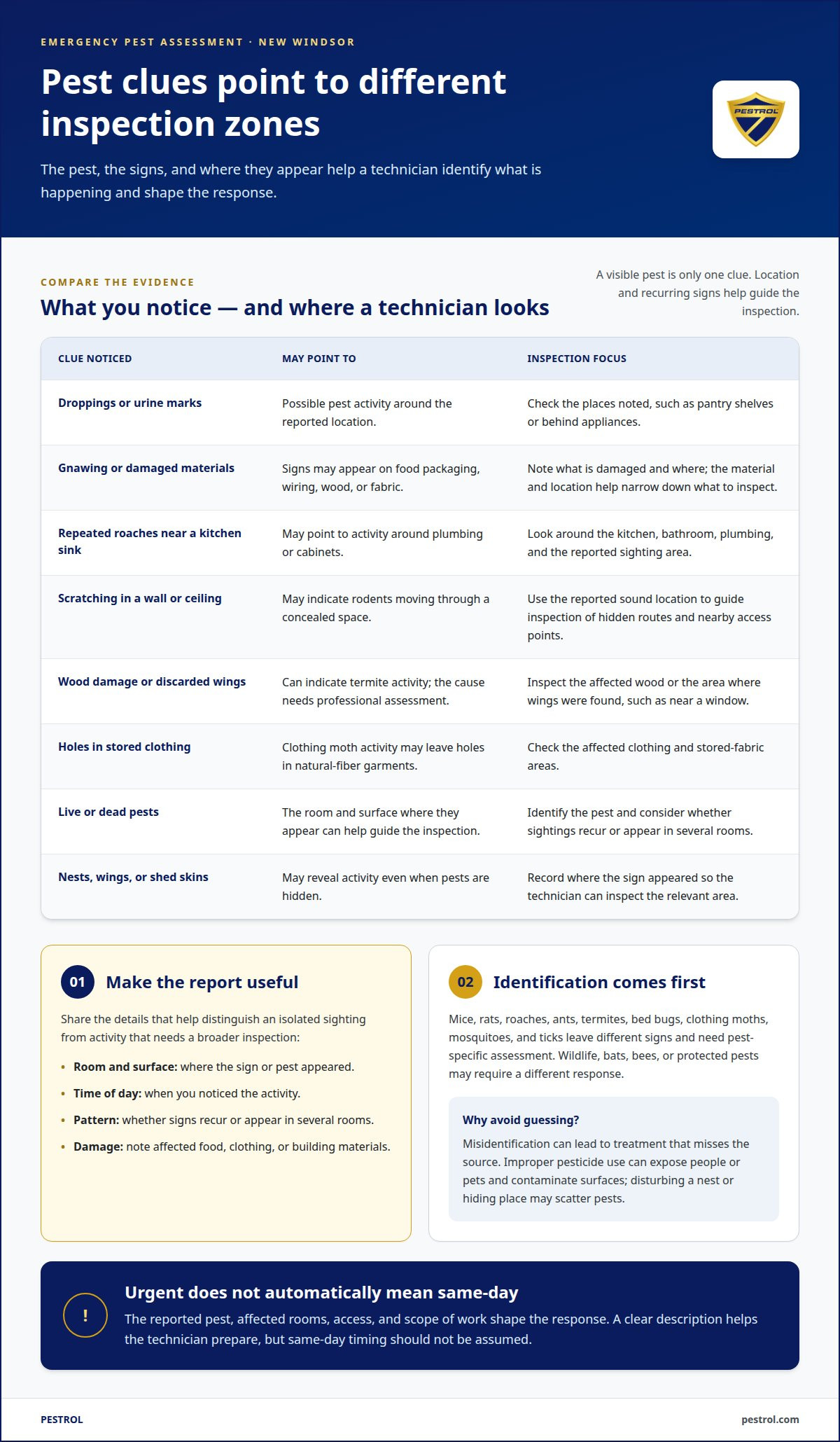
Early pest activity often appears as a specific clue rather than a visible swarm. Mice may leave droppings near a pantry, while termite activity can cause wood damage or leave discarded wings near a window. Noticing these signs early helps a technician identify what is happening and where to inspect.
Look for repeated signs in places pests can reach or hide. A single insect may have entered from outdoors, but recurring sightings in the same room deserve attention. Roaches near a kitchen sink, for example, can point to activity around plumbing or cabinets. Scratching sounds in a wall or ceiling may also indicate rodents moving through a concealed space.
Other clues include damaged food packaging, unusual odors, and marks on household materials. Chewed corners on a cereal box, dark droppings along a baseboard, or holes in stored clothing can help narrow down the likely pest. Clothing moth activity may leave holes in natural-fiber garments. Wood damage can indicate termite activity, but a professional inspection is needed to identify its cause.
When assessing an infestation, technicians look for patterns such as:
- Droppings or urine marks: Check the locations reported, such as pantry shelves or behind appliances.
- Gnawing or damage: Note affected food packages, wiring, wood, or fabric.
- Live or dead pests: The room and surface where they appear can help guide inspection.
- Nests, wings, or shed skins: These signs may reveal activity even when pests are hidden.
What risks can arise when pest removal is attempted without professional help? Misidentifying the pest can lead to treatment that misses the source, while improper pesticide use can expose people or pets and contaminate surfaces. Disturbing a nest or hiding place may also scatter pests to other parts of the property.
Clear observations help a professional assess the problem. Note the room, surface, and time of day where signs appeared, along with details such as a damaged food box or an insect near a window. Follow the treatment instructions provided for the affected area, especially around food, pets, or belongings. These details can help distinguish an isolated sighting from activity that needs a broader inspection.
For emergency pest removal in New Windsor, seek professional help when signs recur, appear in several rooms, or involve damage to food, clothing, or building materials. A technician can inspect likely hiding places, identify the pest, and recommend a response suited to the evidence.
Pests treated, including rodents and insects
A technician identifies the pest before selecting a treatment. Mice, rats, roaches, ants, termites, bed bugs, clothing moths, mosquitoes, and ticks leave different signs and require responses suited to each pest. A rodent near a kitchen, for example, calls for a different inspection focus than insects found in stored clothing.
Rodent activity often centers on entry points, food sources, and concealed routes. A technician may inspect behind appliances, along baseboards, and near gaps around pipes or doors. Pestrol’s Rodent Proofing addresses access as well as activity, helping reduce opportunities for mice or rats to enter. The right plan depends on where signs appear and how the building is arranged.
Insect treatments also vary by pest and location. Bed bugs may be associated with sleeping areas and nearby furniture, while roaches can appear around kitchens, bathrooms, and plumbing. Clothing moths are linked to stored fabrics, and termites are assessed through signs of activity in or around wood. Ants may travel between an entry point and a food source, so a technician looks beyond the insects visible in one spot.
Mosquitoes and ticks require attention to the areas where people encounter them, such as outdoor spaces or places where pests gather. A technician considers reported sightings and property conditions before recommending a treatment approach. A clear description of where pests appear helps focus the inspection and shape the service plan.
Does Orange County or New York State have rules for removing bats, bees, wildlife, or protected pests? Handling requirements can depend on the species and circumstances, so these animals should not automatically be treated like ordinary household pests. Correct identification comes first, especially when a bat, bee, or other wildlife is involved.
That distinction matters because not every animal found in or near a building is a pest-control target. A technician can assess household pests such as rodents and insects, while wildlife situations require a different response. Avoid disturbing an unidentified animal or nest before its type and location are understood.
For a rodent problem, an inspection may connect sightings to access points and possible proofing needs. For insects, a technician considers the species, affected rooms, and signs of activity. This pest-specific approach avoids basing a treatment plan solely on the first visible bug or rodent. It also clarifies whether the concern is a household infestation or an animal requiring another kind of handling.
Same-day and emergency pest service
An urgent pest call starts with the reported problem, affected rooms, and response needed. Same-day timing and emergency treatment are separate considerations: the pest, access, and work involved shape the service plan.
Same-Day Emergency Response
Same-day service means an assessment or treatment visit happens on the day requested. An emergency response focuses on the immediate concern, such as repeated roach sightings in a kitchen or bed bug activity affecting a sleeping area. A clear description of the pest and its location helps the technician prepare for the visit.
Explain what you’ve seen, where it appeared, and whether activity is continuing. This helps distinguish an urgent situation from a problem that needs a scheduled inspection and gives the technician a clearer starting point. Even a quick visit needs time for identification and a suitable treatment plan.
Choosing an Emergency Pest Company
When comparing a service, consider licensing information, customer reviews, and written guarantee terms separately. Licensing details should identify the relevant credential and issuing authority. Reviews are most useful when they describe similar pest problems and follow-up. Guarantee wording should explain what it covers, any limits, and the steps to take if activity continues.
For example, a review about rodent entry points says little about Bed Bug Treatment unless it discusses comparable work. Look for clear explanations of inspection, treatment, and follow-up rather than relying on a broad promise. Specific terms make it easier to understand what the service includes.
Preparing for the Technician’s Arrival
Before the visit, note the pest, the rooms affected, and where you saw signs. Keep the affected area accessible, and tell the technician about children, pets, or allergy concerns before treatment begins. Avoid disturbing nests or moving potentially affected belongings unless the technician gives you instructions.
For example, point out a bedroom where bed bug activity was reported or a pantry where rodents were seen. Mention any previous treatment and when it occurred, if you know. These details help the technician focus the inspection instead of relying on a single sighting.
Are emergency pest removal treatments safe for children, pets, and people with allergies? Safety depends on the pest, treatment method, product instructions, and the people or animals in the home. Tell the technician about sensitivities before work starts, and follow the specific precautions provided for the treatment.
A clear service explanation should cover the identified pest, areas treated, and follow-up instructions. For instance, a technician treating a bedroom should explain which areas are included and what precautions apply afterward. If the pest is uncertain, identification guides the treatment choice. Urgency sets the priority, while the inspection determines the practical scope of work.
Technician experience
Experience matters because pests can leave similar clues while requiring different responses. A technician assesses the evidence, identifies the likely pest, and connects its activity to affected areas. A few insects near a windowsill, for example, call for a different inspection than repeated sightings around kitchen plumbing. Careful identification helps prevent treatment from targeting the wrong problem.
A thorough inspection follows signs beyond the first visible location. For rodents, that can mean assessing travel routes and possible entry points. For insects, the technician considers where activity appears, how the room is used, and nearby hiding places. A Bed Bug Treatment inspection, for instance, needs attention to sleeping areas and surrounding furniture, not just the place where someone noticed a bite.
Experienced technicians also distinguish pest activity from other possible causes. Wood damage may have more than one explanation, and an insect found indoors may have entered from outside. Rather than treating one clue as a complete diagnosis, a technician considers the signs, location, and pattern of activity. This helps shape a response around the actual conditions.
During a visit, clear communication is part of the work. A technician should explain what the inspection found, which areas need attention, and how the proposed treatment addresses the identified pest. If the concern involves a pantry, for example, the explanation should clarify whether activity was found nearby and which treatment steps apply to that space. Specific instructions help occupants understand what to expect.
Experience also shows in how a technician responds to different properties. A restaurant kitchen, bedroom, and storage area have different layouts and uses. The technician needs to consider access, where people spend time, and which areas show activity. Those details affect how the inspection is conducted and treatment planned.
Look for a practical explanation of these points during the assessment:
- Identification: What pest do the observed signs indicate?
- Inspection scope: Which rooms, surfaces, or access points need attention?
- Treatment rationale: How does the proposed approach address the pest and its location?
- Follow-up: What signs should prompt another assessment?
A knowledgeable technician should explain relevant precautions in plain language. If a household includes children, pets, or someone with allergies, those details can guide the treatment discussion. Ask for clear instructions about treated areas and any preparation or follow-up. When a technician explains why a step matters, the service is easier to understand and manage.
Experience is not simply the number of pests a technician can name. It shows in a consistent process: inspect, identify, explain, and tailor the response. Whether the concern is a mouse in a pantry or insects near a bed, a careful assessment gives the treatment plan a clear purpose.
Treatment duration and frequency
Treatment duration has two meanings: how long a visit takes and how long a plan may need follow-up. The pest, affected areas, access, and treatment method shape both. Treating activity confined to one room differs from inspecting several areas or addressing pests with concealed hiding places.
During the visit, the technician assesses the problem before estimating the work involved. A kitchen inspection may include cabinet edges, plumbing areas, and spaces behind appliances. A bed bug assessment may involve sleeping areas and nearby furniture. The number of affected locations and the need to inspect hard-to-reach spaces influence how much time the work takes.
The treatment itself also varies. Some plans focus on specific locations, while others address a broader area or combine treatment with steps to reduce pest access. A mouse problem, for example, may require attention to entry points as well as signs inside the home. The technician explains what the work includes and whether another visit may be needed.
Follow-up frequency depends on the pest and the evidence after treatment. The technician considers whether activity continues, whether pests may remain hidden, and whether treatment needs time to address different life stages. Describe any new sighting by pest type and location: one insect in a treated room differs from repeated activity across several rooms.
For an informed follow-up plan, the technician should clarify:
- What the initial visit covers: Identify inspected and treated areas, such as a pantry or bedroom.
- What to watch for: Note the pest and location if activity appears again.
- When to report changes: Follow the instructions provided for communicating new signs.
- What could change the plan: Additional affected areas or continued activity may call for reassessment.
There is no fixed calendar rule for every infestation. A recurring pest problem may need a different schedule from a single, contained issue. The technician bases recommendations on inspection findings, pest behavior, and response to treatment. Clear instructions about preparation and treated areas also help keep each visit focused.
Before treatment begins, ask what the process includes and how follow-up is handled. If roaches are reported near a sink, for example, the technician can explain which nearby areas need attention and what signs would warrant another assessment. This conversation helps distinguish appointment length from the time needed to manage the infestation.
After the visit, follow the specific instructions for treated rooms and report relevant changes. Note whether the same pest returns, where it appears, and whether activity has shifted to another area. These details help the technician evaluate the response and decide whether further work is appropriate.
Pestrol
Pestrol helps homeowners address pest concerns with treatment and ongoing protection options. Its Home Pest Protection plans offer tiered approaches for household pests, while Bed Bug Treatment is specifically for bed bug concerns.
Share what you’ve noticed, where activity appears, and which rooms are affected. These details help clarify the pest concern and the service that fits the situation. Repeated bed bug activity, for example, calls for a different response than broader household pest concerns.
Turn to Pestrol when you need professional help identifying and addressing pests in your home. Contact Pestrol to discuss your pest concerns and next steps.
Take the Next Step Toward a Pest-Free Home
For emergency pest removal in New Windsor, start with a focused conversation about the activity in your home. Explain what you’ve noticed and where it’s happening, then discuss a response suited to your situation. A clear starting point helps turn an urgent concern into a practical plan.
Pestrol offers Home Pest Protection – Basic, Home Pest Protection – Plus, and Home Pest Protection – Premium. Each provides a different level of residential pest protection. Share your concerns with Pestrol to discuss which approach suits your household and pest issue.
With a clear plan, you can move forward with greater confidence and help protect the comfort of your home.
Frequently Asked Questions
Do you offer same-day or emergency services?
Pestrol provides pest control, but same-day arrival should not be assumed. Timing depends on appointment scheduling and the infestation, including the pest involved, affected areas, and access. For an urgent concern, explain what is happening and where you have noticed activity. This helps clarify the service needed and the appropriate next step.
How can I keep pests from coming back?
Ongoing prevention works best when you address the conditions attracting or admitting pests alongside the active problem. A recurring mouse issue, for example, may call for attention to entry points, while repeated insects near stored food may need a different prevention plan. A professional can recommend measures based on the pest and property. Pestrol’s residential protection plans include scheduled maintenance and preventative measures.
How long does a treatment take?
The length of a treatment visit depends on the pest, the number of affected areas, and the work required. Treating a contained problem in one room can involve a different scope from addressing activity throughout several parts of a home. The appointment itself is also distinct from the time needed for follow-up. A technician can explain the expected work after assessing the property.
Which pests do emergency pest removal services in New Windsor handle?
Professional pest control can address common household insects and rodents, with treatment matched to the pest identified. Pestrol’s services include Mouse Control, Rat Control, Cockroach Control, ants, Bed Bug Treatment, Clothes Moth Treatment, Termite Control, Wasp & Bee Control, and mosquito and tick control. Wildlife is separate from ordinary household pest treatment. Identifying the animal first helps determine an appropriate response rather than treating every sighting the same way.
How quickly can an emergency pest removal technician arrive in New Windsor?
For emergency pest removal in New Windsor, arrival timing depends on scheduling and the details of the service request. There is no fixed arrival window, so do not assume a technician will arrive the same day. Sharing the pest involved, affected rooms, and whether activity is ongoing helps clarify the urgency and the work the visit may require.
Do emergency pest removal services in New Windsor include follow-up visits or prevention?
Follow-up and prevention depend on the treatment plan and pest involved. For ongoing household protection, Pestrol’s Home Pest Protection plans include scheduled maintenance and preventative measures. A one-time treatment and a maintenance plan serve different needs, so the recommended approach should reflect the property and infestation. Ask for clear instructions about planned follow-up and what signs to report afterward.