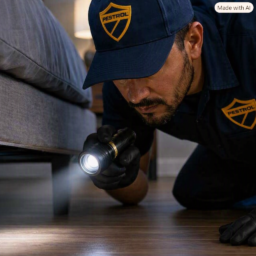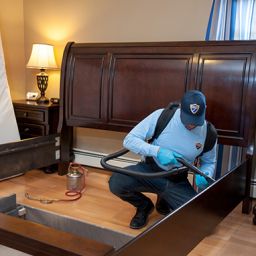




A clean-looking hotel room can still have bed bugs. Before unpacking, place your luggage on a rack or in the bathroom, then inspect the mattress and box spring seams, especially near the head of the bed, along with the headboard and nearby furniture. Knowing how to check a hotel room for bed bugs means looking for live insects, shed skins, eggs, and dark, rust-colored spots. Adult bed bugs are about 3/16 inch (4 to 5 mm) long.
It’s understandable to associate pests with poor cleanliness, but bed bugs can hitchhike into hotels on belongings, even when a room looks tidy. A careful inspection before unpacking can help you spot signs before your bags or clothes come near the bed. This guide shows where to look, how to recognize bed bugs at different life stages, and what to do if you find possible signs.
Key Takeaways
- Inspect beyond the mattress: bed frames, headboards, drawers, and nearby hiding places can also reveal signs.
- Learn how eggs, young bed bugs, and adults differ so you can recognize more than one life stage.
- If you spot suspicious signs, alert hotel staff and request a room away from the reported one.
- Keep your suitcase zipped and on a rack or hard surface to reduce its contact with potential hiding spots.
Inspecting mattress and box spring seams
- Start with the bed before unpacking. Set your suitcase in the bathroom or on a luggage rack while you inspect. Pull back the bedding and check the mattress seams, piping, folds, and tags, especially near the head of the bed. Use your phone light to examine narrow creases. Look for live insects, eggs, shed skins, and dark, rust-colored spots. Check accessible seams on both sides without dragging the bedding across the floor.
- Next, inspect the box spring, including its corners, fabric edges, seams, and underside. If it has a dust cover, check its edges and any tears. Examine bed-frame joints, screw holes, and the points where rails meet. Bed bugs can hide in tight gaps near sleeping areas, so don’t stop at the visible mattress surface. Don’t dismantle hotel furniture. If you can’t safely see a seam or frame section, ask staff to arrange a closer inspection.
- Continue outward from the bed in a deliberate sweep. Examine the headboard, including its joints and the wall behind it when accessible. Check nightstands, drawer corners, upholstered chairs, luggage racks, baseboards, and the edges behind pictures or mirrors. Inspect electrical outlets visually, but don’t remove covers or insert anything. Keep findings separate from ordinary lint or fabric marks: note the exact location and appearance, and take a clear photo for hotel staff.
- For routine hotel inspections, staff should check mattress seams and tags, box springs, bed frames, headboards, upholstered furniture, luggage racks, nightstands, drawers, baseboards, wall voids, and areas behind pictures, mirrors, and electrical outlets. A room-by-room checklist helps staff inspect the same places consistently. If bed bugs are found, connected rooms and rooms above and below the affected room also need inspection. These checks help determine whether signs are limited to one room or extend to adjoining spaces.
- After bed bug treatment, schedule follow-up inspections rather than treating the first inspection as the final check. Treated hotel rooms should be re-inspected at a 14-day interval after treatment and at a 28-day interval after treatment. If professional treatment uses steam, the U.S. Environmental Protection Agency says the steam temperature must reach at least 130°F, and airflow should not be forceful because it may scatter bed bugs. Leave treatment and follow-up work to trained professionals, and keep the room under inspection until the process is complete.
Why Are Hotels Such a Common Place for Bed Bugs to Turn Up?
Bed bugs can hitchhike into hotels on guests’ belongings, even when rooms are clean. After a stay, inspect luggage seams and pockets, then tumble travel clothes in a hot dryer for up to 30 minutes; washing alone usually won’t kill bed bugs.
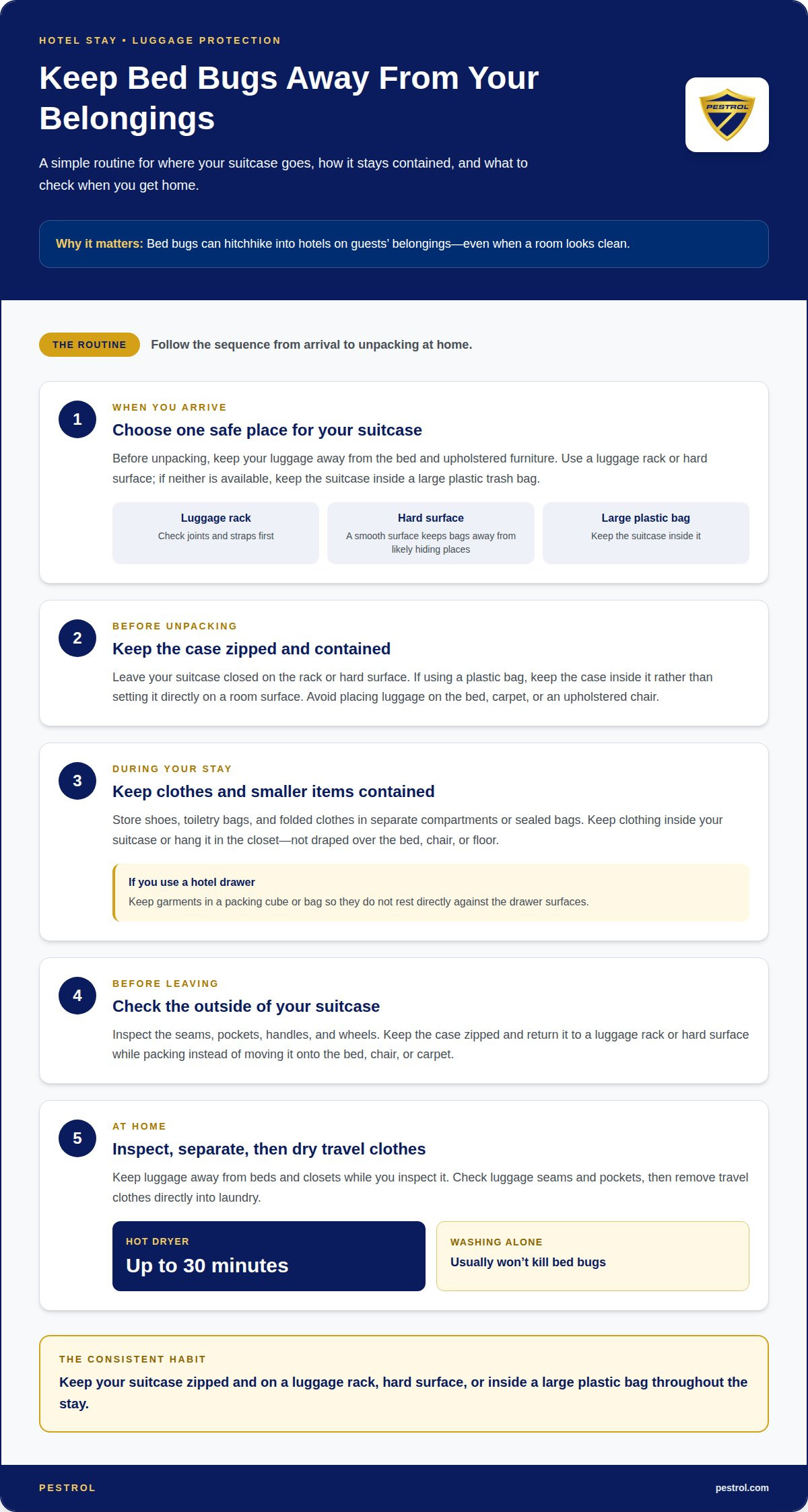
- Keep your suitcase away from beds and upholstered furniture during your stay. Place it on a luggage rack or hard surface, and keep it zipped between uses. If neither option is available, a large plastic trash bag can help separate the suitcase from room surfaces. Don’t set bags on the bed, carpet, or an upholstered chair while unpacking.
- Use the luggage rack carefully. Check its joints and straps before placing your bag there, and keep the suitcase closed rather than leaving it open. A hard tabletop or another smooth surface can also keep bags away from likely hiding places. Keep clothing inside the suitcase or hang it in the closet instead of draping garments over the bed, chair, or floor.
- Keep belongings contained inside your luggage. Store shoes, toiletry bags, and folded clothes in separate compartments or sealed bags, then close each compartment after use. Avoid leaving loose clothing in drawers or on upholstered furniture. If you use a hotel drawer, keep garments in a packing cube or bag so they don’t rest directly against its surfaces.
- Before leaving, check the outside of your suitcase, including seams, pockets, handles, and wheels. At home, keep luggage separate from beds and closets while you inspect it. Remove travel clothes directly into laundry, and use a hot dryer for up to 30 minutes. Washing alone usually won’t kill bed bugs, so don’t rely on a wash cycle as the only step.
- Think about the route your belongings take through the room. Moving a suitcase from the luggage rack to a bed, chair, or carpet can bring it into contact with several surfaces. Keep bags zipped during the trip, and place them on a rack or hard surface again when packing. After your stay, inspect pockets and folds in travel clothing before putting garments away.
Choose one place for the suitcase when you arrive, and keep to that arrangement during the stay. Travelers can keep zipped-closed suitcases on a luggage rack or hard surface during their hotel stay, or keep them inside large plastic trash bags. These options provide a straightforward way to keep the suitcase contained without leaving it open in the room. If you use a rack, leave the case zipped; if you use a hard surface, keep it zipped there as well. If you use a large plastic trash bag, keep the suitcase inside it rather than setting it directly on a room surface.
A consistent routine also makes it easier to manage your suitcase when unpacking or packing again. Choose the option that works in the room, and return the zipped case to it after each use. Use a luggage rack, hard surface, or large plastic trash bag throughout your stay. Avoid switching to an uncovered spot for convenience. The goal is to keep your suitcase zipped and on one of these options while you’re in the hotel.
Requesting another room if signs of bed bugs are found
- Pause unpacking if you find a suspected bed bug or sign of activity. Shed skins and dark, rust-colored spots can be signs, especially near sleeping areas. Don’t touch or crush the evidence. Take a clear photo showing the sign and its location, then note whether you saw an insect, cast skin, or stain. A photo and specific location help hotel staff understand what prompted your report.
- Tell the front desk or hotel manager promptly and describe what you found. Give them the room number, the location of the sign, and any details visible in your photo. Ask staff to document the report and arrange an inspection. Be direct and calm: “I found what may be bed bug signs near the bed. Please record this report and help me move rooms.” Keep your belongings together while staff responds.
- Request a different room, preferably in another part of the building. A room directly beside, above, or below the reported room may share nearby pathways or furnishings, so avoid an adjacent room if another location is available. Ask hotel management to move you to a room that isn’t next to the room reported. Confirm the location before carrying your belongings there.
- Keep your suitcase closed while you wait, and don’t place it on the bed, carpet, or upholstered furniture in the new room. If hotel staff offers to inspect your luggage or launder your clothing after your report, ask how they’ll handle the items before handing them over. Hotels can offer luggage inspection and clothing laundering at no charge. Keep your photo and report details available in case staff needs to clarify what you saw.
- Ask hotel staff what steps they’ll take with the reported room. Hotels should document complaints and contact a pest management provider for a professional inspection. If bed bugs are found, the room should be taken out of service until appropriate treatment is complete. When an infestation is confirmed, connected rooms and rooms above and below should also be inspected. These steps address the reported room and nearby spaces, rather than simply moving the guest.
Bed bug appearance and life stages
- Look for all three life stages: eggs, nymphs, and adults. Each is visible to the naked eye, so you can begin checking without a magnifying glass. Use your phone light to scan seams, folds, and narrow gaps. Move slowly, as small insects or eggs can be easy to overlook among stitching, lint, and fabric texture.
- Compare any suspected adult with its approximate size. An adult bed bug is about 3/16 inch (4 to 5 mm) long. Look closely rather than relying on a quick glance, especially near the mattress edge or bed frame. If an insect is too small to judge clearly, photograph it beside a familiar object for scale, without handling or crushing it.
- Check for nymphs as well as adults. Nymphs are immature bed bugs, and their smaller size makes them harder to spot during a quick room check. Scan the same areas more than once, including seams and creases around the bed. Finding a small insect alongside a larger one may indicate that different life stages are present.
- Look for eggs with steady, close attention. Eggs are visible to the naked eye, but their small size makes good lighting and a slow scan helpful. Examine stitching, folds, and protected crevices, not just broad, flat surfaces. Don’t assume one empty seam means the entire bed or room is clear. Continue checking nearby hiding places.
- Record what you see without disturbing it. Take separate photos of an insect, egg, or suspected shed skin, and include the location, such as “mattress seam near headboard.” A clear image can help hotel staff understand your observation. Don’t sweep away suspected evidence or move it to another surface, as that can make its original location harder to identify.
- Use a consistent approach when comparing what you see. Note whether the suspected insect appears adult-sized, much smaller, or egg-like, then photograph it and report its location. Bed bug life stages can appear together, so don’t dismiss a finding because it doesn’t match an adult’s size. If you can’t identify an object confidently, show the image to hotel staff and request an inspection.
How bed bugs enter hotels
- Keep the main route in mind: bed bugs can hitchhike into hotels on people’s belongings. A guest’s suitcase, clothing, or other personal items can carry them into a room, even when the hotel maintains high cleanliness standards. Clean sheets and tidy surfaces don’t show how every item arrived, so a room’s appearance alone can’t tell you whether pests have been introduced.
- Think of each arrival as a possible route into a room, not proof of poor housekeeping. For example, a suitcase brought from home may have been near an infested sleeping area before the trip. In a hotel, belongings may be placed near beds, chairs, or luggage racks. That’s why even a clean room can still need a careful inspection.
- Keep personal items contained while unpacking. Open your suitcase where you can keep its contents together, and avoid spreading clothing across several surfaces. A jacket moved from luggage to an upholstered chair, for example, comes into contact with another place where an insect could hide. Containing belongings limits unnecessary contact and helps you keep track of where items have been placed.
- Pay attention to how luggage moves through the room. Carrying an open suitcase between the bed, chair, and floor creates more opportunities for contact with room surfaces. Keep the case zipped when you aren’t taking something out, and return items to it after use. This doesn’t establish whether bed bugs are present, but it keeps your belongings organized while you inspect.
- Don’t assume a spotless room is free of bed bugs. Hitchhiking on belongings is the key distinction: cleanliness and introduction are separate issues. A room can look orderly while an insect remains concealed in a seam or crevice. Inspect before unpacking, and look for physical signs rather than relying on fresh linens or a neat appearance.
- Use a simple arrival routine to reduce uncertainty. Keep bags contained, inspect the sleeping area before spreading your belongings, and note where you place clothing and personal items. If you see possible signs, stop unpacking and report their location to hotel staff. The practical takeaway is simple: belongings can carry bed bugs into hotels, so careful placement and early inspection matter.
Pestrol
Pestrol offers Bed Bug Treatment for suspected bed bugs at home after a hotel stay. Inspecting your hotel room can help you act early while traveling, but signs at home need attention in that setting. Note where you saw signs, such as near a mattress or upholstered furniture, and share those details when arranging treatment. Clear observations help focus on the concern and affected areas.
If you find possible bed bug activity at home and aren’t sure what to do, contact Pestrol to discuss Bed Bug Treatment and the next step for your situation.
Make a Calm Plan for Your Next Stay
Knowing how to check a hotel room for bed bugs gives you a practical travel routine, not a reason to worry about every room. Inspect before unpacking and keep belongings organized during your stay. If you notice possible activity after returning home, record where you found it and what you observed. Clear details can help guide the next conversation about your home.
For broader household pest concerns, Pestrol offers Home Pest Protection – Basic, Home Pest Protection – Plus, and Home Pest Protection – Premium. If you notice bed bug signs at home, Pestrol also offers Bed Bug Treatment. Choose your next step based on the concern, rather than assuming a finding in a hotel room means there’s an infestation at home.
Stay observant, act on specific signs, and take your next step with confidence.
Frequently Asked Questions
What are the signs of bed bugs in a hotel room?
Look for live insects, eggs, shed skins, and dark or rust-colored spots near sleeping areas. A single mark can be difficult to identify, so note its appearance and exact location rather than relying on color alone. Take a photo for hotel staff and report suspected signs promptly, even if you haven’t seen a live insect.
How to inspect a hotel room for bed bugs step by step?
To learn how to check a hotel room for bed bugs, follow a consistent inspection route before unpacking. Keep luggage closed, examine the mattress and box spring, then check the bed frame, headboard, and nearby furniture. Continue to drawers, baseboards, and upholstered items. Use a phone light for seams and gaps. Photograph suspected evidence and notify hotel staff.
Where should you look for bed bugs in a hotel room?
Start near the sleeping area: inspect mattress seams and tags, box springs, bed frames, and headboards. Then check nightstands, drawers, upholstered furniture, luggage racks, and baseboards. Look around the edges of pictures and mirrors, too. Bed bugs can hide in narrow gaps, so examine folds and joints instead of limiting your check to broad, exposed surfaces.
How to check hotel mattress seams and headboards for bed bugs?
Use your phone light to examine mattress piping, folded seams, tags, and corners slowly. Check headboard joints and edges, especially where the headboard meets the wall or bed frame. Don’t take fixtures apart or remove outlet covers. If you can’t see a section clearly, show it to hotel staff and ask them to inspect it without disturbing suspected evidence.
What do bed bugs, eggs, and shed skins look like?
Adult bed bugs are approximately 3/16 inch (4 to 5 mm) long, and nymphs are smaller. Adults, nymphs, and eggs are visible to the naked eye. Shed skins resemble empty insect shells, while eggs may be hard to distinguish against textured fabric. Photograph anything suspicious beside a familiar object for scale, without moving or crushing it.
Can bed bug bites confirm an infestation?
No. Itchy bites alone can’t establish that bed bugs are present in a hotel room. Bed bugs feed on people and animals, usually while they sleep, and bites may become infected if scratched. Check the room for physical signs and report them to hotel staff. If bites concern you or worsen, seek medical advice rather than diagnosing their cause by appearance.
What should you do if you find bed bugs in a hotel room?
Stop unpacking and keep your belongings together. Photograph the suspected insect or sign where you found it, then tell hotel staff the room number and location. Ask them to document your report and arrange an inspection. Keep luggage closed while you wait, and ask staff what they’ll do about the room and your belongings.
Should you change rooms or hotels after finding bed bugs?
Request another room, preferably in a different part of the building and not next to the room reported. Before moving, use the same routine for how to check a hotel room for bed bugs: inspect the new room before unpacking. Whether to continue your stay or leave is your choice. Keep your luggage contained while you decide, and don’t place it on another bed.