



The moths flying through a room aren’t the ones eating your clothes: larvae cause the damage. Effective clothes moth pest control focuses on finding where those larvae are feeding, assessing affected fabrics, and treating the source. A professional clothes moth pest control plan can also help when damage keeps appearing or has spread to rugs and carpets.
It’s unsettling to find holes in a favorite garment or thinning patches in a rug, especially when the source may be hidden in a closet or beneath furniture. This guide explains how to recognize clothes moths, what cleaning and treatment can involve, and how to assess damage to clothing and floor coverings.
You’ll also learn when a professional inspection can help and what factors shape a treatment plan. Understanding the signs and next steps can help you decide whether clothes moth pest control is right for protecting your fabrics and home.
Key Takeaways
- Learn to distinguish clothes moths from other fabric pests by looking for the signs they leave behind, not just the insects you see.
- Understand why thorough cleaning needs to address hidden areas where eggs and larvae may be present.
- See which natural fibers are vulnerable and how to judge whether damage is limited or widespread.
- Explore why rugs, carpets, and delicate fur items may need a different treatment approach from washable clothing.
- Recognize when a persistent or extensive infestation calls for professional assessment and targeted Clothing Moth Control.
Identifying clothes moths and other fabric pests
Professionals identify clothes moths by inspecting damaged fabrics, larvae, silken cases, and nearby dark storage areas. The location and type of evidence help distinguish textile pests from pantry moths before treatment is recommended.
Clothes Moth Identification
Two species damage textiles: the webbing clothes moth and the casemaking clothes moth. Webbing clothes moths have distinct appearances at different life stages. Professionals look for larvae, feeding damage, silk webbing, and, for casemaking moths, cigar-shaped cases that remain on fabrics. Because these insects avoid light and fly weakly, adults may hide when disturbed.
Clothes moths lay eggs in dark, secluded places, so an inspection may include closets, storage areas, and fabric folds. Adult clothes moths near stored textiles can indicate larval feeding nearby, even if the insects aren’t on the damaged item.
Clothing Moths and Pantry Moths
The location of the evidence helps distinguish clothes moths from pantry moths. Clothes moth signs tend to cluster around animal-based materials such as wool, fur, hides, hair, and feathers. Pantry moth signs are more likely near stored food: disturbed packaging, an unpleasant odor, or sticky secretions that make food clump can point to a different pest.
A professional assesses both the material and the surrounding area rather than identifying a moth by appearance alone. For example, holes in a wool sweater beside a closet suggest a textile pest, while clumped dry food and damaged packaging point to a pantry pest.
Life Cycle and Trap Monitoring
Female webbing clothes moths lay 40 to 50 eggs over a 2- to 3-week period. In warm weather, eggs hatch in 4 to 10 days, and the full life cycle takes about 65 to 90 days. Larvae cause fabric damage as they feed, so finding an adult doesn’t reveal how many larvae or eggs remain in concealed areas.
Pheromone traps can capture adult male webbing clothes moths, but they don’t control larvae and don’t work for casemaking clothes moths. Professionals use them to monitor webbing moth activity, interpreting catches alongside fabric damage and inspection findings.
Accurate identification shapes the treatment plan. A professional checks whether animal-based fabrics are damaged, whether larvae or cases are present, and whether activity extends to closets, rugs, or other storage spots. This helps distinguish an active infestation from old damage and focus assessment on the affected areas.
Identification also guides how affected items are handled. A delicate garment may need a dry-cleaning assessment, while another suitable item might be treated differently, including in a freezer. Fabric type and inspection findings matter: the wrong approach can leave hidden life stages undetected or damage the material.
Professional cleaning and vacuuming of clothes moth-infested areas
A professional cleaning plan treats the closet and clothing as connected parts of one problem. Dust, lint, loose fibers, and debris can collect along shelf edges, floor seams, and beneath stored items. The technician assesses these spots, identifies affected materials, and determines which cleaning methods suit each fabric. For example, a wool coat beside an infested closet may need different handling from washable cotton clothing.
Closets need close attention because eggs can be laid in dark, secluded spaces. A professional can vacuum corners, cracks, shelf joints, baseboards, and floors beneath storage units. The technician also checks inside drawers and around stored items, where fibers and debris may gather. Cleaning these places helps remove insect debris and makes it easier to spot fresh signs during later monitoring.
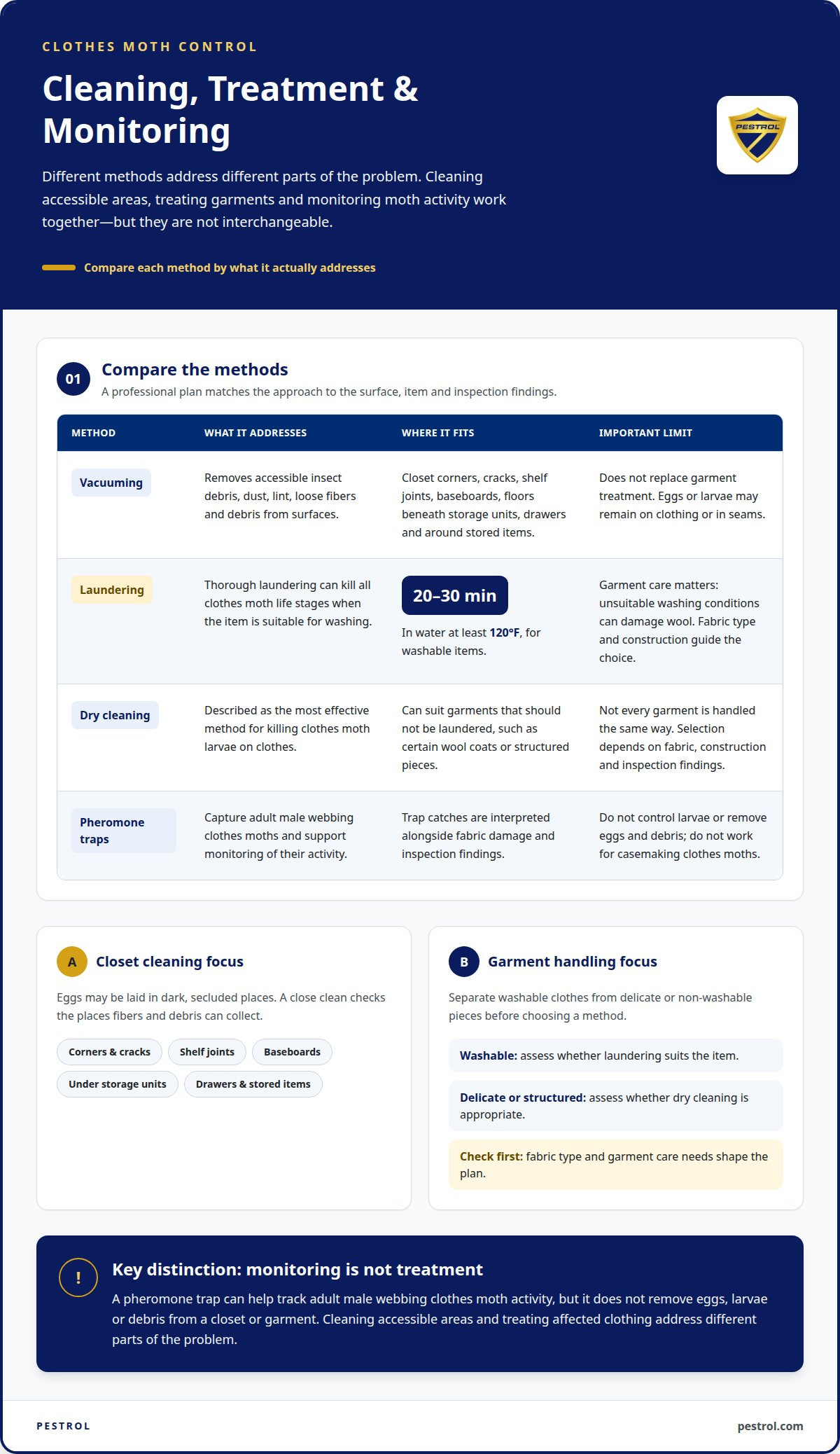
Vacuuming doesn’t replace treating affected garments. It addresses accessible surfaces, while larvae or eggs may remain on items or in seams. A professional separates washable clothing from delicate or non-washable pieces before choosing an approach. That distinction matters for a wool sweater, a lined coat, or fabric trims that may not tolerate the same cleaning process.
For washable items, thorough laundering for 20 to 30 minutes in water at least 120°F is effective against all clothes moth life stages. A professional cleaning plan accounts for garment care needs, since wool can be damaged by unsuitable washing conditions. Fabrics stained with sweat, food, or urine can attract clothes moths, so the technician may prioritize those items during assessment and cleaning.
Dry cleaning is described as the most effective method for killing clothes moth larvae on clothes. It can suit garments that shouldn’t be laundered, such as certain wool coats or structured pieces. A professional identifies which items need this treatment and separates them from washable clothing. Decisions depend on fabric type, garment construction, and inspection findings.
Pheromone traps may support monitoring, but they don’t replace cleaning affected closets or garments. A trap can catch adult male webbing clothes moths; it won’t remove eggs, larvae, or debris from a shelf seam. Professionals interpret trap activity alongside inspection findings and cleaning needs. If damage appears in several storage areas, a targeted clothes moth inspection can help determine where treatment should focus.
Clothing damage from webbing clothes moths
Holes and weakened patches in wool garments can indicate feeding by clothes moth larvae. The location, material, and pattern of damage help identify which items need closer assessment.
Damage to Clothing Fibers
Adult webbing clothes moths don’t eat clothing; their larvae feed on natural fibers containing keratin. Wool, fur, silk, and hair can be damaged as larvae feed within or across garments. A wool sweater with new holes and a silk lining with worn patches may both need inspection, even though the fabrics differ.
Look closely at the damaged area and nearby folds. Larvae may feed in concealed places, so the garment’s outer surface might show only part of the damage. Webbing or silken cases around a damaged section can provide further evidence. Holes indicate fiber loss, while silk traces may point to larval activity nearby.
Affected Materials and Damage Signs
Clothes moth larvae damage animal-based materials, including wool, fur, hides, hair, and feathers. They can also affect clothing, bedding, and furniture made with vulnerable fibers. Check wool coats, feather-filled items, and fur trim for holes, thinning, or weakened areas. These signs help identify which items need attention.
Damage may appear as small holes, irregular thin patches, or missing fibers. Webbing clothes moth larvae can feed on wool, fur, silk, and hair, so inspect seams, folds, and areas in contact with stored materials. One damaged spot can be reason to examine the rest of the garment, especially its hidden folds and lining.
To assess clothing damage, consider three details together: the fiber, the affected area, and any nearby evidence. A hole in wool differs from a snag in material without animal fibers. A professional can examine the fabric and distinguish moth feeding from ordinary wear, helping determine whether damage is confined to one spot or spans several items.
Damage varies by item. A bedding edge may show feeding where fibers are exposed, while a coat may have concealed damage along a seam or hem. Compare similar areas on the same garment and note where weakened fibers cluster. This helps distinguish an isolated damaged piece from a pattern affecting multiple stored items.
Don’t judge an infestation only by the number of visible holes. Larvae feed on fibers, while adult moths don’t eat clothing, so visible damage reflects larval feeding. Assessment should include the garment’s material and both visible and concealed areas. These details help guide the next steps for affected clothing.
Managing infestations in rugs, carpets, and fur
Professionals assess rugs, carpets, fur, and nearby storage areas to locate feeding activity and affected items. Treatment depends on the material, the source of the infestation, and whether the item can safely be heated or frozen.
Treatment time depends on the number of affected items, the materials involved, and the plan. Signs that activity has stopped include no fresh fabric damage and no further webbing clothes moths detected during monitoring. A single empty trap doesn’t establish that every life stage is gone.
Infestation Sources and Affected Items
Clothes moth larvae feed on animal-based materials, including wool, fur, hides, hair, and feathers. They can damage rugs, carpets, clothing, bedding, and furniture made with vulnerable fibers. Clothes moths don’t infest food. Disturbed packaging, unpleasant odors, or sticky secretions that make food clump suggest pantry moth activity instead.
To locate a source, professionals inspect the affected rug or fur item and nearby storage areas. They look for damage and concealed activity around carpet edges, beneath furniture, and where fabrics are stored. Removing or treating only the most visible item can miss another nearby source, so the inspection includes surrounding materials.
Freezing and Heating Infested Items
For suitable items, UC Statewide IPM Program says an infested item can be heated for at least 30 minutes at temperatures higher than 120°F, or frozen in a plastic bag for several days at temperatures lower than 18°F. A professional considers the item’s material and construction before selecting either approach.
Those temperatures aren’t suitable for every rug, fur item, or textile. Beadwork, plastic components, delicate finishes, and carpet size can affect how an item should be handled. A professional assesses whether it can tolerate treatment or needs a different plan, rather than applying heat or cold indiscriminately.
Prevention and Elimination
Professionals focus prevention on stored fabrics and the locations where larvae may feed. Preventative treatment of stored fabrics should be repeated every 6 months. Regular inspection of storage areas, rugs, and fur items can help reveal fresh damage before it spreads across additional materials.
There’s no single treatment duration for every infestation. The extent of activity, source location, affected materials, and chosen treatment all shape the schedule. Professionals assess progress by revisiting treated areas and checking for new damage or signs of moth activity. Pheromone traps can help monitor adult male webbing clothes moths, but they don’t eliminate larvae or work for casemaking clothes moths.
When to hire a pest control professional
Professional help makes sense when moth damage keeps appearing, spreads across rooms, or affects valuable fabrics. Heavy clothes moth infestations may require a pest control professional, especially when larvae or damage appear in several storage areas.
In the United States, the cost depends on the treatment plan, with the price provided after a quote request. The affected areas, materials, extent of the infestation, and treatment approach all shape the plan.
Look beyond one damaged garment. New holes in a wool coat, thinning carpet edges, and signs near furniture may indicate activity in multiple locations. A professional inspection can assess these areas together and identify likely sources, including dark crevices and stored fabrics.
Consider professional help when the source is difficult to locate or affected items need different handling. For example, a fur item, wool rug, and feather-filled furnishing may not suit the same treatment. A professional can assess the materials and construction before choosing an approach, helping avoid unsuitable treatment for delicate fabrics.
Repeated sightings also deserve attention. Clothes moths hide and fly weakly, so visible adults may not reveal where larvae are feeding. A professional connects signs such as fresh fabric damage, webbing, or cases with nearby storage areas. This assessment helps distinguish an active infestation from old damage.
When planning treatment, a professional considers the extent of the infestation, the rooms and belongings affected, and access to the source. Carpet edges, furniture undersides, closet seams, and infested garments may all need assessment. Treating only the easiest visible spot can leave other activity undetected.
Ask what the proposed plan addresses: the source, affected fabrics, nearby locations, and how progress will be assessed. These details matter more than simply targeting adult moths. Pheromone traps can monitor some adult moth activity, but they don’t eliminate larvae or work for every clothes moth species.
Professional treatment can be especially useful when damage continues after cleaning, several rooms or valuable textiles are involved, or treatment could harm the fabric. A clear assessment links each finding to an appropriate next step and identifies which items or areas need attention first.
For persistent damage or activity across multiple areas, request professional clothes moth treatment.
Pestrol: Clothing Moth Control
Pestrol provides Clothing Moth Treatment for infestations affecting clothing, rugs, and other fabrics. Turn to this service when moth activity continues, damage appears in multiple areas, or you need professional help assessing affected items and locating the infestation.
A clear assessment helps focus treatment on the moth problem, not just the visible damage. If moths are affecting your home, contact Pestrol to discuss Clothing Moth Treatment.
Protect the fabrics you value
Choosing clothes moth pest control is a practical step toward protecting the garments, rugs, and furnishings you want to keep. If you’re unsure where the activity is coming from or which items need attention, a professional assessment can turn scattered signs into a clear plan for clothes moth pest control.
Pestrol provides Clothing Moth Treatment for clothing and other affected fabrics. For broader household pest needs, Pestrol also offers Home Pest Protection – Basic, Home Pest Protection – Plus, and Home Pest Protection – Premium. Professional clothes moth pest control can help you make informed decisions about affected areas and belongings.
Taking action gives you a clear next step and helps you make informed decisions about your home and belongings.
With the right support, you can move forward with greater confidence and protect the fabrics that make your home feel like yours.
Frequently Asked Questions
What causes clothes moth infestations and where do they hide?
Clothes moths are drawn to animal-based fabrics, especially items stained with sweat, food, or urine. Eggs are laid in secluded places, so larvae may develop unnoticed inside folded garments, storage boxes, or closet corners. For example, a rarely worn wool coat stored with a stained scarf can provide feeding material. Professionals trace signs through nearby fabrics and storage areas to help locate the source.
How can a professional get rid of clothes moths using washing, freezing, heat, or dry cleaning?
A professional selects treatment according to the item’s fabric, construction, and care requirements. Washable pieces may be laundered, while delicate or non-washable clothing may be dry-cleaned. Freezing or heating may suit certain items, but not every garment or rug. Plastic trims or delicate finishes, for example, can affect which treatment is suitable, so assessing each item matters.
How do pest control professionals clean closets and help protect clothes from clothes moths?
Professionals focus on overlooked surfaces as well as the garments themselves. They can vacuum closet corners, shelf joints, baseboards, and floor edges, then assess stored items for signs of activity. For example, after finding clothing damage, they can check beneath a storage unit. They can also recommend preventive treatment for stored fabrics and identify places for continued monitoring.
Which insecticides do professionals use against clothes moths, and how do they apply them safely?
Insecticide choice and placement depend on the infestation and product label. UC IPM advises using insecticide dusts containing pyrethroids or pyrethrin in cracks and crevices, following label directions. Its examples include 0.05% deltamethrin and 1% pyrethrin dust. A professional applies products to appropriate locations rather than treating clothing indiscriminately, and considers lower-toxicity products first.
When should you hire a pest control professional for clothes moths?
Hire a professional when damage continues, activity appears in several rooms, or valuable textiles are affected. A specialist can assess whether separate locations share a source and build a treatment plan around the affected materials. Recurring damage near a closet and a rug, for instance, may call for a broader inspection than one garment alone. Heavy infestations may need professional treatment rather than monitoring alone.
How can a professional help prevent clothes moths with storage, cedar, or other repellents?
A professional can assess storage conditions, affected fabrics, and likely risk areas, then recommend a prevention plan suited to the items. Ask how cedar or other repellents fit into that plan, rather than relying on them as the only measure. Preventive treatment of stored fabrics should be repeated every 6 months. Regular attention to stored items can also help reveal new signs early.
Are clothes moth pesticides or mothballs harmful to people, pets, or clothing?
Mothballs are pesticides, and their gases may pose a risk to people and pets. Use them only in airtight containers and according to the manufacturer’s directions. Don’t place them casually in closets or around exposed belongings. If you’re considering a pesticide, a professional can explain how the selected treatment is applied and why product-label directions matter for that use.