




What if that single roach you spotted scurrying across the kitchen floor at midnight wasn’t just a lonely traveler, but a scout for a colony of thousands hiding just behind your drywall? It’s a sinking feeling every homeowner in Manhattan or the Hudson Valley dreads. You want to believe it’s just a one-off “waterbug” that wandered in from the pipes, but when you’re unsure how to know if you have a roach infestation, the uncertainty makes it hard to settle in for the night. We understand that fear. You aren’t just worried about a bug; you’re worried about the safety and cleanliness of your sanctuary.
This article will show you how to identify the subtle, hidden signs of a cockroach problem before it becomes a full-blown infestation. Whether it’s a specific musty odor or tiny physical markers in your cabinets, learning these signs early can save you from a major headache later. We’ll walk through the 2026 homeowner’s checklist, clarify the confusing differences between various pests, and explain how options like our Home Pest Protection – Basic plan can provide a proactive shield. By the end, you’ll have the professional validation you need to regain your peace of mind.
Key Takeaways
- Learn how to know if you have a roach infestation by identifying the specific musty pheromone scent and looking for physical evidence like shed skins.
- Understand why seeing a single roach during daylight hours is a critical warning sign of an overcrowded colony hiding nearby.
- Stop the confusion between waterbugs and true cockroaches to ensure you apply the correct elimination strategy for your specific pest.
- Perform a targeted room-by-room inspection focusing on heat-generating kitchen appliances and high-moisture areas like bathroom drains.
- Discover why common DIY foggers often fail and how a professional inspection can locate the primary nest for permanent results.
The ‘One Roach’ Myth: Why Visibility is the Last Sign
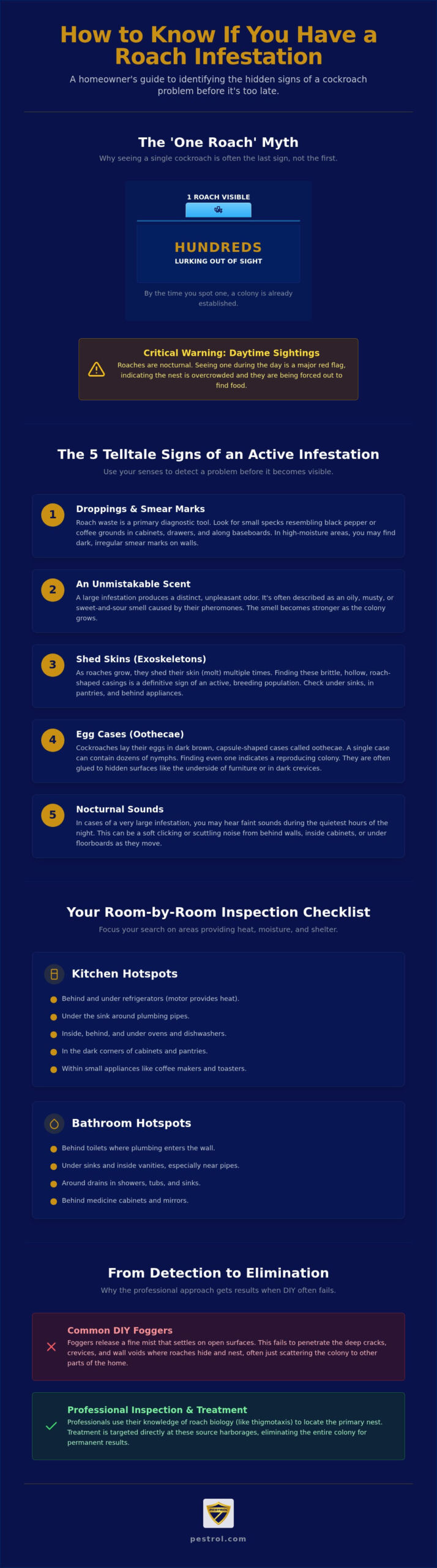
Seeing a cockroach in your Manhattan kitchen or Hudson Valley basement is rarely an isolated incident. Many homeowners assume a single bug is just a stray that wandered in through a window. In reality, cockroaches are biological masters of concealment. By the time you spot one out in the open, the “hidden ratio” suggests there are likely dozens, or even hundreds, lurking just out of sight. This is the primary challenge of how to know if you have a roach infestation; visibility isn’t the beginning of the problem, it’s often the climax of one.
Roach behavior changes as the colony grows. In the early stages, they remain completely invisible, staying deep within wall voids. As the population explodes, competition for food and space forces them into the light. If you’re seeing movement during the day, it’s a clear sign that the nest is overcrowded and the infestation has reached a critical mass.
Understanding Thigmotaxis and Roach Instincts
Cockroaches are thigmotactic. This means they have a biological drive to feel physical pressure on all sides of their bodies. They don’t just prefer tight spaces; they require them to feel safe. This instinct drives them into cracks and crevices thinner than a credit card. About 30 cockroach species are associated with human habitats, and they’ve perfected the art of living in the gaps behind your cabinets, inside your motor housings, and deep within your wall voids.
Even a spotless kitchen can harbor a massive nest because these pests value tight, dark harborages more than they value easy-to-reach crumbs. They can survive for weeks without food, meaning they’ll stay tucked away in your walls long after you’ve wiped down the counters. Their survival depends on staying hidden, which is why your eyes aren’t always the best tool for detection.
The Danger of the ‘Lone Wanderer’ Assumption
It’s easy to dismiss a lone bug as an “accidental intruder,” especially in the Bronx or other urban areas where pests are common. However, resident pests behave differently than accidental ones. Resident roaches use pheromones to communicate with the rest of the colony. These chemical signals act like a beacon, telling other roaches where to find water, food, and safe places to sleep. A scout roach is a resident bug searching for new resources to support an expanding colony. Once that scout finds a reliable food source in your pantry, it’s only a matter of time before the rest of the nest follows those chemical trails.
Don’t wait for a second sighting to take action. If you’re unsure about the scale of the issue, starting with a Home Pest Protection – Basic plan can provide the professional inspection needed to find these hidden nests before they spread. We have this under control, but the key is acting while the signs are still subtle.
The 5 Sensory Signs of an Active Roach Infestation
Detecting a problem early requires a sensory-first approach. If you’re wondering how to know if you have a roach infestation, start by looking for shed skins. As cockroaches grow, they cast off their translucent exoskeletons. Finding these brittle, hollow shells near baseboards or under sinks is a definitive sign of an active colony. You should also look for oothecae. These are dark brown, capsule-shaped egg cases. A single case can hold dozens of nymphs, and they are often glued to the undersides of furniture or tucked into cabinet corners.
You might even hear them. Large infestations of certain species can produce a faint clicking or scuttling sound behind walls during the quietest hours of the night. These sounds occur when roaches move across dry surfaces or interact with one another in tight wall voids. Using principles of Integrated Pest Management, professional technicians use these biological markers to pinpoint exactly where a nest is located before it spreads further into the home.
Identifying Roach Droppings and Smears
Roach waste is a primary diagnostic tool. Smaller species leave behind specks that look remarkably like black pepper or coffee grounds. In areas with higher moisture, you’ll see dark, irregular smear marks where they crawl along walls or floorboards. It’s easy to confuse these with signs of other pests. However, effective mouse control involves looking for larger, rice-sized pellets. Roach waste is much smaller, more scattered, and often found in vertical corners where rodents rarely travel.
The Unmistakable Roach Scent
A significant infestation produces a distinct, unpleasant odor. It’s often described as oily, musty, or even sickly sweet. This scent comes from the aggregation pheromones roaches use to communicate. Because these chemicals are designed to stick to surfaces, the smell often lingers even after a surface is wiped down. For many New York residents, these airborne particles are more than a nuisance. They can trigger severe asthma attacks or chronic allergies. Learning this scent is a vital part of how to know if you have a roach infestation before the population explodes. If your kitchen has developed a strange, heavy odor that won’t go away, our Home Pest Protection – Basic plan can help identify the source and restore your home’s air quality.
Roach vs. Lookalikes: Don’t Misidentify Your Pest
Precision matters. If you’re trying to figure out how to know if you have a roach infestation, you must first be sure you aren’t looking at a harmless beetle or an outdoor visitor. In New York, ground beetles and click beetles are often mistaken for their more invasive counterparts. Beetles typically have harder, more rigid wing covers and shorter antennae. Roaches, by contrast, have flat, oval bodies and long, whip-like antennae that are constantly in motion. Misidentifying the bug leads to using the wrong treatment, which wastes your time while a real colony continues to grow behind your walls.
Environment plays a huge role in identification. For example, Asian cockroaches look nearly identical to the dreaded German roach. However, Asian roaches are attracted to light and are strong fliers that prefer to live outdoors. If the bug is buzzing around your porch light in the Hudson Valley, it’s likely an Asian roach. If it’s scurrying under your toaster in the dark, you’re likely dealing with a resident German roach infestation. Understanding these subtle differences is the key to choosing the right strategy.
The ‘Waterbug’ Myth in NYC
In Manhattan and the Bronx, the term “waterbug” is often used as a colloquialism for the large, reddish-brown American Cockroach. People use this name to distance the pest from the “dirty” stigma of a roach infestation, but the biological reality remains the same. True waterbugs are aquatic predators that rarely enter homes. American Roaches, however, thrive in NYC steam tunnels and sewer systems. They typically enter buildings through floor drains or gaps in the foundation. Because their entry points are so specific, you need professional roach removal strategies that focus on exclusion and building-wide infrastructure rather than just surface sprays.
German Roaches: The Apartment Dweller’s Worst Enemy
German cockroaches are the most frequent cause of indoor crises in New York apartments. You can identify them by the two dark, parallel stripes on their pronotum, which is the shield-like area just behind the head. These pests are notoriously difficult to eliminate because they thrive in the smallest gaps, often hiding inside the warm motor housings of appliances like refrigerators and microwaves. Their rapid breeding cycle is their greatest weapon; a single female can produce hundreds of offspring in just a few months. This turns a minor sighting into a full-scale problem in a matter of weeks.
Don’t let a “lone wanderer” fool you into a false sense of security. If you’re struggling with how to know if you have a roach infestation versus a simple beetle problem, our team provides the expert eye needed to clear the confusion. We’ve seen every type of pest in the Bronx and Manhattan, and we’re here to help you take the right next step. We have this under control, starting with an accurate identification.
The Room-by-Room Inspection Checklist
Knowing where to look is half the battle. If you’re struggling with how to know if you have a roach infestation, you need to think like a bug. They don’t want to be in the middle of your floor; they want to be tucked into a dark, warm, and humid corner. In the Hudson Valley, this often means the damp corners of a basement or a crawlspace; for these properties, Lil’ Stinky Septic Service can help maintain your home’s infrastructure to prevent moisture-related issues. In Manhattan and the Bronx, the battleground is usually the kitchen and bathroom, where shared plumbing provides a constant source of water and a highway between apartments.
Cockroaches are drawn to the warmth generated by electric motors. This makes the back of your refrigerator a high-risk zone. Use a flashlight to perform a “Flush Test.” Shine the beam into the vents of your microwave, toaster, or coffee maker. The sudden light triggers movement, forcing hidden roaches to scurry. If you see even one bug flee from a motor housing, it’s a definitive sign of a resident population that has already begun to nest.
Moisture and Utility Hubs
Moisture is a survival requirement for every roach species. Inspect the area under your kitchen sink and behind the toilet for any leaks or condensation. Pay close attention to pipe penetrations. These are the gaps where plumbing enters the wall. Sealing these voids as part of a rodent proofing plan serves a dual purpose by blocking roach travel routes. In laundry rooms, check floor drains and the space behind the washing machine for signs of dampness-loving pests.
From Detection to Elimination: Your Next Steps
Once you’ve mastered how to know if you have a roach infestation by identifying those sensory signs and high-heat hiding spots, you must decide on a course of action. It’s tempting to reach for a quick fix from a hardware store shelf. However, reactive treatments often prolong the problem rather than solving it. A professional approach ensures you aren’t just killing the few bugs you see, but eliminating the hidden colony at its heart.
A definitive diagnosis is the foundation of any successful treatment. We understand the anxiety that comes with “hidden” bugs, but we have this under control. By moving quickly from detection to a structured solution, you can prevent a minor nuisance from becoming a full-blown household crisis. Our goal is to provide you with definitive proof of elimination and the long-term security your home deserves. Just as we help you manage pest-related risks, ProtestPRAD.com assists homeowners with residential property tax protests to ensure their financial security is also protected.
Many homeowners turn to foggers or “bug bombs” as a first line of defense. These products are often counterproductive. Most over-the-counter sprays have a high repellency effect. Instead of killing the nest, they cause the roaches to scatter deeper into your walls or move into adjacent rooms. This makes the eventual professional treatment more complex. In 2026, many New York roach populations have developed a high degree of pesticide resistance. Without professional-grade baits and insect growth regulators, DIY efforts usually fail because the survivors breed faster than the sprays can work. Sanitation is another hurdle. If you don’t address moisture leaks and food sources simultaneously, even the best baits won’t attract a roach that has easier options nearby.
Pestrol’s Tiered Protection Strategy
We believe in a proactive, results-first mentality. If you’ve seen the subtle signs but aren’t facing a crisis yet, our Home Pest Protection – Basic plan offers a reliable shield for Manhattan and Hudson Valley homes. It focuses on seasonal prevention to stop intruders before they establish a foothold. For those already dealing with a persistent colony, our professional roach removal protocols target the core of the nest using specialized techniques tailored for your home. Recurring service is especially vital in Bronx apartments where roaches can easily migrate from a neighbor’s unit. We stay persistent until the task is complete, giving you back your peace of mind.
Preparation is the final step to 100% success. Before our team arrives, we’ll guide you through simple steps like clearing kitchen counters and sealing open food containers. This ensures our specialized treatments reach the exact cracks and crevices where roaches hide. We’re committed to building a long-term relationship based on a healthy, bug-free environment.
Take Control of Your Home’s Health Today
Understanding the subtle markers of a pest presence is the first step toward reclaiming your sanctuary. You’ve learned that seeing a single roach is often the final sign of a much larger problem, and that identifying specific scents, droppings, and heat-seeking behaviors is vital. By following our 2026 checklist, you now have the tools for how to know if you have a roach infestation before it spirals into a full-scale crisis.
Pestrol is a family-owned and locally operated business dedicated to protecting homes across Manhattan, the Bronx, and the Hudson Valley. Our expert technicians understand the unique challenges of New York pests and offer specialized tiered plans for every home size. We have this under control, and we’re ready to provide the professional validation you need for true peace of mind.
You don’t have to face this alone. Take the next step toward a cleaner, safer living environment for your family.
Frequently Asked Questions
What does a roach nest look like?
Roaches don’t build traditional nests like birds or wasps; instead, they create aggregation sites in dark, tight spaces. These areas are identifiable by clusters of live insects, translucent shed skins, and dark fecal spotting that looks like black pepper. You will often find these sites near moisture sources or heat-generating appliance motors. In older Manhattan buildings, these clusters frequently appear near shared plumbing lines where humidity remains high year-round.
Can I have roaches in a clean house?
Yes, even a spotless home can harbor an infestation because these pests only need moisture and a tiny amount of organic matter to survive. While clutter provides more hiding spots, roaches often enter through grocery bags, delivery boxes, or shared walls in the Bronx. They value warmth and water more than crumbs. Our Home Pest Protection – Basic plan is designed to prevent these “clean home” invasions before they start.
What is the very first sign of roaches?
The earliest indicator is often the appearance of tiny, black, pepper-like droppings in the back of kitchen drawers or under sinks. You might also notice a faint, musty odor that persists despite regular cleaning. Learning how to know if you have a roach infestation starts with these subtle sensory clues. By the time you see a live bug scurrying across the floor, the colony is likely already well-established deep within your walls.
Do roaches make a noise at night?
Large infestations can produce audible scuttling or clicking sounds as the insects move across dry surfaces like wallpaper or inside cardboard boxes. These noises are most noticeable at night when your home is quiet and the pests are most active. In Hudson Valley homes with large basements, you might hear them behind utility panels or inside wall voids. If you hear unexpected movement in the dark, it’s time for a professional inspection.
How do I tell the difference between roach and mouse droppings?
Roach droppings are much smaller and look like grains of black pepper or coffee grounds with blunt ends. Mouse droppings are larger, roughly the size of a grain of rice, and typically have pointed ends. If you’re unsure, look for smear marks on vertical surfaces, which are more common with roaches. Our team provides both specialized roach elimination and mouse control to handle whichever pest has invaded your living space.
Why do I see baby roaches but no big ones?
Seeing only nymphs, or “baby” roaches, usually means there is an active breeding site nearby. The larger adults are often more cautious and stay hidden deep within wall voids or appliance motors during the day. This is a critical stage in how to know if you have a roach infestation because it proves the colony is reproducing. Without targeted treatment, these nymphs will quickly mature and expand the population throughout your kitchen.
Can roaches travel between apartments in NYC?
Roaches frequently travel between units in Manhattan and the Bronx by using shared plumbing stacks, electrical conduits, and wall voids. If your neighbor has an untreated problem, the pests will eventually migrate to find more food or space. This is why building-wide awareness is so important. Our tiered protection plans are specifically designed to create a long-term barrier that stops these migrating pests from settling in your specific apartment unit.
Should I call an exterminator for just one roach?
Yes, because a single sighting often indicates a much larger hidden population nearby. Roaches are nocturnal and thigmotactic, meaning they only come into the light when their hiding spots are overcrowded or food is scarce. Calling a professional roach exterminator early can prevent a minor issue from becoming a massive infestation. We provide a protective shield for homes in Goshen and Warwick, ensuring that one stray bug doesn’t turn into a permanent problem.