




If you’re asking, “are mouse droppings in kitchen dangerous,” the honest answer is that they can carry germs, but finding droppings does not mean anyone will get sick. One important risk is stirring contaminated particles into the air while cleaning. Treat the area as potentially contaminated, clean it carefully, and then check for signs that mice may still be active.
Droppings near food, counters, or utensils are unsettling, especially when you’re unsure what is safe to keep. Don’t sweep or vacuum dry droppings, since that can send particles into the air. This guide explains the health concerns, outlines safer cleanup and food-handling steps, and shows what to look for next, including fresh droppings, gnaw marks, scratching sounds, and nesting material. If signs keep appearing, a professional inspection may help determine whether mouse activity is ongoing and whether mouse control or rodent proofing is appropriate.
Key Takeaways
- If you’re wondering “are mouse droppings in kitchen dangerous,” the concern is possible contamination, not an assumption that illness will follow.
- Protect food and food-contact areas, and clean droppings without spreading contaminated particles.
- Repeated droppings and other clues, such as gnawed packaging, can help you assess whether mice may still be active.
- A professional inspection, mouse control, or rodent proofing may be a sensible next step if signs continue.
Are Mouse Droppings in the Kitchen Dangerous? Understand the Real Risks
Mouse droppings can contaminate counters, utensils, and other food-contact areas. That makes them a health concern, but it doesn’t prove anyone has been exposed to an illness. If you’re asking, “are mouse droppings in kitchen dangerous,” the balanced answer is that the risk depends on whether food or surfaces were contaminated, how someone was exposed, and how the area is cleaned.
Practical definition: Droppings pose a contamination risk if germs from rodents reach food or surfaces, or if cleanup sends contaminated particles into the air. The U.S. Centers for Disease Control and Prevention (CDC) warns against sweeping or vacuuming dry droppings because those actions can stir particles into the air. Keep people and pets away, and use a careful wet-cleaning method.
What can make mouse droppings a health concern?
Rodents can spread germs through droppings, urine, and saliva. For example, food contaminated with Salmonella can cause illness if eaten. Hantavirus is a separate concern: severe hantavirus pulmonary syndrome is associated mainly with exposure to infected deer mice, rather than being a likely outcome of every house-mouse sighting. The CDC advises caution around all rodent droppings. Read more about Hantavirus pulmonary syndrome, but rely on official public-health guidance for cleanup advice.
Finding one dropping doesn’t establish that food was contaminated or that anyone will become sick. Consider where it was found, whether food packaging or utensils were affected, and whether the material was disturbed. Discard food that may have been directly contaminated, and clean affected surfaces before preparing food there.
Who should take extra care around droppings?
Keep children and pets out of the kitchen until cleanup is complete. Children may touch contaminated surfaces or put their hands in their mouths, while pets may investigate droppings directly. Anyone who is pregnant, has a weakened immune system, or has another health concern should avoid handling the material if possible and ask a healthcare professional for advice about personal exposure.
For most households, the practical response is calm and straightforward: prevent contact, avoid stirring up dry material, and clean carefully. If someone believes they may have been exposed and is concerned about their health, contact a qualified healthcare professional rather than trying to diagnose the risk at home.
How Mouse Droppings Can Contaminate Kitchen Food and Surfaces
Droppings near pantry shelves, counters, or utensils matter because germs can transfer from rodent waste to food and surfaces. A mouse may also leave urine or saliva behind. Gnawing can damage packaging and give mice access to food. Location helps guide your response: droppings on a food-preparation surface need attention, while signs in a separate, empty cupboard may call for a different cleanup.
Practical rule: protect food and food-contact surfaces before cleanup. Keep people and pets away, avoid handling items unnecessarily, and set aside anything visibly contaminated until you can clean or discard it safely. Don’t assume every item in the kitchen is affected. Sealed, intact food isn’t automatically contaminated just because droppings were found nearby.
Which kitchen areas should you check?
Look for other clues near the discovery, but don’t disturb droppings or nesting material while inspecting. Check under the sink, behind appliances, inside cupboards, and near stored food. Look for gnaw marks, shredded nesting material, or torn and chewed packaging. No single clue proves that mice are currently active. Consider where signs appear and whether you find them in more than one spot.
Keep stored food in sealed, intact containers. Separate visibly damaged packaging from food you plan to keep, and discard food if the contents may have been exposed. If you’re unsure whether an item was contaminated, err on the side of caution rather than tasting it or transferring it to another container.
Can droppings contaminate food or dishes?
Yes. Food touched by droppings, or exposed through damaged packaging, may be contaminated and should be discarded. For dishes, utensils, and food-preparation surfaces, follow current public-health cleanup guidance before using them again. The CDC advises wetting droppings with disinfectant before wiping them up, then disinfecting the surrounding area. Don’t sweep or vacuum dry material, which can send contaminated particles into the air.
After removing contamination safely, clean food-contact items thoroughly according to their material and care instructions. If a utensil was directly exposed and you can’t clean it properly, don’t use it for food preparation. Protecting food and dishes first keeps cleanup focused and helps reduce the chance of spreading contamination around the kitchen.
If droppings recur or you find signs in several locations, a professional assessment may help clarify whether mouse activity is continuing. Learn more about residential mouse control if you’re considering that next step.
How to Clean Mouse Droppings in a Kitchen More Safely
If you’re concerned about are mouse droppings in kitchen dangerous, the cleanup method matters. The U.S. Centers for Disease Control and Prevention (CDC) advises against sweeping or vacuuming dry droppings because doing so can put contaminated particles into the air. Use a wet-cleaning approach instead, and keep children and pets away until cleanup is complete.
What should you do before touching the droppings?
Move nearby food, dishes, and utensils out of the work area without disturbing the droppings. Set aside visibly contaminated or damaged food for disposal. Before starting, gather rubber or plastic gloves, paper towels, and a suitable disinfectant. Read the product label, including ventilation and contact-time instructions. Never mix cleaning chemicals, especially bleach with other cleaners.
Follow this cleanup sequence
- Ventilate. Open doors or windows and leave the area to air out for at least 30 minutes before cleaning, as the CDC recommends.
- Put on gloves. Wear rubber or plastic gloves while handling droppings and cleanup materials.
- Wet the droppings. Spray them and any urine with an appropriate disinfectant until thoroughly wet. The CDC recommends a commercial disinfectant or a freshly prepared bleach solution. Follow the product label and keep the disinfectant wet for the required contact time. CDC guidance specifies at least five minutes.
- Wipe and discard. Use paper towels to pick up the material. Place the towels in a covered garbage can that’s emptied regularly, following applicable local disposal guidance.
- Disinfect the surrounding area. Use a mop or sponge to clean nearby surfaces. On counters and other food-contact surfaces, follow the disinfectant label, including any rinsing directions before food preparation.
What should you do after cleanup?
Keep your gloves on while disposing of used towels. Then remove the gloves without touching your bare skin to the contaminated exterior. Wash your hands thoroughly with soap and water after taking off the gloves and finishing the work. Clean any food-contact surface again if the product label calls for rinsing before use.
Don’t rush or improvise with chemicals. If you can’t ventilate the space, don’t have suitable gloves or disinfectant, or find a large amount of droppings, pause and check current CDC guidance or contact a qualified professional for advice. Once the immediate contamination is handled, homeowners who want a thorough reset of their living spaces often turn to professional residential services like AlphaLux Cleaning for deep kitchen and home sanitation.
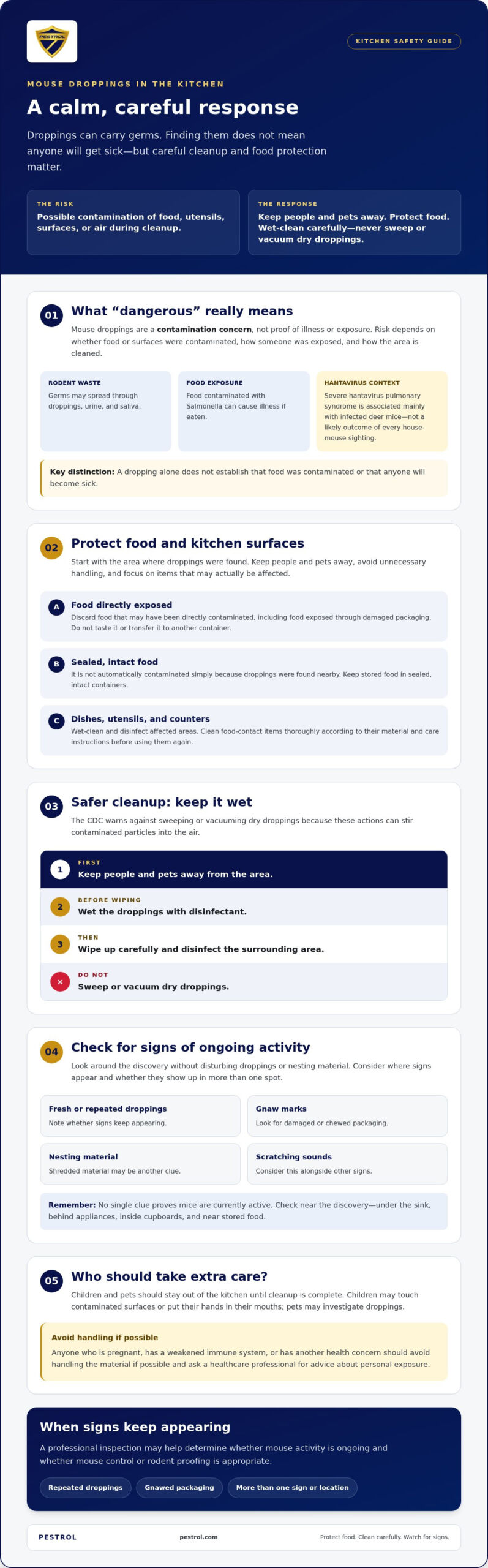
How to Tell Whether Kitchen Droppings Mean Mice Are Still Active
Finding droppings once doesn’t confirm that mice are still in the kitchen. A more useful clue is whether signs appear again after safe cleanup. Note where and when you find them, then compare your observations over the following days. Don’t touch or move droppings to check them. Record their location from a safe distance, and clean them using the recommended wet method.
Repeated droppings in the same cupboard or along a wall deserve attention. New droppings in another spot may suggest activity nearby, but one sign alone doesn’t prove that mice are still present. The question “are mouse droppings in kitchen dangerous” is separate from whether mice remain: treat each discovery as possible contamination, then look for patterns and supporting clues before deciding what to do next.
Which signs suggest the problem may be ongoing?
Look at clues together and in context. Chewed food packaging or fresh-looking gnaw marks may indicate access to stored food. Scratching or scurrying sounds at night can be another clue, though sounds alone aren’t proof. Shredded paper or fabric in a secluded area may be nesting material. Don’t disturb a suspected nest; note its location instead. Check visible gaps around pipes, doors, and utility openings without reaching into concealed spaces.
A simple record can help reveal a pattern. Write down the date and location of each sighting, and note whether you also found damaged packaging, gnaw marks, or other evidence. This information can be useful if signs recur or you seek a professional assessment. For broader guidance on checking possible entry points, see the rodent proofing guide.
What simple steps can help reduce repeat contamination?
Limit easy access to food and waste while monitoring for further signs. Store pantry items in secure containers, wipe away crumbs and food residue promptly, and keep rubbish contained. For busy homeowners, maintaining consistent sanitation can be made simpler through scheduled domestic assistance, with providers like SG Home Cleaning offering regular house care to help prevent crumbs and grease from accumulating. Check visible gaps around pipes, doors, and utility openings. These steps help keep the kitchen cleaner, but they don’t confirm whether mice are present or address concealed entry points.
If droppings keep appearing, show up in several areas, or accompany other signs, a professional inspection may help assess ongoing activity and possible access points. You can also review home pest protection guidance for broader prevention information.
When to Call a Mouse Control Professional About Kitchen Droppings
A single discovery may call for careful cleanup and monitoring. Consider a professional assessment if droppings return after cleanup, appear in several areas, or show up alongside damaged food packaging, gnaw marks, or repeated scratching sounds. These clues don’t confirm an infestation on their own, but taken together they can make further inspection a sensible next step.
A mouse control professional can assess signs of activity and look for possible entry points. This may help you understand what is happening and what steps could be appropriate. It doesn’t guarantee that mice will be eliminated, and the right approach depends on the situation in your home.
What information should you share when requesting help?
A clear record makes the conversation more useful. Note where and when you found droppings, whether they appeared again after cleanup, and whether you noticed damaged packaging, gnaw marks, or noises. You don’t need to handle contaminated materials to provide this information. Mention access concerns too, such as children or pets in the home or shared spaces in an apartment building.
If you’ve already cleaned the area, explain what you observed before cleanup and what has changed since. This context can help a professional decide whether an inspection may be useful and which areas deserve attention.
How can local residents take the next step?
Pestrol provides residential mouse control and rodent proofing in Manhattan, the Bronx, Chester, Cornwall, Crawford, Goshen, Greenville, Highlands, Minisink, Monroe, Montgomery, Mount Hope, New Windsor, Newburgh, Palm Tree, Tuxedo, Wallkill, Warwick, Wawayanda, and Woodbury. When you reach out, share the signs you’ve noticed and confirm service availability for your community. If you’re unsure whether recurring droppings mean mice are active, your observations can help clarify whether professional help is appropriate.
Whether you first searched “are mouse droppings in kitchen dangerous” or are trying to understand why they keep appearing, focus on two practical steps: clean safely and respond to patterns rather than one sign alone. A conversation with a mouse control professional can help you decide what to do next without assuming more than the evidence shows.
Take the Next Step Toward a Safer, Mouse-Free Kitchen
Mouse droppings deserve careful handling, but they don’t automatically mean someone will get sick. If you’re wondering, “are mouse droppings in kitchen dangerous,” start by preventing contact, protecting food and food-contact surfaces, and following safe cleanup guidance. Then watch for recurring droppings or other signs that mice may still be active.
If signs return or appear in several areas, a professional assessment can help you understand what may be happening and whether mouse control or rodent proofing is appropriate. Pestrol is a family-owned and operated business offering dedicated mouse control, rodent proofing, and residential pest protection plans. Contact Pestrol to discuss what you’ve observed and confirm availability in your community.
With careful cleanup and a clear next step, you can protect your kitchen and feel more confident about what to do next.
Frequently Asked Questions
Are mouse droppings in the kitchen dangerous?
Mouse droppings can carry germs and contaminate food or food-contact surfaces, but finding them doesn’t mean someone will get sick. Risk depends on exposure and how the area is handled. The CDC advises against sweeping or vacuuming dry droppings because this can stir contaminated particles into the air. Keep children and pets away, then follow careful wet-cleanup guidance. If you’re worried about possible exposure, speak with a healthcare professional.
Can mouse droppings contaminate food or dishes?
Yes. Food directly touched by droppings or exposed through chewed packaging may be contaminated, so discard it. Droppings can also contaminate utensils, dishes, and food-preparation surfaces. Sealed, intact food isn’t automatically contaminated just because droppings were found nearby. Set aside items that may have been exposed, clean dishes and food-contact surfaces carefully, and follow disinfectant label directions, including any rinsing instructions before using a surface for food preparation.
How should I clean mouse droppings in my kitchen?
Ventilate the room for at least 30 minutes before cleaning, keep children and pets away, and put on rubber or plastic gloves. Spray droppings with disinfectant until thoroughly wet and let it soak for at least five minutes, following the product label. Wipe them up with paper towels, dispose of the waste in a covered garbage can, then disinfect the surrounding area. Wash your hands thoroughly after removing your gloves.
Can I vacuum mouse droppings?
No. Don’t vacuum or sweep dry mouse droppings, since these actions can send contaminated particles into the air. Instead, follow the CDC’s wet-cleanup approach: ventilate first, wear gloves, soak droppings with disinfectant, and wipe them up with paper towels. Follow the disinfectant label for use and contact time. If you find a large amount of droppings or aren’t sure how to clean safely, consult current public-health guidance or a qualified professional.
What happens if I accidentally touched mouse droppings?
Touching a dropping doesn’t mean you’ll become ill, but wash your hands thoroughly with soap and water as soon as possible. Avoid touching your face before washing, and clean any surface the material may have contacted. If droppings got into a cut, your eyes, or your mouth, or you’re concerned because of a health condition, contact a qualified healthcare professional for advice. Don’t try to diagnose an illness based on the contact alone.
How can I tell if mice are still in my kitchen?
Repeated droppings after cleanup are a stronger reason to investigate than one discovery, but no single sign proves current activity. Look for new droppings in the same or additional areas, chewed food packaging, gnaw marks, nesting material, or scratching sounds. Note dates and locations without touching suspected contamination. Check visible gaps around pipes or doors, but don’t disturb hidden nesting areas. Consider the pattern of clues together.
When should I call a mouse control professional?
Consider a professional assessment if droppings recur, appear in several areas, or accompany signs such as damaged packaging or repeated noises. Pestrol provides mouse control and rodent proofing in Manhattan, the Bronx, Chester, Cornwall, Crawford, Goshen, Greenville, Highlands, Minisink, Monroe, Montgomery, Mount Hope, New Windsor, Newburgh, Palm Tree, Tuxedo, Wallkill, Warwick, Wawayanda, and Woodbury. Confirm coverage and availability for your community when you contact the family-owned business.