



A mouse needs only a quarter-inch gap to enter your dry storage room, and under New York State Sanitary Code Subpart 14-1, vermin violations can bring civil penalties of up to $2,000 per day. For local restaurant operators, the constant anxiety of an unannounced Orange County Department of Health inspection is exhausting. Simply spraying chemicals around prep stations doesn’t fix structural vulnerabilities, and state regulations strictly forbid using pesticides as an excuse for poor sanitation. Establishing targeted integrated pest management for food service Wallkill commercial kitchens rely on is the only reliable way to stop pests at the perimeter and protect your dining room’s hard-earned reputation.
You shouldn’t have to stress over surprise audits or negative customer reviews. Discover how food-grade integrated pest management safeguards your Wallkill commercial kitchen, ensures health inspection compliance, and prevents infestations through structural exclusion and diligent monitoring. In this 2026 guide, we cover local sanitary requirements, identify the highest-risk harborage areas across your facility, and outline the precise compliance records you need to secure spotless inspection scores.
Key Takeaways
- Understand why broadcast chemical spraying fails in commercial kitchens and how non-chemical preventative defenses protect food safety.
- Master local Orange County Department of Health compliance standards to keep your sanitation logs audit-ready and avoid costly penalties.
- Implement a reliable protocol for integrated pest management for food service Wallkill kitchens need to seal perimeter gaps and eliminate harborage.
- Identify the unique behaviors and nesting habits of German cockroaches, drain flies, and rodents common to Wallkill commercial corridors.
- Discover the critical state licensing and documentation standards to look for when choosing a trusted commercial food service pest management partner.
What Is Integrated Pest Management for Wallkill Food Service Facilities?
Operating a successful commercial kitchen along the busy Route 211 corridor requires tight coordination, rapid ticket times, and uncompromising hygiene. Integrated pest management (IPM) is a comprehensive, ecosystem-based food safety strategy designed to prevent infestations before they compromise your prep line. While industrial food processing plants manage massive dry silos, local restaurants face different daily pressures like hot cook lines, constant delivery traffic, and heavy dishwashing moisture. Utilizing an established integrated pest management framework allows dining establishments to systematically eliminate pest pressures by combining aggressive structural exclusion with meticulous sanitation rather than relying on hazardous broadcast sprays.
Implementing reliable integrated pest management for food service Wallkill dining operations rely on protects patron health and shields your restaurant’s digital reputation from catastrophic public reviews. Food preparation areas demand non-chemical interventions as the primary defense. Keeping food contact tables, cook surfaces, and dish pits uncontaminated ensures you maintain pristine sanitary conditions every service shift.
Core Pillars of Food-Grade IPM Standards
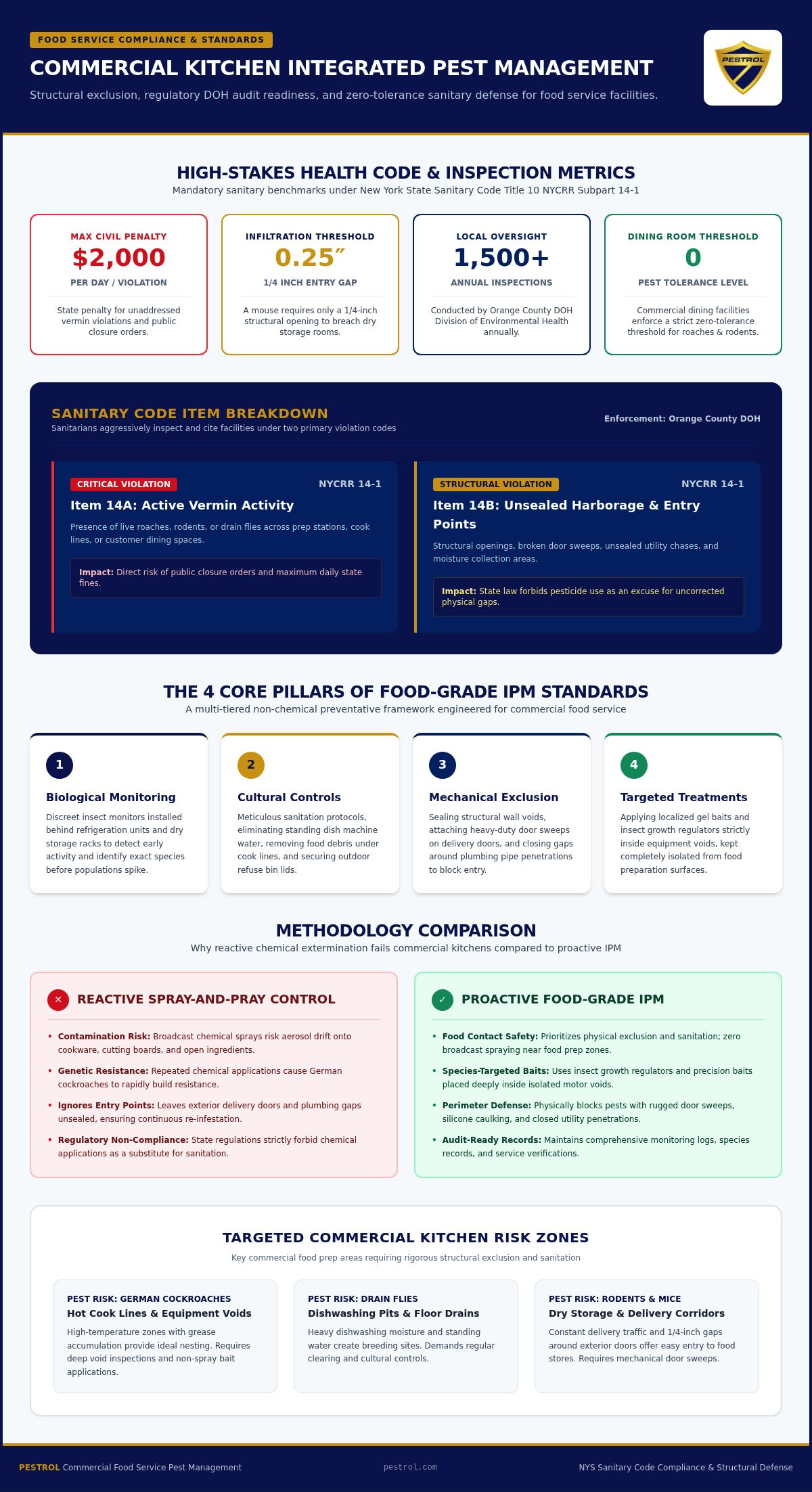
A restaurant-grade IPM strategy relies on a multi-tiered defense structure tailored to fast-paced commercial kitchens:
- Biological Monitoring and Population Thresholds: Technicians place discreet insect monitors behind refrigeration units and dry storage racks to catch early activity and identify exact species before numbers spike. In a commercial dining room, the acceptable threshold for roaches or rodents is strictly zero.
- Cultural Controls: Staff enforce deep-cleaning routines, clear standing water under dish machines, and ensure outdoor refuse bins stay covered.
- Mechanical Exclusion: Technicians seal structural voids, install rugged door sweeps, and close plumbing pipe penetrations to physically block pest entry.
- Targeted Treatments: When necessary, specialists apply localized gel baits or insect growth regulators deep inside equipment voids, well away from food prep surfaces.
Why Reactive Extermination Fails Commercial Kitchens
Traditional “spray-and-pray” pest control is dangerous and ineffective in commercial dining. Chemical broadcast sprays risk drifting onto cookware, cutting boards, and open ingredients. Repeated chemical applications also cause German cockroaches to build genetic resistance quickly, rendering baseline insecticides useless along hot cook lines.
Worst of all, chemical sprays ignore the structural gaps that let pests inside. If exterior delivery doorways lack proper seals or utility chases have gaps around plumbing, pests will continuously re-enter your kitchen regardless of how heavily chemicals are applied. True pest prevention demands building defense, diligent sanitation, and proactive monitoring.
Health Codes, DOH Compliance, and Audit Readiness in Orange County
The Orange County Department of Health (OCHD) Division of Environmental Health inspects more than 1,500 food service operations annually. Under New York State Sanitary Code Title 10 NYCRR Subpart 14-1, restaurants must remain completely free of insects, rodents, and harborage conditions. Sanitarians aggressively cite Item 14A for active vermin and Item 14B for unsealed structural entry points. Violations can trigger severe civil penalties of up to $2,000 per day under state law, alongside immediate public closure orders. Aligning kitchen protocols with the EPA’s integrated pest management principles ensures your team prevents violations before sanitarians walk through the door. For food operators managing regional concepts, reviewing our playbook on restaurant pest control NYC provides proven inspection readiness strategies that translate directly to upstate standards.
Mandatory Pest Documentation and Service Logs
Inspectors expect instant verification of professional oversight. Establishing comprehensive integrated pest management for food service Wallkill facilities operate demands a dedicated compliance binder. New York State law requires businesses to maintain pesticide application records for a minimum of three years. Your on-site audit folder must include:
- Detailed Pest Logs: Concrete records listing dates, times, and exact kitchen prep or storage locations of any pest sightings.
- Chemical Records: Safety Data Sheets (SDS) and NYSDEC-approved product labels for every material utilized on the property.
- Facility Mapping: A clean floor schematic displaying every numbered interior insect trap and exterior rodent tamper-resistant station.
Passing Unannounced Health Inspections with Confidence
Surprise audits shouldn’t cause panic. Schedule monthly self-inspections to check critical vulnerability points, such as floor drains, cook-line wheel casters, and weatherstripping along delivery portals. Teach kitchen crews to flag pest signs immediately rather than ignoring them during a rush. If an issue surfaces, consult licensed local pest control specialists who can provide rapid, targeted remediation and updated compliance paperwork before an inspector visits.
Step-by-Step IPM Implementation for Wallkill Food Service Operators
Executing an effective pest defense program requires seamless teamwork between kitchen staff, closing cleaning crews, and licensed technicians. Rather than relying on guesswork, restaurants succeed by systematically removing the food, moisture, and shelter pests seek. Aligning your daily kitchen operating procedures with established FDA Food Code standards creates an uninviting environment for invaders. Following a clear, multi-phase roadmap establishes measurable accountability across every shift.
Phase 1: Comprehensive Site Assessment and Risk Mapping
Every successful plan begins with identifying structural vulnerabilities. A qualified technician inspects suspended ceiling tiles, hollow stainless equipment legs, dish pits, and warm compressor compartments behind walk-in coolers. Outside, inspectors evaluate dumpster corrals and grease interceptors to ensure compliance with Town of Wallkill Town Code § 249-7, which mandates tight-fitting lids and clean enclosures. Mapping these critical control points highlights where ambient kitchen warmth and moisture create immediate pest attractants.
Phase 2: Sanitation Protocols and Environmental Modifications
Consistent sanitation starves pests before they multiply. Eliminating organic food sources denies pests the fuel they need to survive:
- Enzymatic Floor Mopping: Strip away hardened grease and food debris beneath fryers and heavy cook lines nightly using specialized microbial cleaners.
- Moisture Abatement: Clean floor drain baskets, empty condensation drip pans, and repair leaky beverage line fittings to cut off standing water.
- The Six-Inch Elevation Rule: Store all bulk ingredients, dry goods, and single-service supplies at least six inches off the floor to permit clear visual inspection.
Phase 3: Active Monitoring and Non-Chemical Intervention
The final phase seals your perimeter and tracks pest activity continuously. Deploying proper integrated pest management for food service Wallkill establishments rely on means stopping pests before they reach food zones. Mount discreet insect light traps in rear delivery corridors away from open food preparation tables. For exterior perimeter breaches, utilizing dedicated rodent proofing services ensures technicians pack stainless steel mesh into foundation voids and seal entry gaps. Because mice squeeze through openings as small as one-quarter inch and rats penetrate half-inch gaps, durable mechanical exclusion forms your permanent line of defense.
Targeting Common Commercial Kitchen Pests in the Wallkill Area
High-traffic commercial corridors along Route 211 face continuous biological pressures. The mix of older strip-center architecture, cold upstate winters, and frequent ingredient deliveries exposes kitchens to specific pests. Managing integrated pest management for food service Wallkill kitchens encounter requires targeting the precise biology and behavior of each invader.
The table below breaks down the primary pests found in local commercial dining rooms:
| Pest Species | Primary Kitchen Vector | Inspection Risk | Targeted Control Method |
|---|---|---|---|
| German Cockroach | Corrugated delivery boxes | Item 14A Health Citation | Growth regulators and baiting |
| House Mouse | Loading docks, threshold gaps | Product contamination | Exterior metal mesh exclusion |
| Phorid and Drain Fly | Organic drain line biofilm | Sanitation violation | Bio-enzymatic drain foaming |
German Cockroaches: Eradication and Drain Maintenance
German cockroaches thrive in high-heat zones like refrigeration compressor housings, electrical junction boxes, and hollow prep table legs. A single egg capsule produces 30 to 48 nymphs, reaching reproductive maturity in just 50 to 60 days. To eliminate active populations without contaminating prep areas, our technicians deploy targeted insect growth regulators alongside deep-void gel placements. Learn more about our targeted commercial strategies in our guide to professional roach removal.
Rodent Infiltration: Rats and Mice in Hudson Valley Winters
Late autumn frosts across Orange County drive field rodents toward the warmth and abundant grease traps of commercial kitchens. Up to 80% of indoor commercial rodent problems in Hudson Valley facilities stem from unsealed exterior perimeters. Technicians harden delivery bay doors with heavy-duty metal sweeps and seal utility penetrations using stainless steel mesh, backing up physical barriers with tamper-resistant exterior monitoring stations.
Drain Flies, Fruit Flies, and Stored Product Pests
Small flies indicate hidden moisture failures. Phorid flies breed in cracked sub-floor plumbing lines, fruit flies feed on fermenting bar syrups, and drain flies colonize gelatinous sludge inside floor drains. Bio-enzymatic foams digest this organic buildup, destroying breeding cycles at the source. In dry storage, regular stock rotation and sealed bins keep Indian meal moths and flour beetles from ruining expensive bulk spices.
Selecting a Food-Grade Commercial Pest Management Partner in Wallkill
Hiring an exterminator for a commercial kitchen isn’t like booking routine home maintenance. Commercial dining environments require specialized regulatory oversight, non-chemical exclusion tactics, and discreet timing. National service corporations often rely on rigid dispatch models that leave independent operators waiting for days when an urgent issue strikes. Partnering with a dedicated Hudson Valley specialist ensures you get responsive service and deep familiarity with regional health enforcement.
A true commercial partner understands that professional integrated pest management for food service Wallkill establishments require goes far beyond monthly chemical sprays. You need an expert ally who protects your health inspection standing and works cleanly around your service schedule.
Crucial Questions to Ask Commercial Pest Providers
Before entering any service agreement, vet prospective vendors by asking specific operational questions:
- Licensing and Food Service Credentials: Confirm that technicians hold active New York State DEC commercial pesticide applicator licenses in Category 7A (Structural and Rodent) or Category 7F (Food Processing), operating under a registered NYSDEC business entity.
- Audit Readiness and Reporting: Ask whether service records, floor trap schematics, and chemical SDS sheets are provided immediately in a format ready for OCHD sanitarian review.
- Emergency Response Turnaround: Clarify how quickly a technician can be on-site if a rodent or roach is spotted during prep hours.
- Service Discretion: Make sure routine maintenance can be handled during off-peak hours so treatments never interfere with customer dining or active food preparation.
Why Wallkill Restaurants Trust Pestrol for Commercial Defense
Pestrol delivers specialized restaurant pest control and structural rodent proofing programs tailored specifically to Orange County food establishments. As a family-owned and operated local business, we understand the local dining landscape and prioritize rapid dispatch for urgent issues. We don’t believe in generic treatments. Instead, our team builds custom pest management plans around your kitchen’s unique architecture, plumbing layouts, and cuisine types.
Our focus centers on permanent mechanical exclusion and compliance-first protocols. By addressing exterior structural gaps and applying targeted treatments inside equipment voids, we stop infestations without risking cross-contamination on your prep lines. We stand beside local operators as a reliable neighbor, ensuring your commercial kitchen remains clean, compliant, and protected year-round.
Take Control of Your Kitchen’s Health Inspection Future
Operating a commercial kitchen in Wallkill brings plenty of daily challenges without the lingering stress of an unannounced health inspection. Achieving spotless inspection scores requires much more than temporary aerosol sprays. By implementing permanent mechanical exclusion, strict sanitation routines, and comprehensive documentation logs, you protect your culinary reputation from the ground up. Securing professional integrated pest management for food service Wallkill facilities depend on prevents pests from ever reaching your cook lines.
As a family-owned team serving Wallkill and the greater Hudson Valley, Pestrol provides customized commercial pest management and proven structural rodent proofing built specifically for high-volume dining environments. You can lead your kitchen with complete confidence while our certified technicians keep your doors open, your guests safe, and your health grades pristine.
Frequently Asked Questions
How often should a Wallkill food service establishment schedule IPM inspections?
Most commercial kitchens require monthly IPM inspections at minimum, while high-volume operations or facilities handling large inventories benefit from bi-weekly visits. Regular service ensures insect monitoring traps are checked, bait freshness is maintained, and emerging structural gaps are identified promptly. Technicians adjust this schedule based on your facility’s square footage, waste handling volume, and seasonal pest pressures across the Hudson Valley.
Can commercial kitchens remain open during professional IPM pest treatments?
Yes, kitchens can typically remain open during routine inspections and non-chemical IPM procedures, though chemical applications require careful timing. Under New York State Sanitary Code § 14-1.60, technicians cannot apply insecticides while food is being prepared or served. Certified applicators perform targeted gel applications, drain foam treatments, or structural proofing before morning prep starts or after the evening line closes to avoid operational downtime.
What is the difference between standard pest control and food-grade IPM?
Standard pest control relies on reactive chemical sprays applied after pests appear, whereas food-grade IPM focuses on biological monitoring, physical exclusion, and sanitation. Delivering integrated pest management for food service Wallkill kitchens trust means fixing root environmental causes. Instead of spraying broad chemicals near food zones, technicians seal building perimeters, eliminate standing moisture, and apply discreet, targeted treatments only when population thresholds demand action.
What pest control documentation do Orange County health inspectors require on-site?
Orange County health inspectors look for an active on-site pest compliance binder during unannounced sanitation audits. Your logbook must contain recent service tickets, chemical application details, Safety Data Sheets (SDS), and an updated floor plan mapping every interior trap and exterior bait station. State regulations require maintaining these pesticide records for a minimum of three years, alongside documentation of your technician’s NYSDEC Category 7A certification.
How can restaurant staff prevent pests from entering through delivery loading docks?
Staff should keep receiving bay doors closed between trucks and unpack corrugated cardboard boxes immediately, discarding external shipping cartons outside. Cockroaches frequently hitchhike into dry storage areas inside packaging ridges and produce crates. Installing rugged nylon brush door sweeps, keeping dock levelers flush with the floor, and maintaining clean dumpster corrals significantly reduce pest entry during busy morning delivery hours.
What are the most common signs of a hidden cockroach infestation in commercial equipment?
Key indicators include tiny black droppings resembling black pepper behind appliances, discarded egg capsules (oothecae), and an unpleasant, musty odor around warm machinery. German cockroaches harbor inside refrigerator compressor compartments, behind reach-in cooler gaskets, and within hollow prep table legs. Seeing roaches active during daylight hours suggests an established population that has already outgrown its primary harborage voids.
Why are chemical bug bombs and over-the-counter foggers strictly prohibited in restaurants?
Total-release foggers settle aerosolized pesticides across food prep counters, cutting boards, and cooking equipment, creating severe chemical contamination risks and flammability hazards near kitchen pilot lights. State health codes strictly ban unapproved chemical applications in dining facilities. Implementing proven integrated pest management for food service Wallkill establishments rely on eliminates pests safely through deep-void baiting and structural exclusion without endangering kitchen staff or patrons.